Muskelmasse messen: Warum dein Analysegerät über die Diagnose entscheidet
Eine neue Studie enthüllt, wie stark die Wahl des Messgeräts die Einschätzung deiner Muskelmasse beeinflusst – mit potenziell weitreichenden Folgen für deine Gesundheitsbewertung. Was das für dich bedeutet, erfährst du hier.
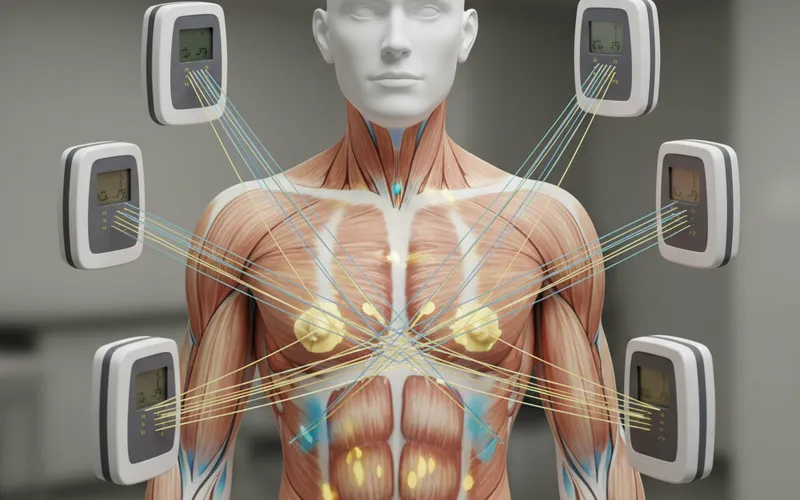
1. Die Studie – Was wurde untersucht und warum betrifft dich das?
Stell dir vor, du gehst zum Arzt oder ins Fitnessstudio, um deine Körperzusammensetzung messen zu lassen – besonders deine Muskelmasse. Du möchtest wissen, ob du genügend Muskeln hast, ob du riskierst, Sarkopenie (Muskelschwund) zu entwickeln, oder ob dein Trainingsplan Früchte trägt. Du legst dich auf eine Liege oder stellst dich auf eine Waage, und ein Gerät spuckt Zahlen aus. Du vertraust darauf, dass diese Zahlen stimmen und eine verlässliche Aussage über deinen Körper treffen. Doch genau hier liegt ein potenzielles Problem, das eine aktuelle Studie aus Deutschland genauer unter die Lupe genommen hat.
Forschende um Burgard, Goldschmidt und Ohse vom Hector-Center für Ernährung, Bewegung und Sport am Universitätsklinikum Erlangen haben untersucht, wie stark die Wahl des Bioelektrischen Impedanzanalyse (BIA)-Geräts die Messung und damit die Diagnose von Muskelmasse beeinflusst. BIA-Geräte sind weit verbreitet und messen den Widerstand des Körpers gegenüber einem schwachen elektrischen Strom, um Rückschlüsse auf Körperfett, Muskelmasse und Wassergehalt zu ziehen. Ihre Ergebnisse sind im renommierten Fachjournal Nutrients erschienen.
Die zentrale Fragestellung der Studie war: Führen unterschiedliche BIA-Geräte zu so grossen Abweichungen in den Messwerten für Muskelmasse, dass dies die klinische Klassifizierung – also die Diagnose, ob jemand zum Beispiel an Muskelschwund leidet – massgeblich beeinflusst? Bisherige Studien hatten zwar gezeigt, dass es Unterschiede zwischen den Geräten gibt, aber die klinische Relevanz, besonders bei anfälligen Patientengruppen, war noch unklar. Deshalb konzentrierte sich das Team auf Patientinnen und Patienten mit Krebs oder Adipositas, beides Zustände, die oft mit Veränderungen der Körperzusammensetzung einhergehen.
Für die Studie wurden Daten von 224 Erwachsenen ausgewertet, davon 85 Krebspatienten und 139 Menschen mit Adipositas. Bei allen Teilnehmenden wurde die Körperzusammensetzung mit zwei verschiedenen segmentalen Multi-Frequenz-BIA-Geräten gemessen: einem seca mBCA 515 und einem InBody 970. Segmentale Geräte messen die Impedanz in verschiedenen Körperteilen (Arme, Beine, Rumpf), was als genauer gilt als Ganzkörper-BIA. Multi-Frequenz-BIA verwendet zudem verschiedene Frequenzen, um zwischen intra- und extrazellulärem Wasser zu unterscheiden.
Die Forschenden verglichen die Messwerte der beiden Geräte für verschiedene Parameter wie Skelettmuskelmasse (in Kilogramm und Prozent) und fettfreie Masse. Anschliessend wurde untersucht, wie sich diese Unterschiede auf die Klassifizierung der Patientinnen und Patienten auswirkten, basierend auf etablierten Grenzwerten für Mangelernährung (GLIM-Kriterien) und sarkopenische Adipositas (ESPEN- und EASO-Kriterien). Darüber hinaus analysierten sie, ob Faktoren wie Krankheitstyp, Geschlecht und Alter die Abweichungen zwischen den Geräten beeinflussten.
Die Ergebnisse waren deutlich: Für alle gemessenen Parameter gab es signifikante Unterschiede zwischen den beiden BIA-Geräten (alle p ≤ 0.005). Die grössten Diskrepanzen zeigten sich bei der Skelettmuskelmasse, sowohl in Kilogramm als auch im prozentualen Anteil. Hier waren die Effektstärken r > 0.8, was auf sehr grosse Unterschiede hindeutet, und die Übereinstimmung zwischen den Geräten war gering (Lin's CCC < 0.90).
Noch wichtiger für die klinische Praxis: Die Wahl des Geräts hatte einen signifikanten Einfluss auf die Klassifizierung der Muskelmasse bei Krebspatienten und adipösen Menschen (p < 0.001). Das seca-Gerät klassifizierte beispielsweise deutlich mehr Patienten als Personen mit geringer fettfreier Masse (50% vs. 20% beim InBody) und als Personen mit einer Körperzusammensetzung, die auf sarkopenische Adipositas hindeutet (90% vs. 50% beim InBody). Die Abweichungen waren bei Krebspatienten und Frauen ausgeprägter.
Die Forschenden schlussfolgern, dass die Messung der Muskelmasse mittels BIA stark von der Gerätewahl abhängt. Dies kann zu klinisch relevanten Fehldiagnosen führen, wenn starre Grenzwerte angewendet werden. Sie fordern eine individualisierte Interpretation der BIA-Daten und eine weitere Validierung der Vorhersagegleichungen, besonders für spezifische Patientengruppen.
Quelle: Burgard LC, Goldschmidt S, Ohse VA, Herrmann HJ, Reljic D, Neurath MF, Zopf Y (2026). Variability in BIA-Derived Muscle Mass Estimates: Device Choice Impacts Diagnostic Classification. Nutrients, 18(5):767. PubMed-ID: 41829937
Diese Ergebnisse werfen wichtige Fragen auf, wie wir Messdaten interpretieren und welche Schlüsse wir daraus ziehen. Lass uns das genauer beleuchten.
2. Was heisst das wirklich? – Die kritische Einordnung
Die Studie zeigt eindrücklich, dass die Wahl des BIA-Geräts keine kleine Nebensächlichkeit ist, sondern potenziell weitreichende Konsequenzen für deine Diagnose haben kann. Wenn ein Gerät doppelt so viele Menschen als mangelernährt oder von Sarkopenie betroffen einstuft wie ein anderes, dann ist das ein massiver Unterschied.
Du bist kein Durchschnitt. Grosse Studien liefern Durchschnittswerte und statistische Signifikanzen. Hier wurde mit p-Werten von ≤ 0.005 eine sehr hohe statistische Signifikanz für die Geräteunterschiede gefunden. Das bedeutet, es ist extrem unwahrscheinlich, dass diese Unterschiede nur zufällig auftreten. Doch die grosse Herausforderung liegt in der individuellen Interpretation. Wenn du mit einem Gerät gemessen wirst, das tendenziell niedrigere Muskelmasse anzeigt, könnte dir eine Diagnose gestellt werden, die mit einem anderen Gerät gar nicht zustande gekommen wäre. Das ist keine abstrakte Statistik mehr, sondern betrifft dich direkt. Der Unterschied zwischen «statistisch signifikant» und «klinisch bedeutsam» wird hier sehr greifbar: Die gemessenen Unterschiede sind nicht nur statistisch nachweisbar, sondern führen zu unterschiedlichen Behandlungs- oder Interventionsempfehlungen.
Was wurde wirklich gemessen? BIA-Geräte messen nicht direkt die Muskelmasse, sondern die elektrische Leitfähigkeit deines Körpers. Daraus werden dann mittels komplexer Algorithmen und Vorhersagegleichungen die Werte für Muskel- und Fettmasse berechnet. Diese Vorhersagegleichungen basieren auf Referenzpopulationen. Wenn nun das InBody-Gerät und das seca-Gerät unterschiedliche Algorithmen oder Referenzgleichungen verwenden, ist es wenig überraschend, dass sie zu unterschiedlichen Ergebnissen kommen. Hier handelt es sich also nicht um eine direkte Messung eines harten Endpunkts (wie zum Beispiel das Sterberisiko), sondern um eine indirekte Messung, die stark von der Qualität und Eignung der verwendeten Gleichungen abhängt.
Methodische Stärken und Grenzen: Die Studie hat eine klare Stärke: Sie vergleicht zwei weit verbreitete, hochwertige segmentale Multi-Frequenz-BIA-Geräte direkt an derselben Personengruppe. Die Auswahl von Krebspatienten und Menschen mit Adipositas ist ebenfalls sinnvoll, da diese Gruppen oft ein erhöhtes Risiko für Veränderungen der Körperzusammensetzung aufweisen. Die statistische Analyse ist robust. Eine Grenze ist jedoch, dass die Studie keine «Goldstandard»-Messmethode (wie zum Beispiel DXA – Dual-Röntgen-Absorptiometrie) als Vergleich heranzog, um zu beurteilen, welches der beiden BIA-Geräte die «wahreren» Werte liefert. Es ging primär um den Vergleich der beiden BIA-Geräte untereinander und ihren Einfluss auf die Klassifikation.
Für wen gelten die Ergebnisse? Die Ergebnisse sind besonders relevant für Menschen, die zu den untersuchten Risikogruppen gehören (Krebs, Adipositas), aber auch für jeden, der regelmässig seine Körperzusammensetzung misst oder messen lässt. Die Tatsache, dass die Diskrepanzen bei Frauen und Krebspatienten noch ausgeprägter waren, unterstreicht die Notwendigkeit einer genderspezifischen und krankheitsspezifischen Betrachtung.
Denkwerkzeug: Wenn du deine Muskelmasse messen lässt, frage dich: Welches Gerät wird hier verwendet, und wie wurde es kalibriert? Ist die Person, die mich misst, geschult in der Interpretation der spezifischen Daten dieses Geräts?
Diese Erkenntnisse sind wichtig, aber sie kratzen nur an der Oberfläche dessen, was wirklich passiert. Denn während wir uns auf die Technik konzentrieren, übersehen wir oft einen entscheidenden Faktor.
3. Der Geist im Körper – Die psychophysiologische Perspektive
Die Studie zeigt uns eindrücklich, wie die Messmethode selbst die Interpretation unserer Körperzusammensetzung beeinflusst. Doch was, wenn nicht nur das Gerät, sondern auch unsere Gedanken und Gefühle die Ergebnisse – und unsere Reaktion darauf – massgeblich prägen?
Das psychophysiologische Interaktionsmodell lehrt uns, dass Psyche und Körper untrennbar verbunden sind. Das bedeutet: Allein die Information, die du über deine Muskelmasse erhältst, kann physiologische und psychologische Auswirkungen haben. Stell dir vor, du lässt deine Muskelmasse messen, und das seca-Gerät stuft dich als Person mit geringer fettfreier Masse ein, also potenziell gefährdet für Sarkopenie. Was löst das in dir aus? Vielleicht Sorge, Angst, den Druck, mehr trainieren zu müssen oder bestimmte Supplemente einzunehmen. Diese Emotionen sind keine neutralen Beobachter; sie wirken sich auf deinen Körper aus.
- Stress und Physiologie: Wenn die Diagnose „geringe Muskelmasse“ Stress auslöst, steigt dein Cortisolspiegel. Chronisch erhöhte Cortisolwerte können den Muskelabbau fördern und den Muskelaufbau hemmen. Dein Körper reagiert auf die Bedrohung, die du mental wahrnimmst.
- Nocebo-Effekt der Diagnose: Allein die Erwartung, dass mit deinem Körper etwas „nicht stimmt“, kann Symptome hervorrufen oder verschlimmern. Wenn du glaubst, dass du zu wenig Muskeln hast, obwohl du mit einem anderen Gerät als „normal“ eingestuft worden wärst, kann das deine Motivation für Training und Ernährung untergraben. Du fühlst dich vielleicht schwächer, obwohl du objektiv nicht schwächer bist.
- Motivation und Selbstwirksamkeit: Umgekehrt kann eine positive Rückmeldung – selbst wenn sie von einem Gerät stammt, das tendenziell höhere Werte anzeigt – deine Motivation stärken. Wenn du siehst, dass du Fortschritte machst oder „gut in Form“ bist, kann das dein Selbstvertrauen stärken, dich zu weiteren Anstrengungen anspornen und sogar die wahrgenommene Anstrengung beim Training reduzieren.
- Der Hawthorne-Effekt: Wenn du weisst, dass deine Muskelmasse gemessen und bewertet wird, kann das dein Verhalten beeinflussen. Du achtest vielleicht bewusster auf deine Ernährung und dein Training, einfach weil du beobachtet wirst. Dieser Effekt könnte die tatsächlichen physiologischen Veränderungen überlagern oder verstärken, unabhängig davon, welches Gerät verwendet wird.
Es ist gut denkbar, dass die psychische Reaktion auf eine Diagnose, die stark von der Gerätewahl abhängt, weitreichendere Folgen hat als der reine Zahlenwert. Ein Arzt, der eine „geringe Muskelmasse“ diagnostiziert, handelt in bester Absicht. Aber die psychologische Last dieser Diagnose, wenn sie auf einer möglicherweise willkürlichen Messung basiert, ist nicht zu unterschätzen. Dein Körper reagiert nicht nur auf das, was gemessen wird, sondern auch auf das, was du über diese Messung denkst und fühlst.
Dieser Aspekt – wie die psychische Verarbeitung der Messergebnisse die eigene Physiologie und das Verhalten beeinflusst – wurde in der Studie nicht erfasst, ist aber für die ganzheitliche Betrachtung deiner Gesundheit unerlässlich.
4. Der grössere Kontext – Einordnung und Abhängigkeiten
Diese Studie ist ein wichtiges Puzzleteil in der Diskussion um die Präzision und Verlässlichkeit von Körperzusammensetzungsmessungen. Sie bestätigt und erweitert frühere Erkenntnisse, dass BIA-Geräte nicht immer austauschbar sind. Es ist kein Ausreisser, sondern eine Bestätigung, dass die Standardisierung in diesem Bereich noch nicht ausgereift ist.
Wer steht dahinter? Die Studie wurde von Forschenden des Universitätsklinikums Erlangen durchgeführt. Die Autoren gaben an, keine Interessenkonflikte zu haben, was die Glaubwürdigkeit der Ergebnisse stärkt. Die Finanzierung durch eine akademische Einrichtung deutet ebenfalls auf eine unabhängige Forschung hin, die nicht von Geräteherstellern beeinflusst wurde.
Wo steht diese Studie in der Forschungslandschaft? Die Forschung zur Körperzusammensetzung ist ein dynamisches Feld. BIA ist eine beliebte Methode, da sie relativ kostengünstig, schnell und nicht-invasiv ist. Allerdings gibt es immer wieder Diskussionen über ihre Genauigkeit im Vergleich zu Goldstandards wie DXA oder Hydrostatik. Diese Studie unterstreicht, dass selbst innerhalb der BIA-Methodik erhebliche Unterschiede bestehen können. Sie ergänzt die Literatur, die die Notwendigkeit einer sorgfältigen Auswahl und Validierung von BIA-Geräten für spezifische Populationen betont.
Was wurde nicht kontrolliert? Die Studie konzentrierte sich auf den direkten Vergleich der Geräte. Was nicht kontrolliert wurde, sind andere Lebensstilfaktoren, die die Körperzusammensetzung beeinflussen, wie Ernährung, körperliche Aktivität, Schlaf oder Stresslevel. Diese Faktoren sind jedoch entscheidend für die tatsächliche Muskelmasse und Gesundheit. Auch wenn diese Studie diese Aspekte nicht direkt untersuchte, ist es wichtig zu bedenken, dass die BIA-Messung nur eine Momentaufnahme ist und von vielen anderen Parametern beeinflusst wird, die nicht im Rahmen dieser Studie erfasst wurden.
Denkwerkzeug: Bevor du aufgrund einer einzelnen Messung weitreichende Entscheidungen triffst, frage dich: Basieren die Empfehlungen, die ich erhalte, auf einer einzigen Messmethode, oder wurden verschiedene Aspekte meiner Gesundheit und meines Lebensstils berücksichtigt?
Diese Studie ist ein Weckruf, nicht blind auf Zahlen zu vertrauen, sondern den Kontext und die Methode kritisch zu hinterfragen. Doch was bedeutet das nun konkret für dich?
5. Was heisst das für dich? – Fazit und Alltagsrelevanz
Die Ergebnisse dieser Studie sind für dich hochrelevant, besonders wenn du dich aktiv um deine Gesundheit bemühst und regelmässig deine Körperzusammensetzung überprüfen lässt. Hier sind die wichtigsten Erkenntnisse und Handlungsempfehlungen:
Was kannst du mitnehmen?
- Hinterfrage die Messmethode: Wenn du deine Körperzusammensetzung, insbesondere deine Muskelmasse, messen lässt, frage nach, welches BIA-Gerät verwendet wird. Sei dir bewusst, dass die Ergebnisse je nach Gerät variieren können. Bleibe idealerweise immer beim selben Gerät, um Vergleiche über die Zeit hinweg nicht zu verfälschen.
- Individualisierte Interpretation: Zahlen sind nicht alles. Eine Diagnose wie „geringe Muskelmasse“ sollte immer im Kontext deines gesamten Gesundheitszustands, deiner Lebensweise und deiner Ziele betrachtet werden. Ein erfahrener Arzt oder Therapeut wird nicht nur auf die Zahlen schauen, sondern auch auf deine körperliche Verfassung, Kraft, Ausdauer und dein Wohlbefinden.
- Fokus auf das Ganze: Konzentriere dich auf bewährte Strategien zur Förderung der Muskelgesundheit: eine proteinreiche Ernährung, regelmässiges Krafttraining und ausreichende Erholung. Diese Grundpfeiler wirken, unabhängig davon, welches Gerät gerade die „richtigeren“ Zahlen liefert.
Was solltest du NICHT daraus schliessen?
- Keine Panik bei abweichenden Messungen: Wenn du bei verschiedenen Messungen unterschiedliche Ergebnisse erhältst, ist das kein Grund zur Sorge oder gar Panik. Es zeigt lediglich die Grenzen der Messmethode auf und nicht unbedingt, dass sich dein Körper dramatisch verändert hat.
- Keine blindes Vertrauen in eine einzige Zahl: Verlasse dich nicht ausschliesslich auf die BIA-Messung, um deine Gesundheit zu beurteilen. Dein Körpergefühl, deine Leistungsfähigkeit im Alltag und dein allgemeines Wohlbefinden sind oft viel aussagekräftigere Indikatoren.
Für wen ist das besonders relevant?
Diese Erkenntnisse sind besonders relevant für Menschen, die zu den in der Studie untersuchten Risikogruppen gehören (Krebspatienten, Menschen mit Adipositas), da bei ihnen präzise Diagnosen für die Therapieplanung entscheidend sind. Aber auch für Sportler, Fitnessbegeisterte und alle, die ihre Körperzusammensetzung optimieren möchten, ist es wichtig, die Limitationen der Messgeräte zu kennen. Für Menschen ohne Vorerkrankungen, die einfach ihren allgemeinen Fitnesszustand im Blick behalten wollen, ist die Botschaft dieselbe: Die Tendenz über die Zeit ist wichtiger als der absolute Wert einer einzelnen Messung.
Der psychophysiologische Gedanke zum Schluss: Diese Studie erinnert uns daran, dass Gesundheit weit mehr ist als eine Reihe von Zahlen auf einem Messgerät. Dein Körper reagiert nicht nur auf das, was du isst oder wie du dich bewegst, sondern auch auf das, was du denkst und fühlst, und wie du Informationen über deinen Körper interpretierst. Die wichtigste Messgrösse ist oft dein eigenes, achtsames Körpergefühl. Hör auf deinen Körper, vertraue auf deine Intuition und nutze Messungen als eine zusätzliche Informationsquelle – nicht als alleinige Wahrheit. Bleibe neugierig und kritisch, aber vor allem: Bleibe gelassen und zuversichtlich in deine Fähigkeit, deine Gesundheit selbst zu gestalten.