Ernährungssonden bei Kindern: Ballon oder Solidstopper – Was ist sicherer?
Wenn Kinder langfristig ernährt werden müssen, sind Sonden eine wichtige Hilfe. Eine neue Studie vergleicht zwei Typen von Sonden und ihre Sicherheit. Was bedeutet das für die kleinen Patienten und ihre Familien?
1. Die Studie – Was wurde untersucht und warum betrifft dich das?
Stell dir vor, dein Kind ist krank und kann nicht auf normalem Weg ausreichend Nahrung aufnehmen. In solchen Fällen kann eine Ernährungssonde, ein sogenannter Gastro-Jejunal-Tubus (GJ-Tubus), lebensrettend sein. Diese Sonden führen die Nahrung direkt in den Magen und Dünndarm und stellen so sicher, dass das Kind alle notwendigen Nährstoffe erhält. Doch welche Sonde ist die beste? Welche ist am sichersten und verursacht die wenigsten Komplikationen? Das ist eine Frage, die Eltern, Ärzte und Pflegende gleichermassen beschäftigt.
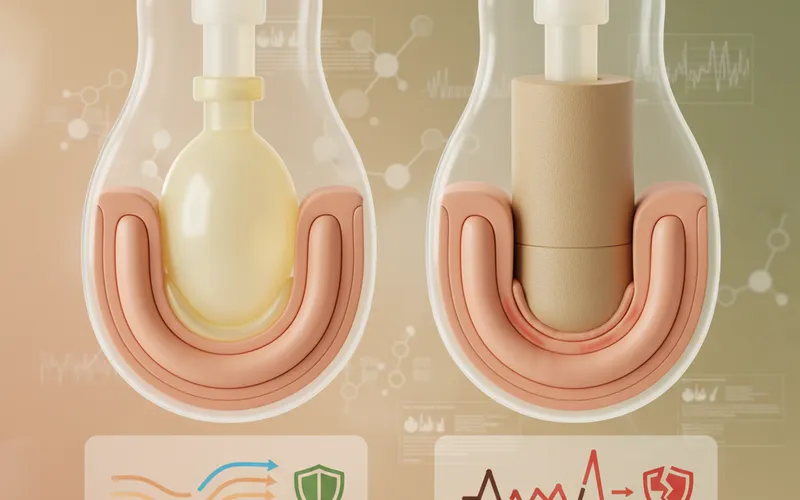
Genau dieser Frage widmete sich ein Forschungsteam um Naeem M. und Ali MS. vom Leeds Childrens Hospital in Grossbritannien. Sie verglichen zwei gängige Typen von GJ-Tuben: den Freka® perkutanen endoskopischen GJ-Tubus (FPEGJ) mit einem soliden, also festen internen Stopper, und Ballon-Gastro-Jejunal-Tuben (BGJ), die mit einem kleinen Ballon im Magen fixiert werden. Obwohl beide Sondentypen weit verbreitet sind, gab es bisher nur begrenzte Vergleichsdaten zu ihrer Sicherheit, Haltbarkeit und den möglichen Komplikationen. Diese Lücke wollten die Forschenden schliessen.
Für ihre retrospektive Studie untersuchten sie die Daten von 69 Kindern, die im August 2024 eine aktive GJ-Sonde trugen. Sie analysierten jeden «Sonden-Einsatz» – also die Zeit, in der ein Kind eine bestimmte Sonde hatte, bis diese gewechselt oder entfernt wurde. Dabei wurden demografische Daten der Kinder, auftretende Komplikationen sowie die Häufigkeit von geplanten und ungeplanten Sondenwechseln erfasst. Die Forschenden wollten herausfinden, welcher Sondentyp in der Praxis besser abschneidet und welche spezifischen Probleme mit den jeweiligen Designs verbunden sind.
Die Ergebnisse zeigten interessante Unterschiede: 41 Kinder (59%) erhielten initial einen FPEGJ. Ihr medianes Gewicht war mit 7,9 kg signifikant niedriger als das der Kinder, die initial einen BGJ-Tubus bekamen (21,4 kg, p < 0,001). Insgesamt wurden 56 FPEGJ- und 48 BGJ-Sonden-Einsätze ausgewertet. Über einen medianen Zeitraum von 14,5 Monaten für FPEGJ und 37 Monaten für BGJ (p < 0,001) benötigten BGJ-Sonden mehr routinemässige Wechsel (0,12 vs. 0,0 Wechsel/Monat). Die Rate der akuten, also ungeplanten Wechsel war jedoch bei beiden Typen ähnlich (0,05 vs. 0,06 Wechsel/Monat, p = 0,61). Eine Poisson-Regression, die die Dauer berücksichtigte, zeigte hier keinen signifikanten Unterschied (Inzidenzratenverhältnis 0,97, p = 0,82).
Die häufigste Ursache für einen akuten Wechsel war bei beiden Sondentypen eine Verlagerung des Jejunum-Schenkels (32% FPEGJ, 34% BGJ). Bei FPEGJ-Sonden kam es zudem häufig zu einer distalen Migration (19%), während bei BGJ-Sonden ein Ballonriss (18%) ein typisches Problem darstellte. Besonders auffällig war, dass signifikante Komplikationen ausschliesslich bei FPEGJ-Sonden auftraten, darunter eine gastrokolische Fistel und zehn Fälle von «buried bumper» (einem eingewachsenen Stopper). Die Forschenden schlussfolgern, dass FPEGJ zwar die bevorzugte Wahl für kleinere Säuglinge war und weniger routinemässige Wechsel erforderte, aber mit schwerwiegenderen Komplikationen verbunden war. Sie legen nahe, dass eine primäre BGJ-Insertion die Morbidität reduzieren könnte, ohne das Risiko einer Sondenverlagerung zu erhöhen. Gleichzeitig sehen sie Innovationsbedarf, um die Langlebigkeit von BGJ-Sonden und ihre Eignung für Säuglinge zu verbessern.
Quelle: Naeem M, Ali MS, Khan S, Alma'aitah SW, Aworanti OM (2026). Comparative analysis of balloon vs solid internal bumper gastro-jejunal tubes in children: a review of outcomes. Pediatr Surg Int, 42(1):143. PubMed-ID: 41790260
Diese Ergebnisse werfen wichtige Fragen auf, die weit über die reine Statistik hinausgehen und das Leben der betroffenen Kinder und ihrer Familien direkt beeinflussen.
2. Was heisst das wirklich? – Die kritische Einordnung
Diese Studie liefert wertvolle Einblicke in die Praxis der Sondenversorgung bei Kindern. Wenn du dir die Ergebnisse ansiehst, ist es wichtig, die Zahlen richtig zu deuten und nicht vorschnelle Schlüsse zu ziehen. Die Forschenden haben Daten aus dem realen Klinikalltag gesammelt, was einen grossen Vorteil darstellt, da es die tatsächlichen Herausforderungen und Erfolge widerspiegelt.
Zunächst fällt auf, dass die FPEGJ-Sonden primär bei deutlich jüngeren und leichteren Kindern eingesetzt wurden. Das ist ein wichtiger Kontextfaktor, denn kleinere Kinder sind oft fragiler und haben möglicherweise andere physiologische Voraussetzungen, die das Komplikationsrisiko beeinflussen können. Die Tatsache, dass FPEGJ weniger routinemässige Wechsel benötigten, könnte als Vorteil erscheinen. Doch die entscheidende Erkenntnis liegt in den ungeplanten, also akuten Wechseln und den schwerwiegenden Komplikationen.
Die Raten für akute Wechsel waren bei beiden Sondentypen ähnlich, was darauf hindeutet, dass das Problem der Sondenverlagerung, insbesondere der Jejunum-Schenkel-Dislokation, ein allgemeines und designunabhängiges Problem ist. Hier scheint es also keine Überlegenheit eines Typs zu geben. Das heisst, selbst wenn eine Sonde weniger oft für Routinezwecke gewechselt werden muss, kann sie dennoch plötzlich Probleme verursachen, die einen Notfallwechsel erfordern.
Was jedoch stark ins Gewicht fällt, ist die Feststellung, dass signifikante Komplikationen wie die gastrokolische Fistel und die «buried bumper»-Problematik ausschliesslich bei FPEGJ-Sonden auftraten. Ein «buried bumper» ist eine ernste Komplikation, bei der der interne Stopper der Sonde in die Magenwand einwächst und zu Schmerzen, Infektionen und der Notwendigkeit eines invasiven Eingriffs führen kann. Diese Art von Komplikation ist potenziell gefährlich und beeinträchtigt die Lebensqualität des Kindes massiv. Hier zeigt sich ein klarer Nachteil des festen Stoppers im Vergleich zum Ballon, der solche spezifischen Probleme nicht verursacht.
Die Studie ist retrospektiv, was bedeutet, dass die Daten aus der Vergangenheit gesammelt wurden und keine zufällige Zuteilung der Kinder zu den Sondentypen erfolgte. Die Entscheidung, welcher Sondentyp verwendet wurde, lag bei den behandelnden Ärzten und könnte von verschiedenen Faktoren beeinflusst worden sein, einschliesslich der Grösse des Kindes und der individuellen Präferenzen des Ärzteteams. Dies könnte die Ergebnisse leicht verzerren. Allerdings ist der signifikante Unterschied bei den schwerwiegenden Komplikationen ein starkes Signal, das es zu beachten gilt.
Denkwerkzeug: Wenn du oder jemand in deinem Umfeld mit einer solchen Situation konfrontiert wird, frage dich: «Welche Komplikationen sind für uns am wichtigsten, und wie beeinflusst die Wahl des Sondentyps das Risiko dieser spezifischen Komplikationen?»
Diese Erkenntnisse sind für die medizinische Praxis von grosser Bedeutung, aber sie sind nur ein Teil des Bildes. Denn wie bei jeder medizinischen Intervention spielt auch die psychische Verfassung des Kindes und der Familie eine immense Rolle, die in solchen Studien oft nicht direkt gemessen wird.
3. Der Geist im Körper – Die psychophysiologische Perspektive
Die rein technischen Aspekte von Ernährungssonden sind wichtig, aber sie erzählen nur die halbe Geschichte. Aus psychophysiologischer Sicht ist es entscheidend zu verstehen, dass die Erfahrung mit einer solchen Sonde weit über die reine Mechanik hinausgeht. Für ein Kind und seine Familie ist die Notwendigkeit einer GJ-Sonde eine enorme Belastung. Es ist ein ständiger Reminder an eine Krankheit, an die Abhängigkeit von medizinischer Technologie und an die Abweichung von dem, was als «normal» empfunden wird.
Stell dir vor, du bist ein Kind und hast permanent einen Schlauch in deinem Körper. Das kann Ängste auslösen – Ängste vor Schmerzen, vor dem Aussehen, vor der Reaktion anderer Kinder. Chronischer Stress, der durch solche Ängste und die allgemeine Belastung durch die Krankheit entsteht, beeinflusst die Physiologie des Kindes massiv. Wir wissen, dass Stress das Immunsystem schwächt, die Wundheilung verlangsamt und die Schmerzempfindlichkeit erhöht.
Wenn eine Sonde häufig gewechselt werden muss, sei es routinemässig oder aufgrund einer akuten Komplikation, bedeutet das für das Kind wiederholte Krankenhausaufenthalte, Narkosen und oft schmerzhafte Prozeduren. Jede dieser Erfahrungen kann traumatisierend sein und die psychische Belastung weiter erhöhen. Ein Kind, das ständig Angst vor einem Sondenwechsel hat oder unter den Folgen einer Komplikation leidet, wird sich schlechter erholen und möglicherweise auch schlechter auf die Ernährung ansprechen.
Die in der Studie erwähnten «signifikanten Komplikationen» wie eine gastrokolische Fistel oder ein «buried bumper» sind nicht nur medizinische Probleme. Sie sind auch psychologische Katastrophen. Ein Kind, das eine solche Komplikation erlebt, wird möglicherweise noch mehr Angst und Misstrauen gegenüber medizinischen Eingriffen entwickeln. Die Eltern sind in ständiger Sorge, was sich wiederum auf das emotionale Klima zu Hause auswirkt. Schlafstörungen, Reizbarkeit und Depressionen können die Folge sein – sowohl beim Kind als auch bei den Eltern.
Es ist gut denkbar, dass die psychische Verfassung des Kindes und der Familie einen erheblichen Einfluss darauf hat, wie gut eine Sonde toleriert wird und wie schnell sich das Kind von Komplikationen erholt. Ein Kind, das sich geliebt, sicher und gut betreut fühlt, auch mit einer Sonde, hat möglicherweise eine stärkere Stressresilienz und eine bessere Fähigkeit zur Selbstregulation. Dies könnte indirekt die Häufigkeit von Komplikationen oder die Erholungszeit beeinflussen, auch wenn solche Faktoren in einer retrospektiven Studie nicht direkt gemessen werden können.
Die Wahl des Sondentyps beeinflusst also nicht nur die physische, sondern auch die psychische Gesundheit. Eine Sonde, die weniger schwerwiegende Komplikationen verursacht, reduziert nicht nur das körperliche Leid, sondern auch den emotionalen Stress für das Kind und die gesamte Familie. Das ist ein Aspekt, der in der Diskussion um die «beste» Sonde oft unterschätzt wird, aber für die Lebensqualität der kleinen Patienten von entscheidender Bedeutung ist.
4. Der grössere Kontext – Einordnung und Abhängigkeiten
Diese Studie reiht sich ein in eine lange Reihe von Forschungsarbeiten, die sich mit der Optimierung der medizinischen Versorgung von Kindern beschäftigen. Es ist ein ständiges Ringen darum, die bestmöglichen Lösungen zu finden, die Sicherheit maximieren und gleichzeitig die Lebensqualität der jungen Patienten nicht unnötig einschränken.
Die Forschenden haben in ihrer Veröffentlichung angegeben, dass es keine Interessenkonflikte gibt, und die Studie wurde von einem renommierten Krankenhaus und einer Universität durchgeführt. Dies stärkt die Glaubwürdigkeit der Ergebnisse, da keine kommerziellen Interessen die Resultate beeinflusst haben dürften.
Im grösseren Bild bestätigt diese Studie, dass Innovation in der Medizintechnik ein fortlaufender Prozess ist. Es gibt selten die «perfekte» Lösung, sondern immer wieder Möglichkeiten zur Verbesserung. Die Erkenntnis, dass BGJ-Sonden im Hinblick auf schwerwiegende Komplikationen vorteilhafter sein könnten, ist ein wichtiges Puzzleteil. Gleichzeitig zeigt der Bedarf an mehr routinemässigen Wechseln bei BGJ-Sonden und die Notwendigkeit, deren Langlebigkeit und Eignung für Säuglinge zu verbessern, dass auch hier noch Forschungsbedarf besteht.
Was in dieser Studie nicht kontrolliert werden konnte, sind die individuellen Pflegepraktiken zu Hause. Wie sorgfältig wurde die Sonde gereinigt? Wurden die Eltern ausreichend geschult, um kleine Probleme frühzeitig zu erkennen? Solche Faktoren können die Häufigkeit von Infektionen und Dislokationen beeinflussen. Auch die allgemeine Gesundheit und der Ernährungszustand der Kinder vor der Sondenimplantation könnten eine Rolle gespielt haben. Kinder mit sehr komplexen Grunderkrankungen könnten anfälliger für Komplikationen sein, unabhängig vom Sondentyp.
Eine einzelne Studie ist immer nur ein Schnappschuss. Sie liefert Hinweise und Anregungen, aber selten die endgültige Wahrheit. Die Ergebnisse müssen im Kontext weiterer Forschung und klinischer Erfahrung betrachtet werden. Sie sind ein wichtiger Beitrag zur Diskussion, aber sie ersetzen nicht die individuelle ärztliche Entscheidung im Einzelfall, die immer die spezifischen Bedürfnisse und Umstände des Kindes berücksichtigen muss.
Denkwerkzeug: Bevor du auf Basis einer einzelnen Studie eine Entscheidung triffst, frage dich: «Gibt es andere Studien oder Erfahrungsberichte, die diese Ergebnisse bestätigen oder ihnen widersprechen, und wie passt das alles zu den individuellen Bedürfnissen der Person, um die es geht?»
Diese Studie ist ein guter Anfang, aber der Weg zu optimalen Lösungen ist oft lang und erfordert die Integration von Wissen aus verschiedenen Quellen und Perspektiven.
5. Was heisst das für dich? – Fazit und Alltagsrelevanz
Wenn du oder jemand in deinem Umfeld von der Notwendigkeit einer Ernährungssonde bei einem Kind betroffen ist, liefert diese Studie einige wichtige Erkenntnisse, die dir helfen können, informierte Entscheidungen zu treffen und Fragen zu stellen. Es geht nicht darum, Angst zu machen, sondern darum, mehr Wissen zu haben.
- Erkenntnis 1: Die Wahl des Sondentyps ist wichtig. Die Studie legt nahe, dass Ballon-Gastro-Jejunal-Tuben (BGJ) im Vergleich zu FPEGJ-Sonden mit festen Stoppern weniger schwerwiegende Komplikationen wie Fisteln oder eingewachsene Stopper verursachen. Dies ist ein starkes Argument, das bei der Erstimplantation in Betracht gezogen werden sollte, insbesondere wenn das Kind nicht zu den kleinsten Säuglingen gehört.
- Erkenntnis 2: Routinewechsel sind nicht das einzige Mass für Qualität. Auch wenn BGJ-Sonden möglicherweise häufiger routinemässig gewechselt werden müssen, ist die Rate der akuten, ungeplanten Wechsel bei beiden Typen ähnlich. Der Fokus sollte also nicht nur auf der Häufigkeit der routinemässigen Wartung liegen, sondern vor allem auf der Vermeidung schwerwiegender, potenziell lebensbedrohlicher Komplikationen.
- Erkenntnis 3: Die psychische Belastung ist real. Jede Komplikation und jeder Sondenwechsel ist für ein Kind und seine Familie eine enorme psychische Belastung. Die Wahl einer Sonde, die das Risiko schwerwiegender Komplikationen minimiert, kann nicht nur körperliches Leid, sondern auch immensen emotionalen Stress reduzieren. Sprecht offen mit dem medizinischen Personal über eure Ängste und Sorgen.
Was solltest du NICHT daraus schliessen? Diese Studie ist keine Anleitung zur Selbstdiagnose oder -behandlung. Sie ist auch kein Grund, in Panik zu geraten, wenn ein Kind bereits eine FPEGJ-Sonde hat. Die Entscheidung für einen Sondentyp wird immer individuell getroffen, unter Berücksichtigung des Alters, Gewichts und der spezifischen medizinischen Bedürfnisse des Kindes. Die Studie gibt eine Richtung vor, aber die klinische Erfahrung und die Expertise des behandelnden Teams sind unerlässlich.
Diese Ergebnisse sind besonders relevant für Eltern, die vor der Entscheidung stehen, welcher Sondentyp für ihr Kind am besten geeignet ist, sowie für medizinisches Fachpersonal, das diese Sonden implantiert und betreut. Für Kinder, die bereits gut mit einer bestimmten Sonde zurechtkommen, gibt es keinen unmittelbaren Grund zur Besorgnis, aber es kann Anlass geben, die Situation mit dem Arzt zu besprechen.
Denk immer daran, dass Gesundheit ein komplexes Zusammenspiel ist. Der Körper deines Kindes reagiert nicht nur auf die technische Beschaffenheit einer Sonde, sondern auch auf die Atmosphäre der Geborgenheit, das Gefühl der Sicherheit und die Stärke der Bindung. Die psychische Verfassung kann die körperliche Heilung massgeblich unterstützen. Es ist nicht nur die Sonde, die wirkt, sondern das gesamte Umfeld – einschliesslich der Fürsorge, des Vertrauens und der Hoffnung, die du als Elternteil vermittelst. Bleib neugierig, bleib informiert und vertraue auf die Kraft der Verbindung zwischen Körper und Geist.