Fettlösliche Vitamine und Nutrigenomik: Ein Hoffnungsschimmer für die Fettleber?
Eine aktuelle Übersichtsarbeit beleuchtet, wie fettlösliche Vitamine und Nutrigenomik unser Verständnis und die Behandlung der Fettlebererkrankung revolutionieren könnten. Erfahre, was das für deine Gesundheit bedeutet.
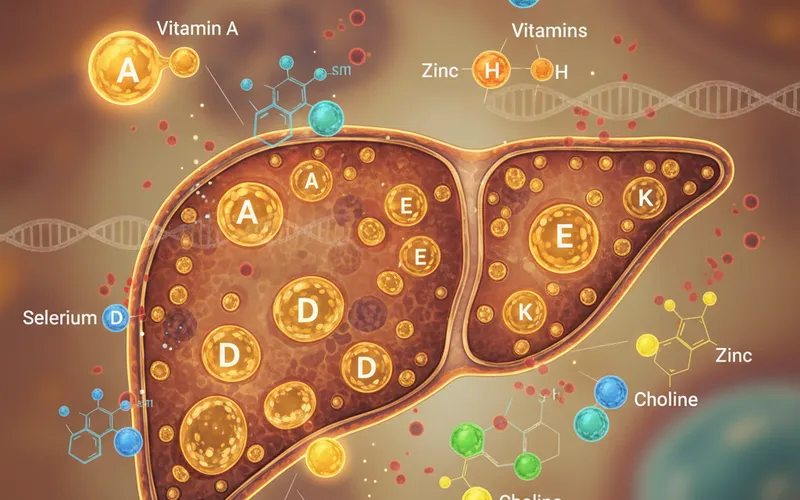
1. Die Studie – Was wurde untersucht und warum betrifft dich das?
Stell dir vor, du sitzt beim Arzt und bekommst die Diagnose: Fettleber. Eine Diagnose, die immer häufiger wird und viele Menschen betrifft, oft ohne dass sie es merken. Die sogenannte metabolisch-assoziierte Steatotische Lebererkrankung (MASLD) ist eine weit verbreitete Lebererkrankung, die aus einer chronischen Belastung der Leberzellen durch Fett (Steatose) und den damit verbundenen toxischen Effekten (Lipotoxizität) resultiert. Das kann zu mitochondrialen Fehlfunktionen, einer Überaktivierung von Stress- und Entzündungsgenen und schliesslich zum Zelltod führen. Klingt beunruhigend, oder?
Genau hier setzt eine spannende Übersichtsarbeit an, die in der renommierten Zeitschrift Progress in Lipid Research veröffentlicht wurde. Ein Forschungsteam um A. Migni, D. Bartolini und C. Galli von verschiedenen italienischen Universitäten, darunter die Universität Perugia und die Marche Polytechnic University, hat sich intensiv mit der Rolle der Nutrigenomik und fettlöslicher Vitamine bei der Leberlipotoxizität und MASLD beschäftigt. Ihr Ziel war es, aufzuzeigen, wie moderne genomische Techniken dabei helfen können, Krankheitsmechanismen besser zu verstehen, präzisere Diagnosen zu stellen und massgeschneiderte Behandlungsansätze zu entwickeln.
Die Studie beleuchtet insbesondere, wie die Nutrigenomik – ein Forschungsfeld, das die Wechselwirkung zwischen Ernährung/Nährstoffen und unserem Genom untersucht – genutzt werden kann, um die gesundheitlichen Auswirkungen von Lebensstil- und Ernährungsumstellungen zu erforschen. Es geht darum, die Wirksamkeit von Ernährungsinterventionen nach den Kriterien der Präzisionsmedizin zu bewerten. Konkrete Beispiele, die in der Studie diskutiert werden, sind Interventionen mit fettlöslichen Vitaminen und anderen Lipidnährstoffen wie Omega-3-Fettsäuren. Diese haben zellschützende Eigenschaften gezeigt und können wichtige Schritte im Lipotoxizitätsprozess der Leber modulieren, wie die Fettsynthese, Lipidperoxidation, die Aktivierung von Entzündungsgenen und Signalwege für den Zelltod. Auch die Anwendung der Nutrigenomik in der Medikamentenentwicklung und präklinischen Studien zur Erforschung therapeutischer Mechanismen, Wirksamkeit und Sicherheit neuer Vitaminprodukte und Nahrungsergänzungsmittel wird erörtert. Die Autoren bewerten kritisch die Eigenschaften, Einschränkungen und das Potenzial dieser Lipidnährstoffe für die Prävention und das klinische Management von MASLD.
Im Kern geht es darum zu verstehen, wie das, was wir essen, auf molekularer Ebene mit unseren Genen interagiert und so unsere Lebergesundheit beeinflusst. Das ist nicht nur faszinierend, sondern könnte auch ganz neue Wege eröffnen, wie wir Krankheiten wie die Fettleber in Zukunft angehen.
Quelle: Migni A, Bartolini D, Ceccarini MR, Galli C, Cavaliere G, Garetto S, Lucci J, Galli F (2026). Nutrigenomics of fat-soluble vitamins and micronutrients in hepatocyte lipotoxicity and MASLD. Prog Lipid Res, 101. PubMed-ID: 41794230
2. Was heisst das wirklich? – Die kritische Einordnung
Diese Übersichtsarbeit ist ein sogenanntes Review. Das bedeutet, die Forschenden haben nicht selbst experimentiert, sondern die bereits vorhandene Literatur gesichtet und zusammengefasst. Das ist extrem wertvoll, weil es uns einen Überblick über den aktuellen Stand der Forschung gibt und Trends aufzeigt. Allerdings liefert ein Review keine neuen Daten, sondern interpretiert bestehende.
Die Studie hebt die vielversprechende Rolle der Nutrigenomik hervor, insbesondere im Kontext von fettlöslichen Vitaminen und Omega-3-Fettsäuren bei MASLD. Es ist spannend zu sehen, wie diese Nährstoffe auf molekularer Ebene wirken und potenziell schützende Effekte auf die Leber haben können. Die Idee der Präzisionsmedizin, bei der Ernährungsempfehlungen auf die individuelle genetische Ausstattung zugeschnitten werden, ist ein echter Fortschritt. Es ist ein grosser Unterschied, ob wir allgemeine Empfehlungen geben oder genau wissen, welche Nährstoffe jemand aufgrund seiner Genetik besonders gut verwerten kann oder braucht.
Ein wichtiger Punkt ist, dass die Studie von zellschützenden Eigenschaften und molekularen Effekten spricht. Das sind zwar vielversprechende Hinweise, aber es handelt sich hier primär um Surrogatparameter – also Laborwerte und molekulare Marker. Ob diese Effekte auch zu harten klinischen Endpunkten führen, wie einer tatsächlichen Verbesserung der Lebensqualität, einer Reduktion von Krankheitsrisiken oder gar der Sterblichkeit, muss in klinischen Studien am Menschen noch umfassender belegt werden. Eine verbesserte Genexpression ist ein starker Hinweis, aber noch kein Garant für ein gesünderes Leben.
Die Stärke dieser Arbeit liegt darin, dass sie ein komplexes Forschungsfeld zusammenführt und das Potenzial der Nutrigenomik für die personalisierte Ernährung bei MASLD aufzeigt. Die Grenzen sind, dass es sich um eine theoretische Zusammenfassung handelt und die praktische Umsetzung in der klinischen Routine noch vor uns liegt. Zudem muss immer die Frage gestellt werden, für wen diese Erkenntnisse am relevantesten sind. Die Teilnehmer der zitierten Studien, auf denen dieses Review basiert, sind oft spezifische Patientengruppen. Ob die Ergebnisse 1:1 auf dich übertragbar sind, hängt von deiner individuellen Situation ab.
Denkwerkzeug: Wenn du von einer neuen Ernährungsstrategie hörst, frag dich immer: Handelt es sich um allgemeine Empfehlungen oder basiert sie auf einer individuellen Diagnostik, die deine spezifischen Bedürfnisse berücksichtigt?
3. Der Geist im Körper – Die psychophysiologische Perspektive
Die Leberlipotoxizität und MASLD werden in dieser Studie primär aus einer molekularen und genetischen Perspektive betrachtet. Doch wie wir bei Jürg Hösli immer wieder betonen, ist der Mensch keine Maschine, die nur auf Nährstoffe reagiert. Die psychophysiologische Interaktion spielt auch hier eine entscheidende Rolle, die in solchen Reviews oft unerwähnt bleibt.
Denk an den chronischen Stress. Stresshormone wie Cortisol beeinflussen den gesamten Stoffwechsel, einschliesslich des Fettstoffwechsels in der Leber. Dauerstress kann zu einer erhöhten Speicherung von Fett in der Leber führen und die mitochondriale Funktion beeinträchtigen – genau die Mechanismen, die in der Studie als Ursachen für Lipotoxizität genannt werden. Wenn du also unter ständigem Druck stehst, dich Sorgen machst oder schlecht schläfst, kann das die besten Ernährungsstrategien untergraben. Selbst wenn du die perfekten fettlöslichen Vitamine einnimmst, kann ein hoher Stresslevel die positive Wirkung dieser Nährstoffe auf deine Leber reduzieren oder sogar zunichtemachen.
Auch deine Erwartungshaltung spielt eine Rolle. Wenn du fest davon überzeugt bist, dass eine bestimmte Diät oder ein Nahrungsergänzungsmittel dir helfen wird, kann allein diese Überzeugung positive physiologische Effekte auslösen (Placebo-Effekt). Umgekehrt kann Skepsis oder die Angst vor einer Krankheit (Nocebo-Effekt) die Wirkung selbst der besten Interventionen mindern. Das ist keine Einbildung, sondern messbare Physiologie. Dein Gehirn und dein Körper sind untrennbar miteinander verbunden.
Es ist gut denkbar, dass die Wirksamkeit von fettlöslichen Vitaminen und Omega-3-Fettsäuren bei MASLD nicht nur von der Menge und Qualität der Nährstoffe abhängt, sondern auch massgeblich von der psychischen Verfassung des Einzelnen. Ein Patient, der motiviert ist, an seine Heilung glaubt und seine Stressoren managen kann, wird wahrscheinlich besser auf eine Ernährungsintervention ansprechen als jemand, der sich entmutigt und überfordert fühlt.
4. Der grössere Kontext – Einordnung und Abhängigkeiten
Diese Übersichtsarbeit wurde in einem renommierten Journal veröffentlicht, was für eine hohe wissenschaftliche Qualität spricht. Die Autoren kommen von verschiedenen Universitäten in Italien. Es gibt jedoch eine interessante Anmerkung zu den Interessenkonflikten: Drei der Autoren sind Angestellte von Bios-Therapy, einem Unternehmen, das sich mit «Physiological Systems For Health» befasst. Dies ist eine wichtige Information, die nicht als Anklage, sondern als Kontext verstanden werden sollte. Es bedeutet, dass ein Teil des Teams möglicherweise ein kommerzielles Interesse an den besprochenen Therapien oder Produkten hat. Das muss nicht die Objektivität der Forschung beeinträchtigen, aber es ist ein Faktor, den du als Leser im Hinterkopf behalten solltest, wenn die Diskussion sich um die Wirksamkeit bestimmter Nahrungsergänzungsmittel dreht.
Die Forschung zur Nutrigenomik und Lebergesundheit ist ein sehr aktives Feld. Diese Studie bestätigt im Grossen und Ganzen die vorhandenen Erkenntnisse über die protektive Rolle von fettlöslichen Vitaminen und Omega-3-Fettsäuren. Sie stösst aber auch die Tür zu einer präziseren, personalisierten Medizin auf, die über allgemeine Empfehlungen hinausgeht. Es ist ein Puzzleteil in einem immer komplexer werdenden Bild, das zeigt, wie tiefgreifend unsere Ernährung unsere Genexpression und damit unsere Gesundheit beeinflusst.
Was oft nicht kontrolliert wird in solchen Studien, sind die unzähligen anderen Lebensstilfaktoren. Wie sieht es mit der Schlafqualität der Studienteilnehmer aus? Wie hoch ist ihr Stresslevel? Sind sie körperlich aktiv? Welche Medikamente nehmen sie ein? All diese Faktoren können den Stoffwechsel und die Lebergesundheit massgeblich beeinflussen und die Wirkung von Nährstoffen überlagern oder verstärken. Es ist eine Herausforderung, all diese Variablen in Studien zu erfassen, aber für die individuelle Anwendung sind sie entscheidend.
Denkwerkzeug: Bevor du aufgrund einer einzelnen Studie deine Gewohnheiten änderst, frag dich: Wer hat die Studie finanziert und welche potenziellen Interessen könnten dahinterstecken? Und wie passen die Ergebnisse zu meinem gesamten Lebensstil und meinen individuellen Bedürfnissen?
5. Was heisst das für dich? – Fazit und Alltagsrelevanz
Was kannst du aus dieser komplexen Übersichtsarbeit für deinen Alltag mitnehmen? Hier sind 2–3 konkrete Erkenntnisse:
- Die Macht der Präzision: Allgemeine Ernährungsempfehlungen sind ein guter Startpunkt, aber die Zukunft liegt in der personalisierten Ernährung. Die Nutrigenomik verspricht, uns zu zeigen, welche Nährstoffe – wie fettlösliche Vitamine und Omega-3-Fettsäuren – für deine individuelle genetische Ausstattung am vorteilhaftesten sind. Das bedeutet, dass eine umfassende Diagnostik, die über Standardblutwerte hinausgeht, immer wichtiger wird, um deinen individuellen Bedarf zu erkennen.
- Fettlösliche Vitamine und Omega-3 im Fokus: Wenn du dich um deine Lebergesundheit sorgst oder bereits eine Fettleber hast, lohnt es sich, die Zufuhr von fettlöslichen Vitaminen (A, D, E, K) und Omega-3-Fettsäuren kritisch zu überprüfen. Eine ausreichende Versorgung kann potenziell zellschützende Effekte haben. Aber Achtung: Mehr ist nicht immer besser, besonders bei fettlöslichen Vitaminen, die sich im Körper anreichern können. Eine gezielte Supplementierung sollte immer in Absprache mit einem Arzt oder einer Fachperson erfolgen.
- Lebergesundheit ist ganzheitlich: Diese Studie konzentriert sich auf Nährstoffe und Gene, aber vergiss nie, dass deine Lebergesundheit ein Spiegel deines gesamten Lebensstils ist. Stressmanagement, ausreichend Schlaf und regelmässige Bewegung sind genauso wichtig wie die richtige Ernährung. Dein Körper und dein Geist arbeiten Hand in Hand.
Was solltest du NICHT daraus schliessen? Bitte interpretiere diese Studie nicht so, dass du jetzt einfach grosse Mengen an fettlöslichen Vitaminen supplementieren solltest, ohne deinen individuellen Bedarf zu kennen. Eine Überdosierung kann schädlich sein. Es geht nicht um eine einfache Pille, die alle Probleme löst, sondern um ein komplexes Zusammenspiel.
Diese Erkenntnisse sind besonders relevant für Menschen mit einem erhöhten Risiko für MASLD, also zum Beispiel bei Übergewicht, Diabetes oder metabolischem Syndrom. Aber auch für jeden, der seine Lebergesundheit proaktiv unterstützen möchte, bietet sie spannende Anhaltspunkte.
Dein Körper reagiert nicht nur auf das, was du isst und wie du dich bewegst, sondern auch auf das, was du denkst und fühlst. Die Leber ist ein zentrales Organ für deinen Stoffwechsel und extrem sensibel für Stress und emotionale Belastungen. Achte auf dieses Zusammenspiel. Die Wissenschaft liefert uns immer präzisere Werkzeuge, um unseren Körper besser zu verstehen. Nutze sie, aber höre gleichzeitig auf die Signale deines eigenen Körpers und Geistes. Die Reise zu optimaler Gesundheit ist eine persönliche Entdeckungsreise.