Diabetes und Gefässgesundheit: Wie Bewegung die Blutgefässe schützen kann
Diabetiker leiden oft unter Gefässschäden. Eine aktuelle Studie an Mäusen zeigt, wie aerobes Training die Blutgefässe auf molekularer Ebene vor diesen Schäden bewahren könnte. Entdecke, wie Bewegung nicht nur den Blutzucker beeinflusst, sondern auch tiefgreifend in Zellprozesse eingreift.
1. Die Studie – Was wurde untersucht und warum betrifft dich das?
Stell dir vor, deine Blutgefässe, diese feinen Röhren, die deinen Körper mit allem Lebenswichtigen versorgen, würden langsam steifer und enger werden. Für viele Menschen mit Diabetes ist das leider eine reale Gefahr. Die Zuckerkrankheit ist nicht nur eine Störung des Blutzuckerspiegels, sondern oft auch eine stille Bedrohung für Herz und Gefässe. Trotz fortschrittlicher Diabetesmedikamente bleiben vaskuläre Komplikationen – also Schäden an den Blutgefässen – eine der Hauptursachen für ernste Gesundheitsprobleme bei Diabetikern.
Genau hier setzt eine faszinierende Studie an, die im renommierten FASEB Journal veröffentlicht wurde. Ein Forschungsteam um Xie X. und Zhang Z. von der Wenzhou Medical University in China hat untersucht, wie aerobes Training – also Ausdauersport – die negativen Veränderungen an den Blutgefässen bei Diabetes beeinflussen kann. Die Forscher wollten herausfinden, welche molekularen Mechanismen dabei eine Rolle spielen, denn die positiven Effekte von Bewegung sind zwar bekannt, aber die genauen Abläufe im Körper oft noch ein Rätsel.
Für ihre Untersuchung haben die Wissenschaftler Mäusen Diabetes Typ 1 induziert, indem sie ihnen über drei Monate Streptozotocin (STZ) injizierten. Das ist ein gängiges Modell in der Diabetesforschung. Anschliessend wurde ein Teil dieser diabetischen Mäuse einem dreimonatigen aeroben Trainingsprogramm unterzogen, während die anderen Diabetes-Mäuse und eine Kontrollgruppe gesunder Mäuse kein Training erhielten. Analysiert wurden die Halsschlagadern (Arteria carotis) der Tiere. Die Forschenden untersuchten die Struktur der Gefässwände mittels Immunfluoreszenzanalyse und massen die Expression verschiedener Proteine und Entzündungsmarker wie PDK1, FoxO1, NLRP3, VCAM-1, CCR2 und NF-κB. Auch Biomarker für die Kontraktion und Proliferation von glatten Muskelzellen (α-SMA/MMP-2, MMP-9), die für die Elastizität der Gefässe wichtig sind, wurden mittels Immunfluoreszenz und Western Blot analysiert. Die statistische Auswertung erfolgte mittels ungepaartem t-Test und Einweg-ANOVA.
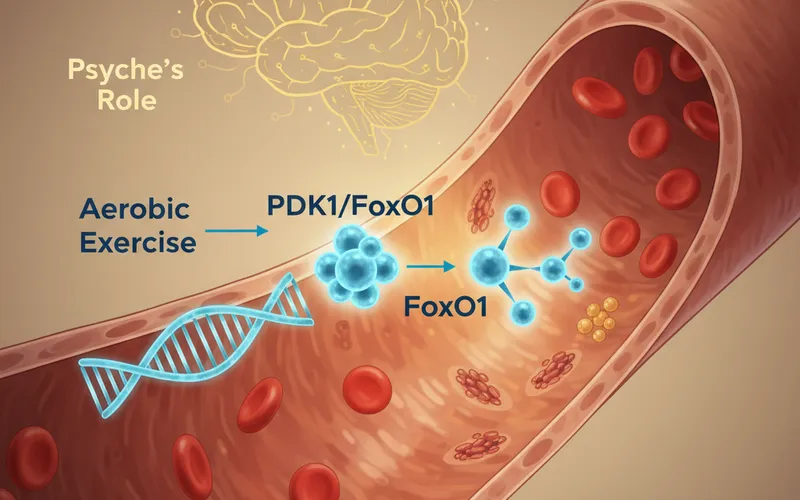
Die Ergebnisse waren deutlich: Bei den diabetischen Mäusen ohne Training zeigten sich nach drei Monaten verdickte Gefässwände und ein reduzierter Durchmesser der inneren Gefässöffnung der Halsschlagader. Diese vaskulären Schäden gingen einher mit erhöhten Entzündungsmarkern wie NLRP3 und NF-κB. Auf molekularer Ebene war bei diesen Mäusen die Expression von PDK1 erniedrigt, während FoxO1 hochreguliert war. Das ist wichtig, denn FoxO1 ist ein Schlüsselprotein, das an der diabetischen Gefässumstrukturierung beteiligt sein soll, wie frühere Studien des Teams zeigten. Das Beste aber: Bei den diabetischen Mäusen, die trainiert hatten, wurden all diese negativen Veränderungen – die verdickten Gefässwände, die Entzündungsmarker und die molekularen Ungleichgewichte – umgekehrt oder deutlich abgemildert. Die Studie legt nahe, dass aerobes Training eine schützende Funktion für die kranken Blutgefässe bei Diabetes hat, indem es den PDK1/FoxO1-Signalweg aktiviert.
Quelle: Xie X, Zhang Z, Yang X, Chu M (2026). Aerobic Exercise Ameliorates Adverse Vascular Remodeling in Diabetes via PDK1/FoxO1 Axis. FASEB Journal, 40(6). PubMed-ID: 41837839
2. Was heisst das wirklich? – Die kritische Einordnung
Diese Studie liefert spannende Einblicke in die molekularen Mechanismen, wie Bewegung die Gefässe bei Diabetes schützt. Doch bevor wir voreilige Schlüsse ziehen, lass uns die Ergebnisse gemeinsam einordnen.
Du bist kein Durchschnitt. Die Studie wurde an Mäusen durchgeführt. Obwohl Mausmodelle in der Forschung unerlässlich sind, um komplexe Krankheitsmechanismen zu verstehen, sind die Ergebnisse nicht 1:1 auf den Menschen übertragbar. Mäuse und Menschen sind physiologisch unterschiedlich, und was bei einer Maus funktioniert, muss nicht zwangsläufig in gleicher Weise beim Menschen wirken. Die Studie zeigt eine statistisch signifikante Veränderung auf molekularer Ebene, aber die klinische Bedeutung für dich als Mensch mit Diabetes muss in weiteren Studien am Menschen untersucht werden.
Was wurde wirklich gemessen? Die Forscher haben hier sogenannte Surrogatparameter gemessen: Veränderungen in der Gefässstruktur und der Expression von Proteinen und Entzündungsmarkern. Das sind wichtige Hinweise auf zugrunde liegende Krankheitsmechanismen. Allerdings sind das keine harten Endpunkte wie Herzinfarkte, Schlaganfälle oder die Lebensqualität. Die Studie legt nahe, dass aerobes Training diese Surrogatparameter positiv beeinflusst, was wiederum das Risiko für schwerwiegende vaskuläre Ereignisse senken könnte. Es ist ein Puzzleteil, das uns hilft, den Weg vom Training zum gesünderen Gefäss besser zu verstehen.
Methodische Stärken und Grenzen: Die Studie ist gut konzipiert und verwendet anerkannte Methoden zur Induktion von Diabetes und zur Analyse der Gefässveränderungen. Die molekularen Analysen sind detailliert und untermauern die Hypothese des PDK1/FoxO1-Signalwegs. Eine Stärke ist, dass die Intervention über drei Monate lief, was für Tiermodelle eine relevante Zeitspanne ist. Eine Grenze ist natürlich die Übertragbarkeit auf den Menschen und die Tatsache, dass es sich um Diabetes Typ 1 handelt, der sich in seinen Ursachen und Verläufen von Typ 2 unterscheidet. Zudem wurden keine anderen Lebensstilfaktoren ausser Bewegung kontrolliert, die ebenfalls einen Einfluss auf die Gefässgesundheit haben könnten.
Für wen gelten die Ergebnisse? Direkt gelten die Ergebnisse für diabetische Mäuse. Für dich als Mensch bedeuten sie, dass es einen weiteren plausiblen molekularen Mechanismus gibt, der die bekannten positiven Effekte von Bewegung bei Diabetes untermauert. Es ist ein starkes Argument dafür, dass Bewegung nicht nur den Blutzucker stabilisiert, sondern auch tiefgreifend in die Gefässbiologie eingreift.
Denkwerkzeug: Wenn du eine Studie liest, die an Tiermodellen durchgeführt wurde, frage dich: „Welche grundlegenden biologischen Prinzipien werden hier untersucht, und inwiefern könnten diese auch in meinem Körper eine Rolle spielen, auch wenn die direkte Übertragbarkeit noch nicht bewiesen ist?“
3. Der Geist im Körper – Die psychophysiologische Perspektive
Diese Studie konzentriert sich auf zelluläre und molekulare Prozesse, was für die mechanistische Forschung unerlässlich ist. Doch aus psychophysiologischer Sicht ist es wichtig, den Blick über die reinen Biomarker hinaus zu erweitern. Warum? Weil selbst die beste molekulare Intervention – sei es ein Medikament oder ein Trainingsprogramm – nur dann ihre volle Wirkung entfalten kann, wenn der Mensch dahinter mitspielt.
Betrachten wir das aerobe Training: Es ist gut denkbar, dass die Motivation, die Selbstwirksamkeitserwartung und die innere Überzeugung des Menschen, dass Training wirkt, einen erheblichen Einfluss auf die tatsächliche Durchführung und damit auf die physiologischen Effekte haben. Eine Maus wird zum Training gezwungen; ein Mensch entscheidet sich dafür – oder dagegen. Wer fest daran glaubt, dass Bewegung seine Gesundheit verbessert, wird mit höherer Wahrscheinlichkeit regelmässig und mit der nötigen Intensität trainieren. Diese positive Erwartungshaltung, der Glaube an die eigene Fähigkeit zur Veränderung, kann die physiologischen Effekte des Trainings sogar noch verstärken. Wir wissen, dass der Placebo-Effekt nicht nur bei Medikamenten, sondern auch bei Verhaltensinterventionen wie Sport eine Rolle spielt.
Ein weiterer Aspekt, der in solchen Studien oft nicht erfasst wird, ist Stress. Chronischer Stress ist ein bekannter Risikofaktor für Diabetes und vaskuläre Komplikationen. Er beeinflusst Entzündungsprozesse und den Hormonhaushalt, darunter auch die Cortisol-Achse, die wiederum den Stoffwechsel und die Gefässgesundheit beeinträchtigt. Aerobes Training ist nicht nur ein physiologischer Stimulus, sondern auch ein effektiver Stresskiller. Die Reduktion von psychischem Stress durch Bewegung könnte einen zusätzlichen, in dieser Studie nicht quantifizierten Beitrag zu den beobachteten positiven Gefässeffekten leisten. Ein entspannteres Nervensystem sendet andere Signale an die Blutgefässe als ein ständig überreiztes.
Die Aktivierung des PDK1/FoxO1-Signalwegs ist zwar ein rein physiologischer Befund, doch die Bedingungen, unter denen dieser Signalweg optimal funktioniert, sind multifaktoriell. Es ist plausibel anzunehmen, dass ein Mensch, der sich weniger gestresst fühlt, besser schläft und eine positive Einstellung zu seiner Gesundheit hat, auch auf molekularer Ebene «empfänglicher» für die positiven Effekte von Training ist. Dein Körper reagiert nicht nur auf die Bewegung selbst, sondern auch auf die Botschaften, die dein Geist ihm sendet.
4. Der grössere Kontext – Einordnung und Abhängigkeiten
Die vorliegende Studie ist ein wichtiges Puzzleteil in der Diabetesforschung, aber sie steht nicht allein. Bereits seit Langem ist bekannt, dass körperliche Aktivität eine Schlüsselrolle in der Prävention und Therapie von Diabetes und seinen Komplikationen spielt. Diese Studie vertieft unser Verständnis, wie Bewegung genau wirkt. Sie bestätigt, dass die positiven Effekte von Training weit über die reine Blutzuckerkontrolle hinausgehen und direkt in die Gefässbiologie eingreifen.
Die Finanzierung dieser Studie und mögliche Interessenkonflikte werden im Abstract nicht explizit genannt. Es ist jedoch üblich, dass solche Arbeiten von staatlichen Forschungsgeldern oder Universitätsbudgets finanziert werden. Da es sich um Grundlagenforschung handelt, sind direkte kommerzielle Interessen in der Regel weniger ausgeprägt als bei klinischen Studien zu Medikamenten.
Diese Studie ergänzt bestehende Erkenntnisse, die zeigen, dass Bewegung Entzündungsprozesse reduziert, die Endothelfunktion verbessert (also die Funktion der innersten Zellschicht der Blutgefässe) und die Insulinempfindlichkeit steigert. Sie liefert einen neuen molekularen Ansatzpunkt – den PDK1/FoxO1-Signalweg – der zukünftig möglicherweise für die Entwicklung neuer Therapieansätze genutzt werden könnte. Das ist der Reiz der Grundlagenforschung: Sie öffnet Türen zu neuen Ideen.
Was wurde nicht kontrolliert? Bei Tiermodellen lassen sich viele Faktoren kontrollieren, aber es bleiben immer Unterschiede zum komplexen menschlichen Leben. Die Ernährung der Mäuse war standardisiert, aber im menschlichen Alltag spielen Ernährungsgewohnheiten, Rauchen, Alkoholkonsum, soziale Unterstützung und viele andere Lebensstilfaktoren eine entscheidende Rolle für die Gefässgesundheit. Diese Faktoren wurden in dieser Studie nicht berücksichtigt, was aber auch nicht ihre Aufgabe war. Es ist wichtig zu verstehen, dass jede Studie einen spezifischen Fokus hat und nicht das gesamte Spektrum der Realität abbilden kann.
Denkwerkzeug: Frage dich: „Bestätigt diese Studie ein bereits bekanntes Prinzip und vertieft mein Verständnis dafür, oder stellt sie eine völlig neue Behauptung auf, die noch weiterer Bestätigung bedarf?“
5. Was heisst das für dich? – Fazit und Alltagsrelevanz
Was kannst du aus dieser Studie mitnehmen? Auch wenn sie an Mäusen durchgeführt wurde, gibt sie uns wichtige Hinweise und bestärkt uns in der Annahme, dass Bewegung ein mächtiges Werkzeug für deine Gefässgesundheit ist, besonders wenn du von Diabetes betroffen bist oder ein Risiko dafür hast.
- Bewegung ist mehr als Kalorienverbrauch: Die Studie zeigt, dass aerobes Training auf molekularer Ebene in die Gefässbiologie eingreift und schützende Mechanismen aktiviert. Es geht also nicht nur darum, Kalorien zu verbrennen oder den Blutzucker zu senken, sondern deine Blutgefässe aktiv vor Schäden zu bewahren.
- Kontinuität zählt: Die Mäuse trainierten drei Monate lang. Das unterstreicht die Bedeutung von regelmässiger, langfristiger Bewegung. Ein einmaliger Sprint bringt wenig; es ist die Gewohnheit, die zählt.
- Vaskuläre Gesundheit aktiv beeinflussen: Du hast die Möglichkeit, die Gesundheit deiner Gefässe positiv zu beeinflussen. Aerobes Training, das dein Herz-Kreislauf-System fordert – sei es zügiges Gehen, Joggen, Schwimmen oder Radfahren – ist eine Investition in deine Zukunft.
Was solltest du NICHT daraus schliessen? Diese Studie ist kein Freifahrtschein, andere Therapieansätze oder ärztliche Empfehlungen bei Diabetes zu ignorieren. Sie ersetzt keine medikamentöse Behandlung, falls diese notwendig ist. Sie ist auch kein Beweis dafür, dass nur ein bestimmter Signalweg für alle positiven Effekte von Training verantwortlich ist. Der menschliche Körper ist viel komplexer.
Für wen ist das besonders relevant? Diese Erkenntnisse sind besonders relevant für Menschen mit Diabetes oder einem hohen Risiko, daran zu erkranken. Aber auch für jeden, der seine allgemeine Gefässgesundheit fördern und Entzündungsprozessen vorbeugen möchte, ist die Botschaft klar: Bewegung ist essenziell. Für gesunde Menschen ist es eine Bestätigung, dass ein aktiver Lebensstil nicht nur das Wohlbefinden steigert, sondern auch tiefgreifend schützende Effekte auf zellulärer Ebene hat.
Erinnere dich daran: Dein Körper reagiert nicht nur auf das, was du tust, sondern auch auf das, was du denkst und fühlst. Die Überzeugung, dass Bewegung dir guttut, kann die physiologischen Effekte des Trainings verstärken. Nutze dieses Wissen und integriere Bewegung als festen Bestandteil in deinen Alltag. Dein Körper wird es dir danken – bis in die kleinsten Blutgefässe.
Welche Fragen bleiben offen? Es wäre spannend zu sehen, ob diese Mechanismen auch bei menschlichen Probanden nachweisbar sind und ob die gezielte Beeinflussung des PDK1/FoxO1-Signalwegs in Zukunft neue therapeutische Optionen für vaskuläre Komplikationen bei Diabetes eröffnen könnte.
Bleib neugierig auf die Wunder deines Körpers und die Kraft, die in dir steckt, um deine Gesundheit aktiv zu gestalten.
Wissenschaftliche Quelle
FASEB journal : official publication of the Federation of American Societies for Experimental Biology