Natürliche Helfer für gesundes Zahnfleisch: Was Naturprodukte bei Parodontitis wirklich bringen
Deine Zahngesundheit ist mehr als nur Zähneputzen. Eine aktuelle Meta-Analyse zeigt, wie Naturprodukte wie Kurkuma oder Omega-3 die Parodontitis-Behandlung unterstützen können – und warum dein Mindset dabei eine entscheidende Rolle spielt.
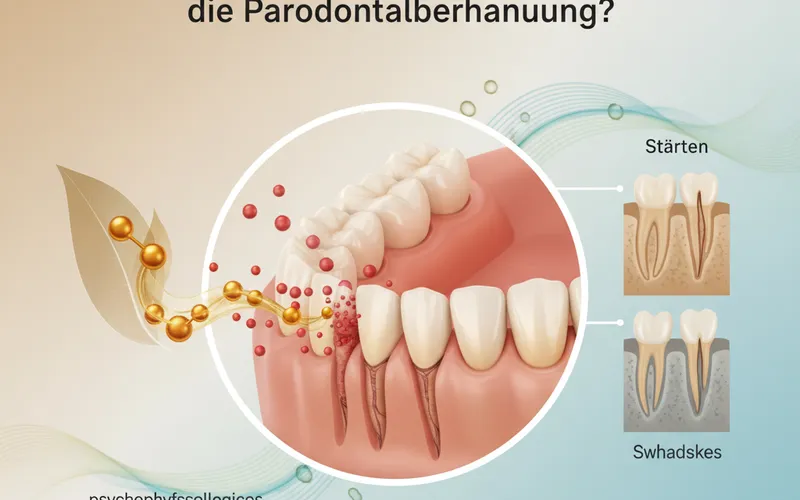
1. Die Studie – Was wurde untersucht und warum betrifft dich das?
Du kennst das Gefühl: Ein leichtes Ziehen am Zahnfleisch, ab und zu blutet es beim Zähneputzen. Vielleicht hast du schon mal von Parodontitis gehört – einer chronischen Entzündung, die nicht nur schmerzhaft ist, sondern im schlimmsten Fall zum Zahnverlust führen kann. Sie ist weit verbreitet, aber oft unterschätzt. Die Standardbehandlung ist eine professionelle Zahnreinigung, die sogenannte «Scaling and Root Planing» (SRP), bei der Beläge und Zahnstein gründlich entfernt werden. Doch reicht das immer aus, besonders in komplexeren Fällen oder bei Menschen, die anfälliger für solche Entzündungen sind?
Genau hier setzt eine umfassende systematische Übersicht und Meta-Analyse an, die von einem internationalen Forscherteam um de Molon RS und Kollegen durchgeführt wurde. Sie wollten wissen: Können natürliche Produkte, die oft als «Adjunctive Therapies» (begleitende Therapien) eingesetzt werden, die klinischen Ergebnisse nach einer nicht-chirurgischen Parodontitis-Behandlung verbessern? Der Gedanke dahinter ist, dass viele Naturstoffe antimikrobielle, entzündungshemmende, antioxidative oder immunmodulierende Eigenschaften besitzen könnten, die über die rein mechanische Reinigung hinausgehen.
Die Forschenden haben akribisch in sieben grossen wissenschaftlichen Datenbanken – darunter MEDLINE/PubMed, Scopus und Web of Science – bis Dezember 2025 (!) nach randomisierten, kontrollierten klinischen Studien gesucht. Das heisst, sie haben nur die Goldstandards der Studien ausgewählt, bei denen die Teilnehmer zufällig einer Behandlungs- oder einer Kontrollgruppe zugeteilt wurden. Insgesamt wurden 90 Studien für die qualitative Analyse herangezogen und 33 davon konnten in die Meta-Analyse, eine statistische Zusammenführung der Ergebnisse, integriert werden. Die untersuchten Interventionen waren vielfältig und reichten von pflanzlichen Extrakten wie Kurkuma, Resveratrol, Propolis, Aloe vera und Grüntee-Katechinen bis hin zu Omega-3-Fettsäuren. Diese wurden entweder lokal (z.B. als Mundspülung oder Gel), systemisch (als Tablette) oder über Spülungen verabreicht.
Die zentralen Ergebnisse der Meta-Analyse zeigen, dass die begleitende Anwendung natürlicher Produkte die Reduktion der Sondierungstiefe (PPD) und den Gewinn an klinischem Attachment-Level (CAL) im Vergleich zur alleinigen SRP signifikant verbesserte. Auch die Zahnfleischentzündung und Blutungswerte zeigten zusätzliche positive Veränderungen. Kurz gesagt: Natürliche Produkte scheinen laut dieser Analyse messbare Vorteile bei der Behandlung von Parodontitis zu bieten. Allerdings betonen die Autoren auch, dass eine «erhebliche Heterogenität» zwischen den Studien beobachtet wurde, was bedeutet, dass die Ergebnisse nicht immer einheitlich waren.
Quelle: de Molon RS, Rodrigues JVS, de Avila ED, da Silva Barbirato D, Franco Moura JP, Monteiro GV, Alves MV, Theodoro LH, Vernal R, Teughels W. (2026). Do Adjunctive Therapies with Natural Products Improve Periodontal Clinical Parameters After Non-Surgical Treatment? A Systematic Review and Meta-Analysis. Int J Mol Sci, 27(5):2394. PubMed-ID: 41828611
2. Was heisst das wirklich? – Die kritische Einordnung
Diese Studie ist ein Paradebeispiel dafür, wie wissenschaftliche Evidenz gesammelt und bewertet wird. Eine systematische Übersicht und Meta-Analyse steht in der Hierarchie der Evidenz ganz weit oben, da sie die Ergebnisse vieler Einzelstudien zusammenfasst und so eine robuste Aussagekraft erlangen kann. Die Forschenden haben hier also eine enorme Menge an Daten gesichtet und analysiert, um dir eine fundierte Antwort zu liefern.
Die Feststellung, dass natürliche Produkte die Reduktion der Sondierungstiefe (PPD) und den Gewinn an klinischem Attachment-Level (CAL) signifikant verbessern, ist vielversprechend. PPD und CAL sind «harte» klinische Endpunkte in der Parodontologie, die direkt mit dem Fortschreiten der Erkrankung und dem Zustand des Zahnhalteapparats zusammenhängen. Eine Verringerung der Taschen und ein Gewinn an Attachment bedeuten, dass das Zahnfleisch wieder fester am Zahn anliegt und die Entzündung zurückgeht – das sind also relevante Verbesserungen für deine Zahngesundheit.
Allerdings ist die erwähnte «erhebliche Heterogenität» ein wichtiger Punkt. Sie bedeutet, dass die einzelnen Studien, die in die Analyse eingeflossen sind, sich in ihren Methoden, den verwendeten Naturprodukten, deren Dosierung, der Anwendungsdauer und den Patientenpopulationen stark unterschieden haben. Das macht es schwierig, eine pauschale Empfehlung für ein bestimmtes Naturprodukt oder eine bestimmte Anwendungsform zu geben. Es ist eher eine Bestätigung, dass die Kategorie «natürliche Produkte» als Ganzes Potenzial hat.
Du bist kein Durchschnitt. Die Studienergebnisse sind Durchschnittswerte über viele Menschen hinweg. Was für den einen funktioniert, muss für dich nicht zwangsläufig die gleiche Wirkung haben. Die Ergebnisse sind statistisch signifikant, aber die Frage ist: Ist das auch klinisch bedeutsam für dich? Eine geringfügige Verbesserung, die statistisch messbar ist, spürst du vielleicht im Alltag kaum. Dein individueller Fall, deine genetische Veranlagung, dein allgemeiner Gesundheitszustand und dein Lebensstil spielen eine grosse Rolle.
Denkwerkzeug: Wenn du überlegst, ein Naturprodukt als Ergänzung zu deiner Parodontitis-Behandlung zu nutzen, frage dich: Habe ich alle anderen, etablierten Massnahmen (wie gründliche Mundhygiene, regelmässige professionelle Zahnreinigung) bereits optimal umgesetzt, und suche ich nun nach einer zusätzlichen Unterstützung, oder erwarte ich, dass ein Naturprodukt eine mangelnde Basisversorgung ersetzen kann?
Die Studie konzentriert sich auf die Wirksamkeit der Produkte, aber die Frage bleibt: Was passiert in dir, während du diese Produkte anwendest?
3. Der Geist im Körper – Die psychophysiologische Perspektive
Hier kommen wir zum Kern dessen, was wir oft übersehen: Die psychophysiologische Dimension. Ja, die Naturprodukte haben potenziell antimikrobielle oder entzündungshemmende Eigenschaften. Aber was ist mit deiner Erwartungshaltung und dem Placebo-Effekt?
- Erwartung und Selbstwirksamkeit: Wenn du überzeugt bist, dass das «natürliche» Mittel, das du verwendest, dir helfen wird, kann diese Überzeugung allein schon physiologische Veränderungen auslösen. Dein Körper reagiert auf deine Gedanken. Diese positive Erwartung kann Stress reduzieren, dein Immunsystem subtil beeinflussen und dich vielleicht sogar dazu motivieren, deine Mundhygiene noch gewissenhafter zu betreiben, weil du «aktiv etwas tust».
- Stress und Entzündung: Chronischer Stress ist ein bekannter Faktor, der Entzündungsprozesse im Körper fördert und das Immunsystem schwächt. Parodontitis ist eine chronische Entzündung. Wenn die Anwendung eines Naturprodukts, sei es eine Mundspülung oder eine Tablette, als Teil eines «sich-um-sich-selbst-kümmern»-Rituals empfunden wird, kann das Stress reduzieren. Und ein reduziertes Stresslevel kann die Entzündung im Zahnfleisch positiv beeinflussen, unabhängig von der direkten Wirkung des Produkts.
- Nocebo-Effekt im Umkehrschluss: Stell dir vor, du hättest eine negative Einstellung zu «alternativen» Therapien. Selbst wenn das Produkt objektiv wirken würde, könnte deine Skepsis die Wirkung mindern. Das Gegenteil ist hier der Fall: Die positive Konnotation von «Naturprodukten» kann eine heilsame Wirkung entfalten, die über die reine Biochemie hinausgeht.
- Hawthorne-Effekt: Die Studienteilnehmer wussten, dass sie ein «aktives» Produkt erhalten. Allein das Wissen, an einer Studie teilzunehmen und beobachtet zu werden, kann dazu führen, dass Menschen ihr Verhalten ändern – in diesem Fall vielleicht ihre Mundhygiene verbessern oder genauer auf Symptome achten.
Es ist gut denkbar, dass ein Teil der beobachteten positiven Effekte nicht nur auf die biochemische Wirkung der Naturprodukte zurückzuführen ist, sondern auch auf die psychophysiologischen Reaktionen der Probanden. Dies schmälert nicht unbedingt die Wirksamkeit, sondern erweitert unser Verständnis, wie Heilung funktioniert: Es ist immer ein Zusammenspiel von Substanz, Körper und Geist.
Diese Perspektive zeigt uns, dass deine innere Haltung und dein Umgang mit Stress nicht nur deinen Darm oder dein Herz beeinflussen, sondern auch dein Zahnfleisch und die Effektivität deiner Parodontitis-Behandlung.
4. Der grössere Kontext – Einordnung und Abhängigkeiten
Diese Meta-Analyse ist ein wichtiges Puzzleteil in der Forschung zur Parodontitis. Sie bestätigt, was viele Ärzte und Patienten intuitiv vermuten: Es gibt mehr als nur die mechanische Reinigung. Die Idee, den Körper bei der Heilung zu unterstützen – sei es durch entzündungshemmende oder immunmodulierende Substanzen –, ist nicht neu, aber diese Studie liefert dafür eine breitere wissenschaftliche Basis.
Die Studie wurde von einem internationalen Konsortium von Universitäten aus Brasilien, Chile, Belgien und Thailand durchgeführt. Das ist ein Zeichen für eine breite wissenschaftliche Zusammenarbeit und Expertise. Die Finanzierung oder mögliche Interessenkonflikte werden im Abstract nicht explizit genannt, was bei einer so breit angelegten Meta-Analyse oft schwierig ist, da die einzelnen Studien unterschiedliche Finanzierungsquellen hatten. Im Allgemeinen ist die Forschung an Naturprodukten oft weniger von grossen Pharmakonzernen finanziert als die Entwicklung patentierbarer Medikamente, was die Objektivität tendenziell erhöhen kann.
Es ist wichtig zu verstehen, dass diese Studie nicht «die eine» Wunderlösung präsentiert. Sie zeigt ein Potenzial für eine ganze Klasse von Substanzen. Was nicht kontrolliert wurde, ist die genaue Zusammensetzung der Ernährung der Probanden ausserhalb der spezifischen Interventionen. Lebensstilfaktoren wie Rauchen, Alkoholkonsum, Stresslevel und die allgemeine Ernährungsqualität spielen eine enorme Rolle bei der Entstehung und dem Verlauf von Parodontitis. Eine Studie kann nicht alles kontrollieren, aber diese Faktoren sind für dich im Alltag entscheidend.
Denkwerkzeug: Bevor du dich auf ein bestimmtes Naturprodukt festlegst, frage dich: Habe ich bereits alle anderen beeinflussbaren Faktoren wie Ernährung, Stressmanagement, Schlaf und Rauchverhalten optimiert? Oder erwarte ich von einem Produkt, dass es einen ungesunden Lebensstil ausgleicht?
Diese Studie untermauert die Bedeutung eines ganzheitlichen Ansatzes, bei dem die Mundgesundheit nicht isoliert betrachtet wird, sondern als Teil des gesamten Körpergeschehens.
5. Was heisst das für dich? – Fazit und Alltagsrelevanz
Was kannst du aus dieser umfangreichen Analyse für dich mitnehmen? Hier sind 2-3 konkrete Erkenntnisse:
- Natürliche Unterstützung ist eine Option: Wenn du unter Parodontitis leidest und die Standardbehandlung durch deinen Zahnarzt erhältst, ist es durchaus sinnvoll, die Möglichkeit der ergänzenden Anwendung von Naturprodukten zu besprechen. Substanzen wie Kurkuma, Omega-3-Fettsäuren oder Propolis können die Heilung unterstützen und die Entzündung weiter reduzieren. Es geht darum, die Therapie zu ergänzen, nicht zu ersetzen.
- Ganzheitlicher Ansatz zählt: Die psychophysiologische Perspektive lehrt uns, dass deine Einstellung, dein Stresslevel und dein allgemeines Wohlbefinden einen erheblichen Einfluss auf die Wirksamkeit jeder Behandlung haben. Wenn du mit einer positiven Erwartung und dem Gefühl, aktiv etwas für deine Gesundheit zu tun, an die Sache herangehst, schaffst du ein optimales Umfeld für die Heilung – auch im Mund.
- Keine Einheitslösung: Da die Studie eine hohe Heterogenität aufwies, gibt es kein «das eine» Naturprodukt, das für alle passt. Sprich mit deinem Zahnarzt oder einem erfahrenen Therapeuten darüber, welches Produkt in welcher Form für deine individuelle Situation am besten geeignet sein könnte.
Was solltest du NICHT daraus schliessen? Bitte interpretiere diese Ergebnisse nicht so, dass du auf die professionelle zahnärztliche Behandlung verzichten kannst. Die mechanische Reinigung (SRP) bleibt der Grundpfeiler der Parodontitis-Therapie. Naturprodukte sind als Ergänzung gedacht, nicht als Ersatz.
Besonders relevant ist das für dich, wenn du zu den Menschen gehörst, die trotz guter Mundhygiene und regelmässiger Zahnarztbesuche immer wieder mit Zahnfleischentzündungen zu kämpfen haben. Auch wenn du einen ganzheitlichen Ansatz bevorzugst und nach natürlichen Wegen suchst, deinen Körper zu unterstützen, bietet diese Studie spannende Anhaltspunkte.
Der psychophysiologische Gedanke zum Schluss: Dein Zahnfleisch ist nicht nur ein Stück Gewebe in deinem Mund. Es ist ein Spiegel deines gesamten Körperzustandes – deiner Ernährung, deines Stresslevels, deiner Immunantwort und sogar deiner mentalen Verfassung. Wenn du deine Zahngesundheit verbessern willst, schaue nicht nur auf die Zähne, sondern auf den ganzen Menschen. Dein Körper reagiert nicht nur auf das, was du isst und wie du dich bewegst, sondern auch auf das, was du denkst und fühlst. Diese Studie erinnert uns daran, dass wir viele Hebel in der Hand haben, um unsere Gesundheit positiv zu beeinflussen.
Bleib neugierig, sprich mit deinen Fachpersonen und vertraue auf die Fähigkeit deines Körpers zur Selbstheilung, wenn du ihm die richtigen Impulse gibst.