Radix Bupleuri bei Fettleber und Schlafstörungen: Was die Forschung sagt
Eine Studie beleuchtet, wie die traditionelle chinesische Heilpflanze Radix Bupleuri (Chai Hu) bei Fettleber und gestörtem Schlaf-Wach-Rhythmus wirken könnte. Erfahre, welche Mechanismen dahinterstecken und was das für deine Lebergesundheit bedeutet – durch die psychophysiologische Brille betrachtet.
1. Die Studie – Was wurde untersucht und warum betrifft dich das?
Stell dir vor, dein Körper ist wie ein Orchester, in dem jedes Instrument perfekt aufeinander abgestimmt sein muss. Wenn aber ein Instrument – zum Beispiel deine Leber – aus dem Takt gerät und gleichzeitig dein Dirigent – dein Schlaf-Wach-Rhythmus – unregelmässig wird, dann kann das ganze Stück ins Stocken geraten. Genau das passiert bei vielen Menschen, die unter einer Fettleber leiden, einer sogenannten MASLD (Metabolic Dysfunction-Associated Steatotic Liver Disease), oft begleitet von gestörten Schlafmustern.
Eine Gruppe von Forschenden der Shanxi University in China hat sich genau diesem Problem gewidmet. Sie wollten herausfinden, ob eine traditionelle chinesische Heilpflanze namens Radix Bupleuri (auch bekannt als Chai Hu) helfen kann, wenn sowohl eine Fettleber als auch gestörte zirkadiane Rhythmen vorliegen. Diese Kombination, so die Forschenden, ist eine Hauptursache für die steigende Verbreitung von MASLD, und wirksame Therapien sind rar.
Für ihre Studie haben die Wissenschaftler Ratten mit einer Kombination aus fettreicher Ernährung und chronischer Störung des Schlaf-Wach-Rhythmus behandelt. Stell dir vor, diese Ratten lebten in einer Art permanentem Jetlag: Ihr Licht-Dunkel-Zyklus wurde alle 48 Stunden um 8 Stunden verschoben. Das ist ein drastischer Eingriff, der die menschliche Realität von Nachtschichtarbeit oder langem, unregelmässigem Schlaf nachahmt. Nach dieser Vorbehandlung erhielten die Ratten sechs Wochen lang orale Dosen von Radix Bupleuri-Extrakten unterschiedlicher Polarität, oder sie bekamen bekannte Medikamente wie Bicyclol und Melatonin als positive Kontrolle.
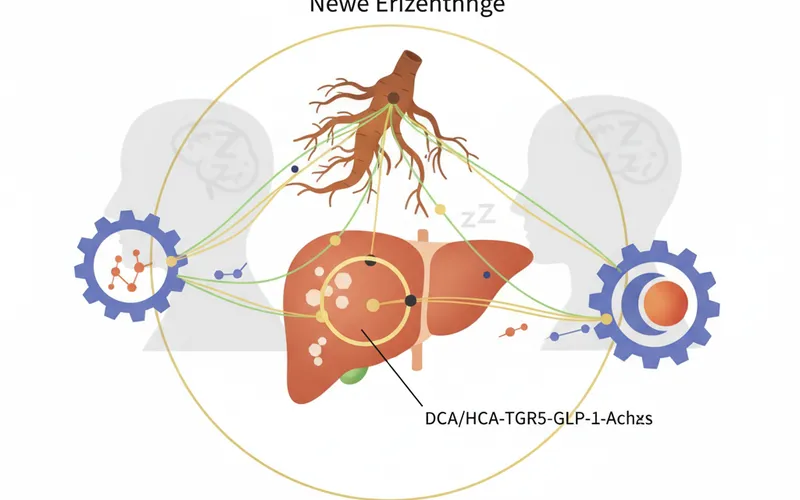
Die Forschenden massen dann eine ganze Reihe von Parametern: Körpergewicht, Leber- und Fettmasse, Blutzuckerwerte, Blutfettwerte und Leberfunktionsmarker. Auch die Bewegungsaktivität der Ratten wurde erfasst. Um die Mechanismen auf molekularer Ebene zu verstehen, nutzten sie hochmoderne Methoden wie Transkriptomik (die Messung der Genaktivität in der Leber) und Metabolomik (die Analyse aller Stoffwechselprodukte). Die zentralen Ergebnisse zeigten, dass die Behandlung mit Radix Bupleuri, insbesondere eine hochpolare Fraktion des Extrakts (BH), das Körpergewicht der Tiere signifikant reduzierte und weitere positive Effekte auf die Lebergesundheit hatte. Die Studie legt nahe, dass diese Wirkung über einen komplexen Signalweg, die sogenannte DCA/HCA-TGR5-GLP-1-Achse, vermittelt wird.
Quelle: Wang Y, Zhou T, Bai S, Wang S, Wang Y, Wang W, Zhou Y, Tian J, Qin X, Gao X. (2026). Integrated metabolomic and transcriptomic analyses reveal Radix Bupleuri alleviates MASLD induced by a high-fat diet and circadian disruption via the DCA/HCA-TGR5-GLP-1 axis. Journal of Ethnopharmacology, 363. PubMed-ID: 41771387
2. Was heisst das wirklich? – Die kritische Einordnung
Die Ergebnisse klingen vielversprechend, aber lass uns genauer hinschauen, was sie für dich bedeuten. Die Studie wurde an Ratten durchgeführt, und das ist ein wichtiger Punkt. Tierstudien sind ein unverzichtbarer erster Schritt, um potenzielle Wirkstoffe und Mechanismen zu identifizieren. Sie erlauben es uns, Faktoren zu kontrollieren, die bei Menschen unmöglich zu isolieren wären – wie zum Beispiel einen über Wochen konstant gestörten Schlaf-Wach-Rhythmus. Aber der Sprung vom Tiermodell zum Menschen ist gross. Was bei Ratten funktioniert, muss nicht zwangsläufig in gleicher Weise beim Menschen wirken, sei es aufgrund unterschiedlicher Stoffwechselwege oder anderer Reaktionen auf die Wirkstoffe.
Ein starker Punkt der Studie ist die Kombination von Hochfett-Diät und zirkadianer Rhythmusstörung zur Induktion der Fettleber. Das bildet die menschliche Realität, wo ungesunde Ernährung und Schlafmangel oft Hand in Hand gehen, deutlich besser ab als Studien, die nur einen Faktor betrachten. Auch die umfassenden molekularen Analysen (Transkriptomik und Metabolomik) sind methodisch anspruchsvoll und liefern tiefe Einblicke in die möglichen Wirkmechanismen. Das ist weit mehr als nur eine Beobachtung von Symptomen.
Allerdings handelt es sich um eine präklinische Studie. Es fehlen noch Daten zur Sicherheit, optimalen Dosierung und Wirksamkeit von Radix Bupleuri beim Menschen, insbesondere bei einer so komplexen Erkrankung wie MASLD in Verbindung mit Schlafstörungen. Die gemessenen Endpunkte wie Körpergewicht, Leberfett und Blutzucker sind zwar relevant, aber es sind immer noch Surrogatparameter. Ob eine Verbesserung dieser Werte langfristig zu einer besseren Lebensqualität oder einer geringeren Sterblichkeit bei Menschen führt, muss in klinischen Studien gezeigt werden.
Dein Denkwerkzeug: Wenn du von einer neuen vielversprechenden Substanz liest, frage dich immer: Wurde diese Studie an Menschen oder an Tieren durchgeführt? Und falls an Tieren, wie nah sind die Bedingungen an meiner eigenen Lebensrealität?
3. Der Geist im Körper – Die psychophysiologische Perspektive
Hier kommen wir zum Kernstück unserer Betrachtung. Diese Studie ist ein Paradebeispiel dafür, wie eng Psyche und Körper miteinander verwoben sind, auch wenn die Forschenden das nicht explizit als psychophysiologie bezeichnen. Der entscheidende Auslöser für die Fettleber und die Stoffwechselstörungen in dieser Studie war nicht nur die fettreiche Ernährung, sondern auch die chronische Störung des zirkadianen Rhythmus. Und was ist ein gestörter zirkadianer Rhythmus anderes als ein massiver Stressor für den gesamten Organismus?
Schlafmangel und gestörte Schlaf-Wach-Zyklen wirken sich tiefgreifend auf unsere Psyche aus: Sie beeinflussen Stimmung, Konzentrationsfähigkeit, Stressresistenz und Entscheidungsfindung. Gleichzeitig hat dieser psychische Stress direkte physiologische Auswirkungen. Er aktiviert die Stressachsen, verändert die Hormonproduktion (z.B. Cortisol), beeinflusst den Appetit und die Verdauung, und kann Entzündungsprozesse im Körper anfachen. Es ist gut denkbar, dass die Ratten in der Studie nicht nur physiologisch, sondern auch psychisch unter dem permanenten Jetlag litten, was ihre Anfälligkeit für die Fettleber zusätzlich verstärkte.
Wenn Radix Bupleuri hier nun positive Effekte zeigt, ist es wichtig zu überlegen, ob diese Wirkung nicht nur auf direkten Stoffwechselwegen beruht, sondern auch indirekt über eine Stabilisierung des Nervensystems oder eine Reduktion des Stresslevels. Traditionelle chinesische Medizin (TCM) betrachtet den Menschen immer als Ganzes, und viele ihrer Kräuter sind dafür bekannt, auf mehreren Ebenen gleichzeitig zu wirken – sowohl auf physische Symptome als auch auf das emotionale Gleichgewicht. Es wäre spannend zu untersuchen, ob Radix Bupleuri auch die Stresshormone der Ratten beeinflusst oder ihr allgemeines Wohlbefinden verbessert hat, was wiederum die physiologischen Effekte verstärken könnte.
Betrachte es so: Dein Körper reagiert nicht nur auf das, was du isst, sondern auch darauf, wie du schläfst und wie gestresst du bist. Eine Pflanze, die hier ansetzt, könnte nicht nur die Symptome lindern, sondern auch die zugrunde liegende psychophysiologische Dysbalance adressieren.
4. Der grössere Kontext – Einordnung und Abhängigkeiten
Diese Studie reiht sich in eine wachsende Zahl von Forschungsarbeiten ein, die die Bedeutung des zirkadianen Rhythmus für unsere Gesundheit betonen. Es ist längst kein Geheimnis mehr, dass Schichtarbeit, unregelmässige Schlafzeiten und zu viel Bildschirmzeit am Abend nicht nur müde machen, sondern auch ernsthafte Stoffwechselstörungen wie Fettleber und Diabetes fördern können. Die Studie bestätigt diese Zusammenhänge auf eindrückliche Weise im Tiermodell und bietet gleichzeitig einen potenziellen Therapieansatz aus der Pflanzenwelt.
Die Finanzierung der Studie und die Autoren stammen von der Shanxi University in China, einem Land mit einer langen Tradition in der Erforschung und Anwendung pflanzlicher Medizin. Es ist daher nicht überraschend, dass sie sich auf ein traditionelles chinesisches Arzneimittel konzentrieren. Offen ausgewiesene Interessenkonflikte, die die Glaubwürdigkeit der Ergebnisse schmälern könnten, sind im Abstract nicht ersichtlich. Die Expertise in traditioneller chinesischer Medizin ist hier als Stärke zu werten, da sie die Untersuchung von Pflanzen ermöglicht, die in westlichen Studien möglicherweise übersehen würden.
Was in dieser Studie nicht kontrolliert wurde, sind andere wichtige Lebensstilfaktoren, die bei Menschen eine Rolle spielen. Die Ratten wurden zwar mit einer Hochfett-Diät gefüttert, aber ihr gesamtes Umfeld war hochstandardisiert. Beim Menschen spielen Faktoren wie Bewegungsmangel, chronischer Stress durch Arbeit oder soziale Umstände, psychische Belastungen und das individuelle Mikrobiom eine zusätzliche Rolle bei der Entstehung und dem Verlauf einer Fettleber. All diese Faktoren können die Wirksamkeit einer Therapie beeinflussen und müssen in zukünftigen Humanstudien berücksichtigt werden.
Dein Denkwerkzeug: Frage dich bei jeder neuen Studie: Welche anderen Aspekte meines Lebensstils – ausser dem direkt untersuchten – könnten die Ergebnisse der Studie beeinflussen oder für mich besonders relevant machen?
5. Was heisst das für dich? – Fazit und Alltagsrelevanz
Was kannst du aus dieser spannenden Rattenstudie für dein eigenes Leben mitnehmen? Auch wenn wir noch keine direkte Empfehlung für die Einnahme von Radix Bupleuri geben können, sind die indirekten Botschaften klar und wichtig:
- Priorisiere deinen Schlaf-Wach-Rhythmus: Die Studie unterstreicht einmal mehr, wie fundamental wichtig ein regelmässiger Schlaf-Wach-Rhythmus für deine Stoffwechselgesundheit ist. Versuche, feste Schlafenszeiten einzuhalten, auch am Wochenende. Dunkle dein Schlafzimmer gut ab und vermeide Blaulicht vor dem Schlafengehen.
- Achte auf deine Leber: Eine fettreiche Ernährung in Kombination mit Schlafmangel ist ein gefährlicher Cocktail für deine Leber. Eine ausgewogene Ernährung, reich an Gemüse, Obst und guten Fetten, ist hier der Grundstein.
- Betrachte Pflanzen als potenzielle Helfer: Die traditionelle chinesische Medizin hat einen riesigen Schatz an Pflanzenwissen. Studien wie diese zeigen, dass es sich lohnt, diese Pflanzen wissenschaftlich zu erforschen. Radix Bupleuri könnte in Zukunft eine Rolle spielen, aber erst nach weiteren Humanstudien.
Was du NICHT daraus schliessen solltest: Diese Studie ist kein Freifahrtschein, um eine ungesunde Lebensweise mit Radix Bupleuri zu kompensieren. Auch wenn die Pflanze positive Effekte zeigte, ist sie kein Wundermittel, das die Notwendigkeit einer gesunden Ernährung und eines guten Schlafmanagements ersetzt. Sie ist auch kein Ersatz für eine ärztliche Behandlung bei einer diagnostizierten Fettleber.
Diese Erkenntnisse sind besonders relevant für Menschen, die unter unregelmässigen Arbeitszeiten leiden, wie Schichtarbeiter, oder für diejenigen, die trotz gesunder Ernährungsproben weiterhin mit ihrer Lebergesundheit kämpfen. Für Menschen mit einem bereits gesunden Lebensstil und ohne Leberprobleme ist die direkte Relevanz geringer, aber sie erinnert uns alle an die Bedeutung des Schlafes.
Der psychophysiologische Gedanke zum Schluss: Dein Körper reagiert nicht nur auf die Chemie, die du ihm zuführst, sondern auch auf die Ordnung – oder Unordnung – in deinem Leben. Ein gestörter Tag-Nacht-Rhythmus ist purer Stress für deine Zellen und deine Seele. Die Suche nach pflanzlichen Helfern wie Radix Bupleuri ist spannend, aber die grösste Heilkraft liegt oft darin, das natürliche Gleichgewicht von Körper und Geist wiederherzustellen. Was könnte besser für deine Leber und dein Wohlbefinden sein, als ihr die Ruhe und den Rhythmus zu geben, den sie braucht?
Welche Fragen bleiben offen? Es wäre faszinierend zu sehen, ob Radix Bupleuri auch die subjektive Schlafqualität bei Menschen verbessert und wie sich das auf ihre psychische Verfassung auswirkt. Die Reise der Wissenschaft geht weiter, und wir bleiben neugierig, was die Zukunft bringt.