Probiotika für Legehennen: Ein Blick auf Darm, Knochen und Eierqualität
Wie Probiotika die Gesundheit von Legehennen beeinflussen und was das für uns bedeutet: Eine aktuelle Studie beleuchtet den Zusammenhang zwischen Darmgesundheit, Knochenstärke und Eierqualität bei Hühnern. Was können wir von diesen Erkenntnissen lernen?
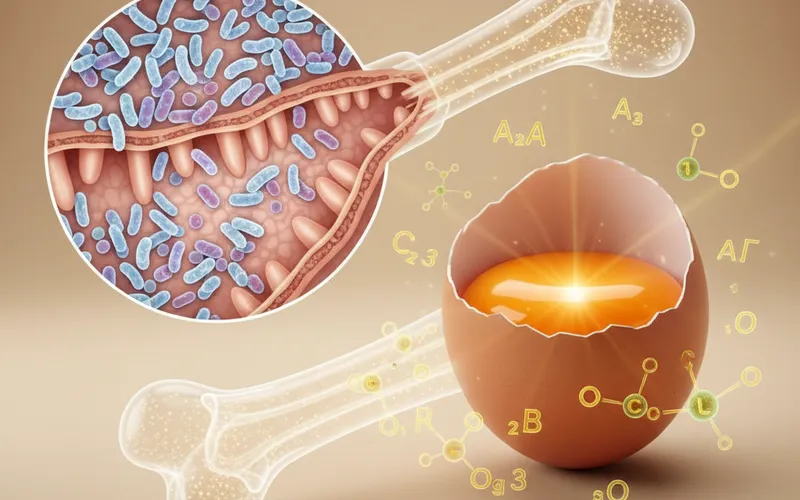
Die Studie – Was wurde untersucht und warum betrifft dich das?
Stell dir vor, du könntest die Qualität eines Produkts, das du täglich konsumierst, massgeblich verbessern – und das, indem du die Gesundheit des „Produzenten“ stärkst. Für viele von uns sind Eier ein fester Bestandteil der Ernährung. Doch was beeinflusst eigentlich die Qualität dieser Eier, von der Stärke der Schale bis zum Nährwert des Inhalts? Eine neue Studie aus China hat genau das bei Legehennen untersucht und dabei eine spannende Rolle für Probiotika entdeckt.
Ein Forschungsteam um J. Zhu und Y. Wang von der Sichuan Agricultural University in China wollte herausfinden, wie die Zugabe von Probiotika zum Futter von Legehennen deren Darmgesundheit, Knochenstärke und letztlich die Eierqualität beeinflusst. Die Wissenschaftler gingen dabei sehr detailliert vor und untersuchten die Effekte in verschiedenen Lebensphasen der Hühner, von der Aufzucht bis zum späten Legealter.
Für die Studie wurden 240 Lohmann Brown Legehennen ab dem ersten Lebenstag über einen Zeitraum von 52 Wochen beobachtet. Die Hühner wurden in vier Gruppen eingeteilt: Eine Gruppe erhielt kontinuierlich Probiotika, eine nur in der frühen Lebensphase, eine weitere nur in der späten Legephase und eine Kontrollgruppe erhielt gar keine Probiotika. Das verwendete Probiotikum war eine Mischung aus Bacillus subtilis, Milchsäurebakterien und Hefe – also eine Kombination, die man auch aus humanen Probiotika kennt. Gemessen wurden dabei nicht nur die offensichtlichen Faktoren wie Eierproduktion und Eierqualität (Schalenbruch, Schalenstärke, Dotterhöhe), sondern auch der Kalzium- und Phosphorstoffwechsel, Knochenmerkmale und sogar die Genexpression von Mineraltransport- und Knochenstoffwechsel-Genen. Das Studiendesign war also sehr umfassend und darauf ausgelegt, die Effekte der Probiotika auf verschiedenen Ebenen zu erfassen.
Die zentralen Ergebnisse waren beeindruckend: In der Hochphase der Legeleistung zeigten Hühner, die Probiotika erhielten, höhere Eierproduktionsraten und weniger Schalenbruch (P < 0.05). In der späten Legeperiode reduzierte die kontinuierliche Probiotika-Gabe den Schalenbruch noch weiter und sorgte für eine allgemein höhere Legeleistung im Vergleich zu den Kontrollhühnern (P < 0.05). Auch die Eierqualität profitierte: Die Schalenstärke und Dotterhöhe nahmen zu, obwohl die Schalendicke leicht abnahm (P < 0.05). Die Probiotika hatten zudem deutliche Auswirkungen auf die Knochenmerkmale und den Mineralstoffwechsel, was auf eine verbesserte Kalzium- und Phosphoraufnahme hindeutet.
Quelle: Zhu J, Hu Z, Xu H, Chen J, Ji X, Wang X, Guo L, Zhang G, Yang T, Yang S, Wang Y (2026). Stage-dependent effects of composite probiotics on gut mineral transport, Skeletal health, and egg quality in laying hens. Poultry Science, 105(6):106679. PubMed-ID: 41833116
Diese Ergebnisse werfen natürlich die Frage auf, was das für uns Menschen bedeuten könnte und welche Mechanismen dahinterstecken.
Was heisst das wirklich? – Die kritische Einordnung
Diese Studie liefert faszinierende Einblicke in die komplexen Zusammenhänge zwischen Darm, Knochen und der Produktivität bei Hühnern. Wenn du dir die Ergebnisse ansiehst, fällt auf, dass die Probiotika nicht nur die Legeleistung und die Eierqualität verbessern, sondern auch den Mineralstoffwechsel und die Knochengesundheit der Tiere positiv beeinflussen. Das ist wichtig, denn eine hohe Legeleistung geht oft zulasten der Knochenstärke, da Kalzium für die Eierschalenproduktion direkt aus den Knochen mobilisiert wird.
Es ist entscheidend zu verstehen, dass wir hier von statistisch signifikanten Ergebnissen sprechen (P < 0.05), was bedeutet, dass die beobachteten Effekte mit hoher Wahrscheinlichkeit nicht zufällig sind. Für die Geflügelindustrie sind diese Ergebnisse klinisch bedeutsam, da sie direkt zu einer besseren Tiergesundheit und einer höheren Produktivität führen können. Die Messung von harten Endpunkten wie Eierproduktionsraten, Schalenbruch und Knochenmerkmalen ist hier ein grosser Pluspunkt der Studie. Auch die detaillierte Analyse auf genetischer Ebene, die den Mineraltransport und Knochenstoffwechsel beleuchtet, stärkt die Aussagekraft.
Ein methodischer Vorteil ist das Design, das die Probiotika-Gabe über verschiedene Lebensphasen hinweg untersucht hat. So konnte gezeigt werden, dass eine kontinuierliche Gabe die besten Ergebnisse liefert, was auf langfristige Effekte hindeutet. Die Stichprobengrösse von 240 Hühnern ist für Tierstudien ebenfalls solide.
Dennoch gibt es auch Grenzen. Erstens handelt es sich um eine Tierstudie. Auch wenn wir grundlegende physiologische Mechanismen teilen, können wir die Ergebnisse nicht eins zu eins auf den Menschen übertragen. Was bei Hühnern funktioniert, muss nicht zwangsläufig in gleicher Weise bei uns wirken. Zweitens wurde hier ein spezifisches Probiotikum verwendet. Ob andere Probiotika-Mischungen oder einzelne Stämme die gleichen Effekte hätten, bleibt offen. Und schliesslich wurde die Studie in einem kontrollierten Umfeld durchgeführt. Im echten Leben können Umweltfaktoren, Stress oder andere Ernährungsbestandteile die Ergebnisse beeinflussen.
Denkwerkzeug: Wenn du eine neue Studie siehst, die beeindruckende Ergebnisse bei Tieren zeigt, frag dich immer: Welche grundlegenden physiologischen Prinzipien könnten hier am Werk sein, die auch für mich relevant sein könnten, und wo liegen die spezifischen Unterschiede zwischen der untersuchten Spezies und mir?
Das bringt uns zu der Frage, was diese Erkenntnisse über die Physiologie von Hühnern hinaus für uns bedeuten könnten.
Der Geist im Körper – Die psychophysiologische Perspektive
Auch wenn diese Studie an Hühnern durchgeführt wurde, können wir aus psychophysiologischer Sicht spannende Parallelen ziehen. Der Darm ist bei allen Lebewesen, vom Huhn bis zum Menschen, ein zentrales Organ für die Gesundheit. Die Darm-Hirn-Achse und die Darm-Knochen-Achse sind Konzepte, die in der Humanmedizin intensiv erforscht werden. Diese Studie an Hühnern untermauert einmal mehr die Bedeutung eines gesunden Mikrobioms für die Mineralstoffaufnahme und die Knochengesundheit.
Obwohl Hühner keine komplexen menschlichen Emotionen haben, gibt es auch bei ihnen Stressfaktoren, die sich auf ihre Physiologie auswirken können. Enge Haltung, Lärm oder Veränderungen in der Umgebung können Stress auslösen, der sich über die Darm-Hirn-Achse auf die Darmfunktion und damit auf die Nährstoffaufnahme auswirkt. Ein gesundes Darmmikrobiom, gestärkt durch Probiotika, könnte die Resilienz gegenüber solchen Stressfaktoren verbessern und so indirekt die Eierproduktion und -qualität stabilisieren.
Für uns Menschen ist der Einfluss der Psyche auf den Darm und umgekehrt noch viel ausgeprägter. Du kennst das vielleicht: Stress schlägt dir auf den Magen oder führt zu Verdauungsproblemen. Chronischer Stress verändert die Zusammensetzung des Darmmikrobioms, erhöht die Durchlässigkeit der Darmwand (Leaky Gut) und beeinträchtigt die Aufnahme wichtiger Nährstoffe – darunter auch Kalzium und Phosphor, die für die Knochengesundheit unerlässlich sind. Wenn wir gestresst sind, ist unser Körper weniger effizient darin, Nährstoffe zu verwerten, selbst wenn sie in ausreichender Menge vorhanden sind.
Es ist gut denkbar, dass die Probiotika bei den Hühnern nicht nur direkte Effekte auf die Darmflora hatten, sondern auch indirekt über eine verbesserte Stressresistenz oder eine allgemein stabilere physiologische Grundstimmung wirkten. Die Tiere, die sich “wohler” fühlen, weil ihr Darm gesund ist, sind womöglich auch produktiver und gesünder. Diese Wechselwirkung zwischen Darmgesundheit, Stressverarbeitung und physiologischer Funktion ist ein Kernaspekt des psychophysiologischen Interaktionsmodells.
Was lernen wir daraus? Auch wenn wir keine Eier legen, zeigt diese Studie, wie wichtig ein gesunder Darm für die Aufnahme von Mineralstoffen und die Stärke unserer Knochen ist. Unser psychischer Zustand hat dabei einen direkten Einfluss auf diese Prozesse.
Der grössere Kontext – Einordnung und Abhängigkeiten
Diese Studie fügt sich gut in die wachsende Zahl von Forschungsergebnissen ein, die die vielfältigen positiven Effekte von Probiotika auf die Tiergesundheit und Produktivität belegen. In der modernen Landwirtschaft, wo der Einsatz von Antibiotika zunehmend kritisch gesehen wird, suchen Forscher intensiv nach alternativen Methoden zur Verbesserung der Tiergesundheit. Probiotika sind hier ein vielversprechender Ansatz.
Die Finanzierung der Studie erfolgte durch staatliche chinesische Programme, was auf ein generelles Interesse an der Optimierung der landwirtschaftlichen Produktion hindeutet. Es sind keine spezifischen Interessenkonflikte von den Autoren angegeben, was die Glaubwürdigkeit der Ergebnisse stärkt. Die Autoren sind an renommierten landwirtschaftlichen Forschungsinstituten in China angesiedelt, was für eine hohe wissenschaftliche Qualität spricht.
Die Studie bestätigt bestehende Erkenntnisse über die Rolle des Darmmikrobioms bei der Mineralstoffaufnahme und der Knochengesundheit. Sie erweitert unser Verständnis jedoch durch die detaillierte Analyse der zeitabhängigen Effekte und der zugrunde liegenden genetischen Mechanismen. Das ist ein wichtiges Puzzleteil, das uns hilft, die komplexen Interaktionen im Körper besser zu verstehen.
Was in dieser Studie nicht kontrolliert wurde, sind natürlich die psychologischen Faktoren, die bei Menschen eine Rolle spielen. Bei Hühnern sind diese weniger ausgeprägt, aber auch hier können Haltungssysteme, soziale Interaktionen und andere Umweltreize das Stresslevel und die allgemeine Stimmung der Tiere beeinflussen. Diese Faktoren wurden hier nicht explizit gemessen, könnten aber indirekt die Wirksamkeit der Probiotika beeinflusst haben.
Denkwerkzeug: Wenn du eine Studie liest, die sich mit der Wirkung eines bestimmten Nahrungsergänzungsmittels befasst, frag dich: Wurde die Finanzierung transparent gemacht, und gibt es potenzielle Interessenkonflikte, die das Ergebnis beeinflusst haben könnten? Und wie passt diese einzelne Studie in das Gesamtbild der bisherigen Forschung?
All das führt uns zu der Frage, was du persönlich aus diesen Erkenntnissen mitnehmen kannst.
Was heisst das für dich? – Fazit und Alltagsrelevanz
Auch wenn du keine Eier legst, kannst du aus dieser Hühnerstudie wichtige Erkenntnisse für deine eigene Gesundheit ziehen. Hier sind 2–3 konkrete Punkte, die du mitnehmen kannst:
- Dein Darm ist der Schlüssel zur Nährstoffaufnahme: Die Studie zeigt eindrücklich, wie ein gesundes Darmmikrobiom die Aufnahme von essenziellen Mineralien wie Kalzium und Phosphor verbessern kann. Wenn du also deine Knochengesundheit oder die allgemeine Nährstoffversorgung optimieren möchtest, lohnt es sich, auf eine ausgewogene Darmflora zu achten. Das erreichst du durch eine ballaststoffreiche Ernährung, fermentierte Lebensmittel und bei Bedarf durch eine gezielte Probiotika-Einnahme.
- Achte auf deinen Stress: Der psychophysiologische Aspekt ist hier besonders relevant. Stress kann die Darmgesundheit massiv beeinträchtigen und damit die Nährstoffaufnahme stören. Selbst die beste Ernährung und die teuersten Nahrungsergänzungsmittel wirken nicht optimal, wenn dein Körper durch chronischen Stress im Ungleichgewicht ist. Techniken zur Stressreduktion wie Meditation, Achtsamkeit oder regelmässige Bewegung sind daher indirekt auch ein Beitrag zu deiner Knochengesundheit und Nährstoffversorgung.
- Kontinuität zahlt sich aus: Die Studie zeigte, dass eine kontinuierliche Probiotika-Gabe über lange Zeit die besten Effekte hatte. Das spricht dafür, dass eine gesunde Darmflora nicht nur kurzfristig aufgebaut, sondern langfristig gepflegt werden muss. Denk an deine Darmgesundheit als einen Garten, der regelmässig gehegt und gepflegt werden will.
Was du NICHT daraus schliessen solltest: Diese Studie ist kein Freifahrtschein, um ungesunde Ernährung durch Probiotika zu kompensieren. Probiotika sind eine Ergänzung, kein Ersatz für eine ausgewogene und nährstoffreiche Ernährung. Auch solltest du nicht erwarten, dass die Einnahme von Probiotika allein alle Probleme mit der Knochengesundheit löst, insbesondere wenn bereits andere Risikofaktoren wie ein Kalziummangel oder hormonelle Ungleichgewichte vorliegen.
Diese Erkenntnisse sind besonders relevant für Menschen, die sich für präventive Gesundheitsmassnahmen interessieren, die ihre Knochengesundheit stärken wollen oder unter Verdauungsproblemen leiden. Aber auch für jeden, der verstehen möchte, wie eng Körper und Geist zusammenhängen, ist diese Studie ein weiterer Beleg.
Welche Fragen bleiben offen? Es wäre spannend zu sehen, wie sich spezifische Probiotika-Stämme auf die menschliche Knochengesundheit auswirken und welche Rolle psychischer Stress dabei spielt. Aber eines ist klar: Dein Körper reagiert nicht nur auf das, was du isst und wie du dich bewegst – sondern auch auf das, was du denkst und fühlst. Kümmere dich um deinen Darm, kümmere dich um deinen Geist, und dein Körper wird es dir danken.
Bleib neugierig, bleib achtsam und hör auf die Signale deines Körpers – er ist ein Meisterwerk der Komplexität.