Mikro- und Nanoenkapselung: Wie funktionelle Getränke smarter werden
Die Lebensmittelindustrie setzt auf Mikro- und Nanoenkapselung, um funktionelle Inhaltsstoffe in Getränken stabiler und wirksamer zu machen. Doch was bedeuten diese Technologien wirklich für uns Konsumenten und unsere Gesundheit?
1. Die Studie – Was wurde untersucht und warum betrifft dich das?
Stell dir vor, du trinkst einen Joghurt-Drink oder einen Pflanzendrink, und jede Zelle deines Körpers bekommt genau die Nährstoffe geliefert, die sie braucht – geschützt vor Hitze, Licht und der aggressiven Magensäure. Klingt futuristisch? Nicht ganz. Die Lebensmittelindustrie arbeitet intensiv daran, die sogenannten funktionellen Getränke – also solche, die mit Probiotika, Vitaminen, Polyphenolen oder Omega-3-Fettsäuren angereichert sind – noch effektiver zu machen. Genau hier setzt die vorliegende Übersichtsstudie an.
Forschende um Shishir MRI, Khan S. und ihr Team haben sich die neuesten Entwicklungen in der Mikro- und Nanoenkapselung genauer angesehen. Ihr Ziel war es zu analysieren, wie diese Technologien dazu beitragen können, empfindliche, bioaktive Inhaltsstoffe in Milch- und Nicht-Milchgetränken zu schützen und ihre Wirkung zu verbessern. Die Kernfrage war: Wie können wir diese nützlichen Stoffe so verpacken, dass sie nicht nur die Produktion und Lagerung überstehen, sondern auch tatsächlich dort im Körper ankommen, wo sie wirken sollen?
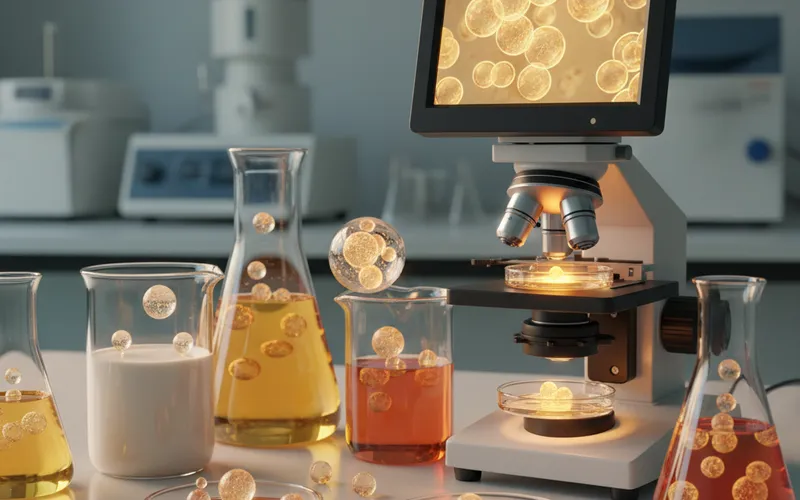
Die Studie, die als umfassende Übersichtsarbeit konzipiert wurde, hat verschiedene neue Liefersysteme unter die Lupe genommen. Dazu gehören Hydrogel-Kügelchen, polymere Komplexe, Emulsionen und bilayer-vesikuläre Systeme. Die Forscher bewerteten deren Rolle bei der Verbesserung der Stabilität, Überlebensfähigkeit und Biozugänglichkeit von bioaktiven Inhaltsstoffen. Auch der Einfluss dieser Strategien auf die Getränkequalität, das sensorische Profil (also wie das Getränk schmeckt und sich anfühlt) und das kommerzielle Potenzial wurde beleuchtet.
Die Autoren fassen zusammen, dass zahlreiche Studien gezeigt haben, wie die Verkapselung die Leistung funktioneller Inhaltsstoffe in verschiedenen Getränkematrizes verbessern kann. Massgeschneiderte Systeme (z.B. beschichtete Partikel, Emulsionsgele) können beispielsweise die Überlebensrate von Probiotika erhöhen, Antioxidantien vor dem Abbau schützen und unerwünschte Geschmäcker maskieren. Ein entscheidender Vorteil dieser Technologien ist die Möglichkeit einer gezielten Freisetzung im Darm, was die Biozugänglichkeit und letztlich die potenziellen gesundheitlichen Vorteile maximieren soll.
Trotz vielversprechender Laborergebnisse sehen die Autoren Herausforderungen bei der kommerziellen Umsetzung, insbesondere in Bezug auf Skalierbarkeit, Kosteneffizienz und den sensorischen Einfluss. Auch die Langzeitstabilität in komplexen Getränkesystemen und die regulatorischen Rahmenbedingungen für neue Technologien spielen eine Rolle.
Quelle: Shishir MRI, Khan S, Karim N, Bilal M, Hussain S, Saifullah M, Rashwan AK, Tahir HE, Mohamed Ahmed IA, Zhang X, Li F (2026). New frontiers in beverage fortification: Delivery of functional ingredients via micro- and nanoencapsulation in dairy and non-dairy beverages. Food Res Int, 230. PubMed-ID: 41794486
2. Was heisst das wirklich? – Die kritische Einordnung
Diese Übersichtsstudie zeigt uns eindrücklich, wohin die Reise in der Lebensmitteltechnologie geht. Es ist faszinierend zu sehen, wie Ingenieure und Lebensmittelwissenschaftler daran arbeiten, die Effizienz von Nährstoffen zu verbessern. Aber was heisst das wirklich für dich, wenn du im Supermarkt vor dem Regal stehst?
Zunächst einmal ist es wichtig zu verstehen, dass es sich hier um eine Übersichtsstudie handelt. Das bedeutet, die Autoren haben nicht selbst experimentiert, sondern die Ergebnisse vieler anderer Studien zusammengetragen und bewertet. Solche Reviews sind wertvoll, weil sie einen Überblick über den aktuellen Forschungsstand geben. Allerdings spiegeln sie die Qualität und die Grenzen der Einzelstudien wider, die sie zitieren.
Die Studie spricht von einer verbesserten «Stabilität, Viabilität und Biozugänglichkeit» sowie einer «gezielten Freisetzung im Darm». Das klingt hervorragend, und aus technischer Sicht ist es das auch. Eine höhere Überlebensrate von Probiotika im Magen-Darm-Trakt ist definitiv wünschenswert. Doch hier kommt ein entscheidender Punkt: Die meisten dieser Studien messen sogenannte Surrogatparameter. Das heisst, sie schauen, ob ein Wirkstoff im Darm ankommt oder ob ein Antioxidans im Labor stabiler ist. Was sie oft nicht messen, sind harte klinische Endpunkte: Fühlt sich der Mensch, der dieses Getränk konsumiert, tatsächlich gesünder? Hat er weniger Krankheiten? Verbessert sich seine Lebensqualität messbar?
Die Studie erwähnt zwar «potenzielle gesundheitliche Vorteile», aber die Brücke von der technischen Machbarkeit zur tatsächlichen Wirkung im menschlichen Körper ist oft länger, als wir uns wünschen. Ein Wirkstoff, der besser ankommt, ist nur dann nützlich, wenn er auch wirklich eine relevante Wirkung entfaltet und der Körper ihn aufnehmen und verwerten kann.
Denkwerkzeug: Wenn du von einem «Superfood» oder einem «funktionellen Getränk» hörst, frage dich: Wird hier die Anwesenheit eines Inhaltsstoffs mit einem tatsächlichen gesundheitlichen Nutzen gleichgesetzt? Oder gibt es auch Belege dafür, dass dieser Inhaltsstoff in dieser Form und Menge im menschlichen Körper wirklich das bewirkt, was versprochen wird?
Die Autoren weisen selbst auf die kommerziellen Herausforderungen hin, wie Skalierbarkeit und Kosteneffizienz. Das ist ein wichtiger Hinweis darauf, dass diese Technologien zwar vielversprechend sind, aber noch nicht unbedingt in jedem Produkt zu finden oder für jeden erschwinglich sind.
3. Der Geist im Körper – Die psychophysiologische Perspektive
Nun kommen wir zum Herzstück unserer Betrachtung: Was die meisten Studien – und auch diese Übersichtsarbeit – systematisch übersehen, ist die psychophysiologische Dimension. Wir reden über «funktionelle Getränke», die unsere Gesundheit verbessern sollen. Doch welchen Einfluss haben unsere Erwartungen, unser Stresslevel oder unser emotionaler Zustand auf die Wirkung dieser hochtechnologischen Nährstoffpakete?
Denken wir an den Placebo-Effekt. Allein die Überzeugung, etwas Gesundes oder Wirksames zu sich zu nehmen, kann physiologische Veränderungen hervorrufen. Wenn du ein Getränk trinkst, das als «supergesund» oder «immunstärkend» beworben wird, kann diese positive Erwartungshaltung bereits einen Teil der wahrgenommenen Wirkung erklären. Dein Gehirn sendet Signale an den Körper, die Entzündungsmarker beeinflussen, das Immunsystem modulieren oder das Wohlbefinden steigern können – ganz unabhängig davon, wie effizient die Probiotika verkapselt sind.
Und was ist mit dem Nocebo-Effekt? Wenn du skeptisch bist oder dir Sorgen machst, ob diese «Nano-Partikel» wirklich sicher sind, kann das die positive Wirkung selbst der besten Verkapselungstechnologie zunichtemachen oder sogar negative Empfindungen hervorrufen. Dein Körper reagiert nicht nur auf die Chemie, sondern auch auf deine Gedanken und Gefühle.
Stell dir vor, du trinkst ein solches Getränk unter chronischem Stress. Dein Körper befindet sich in einem Zustand erhöhter Alarmbereitschaft, die Verdauung ist möglicherweise beeinträchtigt, und dein Immunsystem arbeitet auf Hochtouren. Kann dann selbst das bestverkapselte Probiotikum seine volle Wirkung entfalten? Es ist gut denkbar, dass das Stresslevel, die Schlafqualität und die allgemeine mentale Verfassung des Konsumenten einen erheblichen Einfluss darauf haben, wie gut die bioaktiven Inhaltsstoffe aufgenommen und verwertet werden – und ob sie überhaupt einen spürbaren gesundheitlichen Nutzen entfalten können.
Die Studie konzentriert sich auf die reine technische Machbarkeit und Effizienz der Lieferung. Doch die «Bioverfügbarkeit» im menschlichen Körper ist ein komplexes Zusammenspiel aus biochemischen Prozessen und psychophysiologischen Zuständen. Ein hochstabiler Wirkstoff, der im Darm freigesetzt wird, mag technisch beeindruckend sein. Doch ob er tatsächlich «ankommt» und «wirkt», hängt auch stark davon ab, wie der Körper und der Geist des Empfängers darauf vorbereitet sind.
4. Der grössere Kontext – Einordnung und Abhängigkeiten
Diese Studie reiht sich ein in einen globalen Trend der Lebensmittelindustrie, Produkte nicht nur schmackhaft, sondern auch «funktional» zu machen. Der Markt für funktionelle Lebensmittel und Getränke wächst rasant. Es ist eine logische Konsequenz der modernen Lebensweise, in der Menschen nach einfachen Wegen suchen, ihre Gesundheit zu optimieren.
Die Finanzierung dieser Forschung kommt oft von Universitäten und Regierungsbehörden in Ländern wie China, Australien, Ägypten und Saudi-Arabien, aber letztlich sind es die grossen Lebensmittelkonzerne, die ein enormes Interesse an solchen Technologien haben. Die Autoren selbst sind an Universitäten und Forschungseinrichtungen angesiedelt, was die wissenschaftliche Unabhängigkeit stärkt. Es sind keine direkten Interessenkonflikte aus dem Abstract ersichtlich, was positiv ist und die Glaubwürdigkeit der technischen Bewertung unterstreicht.
Diese Übersichtsstudie bestätigt im Wesentlichen bestehende Erkenntnisse über die Herausforderungen bei der Stabilisierung bioaktiver Inhaltsstoffe und die potenziellen Lösungen durch Verkapselung. Sie ist kein revolutionärer Ausreisser, sondern ein wichtiges Puzzleteil, das die technologischen Fortschritte zusammenfasst. Was jedoch in solchen Studien oft nicht kontrolliert werden kann, sind die unzähligen Lebensstilfaktoren, die die Wirksamkeit von Nährstoffen beeinflussen. Wie ernährt sich der Proband sonst? Wie viel schläft er? Treibt er Sport? Raucht er? Nimmt er Medikamente? All diese Faktoren können die Bioverfügbarkeit und die letztendliche Wirkung der «funktionalen» Inhaltsstoffe massgeblich beeinflussen.
Denkwerkzeug: Bevor du ein Produkt kaufst, das mit «funktionellen» Inhaltsstoffen beworben wird, frage dich: Ist meine grundlegende Ernährung, mein Schlaf und mein Stressmanagement bereits optimiert? Oder erwarte ich von einem Getränk eine Lösung, die eigentlich einen umfassenderen Lebenswandel erfordert?
Es ist wichtig, diese Technologien als das zu sehen, was sie sind: eine Verbesserung der Lieferung von Inhaltsstoffen. Aber die komplexen Wechselwirkungen im menschlichen Körper und die Rolle unserer Psyche bleiben oft unberücksichtigt. Eine einzelne Studie, selbst eine umfassende Übersicht, kann niemals die ganze Wahrheit über Gesundheit und Wohlbefinden abbilden.
5. Was heisst das für dich? – Fazit und Alltagsrelevanz
Was kannst du aus dieser Studie über Mikro- und Nanoenkapselung für deinen Alltag mitnehmen?
- Erkenntnis 1: Technische Raffinesse ist beeindruckend, aber nicht alles. Die Lebensmitteltechnologie macht enorme Fortschritte, um Nährstoffe stabiler und effizienter zu machen. Das ist gut, denn es minimiert den Verlust wertvoller Inhaltsstoffe. Aber es ist nur ein Teil der Gleichung.
- Erkenntnis 2: Deine Psyche spielt eine Rolle. Egal wie gut ein Nährstoff verpackt ist – deine Erwartungen, dein Stresslevel und deine allgemeine mentale Verfassung beeinflussen massgeblich, wie dein Körper darauf reagiert. Ein «Supergetränk» kann unter chronischem Stress oder bei fehlender Überzeugung weniger wirken, als es das Potenzial hätte.
- Erkenntnis 3: Grundlagen vor High-Tech. Bevor du dich auf die neuesten «funktionellen» Getränke mit verkapselten Inhaltsstoffen stürzt, stelle sicher, dass deine Basis stimmt: eine ausgewogene Ernährung mit viel frischem Obst und Gemüse, ausreichend Schlaf, regelmässige Bewegung und effektives Stressmanagement. Diese Grundlagen haben oft einen weitaus grösseren Einfluss auf deine Gesundheit als jeder einzelne «funktionelle» Inhaltsstoff.
Was du daraus NICHT schliessen solltest, ist, dass diese Technologien nutzlos sind. Im Gegenteil, sie sind ein spannender Schritt nach vorn, um die Stabilität und Bioverfügbarkeit von Nährstoffen zu verbessern. Aber sie sind kein Wundermittel und können keine ungesunden Lebensgewohnheiten ausgleichen.
Diese Erkenntnisse sind besonders relevant für dich, wenn du dich für die Optimierung deiner Ernährung interessierst und dabei nicht nur auf Trends setzen, sondern wissenschaftlich fundierte Entscheidungen treffen möchtest. Sie sind weniger relevant, wenn du bereits eine sehr ausgewogene Ernährung pflegst und keine spezifischen Mängel hast.
Der psychophysiologische Gedanke zum Schluss: Dein Körper reagiert nicht isoliert auf Nährstoffe. Er reagiert auf das Gesamtpaket – auf das, was du isst, wie du dich bewegst, wie du schläfst, was du denkst und wie du fühlst. Die beste Mikroverkapselung nützt wenig, wenn dein Geist im Dauerstress ist. Baue auf soliden Grundlagen auf und höre auf deinen Körper. Er ist dein bester Indikator für das, was dir guttut.
Welche Fragen bleiben offen? Es wäre spannend zu sehen, wie die Langzeitwirkungen dieser hochtechnologischen Getränke auf die menschliche Darmflora und das Immunsystem im realen Leben aussehen. Zudem fehlt es an Studien, die den psychophysiologischen Einfluss auf die Wirksamkeit dieser verkapselten Nährstoffe explizit untersuchen. Hier liegt ein grosses Potenzial für zukünftige Forschung, die den Menschen in seiner Ganzheit betrachtet.
Bleib neugierig, kritisch und vor allem: Achte auf dein inneres Gleichgewicht. Denn die beste Technologie kann nur wirken, wenn du dafür empfänglich bist.