Hohe Blutfette bei SLE: Wenn der Körper sich selbst angreift
Eine seltene Form von Hypertriglyceridämie, ausgelöst durch Autoantikörper bei einer jungen Patientin mit Lupus, zeigt, wie komplex die Zusammenhänge in unserem Körper sind und wie wichtig es ist, über den Tellerrand zu schauen.
Die Studie – Was wurde untersucht und warum betrifft dich das?
Stell dir vor, du bist noch ein Kind, dein Körper kämpft mit einer Autoimmunerkrankung, und plötzlich steigen deine Blutfettwerte dramatisch an. Das ist keine Seltenheit, denn erhöhte Triglyceride im Blut sind weit verbreitet und können das Risiko für Herz-Kreislauf-Erkrankungen erhöhen. Meistens sind Lebensstilfaktoren oder genetische Veranlagungen die Ursache. Doch manchmal steckt etwas viel Selteneres dahinter, das selbst erfahrene Ärzte vor ein Rätsel stellt. Genau das beleuchtet eine aktuelle Fallstudie aus Hongkong, die uns vor Augen führt, wie vielschichtig die Ursachen für scheinbar bekannte Gesundheitsprobleme sein können.
Die Autoren Lai ST, Chan SS und Kollegen vom Department of Paediatrics und Chemical Pathology des Prince of Wales Hospital in Hongkong berichten über den Fall eines 12-jährigen chinesischen Mädchens, das mit einer schweren Hypertriglyceridämie (extrem erhöhte Blutfettwerte) und einer kürzlich diagnostizierten systemischen Lupus erythematodes (SLE) – einer chronischen Autoimmunerkrankung – in Behandlung war. Bereits im Alter von 8,5 Jahren wurden bei ihr erstmals stark erhöhte Triglyceride festgestellt, die innerhalb von zwei Jahren zu drei Episoden akuter Bauchspeicheldrüsenentzündung führten. Obwohl die Triglyceridwerte zwischen diesen Schüben sanken, blieben sie stets erhöht.
Die Ärzte gingen systematisch vor: Zuerst suchten sie nach einer primären, also genetisch bedingten Ursache für die Hypertriglyceridämie mittels Next-Generation-Sequenzierung – ohne signifikante Ergebnisse. Auch die gängigen sekundären Ursachen wie erhöhter Blutzucker (gemessen an Nüchternglukose und HbA1c) oder Schilddrüsenfunktionsstörungen konnten ausgeschlossen werden. Angesichts der schwankenden Triglyceridspiegel und des negativen Gentests im Kontext des SLE keimte der Verdacht auf eine autoimmunbedingte Hypertriglyceridämie auf.
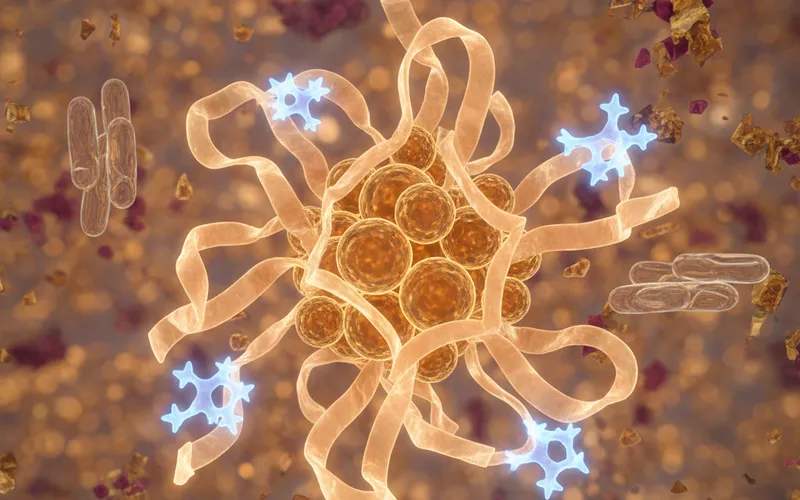
Und tatsächlich: Die Diagnose eines GPIHBP1-Autoantikörper-Syndroms wurde bestätigt. GPIHBP1 ist ein Protein, das entscheidend für den Transport des Enzyms Lipoproteinlipase (LPL) zu den Kapillaren ist. Dort spaltet LPL Triglyceride in den fetthaltigen Lipoproteinen. Wenn Autoantikörper dieses wichtige GPIHBP1-Protein angreifen, kann LPL seine Arbeit nicht mehr richtig verrichten, und die Triglyceride akkumulieren im Blut. Die Diagnose wurde durch einen erhöhten Titer an GPIHBP1-Autoantikörpern und eine geringe LPL-Masse im Serum des Mädchens untermauert. Während ihr SLE mit Immunsuppressiva und Belimumab gut kontrolliert wurde, konnten Fenofibrat und Omega-3-Fettsäuren, die ursprünglich gegen die Hypertriglyceridämie verschrieben wurden, später abgesetzt werden. Zwei Jahre nach der Diagnose normalisierten sich sowohl die GPIHBP1-Autoantikörper als auch die LPL-Masse.
Dieser Fall illustriert, wie eine seltene Erkrankung, die durch Autoantikörper gegen das GPIHBP1-Protein verursacht wird, eine Hypertriglyceridämie auslösen kann. Die Autoren betonen, dass diese Möglichkeit in Betracht gezogen werden sollte, wenn genetische und häufige sekundäre Ursachen ausgeschlossen wurden, insbesondere bei Patienten mit einer Autoimmunerkrankung in der Vorgeschichte.
Quelle: Lai ST, Chan SS, Yu SCY, Cheng JYK, Tsui KT, Ho CA, Yau HC (2026). GPIHBP1 Autoantibody-Related Hypertriglyceridemia in a 12-Year-Old Girl With Systemic Lupus Erythematosus. Case reports in endocrinology, 2026:6673352. PubMed-ID: 41783132
Dieser Fall zeigt uns eindrücklich, dass die Suche nach der Ursache einer Krankheit manchmal detektivische Arbeit erfordert und dass unser Immunsystem, das uns eigentlich schützen soll, manchmal eine unerwartete Rolle spielen kann.
Was heisst das wirklich? – Die kritische Einordnung
Dieser Fallbericht ist ein faszinierendes Beispiel für die Komplexität menschlicher Pathophysiologie. Als Einzelstudie liefert er keine statistisch signifikanten Ergebnisse im Sinne einer grossen Kohortenstudie, aber er ist klinisch hoch bedeutsam. Für das betroffene Mädchen war die korrekte Diagnose lebensrettend, da unbehandelte, extrem hohe Triglyceridwerte zu wiederkehrenden und potenziell tödlichen Bauchspeicheldrüsenentzündungen führen können.
Du bist kein Durchschnitt. Eine Fallstudie wie diese erinnert uns daran, dass statistische Durchschnittswerte oft die individuellen Abweichungen und seltenen Krankheitsbilder überdecken. Während die meisten Fälle von Hypertriglyceridämie auf Lebensstil oder häufigere genetische Faktoren zurückzuführen sind, gibt es immer Ausnahmen. Für dich persönlich bedeutet das: Wenn du oder jemand, den du kennst, mit ungewöhnlichen oder hartnäckigen Symptomen kämpft, die sich den gängigen Erklärungen entziehen, ist es wichtig, dass Ärzte weiter forschen und seltene Ursachen in Betracht ziehen.
Was wurde wirklich gemessen? In diesem Fall wurden «harte» Endpunkte wie die akute Pankreatitis und die extrem hohen Triglyceridwerte beobachtet. Die Messung von GPIHBP1-Autoantikörpern und der LPL-Masse im Serum sind hierbei präzise Biomarker, die direkt auf die zugrunde liegende Störung hinweisen. Es handelt sich also nicht um Surrogatparameter im eigentlichen Sinne, sondern um direkte Indikatoren der Pathologie.
Methodische Stärken und Grenzen: Die Stärke dieser Studie liegt in der detaillierten und systematischen Aufarbeitung eines seltenen Falls. Die Ärzte haben eine umfassende Diagnostik durchgeführt, von genetischen Tests bis hin zu spezifischen Autoantikörper-Messungen. Die Schwäche ist gleichzeitig die Natur eines Fallberichts: Er kann keine allgemeinen Aussagen über die Häufigkeit oder Prävalenz dieser Erkrankung treffen. Er kann lediglich aufzeigen, dass diese seltene Ursache existiert und welche diagnostischen Schritte zur Klärung führen können.
Für wen gelten die Ergebnisse? Die Ergebnisse dieser Studie sind primär relevant für Ärzte und Patienten, die mit Autoimmunerkrankungen, insbesondere SLE, und gleichzeitig unerklärlicher Hypertriglyceridämie zu tun haben. Sie erweitern das Spektrum der möglichen Diagnosen und bieten einen wichtigen Hinweis für die klinische Praxis.
Denkwerkzeug: Wenn du oder jemand in deinem Umfeld mit chronischen Gesundheitsproblemen kämpft, die sich nicht eindeutig erklären lassen, frage dich: Wurden alle möglichen Ursachen, auch die seltenen, in Betracht gezogen, oder wird nur nach den häufigsten Erklärungen gesucht?
Dieser Fall öffnet nicht nur die Augen für seltene Krankheiten, sondern lenkt auch unsere Aufmerksamkeit auf das komplexe Zusammenspiel des Immunsystems mit anderen Stoffwechselwegen im Körper.
Der Geist im Körper – Die psychophysiologische Perspektive
Auch wenn dieser Fallbericht primär physiologische und immunologische Mechanismen beschreibt, dürfen wir die psychophysiologische Dimension nicht ausser Acht lassen. Gerade bei chronischen Erkrankungen wie systemischem Lupus erythematodes (SLE) spielen Stress, Emotionen und die innere Überzeugung eine enorme Rolle im Krankheitsgeschehen und im Umgang damit.
Ein Kind mit SLE und wiederkehrenden, schweren Bauchspeicheldrüsenentzündungen erlebt extremen physischen und psychischen Stress. Die Diagnose einer chronischen Autoimmunerkrankung selbst ist eine immense Belastung. Hinzu kommen die Ängste vor weiteren Schüben, die Schmerzen, die wiederholten Krankenhausaufenthalte und die Unsicherheit über die Zukunft. All diese psychischen Faktoren können über die Stressachsen (Hypothalamus-Hypophysen-Nebennierenrinde-Achse) und das autonome Nervensystem messbare physiologische Auswirkungen haben. Chronischer Stress kann Entzündungsprozesse verstärken, die Immunantwort modulieren und den Stoffwechsel beeinflussen.
Im Kontext dieses Falles ist es gut denkbar, dass der psychische Stress, den das Mädchen durch die Erkrankung und die wiederholten Bauchspeicheldrüsenentzündungen erlebte, zwar nicht die primäre Ursache der GPIHBP1-Autoantikörper war, aber das gesamte System in einem Zustand erhöhter Vulnerabilität hielt. Die Fähigkeit des Körpers, mit Entzündungen umzugehen, der Energiehaushalt und die allgemeine Resilienz können durch anhaltenden psychischen Druck beeinträchtigt werden. Auch wenn die Autoantikörper der direkte Auslöser der Hypertriglyceridämie waren, könnte der psychische Zustand des Mädchens die Schwere der Symptome oder die Genesungsfähigkeit beeinflusst haben.
Es ist ein Aspekt, der in dieser rein physiologisch ausgerichteten Studie nicht erfasst wurde, aber aus psychophysiologischer Sicht von grosser Bedeutung ist: Wie hat das Mädchen und ihre Familie diesen Krankheitsverlauf erlebt und verarbeitet? Welche Rolle spielte die psychische Unterstützung bei der Genesung? Die Normalisierung der Autoantikörper und der LPL-Masse nach zwei Jahren, während der SLE kontrolliert wurde, spricht für eine erfolgreiche Behandlung auf physiologischer Ebene. Doch die psychische Stärke, die es braucht, um eine solche Odyssee zu überstehen, darf nicht unterschätzt werden. Die Überzeugung, dass die Behandlung wirkt, und das Gefühl der Sicherheit durch eine gute medizinische Versorgung können den Heilungsverlauf positiv beeinflussen, selbst bei autoimmunbedingten Prozessen.
Der grössere Kontext – Einordnung und Abhängigkeiten
Diese Fallstudie reiht sich in eine wachsende Zahl von Berichten ein, die die komplexen Wechselwirkungen zwischen Autoimmunerkrankungen und Stoffwechselstörungen aufzeigen. Während traditionell Autoimmunerkrankungen und Stoffwechselerkrankungen oft getrennt voneinander betrachtet wurden, wird immer deutlicher, dass es vielfältige Überschneidungen und gegenseitige Beeinflussungen gibt.
Wer steht dahinter? Die Studie wurde von Forschenden der Chinese University of Hong Kong durchgeführt. Die Autoren gaben an, keine Interessenkonflikte zu haben, was die Glaubwürdigkeit des Berichts stärkt. Dies ist besonders wichtig bei seltenen Diagnosen, da hier keine grossen Pharmaunternehmen oder kommerziellen Interessen im Spiel sind, die Forschungsergebnisse beeinflussen könnten.
Wo steht diese Studie in der Forschungslandschaft? Diese Fallstudie ist ein wichtiges Puzzleteil, das unser Verständnis für seltene Ursachen von Hypertriglyceridämie erweitert. Sie bestätigt frühere Berichte über das GPIHBP1-Autoantikörper-Syndrom, macht aber auf die mögliche Assoziation mit anderen Autoimmunerkrankungen wie SLE aufmerksam. Eine einzelne Studie ist nie die ganze Wahrheit, aber sie kann ein Wegweiser sein. Sie fordert die medizinische Gemeinschaft auf, bei ungeklärten Fällen von Hypertriglyceridämie, insbesondere in Kombination mit Autoimmunerkrankungen, an diese seltene Diagnose zu denken.
Was wurde nicht kontrolliert? In einem Fallbericht gibt es naturgemäss keine Kontrollgruppe. Die Studie konzentriert sich auf die spezifische Pathophysiologie des Patienten. Lebensstilfaktoren wie Ernährung oder körperliche Aktivität wurden in diesem Bericht nicht detailliert beschrieben, sind aber bei Hypertriglyceridämie immer relevante Faktoren. Im vorliegenden Fall war die Ursache jedoch klar autoimmunologisch, sodass Lebensstilfaktoren eher eine nachgeordnete Rolle spielten, nachdem die primäre Ursache identifiziert und behandelt wurde.
Denkwerkzeug: Bevor du aufgrund einer einzelnen Information weitreichende Entscheidungen triffst, frage dich: Handelt es sich hier um eine allgemein gültige Erkenntnis aus einer grossen Studie oder um einen seltenen Einzelfall, der zwar faszinierend ist, aber nicht direkt auf meine Situation übertragbar sein muss?
Diese Studie erinnert uns daran, dass die Medizin ein dynamisches Feld ist und unser Wissen über die komplexen Zusammenhänge im Körper ständig wächst.
Was heisst das für dich? – Fazit und Alltagsrelevanz
Dieser Fallbericht über die seltene GPIHBP1-Autoantikörper-assoziierte Hypertriglyceridämie bei einem Mädchen mit Lupus mag auf den ersten Blick weit entfernt von deinem Alltag erscheinen. Doch er birgt wichtige Lehren, die für jeden von uns relevant sind.
Was kannst du mitnehmen?
- Bleib neugierig und hinterfrage: Wenn du oder nahestehende Personen mit hartnäckigen oder ungewöhnlichen Symptomen kämpfen, die sich durch Standarddiagnosen nicht erklären lassen, ist es wichtig, dranzubleiben und gegebenenfalls eine Zweitmeinung einzuholen. Seltene Ursachen sind selten, aber sie existieren.
- Die Komplexität des Immunsystems: Unser Immunsystem ist ein Meisterwerk der Natur, kann aber auch zum Problem werden, wenn es sich gegen den eigenen Körper richtet. Dieser Fall zeigt, dass Autoimmunreaktionen weit über die klassischen Autoimmunerkrankungen hinausgehen und auch Stoffwechselwege beeinflussen können, die man vielleicht nicht sofort damit in Verbindung bringen würde.
- Ganzheitliche Betrachtung: Auch wenn der Fokus dieser Studie auf physiologischen Mechanismen liegt, sollte die psychische Belastung bei chronischen Erkrankungen niemals unterschätzt werden. Körper und Geist sind untrennbar miteinander verbunden. Die Unterstützung der psychischen Gesundheit ist ein wichtiger Bestandteil jeder umfassenden Behandlung.
Was solltest du NICHT daraus schliessen?
Du solltest nicht sofort an eine seltene Autoimmunerkrankung denken, wenn bei dir erhöhte Triglyceridwerte festgestellt werden. In den allermeisten Fällen sind Lebensstilfaktoren wie Ernährung, Bewegungsmangel oder eine genetische Veranlagung die Ursache. Es ist wichtig, zuerst die häufigsten Ursachen abzuklären und entsprechende Massnahmen zu ergreifen.
Für wen ist das besonders relevant?
Dieser Fall ist besonders relevant für Menschen, die bereits eine Autoimmunerkrankung haben und bei denen ungewöhnliche Stoffwechselstörungen auftreten. Auch für Ärzte ist es ein wichtiger Reminder, die Differentialdiagnose bei Hypertriglyceridämie breit zu fächern.
Der psychophysiologische Gedanke zum Schluss bleibt bestehen: Dein Körper reagiert nicht nur auf das, was du isst oder wie du dich bewegst, sondern auch auf das, was du denkst und fühlst. Eine chronische Erkrankung wie Lupus, gepaart mit den Belastungen wiederkehrender akuter Schübe, stellt eine enorme Herausforderung für die gesamte Person dar. Die Genesung ist nicht nur ein physiologischer Prozess, sondern auch ein psychischer Kraftakt.
Dieser Fall öffnet uns die Augen für die unglaubliche Komplexität und die manchmal überraschenden Wege, die unser Körper gehen kann. Bleib wachsam, informiere dich und vertraue auf die Fähigkeit deines Körpers, sich anzupassen – und auf die moderne Medizin, die immer wieder neue Erkenntnisse gewinnt.