Mikroalgen und dein Teller: Wie Stress in der Natur Omega-3-Fettsäuren beeinflusst
Wissenschaftler haben untersucht, wie abiotische Stressfaktoren wie Salz, pH-Wert und Kälte die Produktion von wertvollen Omega-3-Fettsäuren in Mikroalgen steuern. Erfahre, was das mit deiner Ernährung und Gesundheit zu tun hat und warum die Natur manchmal Stress braucht, um Gutes hervorzubringen.
1. Die Studie – Was wurde untersucht und warum betrifft dich das?
Stell dir vor, du könntest die Nährwerte deiner Lebensmittel gezielt beeinflussen, indem du die Umweltbedingungen änderst, unter denen sie wachsen. Klingt nach Science-Fiction? Für Mikroalgen ist das Realität, und Wissenschaftler nutzen dieses Prinzip, um die Produktion von Omega-3-Fettsäuren zu optimieren. Warum ist das für dich relevant? Ganz einfach: Omega-3-Fettsäuren sind für deine Gesundheit von entscheidender Bedeutung – sie sind essenziell für dein Herz-Kreislauf-System, dein Gehirn und wirken entzündungshemmend. Die Hauptquellen sind oft Fisch, aber auch Mikroalgen spielen eine immer grössere Rolle, nicht nur als Direktquelle, sondern auch als Futter für Fische oder Nutztiere.
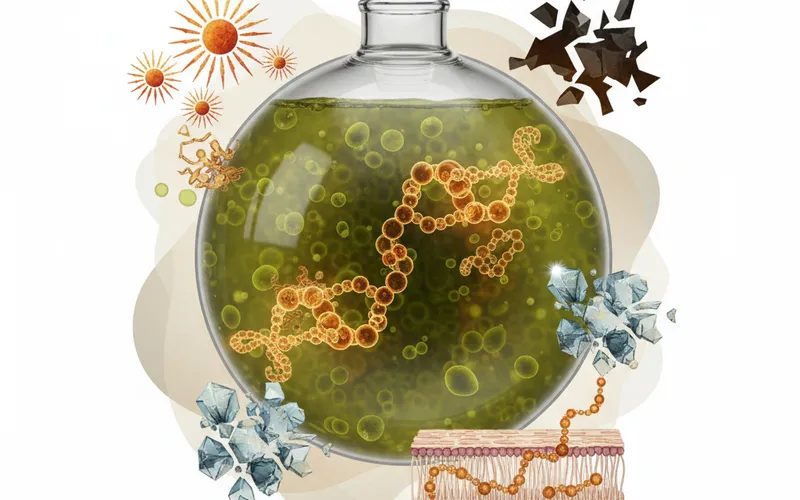
Ein Forschungsteam um Nidhi Chaudhary und Kollegen vom Motilal Nehru National Institute of Technology Allahabad in Indien hat genau das untersucht. Ihre Studie, publiziert im renommierten Journal Applied Microbiology and Biotechnology, fokussierte sich darauf, wie sogenannte abiotische Stressfaktoren – also Umweltbedingungen wie Salzgehalt, pH-Wert und Temperatur – die Biosynthese von mehrfach ungesättigten Fettsäuren (PUFAs) in zwei spezifischen Mikroalgenarten beeinflussen: Chlorococcum oleofaciens und Leptolyngbya sp. Die zentrale Fragestellung war: Können wir durch gezielte Stressbedingungen die Produktion dieser wertvollen Fettsäuren in Mikroalgen steigern, um sie effizienter für die Lebensmittel- und Futtermittelindustrie nutzbar zu machen?
Die Forschenden führten Experimente durch, in denen sie die Mikroalgen unter verschiedenen Bedingungen kultivierten. Sie variierten den Salzgehalt (NaCl), den pH-Wert und die Temperatur. Anschliessend analysierten sie das Wachstum der Algen und deren Fettsäureprofile. Die Stichprobe umfasste Kulturen der beiden genannten Mikroalgenarten, die unter genau kontrollierten Laborbedingungen gezüchtet wurden. Das Studiendesign ist somit als eine kontrollierte Laborstudie zu verstehen, die Kausalzusammenhänge zwischen Umweltfaktoren und Fettsäureproduktion aufzeigen kann.
Die Ergebnisse sind spannend: Bei einem Salzgehalt von 10 mM NaCl zeigten beide Mikroalgenarten die höchsten spezifischen Wachstumsraten (0.142 ± 0.0010 bzw. 0.122 ± 0.0016 Tag-1) und Biomasseerträge (6.89 ± 0.22 bzw. 7.06 ± 0.35 g/L). Der Clou kam aber bei der Temperatur: Der höchste PUFA-Gehalt, insbesondere von Linolensäure (29, 7.7%), Eicosapentaensäure (EPA) (47, 41%) und Docosahexaensäure (DHA) (56, 47%), wurde bei einer Temperatur von 15 °C gemessen. Dies deutet darauf hin, dass kühlere Temperaturen die Algen dazu anregen, mehr dieser wertvollen Fettsäuren zu produzieren. Interessanterweise stiegen auch die Aktivitäten von antioxidativen Enzymen (Superoxiddismutase) und Malondialdehyd als Reaktion auf erhöhten Salzgehalt, niedrige Temperatur und pH-Wert an, was auf eine Anpassung an oxidativen Stress hinweist. Die Studie kommt zum Schluss, dass niedrige Temperaturen einen signifikanten Effekt auf die Steigerung des PUFA-Gehalts haben und diese Mikroalgen somit vielversprechende Kandidaten für die PUFA-Produktion sind.
Quelle: Chaudhary N, Mishra M, Yadav AK, Singh NK (2026). Abiotic stress effects on polyunsaturated fatty acid biosynthesis in Chlorococcum oleofaciens and Leptolyngbya sp. Applied microbiology and biotechnology, 110(1). PubMed-ID: 41794906
Diese Erkenntnisse sind nicht nur für die industrielle Produktion von Fettsäuren wichtig, sondern geben uns auch einen faszinierenden Einblick, wie Lebewesen unter Stressbedingungen ihre innere Chemie anpassen. Doch was bedeutet das wirklich für dich und deine Ernährung?
2. Was heisst das wirklich? – Die kritische Einordnung
Du hast nun gehört, dass Mikroalgen unter bestimmten Stressbedingungen mehr Omega-3-Fettsäuren produzieren. Das klingt vielversprechend, aber lass uns das genauer einordnen. Die Studie ist eine solide Laborarbeit, die klar definierte Parameter untersucht und reproduzierbare Ergebnisse liefert. Die Verwendung von zwei verschiedenen Mikroalgenarten stärkt die Aussagekraft, da die Effekte nicht nur bei einer Spezies beobachtet wurden.
Doch wie immer gilt: Dein Körper ist keine Petrischale. Grosse Studien liefern Durchschnittswerte, aber du bist kein Durchschnitt. Die hier gezeigten Ergebnisse sind statistisch signifikant, das heisst, die beobachteten Effekte sind höchstwahrscheinlich nicht zufällig. Aber ist ein statistisch signifikanter Anstieg des PUFA-Gehalts in Algen auch klinisch bedeutsam für dich? Die Studie misst hier einen Surrogatparameter – den Fettsäuregehalt in den Algen. Das ist ein wichtiger Zwischenschritt, aber noch kein harter Endpunkt wie eine verbesserte Herzgesundheit oder eine reduzierte Entzündung bei Menschen, die diese Algen konsumieren. Es ist ein vielversprechender Hinweis auf das Potenzial dieser Algen, aber keine direkte Gesundheitsaussage für dich.
Die methodischen Stärken liegen in der präzisen Kontrolle der Umweltbedingungen und der genauen Analyse der Fettsäureprofile. Die Forschenden konnten zeigen, dass niedrige Temperaturen einen deutlichen Einfluss haben. Eine Grenze ist jedoch, dass es sich um Laborbedingungen handelt. Die Übertragbarkeit auf grossindustrielle Massstäbe kann komplex sein, da dort weitere Faktoren wie Lichtverfügbarkeit, Nährstoffzufuhr und Kontaminationen eine Rolle spielen können. Auch die genaue chemische Zusammensetzung der Algenbiomasse, abgesehen von den PUFAs, könnte sich unter den Stressbedingungen ändern, was für die Nutzung als Lebensmittel oder Futter relevant wäre.
Denkwerkzeug: Wenn du eine neue Nahrungsergänzung oder ein Lebensmittel siehst, das auf solchen Studien basiert, frage dich: Wurde der Effekt an Menschen gemessen, oder handelt es sich um Ergebnisse aus dem Labor, die einen potenziellen Nutzen suggerieren? Wie gross ist der Sprung von der Petrischale zu meinem Teller?
Diese Studie ist ein Puzzleteil in der Optimierung der Nährstoffproduktion, aber sie sagt noch nichts darüber aus, wie dein Körper diese Fettsäuren aufnimmt, verarbeitet und nutzt. Genau hier kommt die psychophysiologische Perspektive ins Spiel.
3. Der Geist im Körper – Die psychophysiologische Perspektive
Die Studie zeigt uns eindrucksvoll, wie Mikroalgen auf Umweltstress reagieren, indem sie ihre biochemische Zusammensetzung anpassen. Sie produzieren unter kühleren Bedingungen mehr schützende Fettsäuren, um ihre Zellmembranen flexibel zu halten und sich an die widrigen Umstände anzupassen. Das ist ein faszinierendes Beispiel dafür, wie Lebewesen auf Stress reagieren.
Aber was hat das mit dir zu tun? Du bist keine Mikroalge, aber auch dein Körper reagiert auf Stress – und das in einer Weise, die die Aufnahme und Verwertung von Nährstoffen massgeblich beeinflusst. Stell dir vor, du nimmst die hochwertigsten Omega-3-Fettsäuren zu dir, die unter optimalen Algen-Stressbedingungen produziert wurden. Wenn du aber gleichzeitig unter chronischem Stress leidest, emotional angespannt bist oder schlecht schläfst, kann das die Wirkung dieser Fettsäuren in deinem Körper schmälern.
Dein psychophysiologisches System ist ein komplexes Netzwerk. Chronischer Stress aktiviert die Hypothalamus-Hypophysen-Nebennierenrinden-Achse und führt zur Ausschüttung von Hormonen wie Cortisol. Dieses Cortisol kann Entzündungsprozesse fördern und den Stoffwechsel beeinflussen. Selbst wenn du ausreichend Omega-3-Fettsäuren zu dir nimmst, die eigentlich entzündungshemmend wirken sollen, kann ein ständig erhöhter Cortisolspiegel diese positive Wirkung abschwächen oder sogar konterkarieren. Deine Darmgesundheit, die eng mit deinem Stresslevel verbunden ist, spielt ebenfalls eine Rolle bei der Aufnahme von Fettsäuren.
Die Überzeugung, etwas Gutes für sich zu tun, kann ebenfalls einen messbaren Einfluss haben. Der Placebo-Effekt ist hier nicht zu unterschätzen: Wenn du fest daran glaubst, dass du durch den Konsum dieser Algenprodukte deine Gesundheit verbesserst, können allein diese Erwartungshaltungen physiologische Veränderungen bewirken, die die Wirksamkeit der Nährstoffe unterstützen. Umgekehrt kann Skepsis oder eine negative Einstellung die potenziellen Vorteile mindern.
Es ist gut denkbar, dass selbst die besten ernährungsphysiologischen Ansätze nur suboptimal wirken, wenn der Mensch, der sie anwendet, in einem Zustand chronischen Stresses oder emotionaler Dysregulation lebt. Dein Körper reagiert nicht isoliert auf Nährstoffe, sondern als ganzheitliches System, in dem Psyche und Soma untrennbar miteinander verbunden sind. Mikroalgen passen sich ihrem Stress an, um zu überleben – du musst lernen, deinen Stress zu managen, um die Nährstoffe optimal zu nutzen.
4. Der grössere Kontext – Einordnung und Abhängigkeiten
Diese Studie ist ein wichtiger Baustein in der Erforschung nachhaltiger und effizienter Methoden zur Produktion von Nährstoffen. Die Finanzierung der Studie wurde nicht explizit genannt, aber die Autoren sind akademisch an Universitäten in Indien angesiedelt, was auf eine unabhängige Forschungsarbeit hindeutet, ohne offensichtliche kommerzielle Interessenkonflikte, die die Ergebnisse verzerren könnten.
Im grösseren Kontext der Forschung zur PUFA-Produktion bestätigt diese Studie bestehende Erkenntnisse, dass Umweltbedingungen einen erheblichen Einfluss auf die Biosynthese von Fettsäuren in Mikroalgen haben. Sie trägt dazu bei, das Wissen über die spezifischen Reaktionen von Chlorococcum oleofaciens und Leptolyngbya sp. zu erweitern und optimierte Kultivierungsstrategien zu entwickeln. Eine einzelne Studie ist jedoch immer ein Puzzleteil und nie die ganze Wahrheit. Es gibt Tausende von Mikroalgenarten, und jede reagiert anders. Auch die genauen biochemischen Pfade und die Regulation der Enzyme sind hochkomplex und Gegenstand intensiver Forschung.
Was in dieser Studie nicht kontrolliert wurde, sind die Auswirkungen dieser gestressten Algen auf menschliche oder tierische Konsumenten. Es ist eine Sache, den PUFA-Gehalt in der Alge zu messen, eine andere, zu verstehen, wie diese PUFAs dann im Verdauungstrakt freigesetzt, aufgenommen und im Körper verteilt werden. Auch die Langzeitstabilität dieser PUFAs in verarbeiteten Lebensmitteln ist ein wichtiger Faktor, der hier nicht beleuchtet wurde.
Es ist wichtig zu verstehen, dass die Optimierung der Algenproduktion nur ein Teil der Gleichung ist. Wenn diese Algen als Futtermittel für Fische verwendet werden, beeinflussen auch die Lebensbedingungen der Fische deren Fähigkeit, diese Nährstoffe zu speichern und in für uns verwertbare Formen umzuwandeln. Ähnlich ist es beim Menschen: Dein Lebensstil, deine Genetik, dein Darm-Mikrobiom und eventuelle Medikamente sind alles Faktoren, die die Bioverfügbarkeit und Wirkung von Omega-3-Fettsäuren beeinflussen können.
Denkwerkzeug: Wenn du von einem «Superfood» hörst, frage dich: Wie viele Schritte liegen zwischen der Produktion dieses Lebensmittels und seiner tatsächlichen Wirkung in meinem Körper? Werden alle Einflussfaktoren auf diesem Weg berücksichtigt?
5. Was heisst das für dich? – Fazit und Alltagsrelevanz
Was kannst du aus dieser Mikroalgenstudie für deinen Alltag mitnehmen? Auch wenn es sich um Grundlagenforschung handelt, gibt es einige wichtige Erkenntnisse:
- Die Natur nutzt Stress zur Optimierung: Die Studie zeigt, dass auch in der Natur gezielter Stress zu einer besseren Qualität führen kann. Niedrige Temperaturen können die Mikroalgen dazu anregen, mehr der wertvollen Omega-3-Fettsäuren zu produzieren. Dies ist ein wichtiger Hinweis für die nachhaltige Produktion von Nährstoffen.
- Omega-3-Fettsäuren bleiben essenziell: Die Relevanz von Omega-3-Fettsäuren für deine Gesundheit wird durch solche Studien immer wieder unterstrichen. Sie sind unverzichtbar, und es ist sinnvoll, auf eine ausreichende Zufuhr zu achten – sei es durch fetten Fisch, Leinsamen, Walnüsse oder eben durch Algenprodukte.
- Achte auf die Quelle: Wenn du Algenprodukte oder Fischöl kaufst, kann es einen Unterschied machen, wie die Algen oder Fische gezüchtet wurden. Auch wenn diese Studie noch keine direkten Konsumentenempfehlungen gibt, zeigt sie das Potenzial für optimierte Produktionsmethoden.
Was solltest du aber NICHT daraus schliessen? Nur weil Algen unter Stress mehr PUFAs produzieren, heisst das nicht, dass du dich selbst stressen solltest, um mehr Nährstoffe aufzunehmen! Das wäre eine gefährliche Fehlinterpretation. Die Mechanismen sind im Mikrokosmos der Algen anders als in deinem komplexen Körper.
Diese Erkenntnisse sind besonders relevant für Menschen, die sich für pflanzliche Omega-3-Quellen interessieren oder die Lebensmittelindustrie, die nach nachhaltigen Wegen zur Nährstoffanreicherung sucht. Für dich als Endverbraucher ist es eine Erinnerung daran, dass Qualität und Herkunft deiner Nahrung eine Rolle spielen können.
Der psychophysiologische Gedanke zum Schluss: Wie die Algen auf äussere Reize reagieren, reagiert auch dein Körper auf dein inneres und äusseres Milieu. Die besten Nährstoffe sind nur so gut wie deine Fähigkeit, sie zu verarbeiten und zu nutzen. Dein Stresslevel, deine Emotionen und deine Überzeugungen sind keine Nebensächlichkeiten – sie sind integrale Bestandteile deiner Physiologie. Achte darauf, wie du deinen Körper und Geist pflegst, denn nur in einem ausgeglichenen System können auch die besten Nährstoffe ihre volle Wirkung entfalten.
Welche Fragen bleiben offen? Es wäre spannend zu sehen, wie sich die gestressten Algen in Tierfutterstudien oder sogar in menschlichen Ernährungsstudien bewähren. Wie gut werden die PUFAs aus diesen Algen tatsächlich resorbiert, und welche Langzeitwirkungen haben sie auf die Gesundheit? Die Wissenschaft arbeitet weiter daran, diese Puzzleteile zusammenzusetzen.
Bleib neugierig, sei achtsam mit dir und deinem Körper – denn du bist das komplexeste und faszinierendste Labor, das es gibt.