Metabolic Syndrome: Psychophysiological Interventions for Sustainable Health and Performance
Metabolic Syndrome, often referred to as the "metabolic killer," is a dangerous constellation of high blood pressure, impaired glucose metabolism, abdominal obesity, and dyslipidemia. Learn how psychophysiological interventions can promote sustainable health and performance.
Metabolic Syndrome: Psychophysiological Interventions for Sustainable Health and Performance
Metabolic Syndrome, often referred to as the "metabolic killer," is far more than the sum of its individual parts. It manifests as a dangerous constellation of high blood pressure (hypertension), impaired glucose metabolism (insulin resistance/prediabetes), abdominal obesity (belly fat), and dyslipidemia (fat metabolism disorders). This combination is not only a "ticking time bomb" for cardiovascular diseases and type 2 diabetes but also a clear indicator of a deeper dysregulation in our system. Jürg Hösli, as the founder of the psychophysiological interaction model, therefore does not view metabolic syndrome in isolation but as an expression of a complex disturbance in the interplay of psyche, body, nutrition, and performance.
A recently published, groundbreaking 12-month randomized study with 240 participants, whose results were published in The Lancet Diabetes & Endocrinology, among other places, provides impressive evidence for the effectiveness of holistic intervention strategies. The results impressively confirm Jürg Hösli's credo: true health and sustainable performance arise from the optimization of complex interactions.
Study Results in Detail: The Power of Synergy
The study investigated the effects of various intervention approaches on metabolic syndrome. The results are insightful and underscore the need for an integrative perspective:
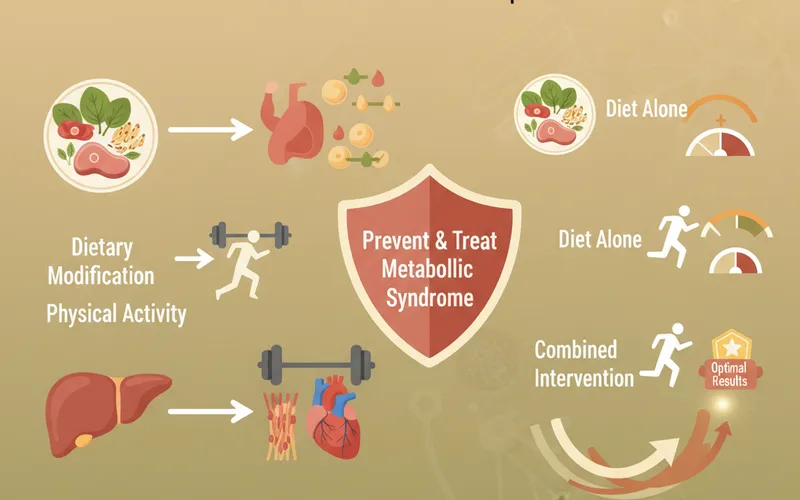
- Combined Intervention (Mediterranean Diet + 150 minutes/week moderate exercise): This group showed an impressive reduction in metabolic syndrome risk by 58%. This significant decrease highlights the synergistic effects when multiple positive impulses are applied simultaneously.
- Single Interventions (Diet alone or exercise alone): The isolated application of dietary adjustments or physical activity also led to an improvement, but significantly less pronounced. Here, the risk reduction was only 31-38%.
These figures are far more than mere statistics; they are a clear appeal not to underestimate the profound interactions between our body, our psyche, and our lifestyle. They exemplify how Jürg Hösli's psychophysiological interaction model provides a sound basis for effective health strategies. The synergistic effects of the combined intervention are key to understanding why a holistic approach is often more successful than the sum of its individual parts.
Metabolic Syndrome from a Psychophysiological Perspective
Jürg Hösli's psychophysiological interaction model postulates that health and illness are to be understood as the result of complex interactions between psychological, physiological, nutritional, and performance-related factors. In metabolic syndrome, this dysregulation manifests particularly clearly. Chronic stress, psychological burdens such as anxiety or depression, but also a lack of sleep, can lead to elevated cortisol levels and an increased release of catecholamines through the activation of the stress axes (hypothalamic-pituitary-adrenal axis and sympathetic nervous system). These hormonal changes directly affect glucose and fat metabolism, promote insulin resistance, and contribute to abdominal obesity.
At the same time, unfavorable eating habits, often triggered by psychological stress or lack of awareness, can intensify the vicious circle. The body reacts to these external and internal stressors with an adaptation that ultimately leads to metabolic dysregulation. The physiological parameters of metabolic syndrome are therefore not only biochemical markers but also indicators of a disturbed balance in the entire system. Understanding these complex relationships is essential for developing sustainable intervention strategies.
The Role of Nutrition: More Than Calorie Counting
The Mediterranean diet, which was successfully used in the cited study, is a prime example of a diet that goes far beyond mere calorie counting. It is characterized by a high proportion of plant-based foods (vegetables, fruits, whole grains, legumes, nuts, seeds), olive oil as the main fat source, moderate fish consumption, and low consumption of red meat and processed foods. This composition not only provides essential macro- and micronutrients but is also rich in anti-inflammatory and antioxidant compounds.
At a psychophysiological level, the Mediterranean diet has multiple effects: It stabilizes blood sugar levels, reduces inflammatory processes, improves gut health, and can even positively influence mood. Stable blood sugar regulation helps to avoid cravings and contributes to a more balanced energy level, which in turn reduces psychological stress. The rich intake of fiber and polyphenols promotes a healthy gut microbiota, which is closely linked to the gut-brain axis and mental state. The conscious selection and preparation of food can also foster a sense of self-efficacy and control, which positively impacts mental health.
Exercise as a Psychophysiological Regulator
The integration of 150 minutes of moderate exercise per week into the intervention is also crucial. Physical activity is a potent psychophysiological regulator. It improves insulin sensitivity, lowers blood pressure, reduces abdominal fat, and improves the lipid profile. At a physiological level, exercise leads to increased glucose uptake into muscle cells, independent of insulin, and promotes the release of myokines, which have anti-inflammatory effects.
Furthermore, exercise has profound effects on the psyche. It reduces stress hormones, promotes the release of endorphins – the natural "happiness hormones" – and can alleviate symptoms of anxiety and depression. Regular physical activity improves sleep quality, which in turn is essential for regeneration and metabolic regulation. For Jürg Hösli, exercise is therefore not just a means of burning calories but an integral part of psychological and physical resilience. It strengthens body awareness, promotes self-perception, and significantly contributes to daily performance.
Stress Management and Mental Resilience
The psychological component of the psychophysiological interaction model should not be underestimated in metabolic syndrome. Chronic stress, whether professional, private, or stress induced by unhealthy lifestyle habits, is a major driver of metabolic dysregulation. The constant activation of the sympathetic nervous system and increased cortisol secretion lead to a redistribution of fat to the abdominal area, increased insulin resistance, and systemic inflammation.
Interventions aimed at stress reduction and strengthening mental resilience are therefore indispensable. Techniques such as mindfulness, meditation, yoga, but also progressive muscle relaxation or breathing exercises can help to modulate the body's stress response. Learning coping strategies for dealing with stressors and promoting positive self-perception are crucial. Jürg Hösli emphasizes that the ability to deal with psychological stress directly affects physiological processes.
Book Tip
By Jürg Hösli – matching the topic