The Psychophysiological Interaction Model: Your Key to Health and Performance
Jürg Hoesli's psychophysiological interaction model (2012) connects psyche, physiology, and the systemic environment. This article highlights its importance for stress management, regeneration, and prevention, as well as the use of AI in health and longevity. Learn how these approaches contribute to health promotion.
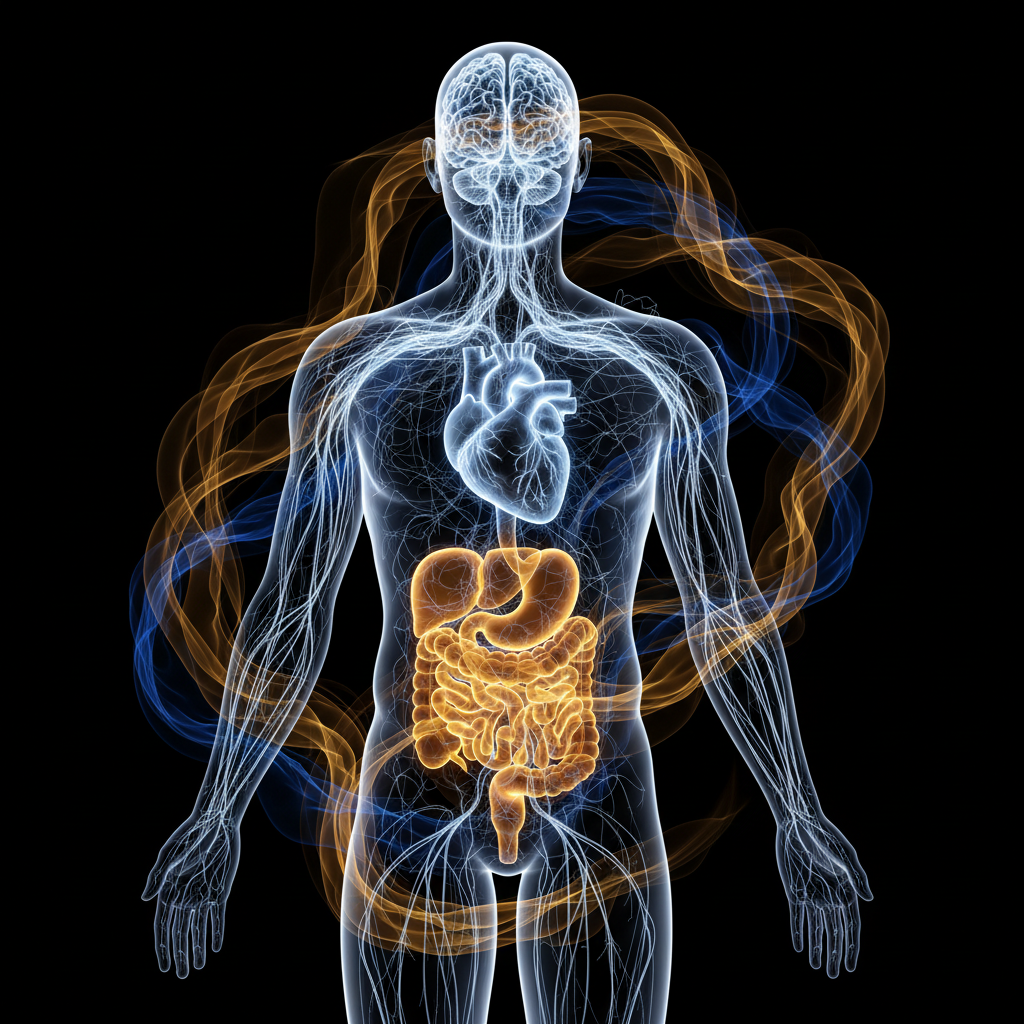
The Psychophysiological Interaction Model: Your Key to Health and Performance
Developed by Jürg Hösli in 2012
Imagine you could finally understand why you sometimes feel like an engine on the verge of overheating. Or why your head says “Keep going!” while your body has long since hit the brakes. This is precisely where my psychophysiological interaction model, which I developed in 2012, comes in. It's more than a theory – it's a tool that sheds a completely new light on health, behavior, and performance. Because one thing is clear: Your thoughts, your body, and your environment are inextricably linked.
For a long time, science viewed humans in fragmented ways – here the psyche, there biology. But in reality, this separation does not exist. Every emotion, every conflict, every moment of stress leaves traces in your body. And every physical change – be it a pounding heart or an exhausted metabolism – influences how you think and decide. No psychological reaction without a physiological response. And no physical change without repercussions on your psyche. This is the central insight of my model.
Whether you're a stressed manager who can't switch off at night, an elite athlete pushing their limits, or someone rebuilding after burnout – this model shows you how everything is connected. It explains why health doesn't arise in the mind or body alone, but in the constant interplay between psyche, physiology, and your environment. Let's dive into this fascinating world together.
Humans as a Dynamic Regulatory System
Imagine your body and mind as a highly complex orchestra. Every note, every beat must be in harmony for the symphony of your life to sound harmonious. My interaction model describes you as an integrated system of three levels that are in constant interaction:
Psychological Processes
This is about your motivation, your emotions, your ability to regulate yourself, and the roles you play in your social environment. Are you the one who always says “yes” to avoid conflict? Or does an inner fire drive you, sometimes making you blind to your own limits?
Physiological Processes
This is your body's hardware: your nervous system, your hormones, your energy balance, your metabolism, and your regenerative capacity. If you're under constant stress, your body pumps cortisol in torrents – and that has measurable consequences for your energy and your health.
Systemic Environment
You don't live in a vacuum. Your social relationships, your working conditions, the pressure to perform in your job, and cultural expectations directly affect you. An example: A manager I coached – let's call him Peter – worked 60 hours a week in an environment that constantly put him under pressure. His environment allowed no recovery, and his body reacted with insomnia and heart rhythm disturbances.
These three levels are like cogs in a machine. If one goes out of sync, the entire system suffers. A conflict in the team can raise your blood pressure. An unbalanced hormone level can make you irritable and unfocused. Do you understand how everything works together?
Stress: When Action and Regeneration Get Out of Balance
Let's talk about stress – a word everyone knows, but few truly understand. Stress isn't just “a lot of work” or “too little time.” Stress is a biological phenomenon deeply rooted in your nature. Your body is designed to cope with demands – be it a sprint to catch the bus, or a presentation to 50 colleagues. The problem begins when regeneration doesn't follow action.
A Practical Example
Take Anna, an elite athlete I coached for years. She trained obsessively for the World Championship, her motivation unwavering. But after each training session, there was no time for recovery – sponsors wanted meetings, coaches demanded analyses, and her social environment expected her to always be “on.” Her body entered a state of chronic dysregulation. Her cortisol levels were permanently elevated, her regeneration virtually zero. The result? Exhaustion, injuries, and a drop in performance – just before the big competition.
Stress arises when you have no opportunity to recover. It's not the 10 hours of overtime that make you sick. It's the fact that you can't switch off afterwards because the boss sends an email at midnight. It's not the tough training hours that destroy you, but the lack of rest periods. When external circumstances such as permanent workload, social pressure, economic uncertainty, or chronic conflicts block your recovery, your body begins to sabotage itself.
The consequences? Your autonomic nervous system gets out of balance. Your metabolism suffers. Your immune defense decreases. And this is precisely where many health problems begin – long before you perceive them as an illness.
Energetic Dynamics: Your Body as an Energy System
Imagine your body is like a highly developed power plant. Every action, every decision, every social interaction consumes energy. My model therefore views you as a complex energy and regulation system. When you are under stress, your nervous system activates the “fight-or-flight” response – an ancient survival strategy. Your heart beats faster, your muscles tense, your energy consumption skyrockets.
A Look into Everyday Life
Let's take Peter, the manager. His days were a marathon: meetings, deadlines, conflicts. His body was working at full throttle, his stress hormones were constantly active. But at night he found no peace – his mind kept racing. Without regeneration, he consumed more energy than he could recharge. The result was an energetic bankruptcy: burnout.
Health means keeping stress and regeneration in balance. If you constantly push the gas without refilling the tank, eventually there will be nothing left. Chronic overactivation leads to exhaustion, and exhaustion is the breeding ground for illnesses. My model helps you understand these dynamics – and counteract them in time.
Diagnostic Tools: Making Interactions Visible
Over the years, I have developed diagnostic instruments that make these complex relationships measurable. These tools are like an X-ray into your inner self – they show how your psyche and your body interact.
What do we measure?
On the psychological level, we analyze your motivational structures, your stress processing patterns, and your social roles. Why do you always react to conflicts by withdrawing? What drives you to go beyond your limits?
On the physiological level, we look at your autonomic regulation, your regenerative capacity, and your metabolic stability. How quickly does your body recover after exertion? How stable is your energy balance?
A Practical Example
In Anna, the athlete, our analysis showed that her parasympathetic nervous system – the part responsible for rest and recovery – was barely active. Her body was in a permanent state of alarm. Psychologically, she was driven by extreme performance pressure that allowed no breaks. With this data, we were able to intervene specifically: targeted regeneration phases