EPA aus der Hefe: Wie Biotechnologie unsere Omega-3-Versorgung revolutionieren könnte
Eine bahnbrechende Studie zeigt, wie hefe gezielt so modifiziert werden kann, dass sie das wertvolle Omega-3-Fett EPA produziert. Was das für deine Gesundheit und die Zukunft der Nahrungsergänzung bedeuten könnte, erfährst du hier.
Die Studie – Was wurde untersucht und warum betrifft dich das?
Stell dir vor, du könntest dein tägliches Omega-3-Fett nicht mehr nur aus Fisch oder Algenöl beziehen, sondern aus einer nachhaltig produzierten Hefe. Klingt nach Zukunftsmusik? Eine aktuelle Studie aus Deutschland bringt uns diesem Szenario einen grossen Schritt näher. Forschende haben einen Weg gefunden, die Mikroorganismus Yarrowia lipolytica so zu optimieren, dass sie gezielt das wertvolle Eicosapentaensäure (EPA) produziert.
Hinter dieser spannenden Entwicklung steckt ein Team um H. Qi, F. Ries und S. Jovanovic Gasovic vom Institut für Systembiotechnologie der Universität Saarland, in Zusammenarbeit mit dem Helmholtz-Institut für Pharmazeutische Forschung Saarland. Sie haben sich einer zentralen Frage der biotechnologischen Produktion gewidmet: Wie lässt sich die Effizienz und Spezifität bei der Herstellung komplexer Moleküle in Mikroorganismen steuern? Ihr Fokus lag auf der gezielten Produktion von EPA, einem Omega-3-Fettsäure, das eine entscheidende Rolle für unsere Gesundheit spielt, von der Herz-Kreislauf-Funktion bis zur Entzündungsregulation.
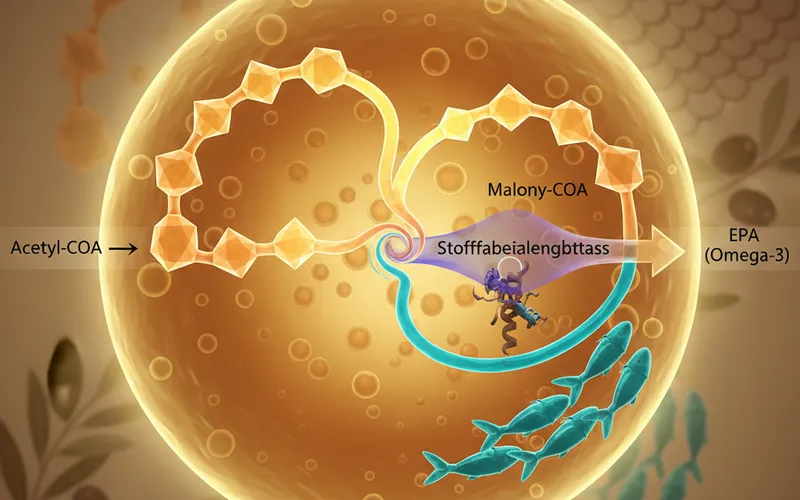
Die Studie, die noch vor der Drucklegung online veröffentlicht wurde, untersuchte im Detail, wie die Verfügbarkeit von Acetyl-CoA und Malonyl-CoA – zwei entscheidende Bausteine im Stoffwechsel – die Selektivität der EPA-Produktion in genetisch modifizierter Hefe beeinflusst. Sie verwendeten dabei biotechnologische Methoden, um die Stoffwechselwege der Hefe so umzuleiten, dass sie grosse Mengen an EPA herstellt. Das Studiendesign war dabei rein experimentell im Labor, basierend auf Genetik und Stoffwechselanalyse, um die biochemischen Mechanismen zu verstehen und zu optimieren.
Die zentralen Ergebnisse zeigen, dass eine sorgfältige Steuerung der Acetyl- und Malonyl-CoA-Spiegel in der Hefe entscheidend ist, um die Produktion von EPA zu maximieren und gleichzeitig die Entstehung unerwünschter Nebenprodukte zu minimieren. Dies ist ein wichtiger Schritt, um die biotechnologische Produktion von EPA wirtschaftlich und effizient zu gestalten. Die Forschenden konnten nachweisen, dass sie die Hefe dazu bringen können, gezielt EPA zu synthetisieren, was die Tür für eine nachhaltige und skalierbare Quelle dieser wichtigen Fettsäure öffnet.
Quelle: Qi H, Ries F, Jovanovic Gasovic S, Dietrich D, Gemperlein K, Müller R, Kohlstedt M, Wittmann C (2026). Acetyl- and malonyl-CoA availability drive EPA selectivity in polyketide synthase-engineered Yarrowia lipolytica. Microb Cell Fact, 25(1). PubMed-ID: 41781957
Diese Erkenntnisse könnten weitreichende Auswirkungen darauf haben, wie wir in Zukunft unsere Versorgung mit essenziellen Fettsäuren sicherstellen. Aber was genau bedeuten sie für dich und deine Gesundheit?
Was heisst das wirklich? – Die kritische Einordnung
Diese Studie ist ein faszinierendes Beispiel für angewandte Biotechnologie. Sie zeigt, dass es technisch möglich ist, eine nachhaltige Quelle für EPA zu schaffen, die nicht auf Fischfang oder Algenzucht angewiesen ist. Doch was heisst das wirklich für dich, heute und in der Zukunft?
Zunächst einmal ist es wichtig zu verstehen, dass es sich hier um eine Grundlagenstudie im Labor handelt. Die Forschenden haben auf zellulärer Ebene die Stoffwechselwege der Hefe optimiert. Das ist ein grosser wissenschaftlicher Erfolg, aber es ist noch ein weiter Weg von der Laborbank zum fertigen Produkt in deinem Supermarktregal. Statistisch signifikante Ergebnisse auf Zellebene bedeuten nicht automatisch, dass morgen eine neue Generation von EPA-Supplementen auf den Markt kommt. Es geht hier um die Machbarkeit und die Optimierung eines Produktionsprozesses, nicht um eine direkte klinische Anwendung am Menschen.
Die Stärke dieser Studie liegt in ihrer methodischen Präzision bei der Stoffwechselanalyse und der genetischen Modifikation der Hefe. Sie liefert detaillierte Einblicke in die biochemischen Mechanismen, die die EPA-Produktion steuern. Die Grenzen liegen darin, dass die Ergebnisse nicht direkt auf die menschliche Ernährung übertragbar sind. Die Hefe selbst wäre das Produktionssystem, nicht unbedingt das Endprodukt, das du direkt konsumieren würdest. Es müsste noch die Extraktion, Reinigung und Formulierung des EPA erfolgen.
Denkwerkzeug: Wenn du von neuen biotechnologischen Entwicklungen hörst, frage dich immer: Wie weit ist die Technologie vom Labor bis zu mir entfernt? Handelt es sich um die Entwicklung eines neuen Rohstoffs oder um ein fertiges Produkt, das ich direkt nutzen kann?
Diese Studie legt den Grundstein für eine potenziell nachhaltigere und ethischere Quelle für EPA. Doch wie beeinflusst das Wissen um die Herkunft und die Erwartungen an ein Produkt unsere Wahrnehmung und Wirkung?
Der Geist im Körper – Die psychophysiologische Perspektive
Auch wenn diese Studie noch weit von der direkten Anwendung am Menschen entfernt ist, können wir bereits jetzt eine psychophysiologische Brücke schlagen. Stell dir vor, EPA aus dieser biotechnologisch produzierten Hefe wäre in Kapseln erhältlich. Die Wirkung, die du davon erwartest, wäre nicht nur von der Menge des enthaltenden EPA abhängig, sondern auch stark von deiner eigenen Erwartungshaltung und deinem Vertrauen in die Quelle.
Denken wir an den Placebo- und Nocebo-Effekt. Wenn du ein Supplement nimmst, von dem du glaubst, dass es aus einer nachhaltigen, ethisch unbedenklichen und wissenschaftlich fortschrittlichen Quelle stammt, kann dies deine psychologische Einstellung positiv beeinflussen. Diese positive Erwartung kann über die reine Biochemie hinausgehen und physiologische Prozesse im Körper anstossen. Dein Körper reagiert nicht nur auf die reine Substanz, sondern auch auf die Geschichte, die du dir über diese Substanz erzählst.
Umgekehrt, wenn du Vorbehalte gegenüber genetisch modifizierten Organismen oder biotechnologischen Prozessen hast, könnten diese Bedenken – selbst wenn das Endprodukt chemisch identisches EPA ist – eine Nocebo-Reaktion auslösen. Stress, Misstrauen oder Skepsis können die Aufnahme und Verwertung von Nährstoffen beeinträchtigen und die erwarteten positiven Effekte mindern. Dein Darm, dein Immunsystem, dein gesamter Stoffwechsel sind eng mit deinem emotionalen und mentalen Zustand verbunden.
Es ist gut denkbar, dass eine als «sauber» und «nachhaltig» wahrgenommene Quelle von EPA eine höhere Akzeptanz und damit möglicherweise eine bessere subjektive Wirkung erzielt, einfach weil sie das Vertrauen und die positive Erwartung des Konsumenten stärkt. Der psychische Kontext, in dem wir Nahrungsergänzungsmittel konsumieren, ist ein oft unterschätzter Faktor für deren tatsächliche Wirksamkeit.
Der grössere Kontext – Einordnung und Abhängigkeiten
Diese Studie ist ein Puzzleteil in einem grösseren Bild der nachhaltigen Lebensmittelproduktion und der biotechnologischen Innovation. Die Finanzierung durch die Universität Saarland und das Helmholtz-Institut deutet auf eine öffentlich geförderte Forschung hin, die auf langfristige wissenschaftliche Erkenntnisse abzielt. Die Autoren haben jedoch auch eine Patentanmeldung im Zusammenhang mit dieser Forschung eingereicht, was auf ein kommerzielles Interesse an der Verwertung der Ergebnisse hindeutet – ein übliches Vorgehen, um Forschungsergebnisse zu schützen und spätere Anwendungen zu ermöglichen.
Im grösseren Kontext der EPA-Forschung ist diese Studie eine Bestätigung des Potenzials von Mikroorganismen als alternative Quelle für Omega-3-Fettsäuren. Bisher stammen die Hauptquellen für EPA aus Fisch oder Algen. Beide Quellen haben ihre Grenzen: Überfischung, Umweltbelastungen und der Mikroplastikgehalt bei Fisch, sowie die Skalierbarkeit und Kosten bei Algen. Die biotechnologische Produktion in Hefe bietet hier eine potenziell unbegrenzte, umweltfreundlichere und kontrollierbarere Alternative.
Was in dieser Studie nicht kontrolliert wurde – und auch nicht Ziel war – sind die Auswirkungen auf den Menschen. Die Hefe ist der Produzent, nicht der Konsument. Auch Faktoren wie die Bioverfügbarkeit des Hefen-EPA im Vergleich zu Fisch- oder Algen-EPA, die Stabilität des extrahierten Fetts oder die Akzeptanz durch die Konsumenten wurden hier nicht untersucht. Dies sind alles wichtige Fragen, die in nachfolgenden Studien geklärt werden müssen.
Denkwerkzeug: Wenn du von einer neuen Produktionsmethode für einen Nährstoff hörst, frage dich: Löst diese Methode bestehende Probleme der traditionellen Quellen (z.B. Nachhaltigkeit, Reinheit, Ethik) und gibt es bereits Studien zur Bioverfügbarkeit und Sicherheit des Endprodukts für den Menschen?
Was heisst das für dich? – Fazit und Alltagsrelevanz
Was kannst du nun aus dieser faszinierenden Laborstudie für deinen Alltag mitnehmen?
- Blick in die Zukunft der Nahrungsergänzung: Diese Forschung zeigt, dass wir in den kommenden Jahren möglicherweise Zugang zu nachhaltigeren und ethischeren Quellen für essenzielle Nährstoffe wie EPA haben werden. Das ist eine gute Nachricht für alle, die Wert auf Umweltfreundlichkeit und die Reduzierung der Belastung der Meere legen.
- Vertrauen in Wissenschaft und Innovation: Die Studie ist ein Beispiel dafür, wie Grundlagenforschung und Biotechnologie dazu beitragen können, globale Herausforderungen wie die Versorgung mit wichtigen Nährstoffen zu lösen. Bleib offen für neue Entwicklungen, aber hinterfrage sie auch kritisch.
- Die Macht deiner Überzeugung: Auch wenn diese Hefe-EPA noch nicht auf dem Markt ist, erinnert uns die potenzielle Entwicklung daran, wie wichtig der psychologische Kontext bei der Einnahme von Nahrungsergänzungsmitteln ist. Wenn du dich für ein Produkt entscheidest, informiere dich über dessen Herkunft und Produktionsweise. Ein gutes Gefühl dabei kann die positive Wirkung verstärken, während Skepsis sie mindern kann.
Was du daraus NICHT schliessen solltest, ist, dass du ab sofort auf deine aktuellen Omega-3-Quellen verzichten musst. Diese Technologie ist noch in den Kinderschuhen der Kommerzialisierung. Verlasse dich weiterhin auf bewährte Quellen wie fettreichen Fisch oder hochwertige Algenöl-Supplemente, wenn du deine EPA-Zufuhr sicherstellen möchtest.
Diese Forschung ist besonders relevant für Menschen, die sich vegan oder vegetarisch ernähren oder aus ethischen Gründen keine Fischprodukte konsumieren möchten. Sie könnte ihnen in Zukunft eine weitere hochwertige EPA-Quelle eröffnen. Für alle anderen ist es ein spannender Ausblick auf eine mögliche Ergänzung der bestehenden Optionen.
Am Ende des Tages ist deine Gesundheit immer ein komplexes Zusammenspiel. Dein Körper reagiert nicht nur auf das, was du ihm an Nährstoffen zuführst, sondern auch auf deine Gedanken, deine Gefühle und deine Überzeugungen. Diese Studie zeigt einen spannenden Weg für die Zukunft der Nährstoffproduktion auf, aber vergiss nie, dass der wichtigste Faktor für dein Wohlbefinden immer du selbst bist – dein Geist und dein Körper in harmonischem Einklang.
Bleib neugierig auf die Wissenschaft und höre weiterhin auf die Signale deines eigenen Körpers, denn der ist dein bester Ratgeber.