EPA aus Hefe: Wie Grundlagenforschung unsere Omega-3-Versorgung revolutionieren könnte
Eine spannende Studie aus Deutschland zeigt, wie wir die Produktion von Omega-3-Fettsäuren in Hefen optimieren können. Was das für deine Ernährung und die Zukunft der Nahrungsergänzung bedeutet, erfährst du hier.
Die Studie – Was wurde untersucht und warum betrifft dich das?
Stell dir vor, du könntest deine tägliche Dosis an wertvollen Omega-3-Fettsäuren nicht mehr nur aus Fischöl oder Algen beziehen, sondern aus einer ganz neuen, nachhaltigen Quelle: Hefe. Klingt futuristisch? Eine aktuelle Studie aus Deutschland, genauer gesagt von Forschenden der Universität des Saarlandes und des Helmholtz-Instituts für Pharmazeutische Forschung Saarland, bringt uns diesem Ziel einen grossen Schritt näher. Sie haben untersucht, wie die Produktion von Eicosapentaensäure (EPA) – einer der wichtigsten Omega-3-Fettsäuren – in einer speziellen Hefeart namens Yarrowia lipolytica gesteuert und optimiert werden kann.
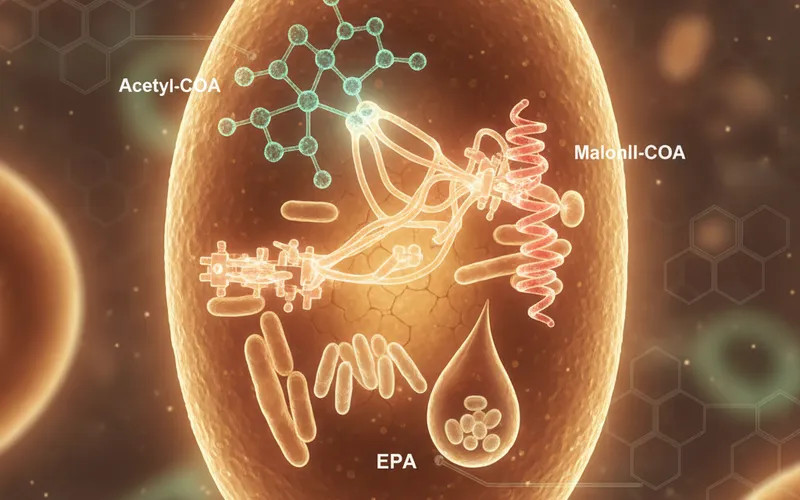
Die zentrale Frage war: Welche molekularen Schalter müssen wir umlegen, damit diese Hefe effizient und selektiv EPA produziert? Die Forschenden konzentrierten sich dabei auf zwei Schlüsselmoleküle im Stoffwechsel der Hefe: Acetyl-CoA und Malonyl-CoA. Diese beiden sogenannten Coenzyme sind grundlegende Bausteine für viele biologische Prozesse, einschliesslich der Fettsäureproduktion. Die Hypothese war, dass die Verfügbarkeit dieser Bausteine die Menge und Art der produzierten Fettsäuren beeinflusst.
Um dies zu testen, nutzten die Wissenschaftler eine gentechnisch veränderte Yarrowia lipolytica Hefe, die mit einem sogenannten Polyketid-Synthase-System ausgestattet wurde. Dieses System ist im Grunde eine molekulare Maschine, die in der Lage ist, komplexe Moleküle wie EPA herzustellen. Durch gezielte Veränderungen in den Stoffwechselwegen der Hefe manipulierten sie die Konzentrationen von Acetyl-CoA und Malonyl-CoA. Anschliessend analysierten sie, wie sich diese Manipulationen auf die EPA-Produktion auswirkten.
Die Ergebnisse waren deutlich: Die Forschenden konnten zeigen, dass die Verfügbarkeit von Acetyl-CoA und Malonyl-CoA tatsächlich die EPA-Selektivität in der Hefe massgeblich beeinflusst. Das bedeutet, je nachdem, wie viel von diesen Bausteinen vorhanden war, produzierte die Hefe mehr oder weniger EPA im Verhältnis zu anderen Fettsäuren. Dies ist ein entscheidender Schritt, um eine effiziente und kostengünstige Produktion von EPA in Mikroorganismen zu ermöglichen. Das Studiendesign war ein klassischer Laborversuch mit gentechnisch veränderten Mikroorganismen, was bei dieser Art von Grundlagenforschung üblich ist. Die Stichprobe bestand aus verschiedenen Hefe-Stämmen unter kontrollierten Bedingungen.
Quelle: Qi H, Ries F, Jovanovic Gasovic S, Dietrich D, Gemperlein K, Müller R, Kohlstedt M, Wittmann C (2026). Acetyl- and malonyl-CoA availability drive EPA selectivity in polyketide synthase-engineered Yarrowia lipolytica. Microbial Cell Factories. PubMed-ID: 41781957
Was heisst das wirklich? – Die kritische Einordnung
Diese Studie ist ein faszinierendes Beispiel für angewandte Grundlagenforschung. Sie zeigt uns, wie wir mit biotechnologischen Mitteln die Natur dazu bringen können, Stoffe zu produzieren, die für uns von grossem Wert sind. Aber was bedeutet das jetzt genau für dich und deine Omega-3-Versorgung?
Zunächst einmal ist es wichtig zu verstehen, dass dies eine in vitro-Studie ist, also eine Untersuchung im Reagenzglas oder genauer gesagt im Fermenter mit Hefekulturen. Es geht nicht darum, wie dein Körper EPA produziert oder verwertet, sondern wie wir eine alternative Quelle für diesen Nährstoff schaffen können. Die Ergebnisse sind statistisch signifikant und zeigen einen klaren Zusammenhang zwischen den Coenzymen und der EPA-Produktion in der Hefe. Aber „statistisch signifikant“ heisst hier nicht „sofort für dich relevant“.
Die Stärke der Studie liegt in ihrer Präzision und der detaillierten Untersuchung molekularer Stoffwechselwege. Die Forschenden haben hart daran gearbeitet, die Produktion einer spezifischen und wertvollen Fettsäure in einem Mikroorganismus zu optimieren. Das ist ein wichtiger Schritt für die Entwicklung nachhaltiger Produktionsmethoden, die weniger auf endliche Ressourcen wie Fisch angewiesen sind. Die Methodik ist hochspezialisiert und für die biotechnologische Forschung relevant.
Eine Grenze ist natürlich, dass die Ergebnisse nicht direkt auf den menschlichen Körper übertragbar sind. Es geht hier um die Produktion eines Rohstoffs, nicht um dessen Wirkung im Menschen. Für dich als Konsument ist die klinische Relevanz noch nicht direkt gegeben, da es sich um eine Vorstufe zur eigentlichen Produktentwicklung handelt. Die Studie misst hier einen Surrogatparameter – die Menge an EPA, die von der Hefe produziert wird – nicht direkt einen harten Endpunkt wie die Verbesserung deiner Herzgesundheit durch die Einnahme dieses Hefeprodukts.
Denkwerkzeug: Wenn du von einer neuen Studie hörst, die ein Nahrungsergänzungsmittel oder einen Inhaltsstoff bewirbt, frage dich immer: Wurde die Wirkung am Menschen untersucht oder nur die Herstellung des Stoffs? Und wenn am Menschen: Wurden harte Endpunkte gemessen, die für meine Gesundheit relevant sind, oder nur Laborwerte?
Der Geist im Körper – Die psychophysiologische Perspektive
Auch wenn diese Studie auf den ersten Blick sehr weit von der psychophysiologischen Interaktion entfernt scheint, gibt es doch interessante Berührungspunkte, die wir beleuchten können. Stell dir vor, diese Hefen werden zukünftig zur Produktion von EPA-Supplementen eingesetzt. Wie du diese Supplemente wahrnimmst und welche Erwartungen du an sie knüpfst, kann einen erheblichen Einfluss auf deren gefühlte und sogar messbare Wirkung in deinem Körper haben.
Wir wissen aus unzähligen Studien, dass der Placebo-Effekt bei Nahrungsergänzungsmitteln eine Rolle spielen kann. Allein die Überzeugung, etwas Gutes für seine Gesundheit zu tun, kann physiologische Veränderungen im Körper auslösen. Wenn du also ein EPA-Supplement aus dieser neuen, nachhaltigen Hefe einnimmst und fest daran glaubst, dass es dir hilft, kann diese positive Erwartungshaltung die tatsächliche Wirkung verstärken. Umgekehrt könnte ein Nocebo-Effekt auftreten, wenn du skeptisch bist oder negative Informationen über das Produkt erhältst.
Darüber hinaus spielt Stress eine entscheidende Rolle für deinen gesamten Stoffwechsel, einschliesslich der Verwertung von Fettsäuren. Chronischer Stress beeinflusst die Cortisol-Achse und kann Entzündungsprozesse im Körper fördern. EPA ist bekannt für seine entzündungshemmenden Eigenschaften. Wenn du also unter hohem Stress stehst, kann dein Körper möglicherweise nicht optimal von einem EPA-Supplement profitieren, selbst wenn es noch so rein und hochdosiert ist. Die psychische Belastung könnte die positiven Effekte teilweise aufheben oder zumindest abschwächen.
Es ist gut denkbar, dass auch die Akzeptanz einer solchen neuartigen EPA-Quelle psychologische Faktoren beinhaltet. Die Bereitschaft, ein Produkt aus gentechnisch veränderter Hefe zu konsumieren, hängt stark von persönlichen Überzeugungen, Ängsten und dem Vertrauen in wissenschaftliche Innovation ab. Diese emotionalen und kognitiven Aspekte sind nicht direkt Teil der Studie, aber sie sind entscheidend dafür, ob ein solches Produkt überhaupt seinen Weg zu dir findet und ob du es bereitwillig in deine Ernährung integrierst.
Der grössere Kontext – Einordnung und Abhängigkeiten
Diese Studie reiht sich ein in eine wachsende Zahl von Forschungsarbeiten, die sich mit der nachhaltigen Produktion von Nährstoffen beschäftigen. Angesichts der Überfischung der Meere und des steigenden Bedarfs an Omega-3-Fettsäuren ist die Suche nach alternativen Quellen von grosser Bedeutung. Algen sind bereits eine etablierte Quelle für EPA und DHA, aber die Optimierung der Produktion in Hefen könnte weitere Vorteile bieten, beispielsweise in Bezug auf Kosten, Skalierbarkeit oder die Vermeidung von Allergenen.
Die Finanzierung dieser Studie erfolgte im Rahmen eines Forschungsprojekts an deutschen Universitäten und Forschungsinstituten. Die Autoren haben einen Patentantrag bezüglich dieser Forschung eingereicht, was darauf hindeutet, dass sie das Potenzial für eine kommerzielle Anwendung sehen. Dies ist üblich in der angewandten Forschung und kein Interessenkonflikt im negativen Sinne, sondern ein Zeichen für die Relevanz und den Innovationscharakter der Arbeit.
Was in dieser Studie nicht kontrolliert wurde, sind natürlich alle Aspekte des menschlichen Lebensstils. Die Hefe hat keine Sorgen, keinen Schlafmangel, keine ungesunde Ernährung oder Bewegungsmangel. All diese Faktoren beeinflussen, wie wir Omega-3-Fettsäuren aufnehmen, verarbeiten und wie sie in unserem Körper wirken. Eine einzelne Studie wie diese liefert einen wichtigen Baustein, ist aber niemals die ganze Wahrheit über ein komplexes Thema wie Ernährung und Gesundheit.
Denkwerkzeug: Wenn dir ein Produkt als die «Lösung» für ein Gesundheitsproblem präsentiert wird, frage dich: Wer profitiert davon? Gibt es Forschung, die die Wirkung am Menschen unter realen Lebensbedingungen belegt? Und welche anderen Faktoren in meinem Leben könnten einen ähnlichen oder sogar grösseren Einfluss haben?
Was heisst das für dich? – Fazit und Alltagsrelevanz
Was kannst du aus dieser hochinteressanten, aber sehr spezifischen Grundlagenstudie für deinen Alltag mitnehmen? Auch wenn sie nicht direkt deine heutige Ernährung verändert, gibt sie dir doch wichtige Perspektiven:
- Nachhaltigkeit der Omega-3-Versorgung: Diese Forschung ist ein vielversprechender Schritt hin zu nachhaltigeren und ethischeren Quellen für Omega-3-Fettsäuren. Wenn du Wert auf Umweltfreundlichkeit legst, ist das eine gute Nachricht für die Zukunft. Es bedeutet, dass wir möglicherweise weniger auf Fischbestände angewiesen sein werden, um unseren Bedarf zu decken.
- Die Rolle der Biotechnologie: Die Studie zeigt, wie gezielte gentechnische Veränderungen die Produktion wertvoller Stoffe revolutionieren können. Auch wenn es bei dir vielleicht Skepsis gegenüber Gentechnik gibt, ist es wichtig zu verstehen, dass solche Methoden in der Pharma- und Lebensmittelproduktion zunehmend eingesetzt werden, um Effizienz und Reinheit zu verbessern.
- Grundlagenforschung ist wichtig: Auch wenn es sich um Hefe handelt und nicht um dich, ist es diese Art von Grundlagenforschung, die letztendlich zu neuen Produkten und besseren Versorgungsmöglichkeiten führt. Sei offen für wissenschaftlichen Fortschritt, aber bleibe kritisch bei der Interpretation der Ergebnisse für deine persönliche Situation.
Was solltest du aus dieser Studie NICHT schliessen? Du solltest jetzt nicht erwarten, dass du morgen EPA-Hefe im Supermarkt kaufst und alle deine Gesundheitsprobleme löst. Es ist ein erster, vielversprechender Schritt auf einem langen Weg. Es ist auch kein Freifahrtschein, deine Ernährung zu vernachlässigen, weil es ja bald „Hefe-EPA“ gibt. Eine ausgewogene Ernährung bleibt das A und O.
Diese Studie ist besonders relevant für Menschen, die sich für die Zukunft der Nahrungsmittelproduktion, Nachhaltigkeit und Biotechnologie interessieren. Für dich persönlich ist die Relevanz noch eher indirekt, zeigt aber, was in der Forschung alles möglich ist.
Der psychophysiologische Gedanke zum Schluss: Denk daran, dass selbst das beste EPA-Supplement nur so gut wirken kann, wie es dein Körper zulässt. Und dein Körper lässt am besten zu, wenn dein Geist in Balance ist. Stress, Sorgen und ein ungesunder Lebensstil können selbst die wertvollsten Nährstoffe in ihrer Wirkung beeinträchtigen. Dein Körper reagiert nicht nur auf das, was du isst und wie du dich bewegst, sondern auch auf das, was du denkst und fühlst. Bleibe neugierig, informiere dich und höre auf deinen Körper – das ist der beste Weg zu nachhaltiger Gesundheit.
Welche Fragen bleiben offen? Wie hoch können die Produktionsraten in industriellem Massstab gesteigert werden? Wie rein ist das Endprodukt und wie ist die Bioverfügbarkeit im menschlichen Körper? Und wie wird die Akzeptanz bei den Konsumenten sein? Die Zukunft wird es zeigen.
Bleib dran, bleib neugierig und vor allem: Bleib gesund!