Lipödem und Ernährung: Wie Low-Carb und Low-Fat Schmerzen beeinflussen können
Leidest du unter Lipödem und den damit verbundenen Schmerzen? Eine neue Studie untersucht, wie unterschiedliche Ernährungsansätze – Low-Carb und Low-Fat – die Fettsäureprofile im Blut verändern und ob sie Linderung bringen können. Erfahre, was das für deine individuelle Situation bedeutet und warum die Psychophysiologie auch hier eine Rolle spielt.
Die Studie – Was wurde untersucht und warum betrifft dich das?
Vielleicht kennst du das Gefühl: Trotz aller Bemühungen, dich gesund zu ernähren und aktiv zu sein, kämpfst du mit hartnäckigen Fettansammlungen, die nicht nur unschön aussehen, sondern auch schmerzhaft sind. Besonders Frauen leiden oft unter dem Lipödem, einer chronischen Fettverteilungsstörung, die mit Schwellungen, Druckempfindlichkeit und Schmerzen einhergeht. Die Suche nach wirksamen Behandlungsmethoden ist für Betroffene oft ein langer und frustrierender Weg. Genau hier setzt eine neue, spannende Studie an, die sich mit der Rolle der Ernährung bei Lipödem beschäftigt.
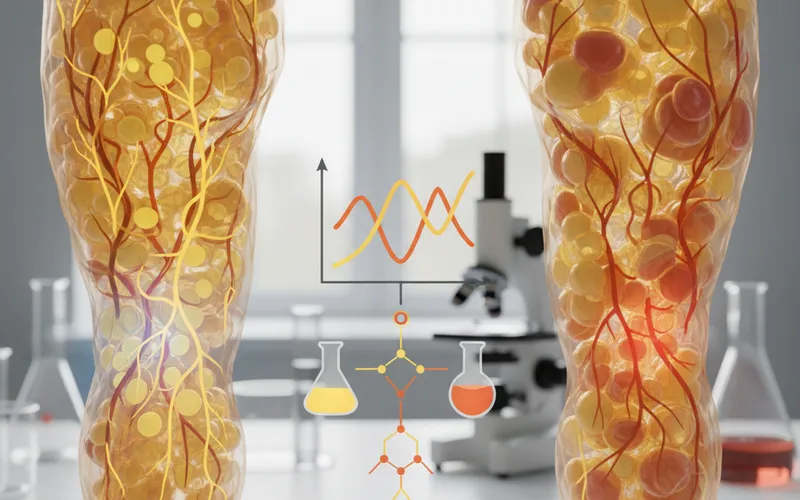
Ein Team von Forschenden aus Norwegen und Schweden, darunter Julianne Lundanes, hat untersucht, wie zwei populäre Ernährungsstrategien – eine kohlenhydratarme (Low-Carb) und eine fettarme (Low-Fat) Diät – die Zusammensetzung der Fettsäuren im Blut von Frauen mit Lipödem beeinflussen. Die zentrale Frage war: Können diese Diäten nicht nur die Fettsäureprofile verändern, sondern auch die oft quälenden Schmerzen lindern, die mit dem Lipödem verbunden sind? Es wurde ein randomisiertes, kontrolliertes Studiendesign gewählt, bei dem die Teilnehmerinnen zufällig einer der beiden Diätgruppen zugewiesen wurden. Über einen Zeitraum von vier Monaten hielten sie sich an die jeweiligen Ernährungspläne. Die Stichprobe umfasste 50 Frauen mit Lipödem, die alle vor der Studie unter Schmerzen litten.
Die Forschenden massen zu Beginn und am Ende der Studie detailliert die Fettsäureprofile im Plasma der Teilnehmerinnen. Dabei ging es um verschiedene Arten von Fettsäuren, wie gesättigte, einfach ungesättigte und mehrfach ungesättigte Fettsäuren sowie deren Verhältnisse. Gleichzeitig wurde die Schmerzintensität der Frauen mittels standardisierter Fragebögen erfasst. Die Ergebnisse zeigen, dass beide Diäten – sowohl Low-Carb als auch Low-Fat – zu signifikanten Veränderungen in den Fettsäureprofilen führten. Interessanterweise wurde bei beiden Gruppen auch eine Reduktion der Schmerzen beobachtet, wobei die Low-Carb-Gruppe tendenziell bessere Ergebnisse in Bezug auf die Schmerzreduktion zeigte, insbesondere bei der Verringerung von entzündungsfördernden Fettsäuren.
Quelle: Lundanes J, Nes VF, Hansson P, Fristedt R, Landberg R, Martins C, Nymo S (2026). Changes in plasma fatty acid composition in females with lipedema following low-carbohydrate vs low-fat diets and associations with pain reduction. Nutrition Journal, Volume/Issue noch nicht final. PubMed-ID: 41808123
Diese Erkenntnisse sind für viele Betroffene von grosser Bedeutung, da sie neue Perspektiven für die Schmerzbehandlung eröffnen könnten. Doch was bedeuten diese Ergebnisse wirklich für dich?
Was heisst das wirklich? – Die kritische Einordnung
Wenn du die Ergebnisse dieser Studie liest, magst du dich fragen, ob eine dieser Diäten die Lösung für deine Lipödem-Probleme sein könnte. Es ist wichtig, die Ergebnisse differenziert zu betrachten. Die Studie zeigt, dass sowohl eine Low-Carb- als auch eine Low-Fat-Diät die Fettsäureprofile im Blut verändern und mit einer Schmerzreduktion einhergehen können. Das ist ein vielversprechender Hinweis. Aber was genau wurde hier gemessen?
Die Forschenden haben sogenannte Surrogatparameter untersucht: die Fettsäureprofile im Blut und die subjektive Schmerzempfindung. Fettsäureprofile sind wichtige Biomarker, die uns viel über den Stoffwechsel verraten können, aber sie sind kein direkter Beweis für eine Heilung oder eine langfristige Verbesserung der Lebensqualität. Die Schmerzreduktion, obwohl subjektiv, ist für Betroffene natürlich ein sehr relevanter Endpunkt. Die Studie war zudem randomisiert und kontrolliert, was methodisch als hochwertig gilt.
Dennoch gibt es Grenzen. Die Stichprobengrösse von 50 Frauen ist für eine erste Untersuchung gut, aber weitere Studien mit grösseren Kohorten wären wünschenswert, um die Ergebnisse zu bestätigen und zu verallgemeinern. Auch die Dauer der Intervention von vier Monaten ist ein guter Anfang, aber Lipödem ist eine chronische Erkrankung. Langzeitstudien sind notwendig, um die Nachhaltigkeit der Effekte zu beurteilen. Es ist auch wichtig zu beachten, dass die Schmerzreduktion in beiden Gruppen auftrat, was darauf hindeuten könnte, dass die Umstellung der Ernährung an sich – unabhängig von der genauen Zusammensetzung – bereits positive Effekte haben kann. Für wen gelten diese Ergebnisse? Die Teilnehmerinnen waren Frauen mit Lipödem. Wenn du selbst betroffen bist, ist diese Studie also potenziell relevant für dich. Wenn nicht, sind die Ergebnisse weniger direkt auf dich übertragbar.
Dein Denkwerkzeug für diesen Abschnitt: Wenn ich diese Ergebnisse auf mich beziehe, wie sehr ähnelt meine aktuelle Situation (Ernährung, Schmerzlevel, Lipödem-Stadium) der der Studienteilnehmerinnen, und welche Faktoren könnten die Ergebnisse für mich persönlich anders ausfallen lassen?
Doch abseits von Fettsäuren und Diätplänen gibt es einen oft übersehenen Faktor, der eine entscheidende Rolle spielen könnte: dein Inneres.
Der Geist im Körper – Die psychophysiologische Perspektive
Die Studie zeigt uns, dass eine Ernährungsumstellung bei Lipödem-Schmerzen helfen kann. Aber wir dürfen nicht vergessen, dass der Körper kein isoliertes System ist, das nur auf Kalorien oder Makronährstoffe reagiert. Dein Gehirn, deine Emotionen, deine Erwartungen – all das spielt eine gewaltige Rolle, insbesondere bei chronischen Schmerzzuständen wie dem Lipödem.
Stell dir vor, du beginnst eine neue Diät mit der festen Überzeugung, dass sie dir helfen wird. Allein diese positive Erwartungshaltung kann bereits einen Placebo-Effekt auslösen, der Schmerzen lindert und das Wohlbefinden verbessert. Dieser Effekt ist real und messbar. Wenn du dich akribisch an einen Ernährungsplan hältst, dich intensiver mit deinem Körper und deiner Gesundheit auseinandersetzt, kann das ein Gefühl von Selbstwirksamkeit und Kontrolle vermitteln. Dieses Gefühl allein kann Stress reduzieren, was wiederum entzündliche Prozesse im Körper beeinflussen und die Schmerzwahrnehmung modulieren kann.
Denke auch an den Hawthorne-Effekt: Die Frauen wussten, dass sie an einer Studie teilnahmen und beobachtet wurden. Allein die Aufmerksamkeit und die Unterstützung durch das Studienteam können dazu führen, dass sich Probandinnen besser fühlen und sich bewusster um ihre Gesundheit kümmern. Das ist kein „Manko“ der Studie, sondern ein Hinweis darauf, wie stark die psychische Komponente physiologische Prozesse beeinflusst.
Darüber hinaus ist chronischer Schmerz oft eng mit Stress und emotionaler Belastung verbunden. Lipödem-Betroffene kämpfen nicht nur mit körperlichen Beschwerden, sondern auch mit Stigmatisierung und Frustration. Eine Ernährungsumstellung, die als effektiver Weg zur Linderung wahrgenommen wird, kann den Teufelskreis aus Schmerz, Stress und schlechter Stimmung durchbrechen. Es ist gut denkbar, dass die beobachtete Schmerzreduktion nicht nur auf die veränderten Fettsäuren zurückzuführen ist, sondern auch auf eine verbesserte Stressregulation, ein höheres Mass an Achtsamkeit für den eigenen Körper und die psychologische Entlastung, endlich etwas Wirksames gegen die Beschwerden zu tun.
Die psychophysiologische Perspektive lehrt uns: Es ist nie nur die „Pille“ oder die „Diät“. Es ist immer das Zusammenspiel von dem, was du tust, und dem, was du darüber denkst und fühlst.
Der grössere Kontext – Einordnung und Abhängigkeiten
Diese Studie ist ein wichtiges Puzzleteil in der Lipödem-Forschung, aber sie ist nicht das ganze Bild. Die Tatsache, dass sie in einem renommierten Journal wie dem Nutrition Journal veröffentlicht und von der Ethikkommission genehmigt wurde, unterstreicht ihre wissenschaftliche Seriosität. Positiv hervorzuheben ist auch, dass die Autoren keine Interessenkonflikte deklariert haben, was die Glaubwürdigkeit der Ergebnisse stützt.
Wo steht diese Studie im Vergleich zur bestehenden Forschung? Bisher gibt es noch nicht viele hochwertige Studien, die den Einfluss spezifischer Diäten auf Lipödem-Symptome, insbesondere Schmerzen, untersuchen. Diese Arbeit leistet hier Pionierarbeit und bestätigt erste Beobachtungen aus der Praxis, dass Ernährung einen Unterschied machen kann. Sie widerspricht keinen etablierten Erkenntnissen, sondern ergänzt sie.
Was wurde nicht kontrolliert und könnte die Ergebnisse beeinflusst haben? Wie bei vielen Ernährungsstudien ist es schwierig, alle Lebensstilfaktoren zu isolieren. Haben die Teilnehmerinnen auch ihr Bewegungsverhalten geändert? Wie sah es mit ihrem Schlaf aus? Haben sie zusätzliche Nahrungsergänzungsmittel eingenommen? Solche Faktoren können die Ergebnisse überlagern oder verstärken. Die Studie konzentrierte sich auf die Fettsäureprofile und die Schmerzreduktion, was eine notwendige Eingrenzung war, aber es ist wichtig zu erkennen, dass der menschliche Körper ein komplexes System ist und viele Variablen gleichzeitig wirken.
Dein Denkwerkzeug für diesen Abschnitt: Bevor ich meine Ernährung radikal umstelle, frage ich mich: Welche anderen Aspekte meines Lebensstils (Stressmanagement, Bewegung, Schlaf) könnten ebenfalls zu meinen Lipödem-Beschwerden beitragen und wären vielleicht ein einfacherer erster Schritt zur Verbesserung?
Nun zur Kernfrage: Was bedeutet das alles für dich und deinen Alltag?
Was heisst das für dich? – Fazit und Alltagsrelevanz
Wenn du selbst unter Lipödem leidest und nach Wegen suchst, deine Schmerzen zu lindern, gibt dir diese Studie wichtige Impulse. Hier sind 2–3 konkrete Erkenntnisse, die du mitnehmen kannst:
- Ernährung als Werkzeug zur Schmerzreduktion: Sowohl eine Low-Carb- als auch eine Low-Fat-Ernährung können die Fettsäureprofile im Blut positiv beeinflussen und zu einer spürbaren Schmerzreduktion führen. Das ist eine ermutigende Nachricht, die zeigt, dass du aktiv etwas tun kannst.
- Individuelle Präferenz zählt: Die Studie deutet an, dass Low-Carb möglicherweise etwas effektiver bei der Schmerzreduktion sein könnte, aber beide Ansätze zeigten positive Effekte. Das bedeutet, dass du nicht zwingend einem starren Plan folgen musst. Finde heraus, welche Ernährungsform für dich im Alltag besser umsetzbar und nachhaltiger ist. Eine Diät, die du nicht durchhalten kannst, wird dir langfristig nicht helfen.
- Achte auf das Gesamtpaket: Die psychophysiologische Perspektive lehrt uns, dass es nicht nur um die Nahrungszusammensetzung geht. Deine Einstellung, deine Erwartungen und dein Umgang mit Stress spielen eine grosse Rolle. Eine bewusste Ernährungsumstellung kann ein Gefühl der Kontrolle und Selbstwirksamkeit vermitteln, was sich positiv auf deine Schmerzwahrnehmung auswirken kann.
Was solltest du NICHT daraus schliessen? Diese eine Studie ist kein Freifahrtschein, eine der Diäten als „Heilmittel“ für Lipödem zu betrachten und andere Behandlungsansätze zu vernachlässigen. Es ist ein vielversprechender Hinweis, aber keine definitive Lösung. Eine radikale Diät ohne medizinische Begleitung kann Risiken bergen, besonders wenn du unter anderen gesundheitlichen Problemen leidest. Konsultiere immer einen Arzt oder eine Ernährungsfachperson, bevor du deine Ernährung grundlegend umstellst.
Diese Erkenntnisse sind besonders relevant für Frauen mit Lipödem, die unter Schmerzen leiden und nach ergänzenden Therapiemöglichkeiten suchen. Für Menschen ohne Lipödem sind die direkten Rückschlüsse auf Schmerzreduktion durch diese spezifischen Diäten weniger relevant, können aber allgemeine Prinzipien einer gesunden Ernährung untermauern.
Denke immer daran: Dein Körper und dein Geist sind untrennbar miteinander verbunden. Was du isst, beeinflusst deine Physiologie, aber auch, wie du dich fühlst und was du denkst, beeinflusst, wie dein Körper auf die Nahrung reagiert und wie du Schmerz wahrnimmst. Dein Wohlbefinden ist das Ergebnis eines komplexen Zusammenspiels. Diese Studie öffnet die Tür für weitere Forschung, die hoffentlich noch präzisere und individuellere Ernährungsempfehlungen für Lipödem-Betroffene liefern wird. Bleib neugierig, höre auf deinen Körper und finde deinen eigenen Weg zu mehr Wohlbefinden.