Kältetoleranz im Alter: Wie Makrophagen und ein bestimmter Rezeptor unsere Körperwärme beeinflussen
Warum frieren wir im Alter schneller? Eine aktuelle Studie zeigt, wie ein spezifischer Rezeptor auf Immunzellen – den Makrophagen – die Wärmeproduktion im braunen Fettgewebe beeinflusst und neue Wege für die Verbesserung der Kältetoleranz im Alter aufzeigen könnte.
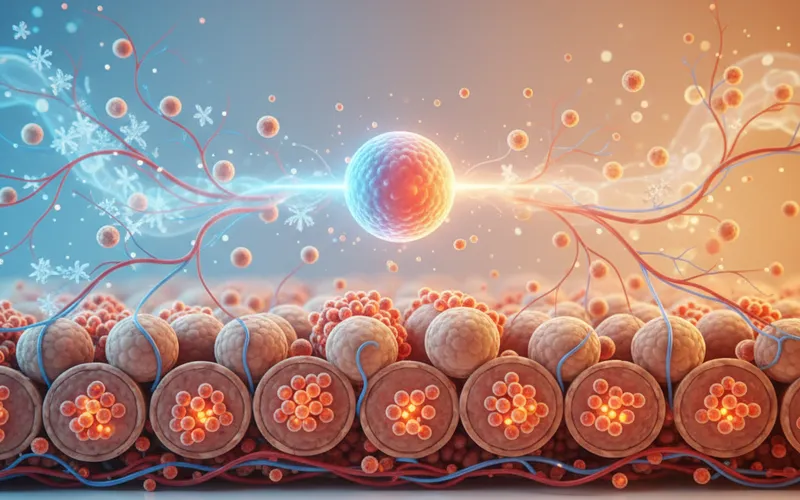
Die Studie – Was wurde untersucht und warum betrifft dich das?
Du kennst das vielleicht: Je älter man wird, desto empfindlicher reagiert der Körper oft auf Kälte. Das gemütliche Zuhause wird zur Festung gegen die Zugluft, und der Wintermantel darf ruhig etwas dicker ausfallen. Doch warum ist das so? Warum lässt die Fähigkeit unseres Körpers, sich warm zu halten, im Alter nach? Diese Frage beschäftigt nicht nur dich, sondern auch die Wissenschaft. Eine aktuelle Studie der Texas A&M University hat sich genau diesem Phänomen gewidmet und dabei einen überraschenden Zusammenhang zwischen unserem Immunsystem und unserer Kältetoleranz entdeckt.
Die Forschenden um Han HW und Sun Y haben untersucht, welche Rolle der sogenannte Growth Hormone Secretagogue Receptor (GHSR) – ein Rezeptor, der unter anderem den Energiestoffwechsel und die Immunfunktion reguliert – bei der altersbedingten Abnahme der Wärmeproduktion spielt. Sie wussten bereits aus früheren Arbeiten, dass eine generelle Deaktivierung dieses Rezeptors die Anpassung des braunen Fettgewebes (BAT) an Kälte im Alter verbessert. Doch welche Zellen genau dafür verantwortlich waren, blieb unklar. Da GHSR auch in Makrophagen, einer Art Immunzellen, vorkommt und deren GHSR-Expression mit dem Alter zunimmt, konzentrierten sie sich auf diese Zelllinie.
Für ihre Studie nutzten die Wissenschaftler männliche Mäuse, bei denen der GHSR-Rezeptor nur in den myeloischen Zellen – zu denen auch die Makrophagen gehören – deaktiviert war (LysM-Cre; Ghsrf/f-Mäuse, kurz „KO“-Mäuse genannt). Sie verglichen diese Mäuse mit normalen Mäusen sowohl in jungen als auch in alten Jahren und setzten sie Kältestress (4 °C) aus. Dabei massen sie die Körperkerntemperatur, Glukosewerte, die Masse des braunen Fettgewebes und die Zusammensetzung der Immunzellen im BAT.
Die Ergebnisse waren aufschlussreich: Alte normale Mäuse zeigten, wie erwartet, eine beeinträchtigte Wärmeproduktion. Ihre Körperkerntemperatur sank unter Kälte stark ab, der kälteinduzierte Anstieg des Glukosespiegels war gedämpft, und ihr braunes Fettgewebe war reduziert. Zudem fanden die Forschenden eine erhöhte Infiltration von entzündungsfördernden CD38+-Makrophagen im BAT. Im Gegensatz dazu zeigten die KO-Mäuse, bei denen GHSR in den Makrophagen fehlte, sowohl im jungen als auch im alten Alter eine verbesserte Kältetoleranz. Besonders bemerkenswert war, dass alte KO-Mäuse eine erhaltene Masse des braunen Fettgewebes und eine Verschiebung der residenten Makrophagen hin zu einem entzündungshemmenden Zustand aufwiesen. Dies spiegelte sich auch in reduzierten entzündungsfördernden Markern (Ccl2, Nos2) und einer erhöhten Expression des wärmeproduzierenden Gens Ppargc1a sowie des UCP1-Proteins unter Kälteeinwirkung wider.
Diese Erkenntnisse deuten darauf hin, dass der GHSR-Rezeptor in Makrophagen die altersbedingte entzündliche Umgestaltung des braunen Fettgewebes vorantreibt. Seine Deaktivierung schafft ein Immunmilieu, das die Wärmeproduktion fördert. Die Autoren schliessen daraus, dass das gezielte Ansprechen des Makrophagen-GHSR eine neue therapeutische Strategie bieten könnte, um die Wärmeproduktion wiederherzustellen und die Kälteresilienz im Alter zu verbessern.
Quelle: Han HW, Kim DM, Baratiboldaji R, Wang H, Liu Z, Shen Z, Jha DK, Teferra T, Septiningsih EM, Patil B, Sun Y (2026). Myeloid GHSR Deficiency Protects Against Thermogenic Impairment in Aging Through Immune Remodeling of Brown Adipose Tissue. Cells, 15(4):321. PubMed-ID: 41744764
Was heisst das wirklich? – Die kritische Einordnung
Diese Studie liefert faszinierende Einblicke in die komplexen Mechanismen, die unserer Kältetoleranz im Alter zugrunde liegen. Sie zeigt, dass die Immunzellen – die Makrophagen – eine viel aktivere Rolle spielen, als man vielleicht intuitiv vermuten würde. Es ist nicht nur das braune Fettgewebe selbst, das altert, sondern auch die Art und Weise, wie unser Immunsystem es reguliert.
Die Forschenden haben hier mit einem sehr spezifischen Studiendesign gearbeitet: Sie haben genetisch veränderte Mäuse verwendet, bei denen ein bestimmter Rezeptor nur in einer Zellart ausgeschaltet war. Das ist wissenschaftlich präzise, um die Rolle dieses Rezeptors zu isolieren. Die Ergebnisse sind statistisch signifikant und die gemessenen Effekte – wie die verbesserte Kältetoleranz und die erhaltene BAT-Masse – sind klinisch bedeutsam für die Mäuse. Ein klares Plus ist auch, dass die Autoren ihre Interessenkonflikte offengelegt haben und keine vorhanden waren, was die Glaubwürdigkeit stärkt.
Doch wie immer gilt: Es handelt sich um eine Mausstudie. Auch wenn Mäuse wichtige Modelle für die menschliche Physiologie sind, lassen sich Ergebnisse nicht 1:1 auf den Menschen übertragen. Die genauen Mechanismen und die Wirkung des GHSR in menschlichen Makrophagen müssen noch weiter erforscht werden. Zudem wurden nur männliche Mäuse untersucht. Es ist bekannt, dass es Geschlechtsunterschiede in der Thermoregulation und Immunantwort geben kann, die hier nicht berücksichtigt wurden. Das Alter der Mäuse, die als „alt“ galten, entspricht nicht exakt dem menschlichen Alter, auch wenn es ein gutes Modell für altersbedingte Veränderungen darstellt.
Ein weiterer Punkt ist die Messung von Surrogatparametern wie der Genexpression (Ppargc1a, Ccl2, Nos2). Diese sind Indikatoren für physiologische Veränderungen, aber nicht direkt die „harten Endpunkte“ wie das tatsächliche Wohlbefinden oder die Lebensqualität. Die Körperkerntemperatur ist hier schon ein stärkerer Indikator für die Kältetoleranz.
Für wen gelten die Ergebnisse? Momentan vor allem für Mäuse. Aber die Studie öffnet eine Tür für die Entwicklung neuer Therapieansätze für Menschen, die unter altersbedingter Kälteempfindlichkeit leiden. Es ist ein Puzzleteil, das uns hilft, das Gesamtbild besser zu verstehen.
Denkwerkzeug: Wenn du eine Studie liest, frag dich immer: Wie gross ist die Lücke zwischen dem, was gemessen wurde, und dem, was ich für mein eigenes Leben wissen möchte? Und wie gut passen die Studienteilnehmer zu mir?
Der Geist im Körper – Die psychophysiologische Perspektive
Diese Studie konzentriert sich auf zelluläre und molekulare Mechanismen, ein klassischer Ansatz in der biomedizinischen Forschung. Doch aus psychophysiologischer Sicht ist es spannend, darüber nachzudenken, wie die hier beschriebenen physiologischen Veränderungen mit unserem Erleben von Kälte und unserem Umgang damit zusammenhängen.
Stell dir vor, du bist eine ältere Person, die schneller friert. Allein die Erwartung, empfindlicher auf Kälte zu reagieren, kann sich auf dein Verhalten und dein Wohlbefinden auswirken. Die subjektive Kälteempfindung ist nicht nur ein physiologisches Signal, sondern wird auch massgeblich von psychologischen Faktoren beeinflusst. Wenn du weisst, dass dein Körper sich schlechter an Kälte anpasst, kann das zu mehr Stress führen, wenn du kalten Umgebungen ausgesetzt bist. Chronischer Stress wiederum beeinflusst das Immunsystem und kann Entzündungsprozesse fördern – ein Teufelskreis, der möglicherweise die hier beschriebene altersbedingte entzündliche Umgestaltung des braunen Fettgewebes noch verstärkt.
Das psychophysiologische Interaktionsmodell lehrt uns, dass Körper und Geist untrennbar verbunden sind. Die emotionale Reaktion auf Kälte, die Angst vor Unterkühlung oder einfach der Unmut über die nachlassende Anpassungsfähigkeit können die physiologischen Reaktionen des Körpers modulieren. Könnte eine verbesserte psychische Resilienz gegenüber den Herausforderungen des Alterns – einschliesslich der Kälteempfindlichkeit – nicht auch indirekt die physiologische Anpassung unterstützen, indem sie beispielsweise chronischen Stress reduziert, der wiederum entzündliche Prozesse im BAT fördert?
Auch wenn die Studie diesen Aspekt nicht direkt untersucht, ist es gut denkbar, dass die Selbstwirksamkeitserwartung – also der Glaube an die eigene Fähigkeit, mit Kälte umzugehen – eine Rolle spielt. Eine Person, die sich mental stark fühlt und an ihre Anpassungsfähigkeit glaubt, könnte auch physiologisch anders reagieren als jemand, der sich als Opfer der Kälte fühlt. Das ist der Punkt, an dem wir über die reine Physiologie hinausdenken müssen. Die Entzündungsmarker und die Makrophagen-Aktivität, die in dieser Studie gemessen wurden, sind nicht nur das Ergebnis eines molekularen Prozesses, sondern stehen auch in Wechselwirkung mit dem gesamten System Mensch, einschliesslich seiner Gedanken und Gefühle.
Der grössere Kontext – Einordnung und Abhängigkeiten
Diese Studie ist ein interessantes Puzzleteil in der wachsenden Forschung zur Thermoregulation und zum Alterungsprozess. Sie bestätigt die Beobachtung, dass die Fähigkeit zur Wärmeproduktion im Alter nachlässt, und liefert eine neue mechanistische Erklärung, die das Immunsystem in den Fokus rückt. Die Rolle von Makrophagen im Stoffwechsel und bei Entzündungsprozessen ist ein aktives Forschungsfeld, und diese Arbeit erweitert unser Verständnis, indem sie eine spezifische Funktion des GHSR-Rezeptors in diesen Zellen aufzeigt.
Es ist wichtig zu erwähnen, dass die Autoren keine Interessenkonflikte angegeben haben und die Studie von der Texas A&M University durchgeführt wurde. Dies ist ein positives Zeichen für die Unabhängigkeit der Forschung.
Was wurde nicht kontrolliert? Wie bei jeder Studie mussten die Forschenden Annahmen treffen und den Fokus eingrenzen. Lebensstilfaktoren wie Ernährung, Bewegung, Schlaf und chronischer Stress sind allesamt bekannt dafür, sowohl das Immunsystem als auch die Thermoregulation zu beeinflussen. Obwohl die Mäuse unter kontrollierten Laborbedingungen gehalten wurden, sind diese Faktoren im menschlichen Alltag von grosser Bedeutung. Eine optimierte Ernährung oder regelmässige Bewegung könnten beispielsweise die Entzündungsreaktionen beeinflussen und damit möglicherweise auch die Funktion des braunen Fettgewebes. Die Studie konzentriert sich auf einen genetischen Eingriff; in der Realität interagieren Genetik und Umwelt ständig.
Diese Arbeit ist ein Beitrag zur Grundlagenforschung. Sie öffnet die Tür für weitere Studien, die herausfinden könnten, ob und wie man den GHSR-Rezeptor in Makrophagen beim Menschen therapeutisch beeinflussen kann. Es ist ein erster Schritt auf einem langen Weg, aber ein vielversprechender.
Denkwerkzeug: Wenn eine Studie eine Ursache für ein Problem identifiziert, frag dich: Ist das die einzige Ursache? Oder gibt es andere Faktoren – besonders aus meinem Lebensstil –, die das Problem auch beeinflussen könnten und die ich selbst in der Hand habe?
Was heisst das für dich? – Fazit und Alltagsrelevanz
Was kannst du aus dieser komplexen Mäusestudie für dein eigenes Leben mitnehmen? Auch wenn direkte Empfehlungen noch verfrüht wären, lassen sich einige spannende Perspektiven ableiten:
- Dein Immunsystem ist mehr als nur Krankheitsabwehr: Diese Studie unterstreicht einmal mehr, wie eng Immunsystem, Stoffwechsel und Alterungsprozesse miteinander verwoben sind. Es ist nicht nur dafür da, Viren und Bakterien abzuwehren, sondern spielt eine aktive Rolle bei der Regulierung deiner Körpertemperatur und deines Energiehaushalts. Ein gesundes, ausgeglichenes Immunsystem könnte also auch zu einer besseren Kältetoleranz beitragen.
- Entzündungen und Alterung: Die Studie zeigt, dass entzündliche Prozesse im braunen Fettgewebe mit einer verminderten Wärmeproduktion im Alter einhergehen. Dies passt gut zu der wachsenden Erkenntnis, dass chronische, niedriggradige Entzündungen ein Treiber vieler altersbedingter Beschwerden sind. Alles, was du tust, um Entzündungen im Körper zu reduzieren – sei es durch eine entzündungshemmende Ernährung, ausreichend Schlaf oder Stressmanagement – kann potenziell auch deine physiologischen Anpassungsfähigkeiten unterstützen.
- Die Kältetoleranz im Alter ist kein Schicksal: Auch wenn es eine natürliche Tendenz gibt, im Alter kälteempfindlicher zu werden, zeigt diese Studie, dass es potenzielle Ansatzpunkte gibt, diesen Prozess zu beeinflussen. Die Forschung sucht weiter nach Wegen, die körpereigene Wärmeproduktion zu stärken.
Was solltest du NICHT daraus schliessen? Bitte fang jetzt nicht an, nach Wegen zu suchen, den GHSR-Rezeptor in deinen Makrophagen zu blockieren! Das ist ein hochkomplexer Eingriff, der derzeit nur in der Grundlagenforschung unter streng kontrollierten Bedingungen untersucht wird. Es ist noch ein sehr, sehr langer Weg von der Mausstudie zur sicheren Anwendung am Menschen.
Für wen ist das besonders relevant? Diese Erkenntnisse sind besonders relevant für Menschen, die unter altersbedingter Kälteempfindlichkeit leiden und sich fragen, warum das so ist. Es gibt ihnen Hoffnung, dass die Wissenschaft an Lösungen arbeitet. Für jüngere Menschen ist es eine Erinnerung daran, wie wichtig es ist, schon früh auf einen gesunden Lebensstil zu achten, um die physiologischen Reserven für das Alter zu stärken.
Der psychophysiologische Gedanke zum Schluss bleibt bestehen: Dein Körper reagiert nicht nur auf das, was du isst, wie du dich bewegst oder welche Gene du hast. Er reagiert auch auf das, was du denkst, wie du dich fühlst und wie du mit Stress umgehst. Die Fähigkeit, Kälte zu tolerieren, mag physiologisch bedingt sein, aber dein Geist kann dir helfen, dich besser darauf einzustellen und die Auswirkungen zu mildern. Erinnere dich daran, dass du ein aktiver Gestalter deiner Gesundheit bist, jeden Tag aufs Neue.
Die Forschung geht weiter, und wir dürfen gespannt sein, welche weiteren Geheimnisse der Körper in Bezug auf die Kältetoleranz im Alter noch lüften wird. Bleib neugierig und hör auf deinen Körper – er erzählt dir mehr, als du denkst.