Stress im Gehirn: Ein Schlüsselprotein entdeckt
Eine aktuelle Studie beleuchtet, wie Stress auf zellulärer Ebene unser Gehirn beeinflusst. Sie identifiziert ein Protein im Hypothalamus, das eine zentrale Rolle bei der Stressreaktion spielt. Was bedeutet das für deine Gesundheit und dein Wohlbefinden?
Die Studie – Was wurde untersucht und warum betrifft dich das?
Stell dir vor, du stehst plötzlich vor einer unerwarteten Herausforderung: ein wichtiger Termin rückt näher, der Stau auf dem Weg zur Arbeit nimmt kein Ende, oder eine unangenehme Nachricht erreicht dich. Dein Körper reagiert sofort. Dein Herz schlägt schneller, deine Muskeln spannen sich an, und dein Gehirn schaltet in den Alarmmodus. Dieser Zustand, den wir als Stress kennen, ist eine überlebenswichtige Reaktion. Doch was passiert dabei eigentlich genau in deinem Kopf? Und gibt es vielleicht einen bisher unbekannten Akteur, der diese Reaktionen massgeblich steuert?
Genau diesen Fragen ist ein Forschungsteam der Colorado State University in den USA nachgegangen. Sie haben sich darauf konzentriert, die genetischen und zellulären Mechanismen zu entschlüsseln, die im Hypothalamus – einem zentralen Steuerorgan im Gehirn – ablaufen, wenn wir Stress erleben. Ihr besonderes Augenmerk lag auf dem paraventrikulären Kern (PVN), einer Region im Hypothalamus, die als Schaltzentrale der Stressantwort gilt.
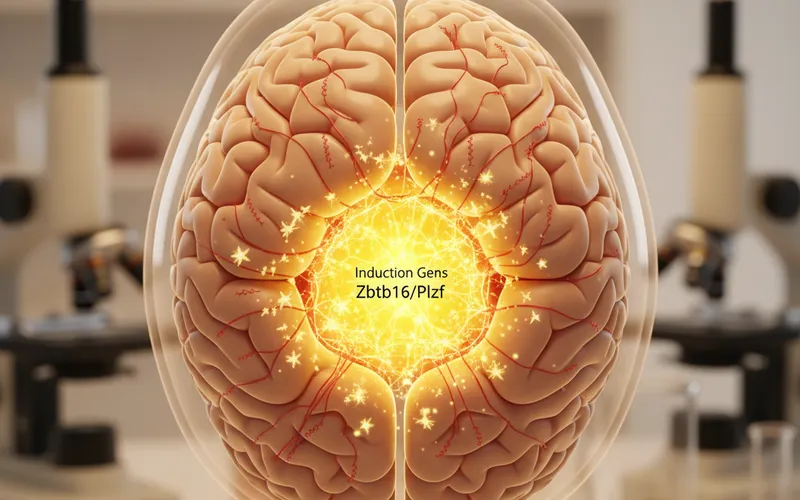
Die Forschenden um Roueinfar et al. setzten erwachsene Mäuse über zwei Stunden verschiedenen Stressoren aus. Anschliessend analysierten sie die Genexpressionsprofile im PVN der Tiere mittels RNA-Sequenzierung. Dabei stiessen sie auf ein bisher wenig beachtetes Transkriptionsfaktor-Protein namens Zbtb16 (auch bekannt als PLZF). Es zeigte sich, dass die Zbtb16-Genexpression sowohl bei männlichen als auch bei weiblichen Mäusen innerhalb von zwei Stunden nach Stress – sei es durch physische Fixierung oder die Injektion eines synthetischen Glukokortikoids (Dexamethason) – um das Doppelte anstieg. Glukokortikoide sind die Hormone, die dein Körper bei Stress freisetzt, wie das bekannte Cortisol.
Weitere detaillierte Untersuchungen mittels Immunhistochemie bestätigten, dass das Zbtb16-Protein im PVN vorhanden war und seine Menge nach nur 20 Minuten Stress und vier Stunden Erholung zunahm. Interessanterweise fand das Team heraus, dass Zbtb16 besonders stark in den sogenannten CRH-Neuronen im PVN exprimiert wird. Diese Neuronen sind bekannt dafür, dass sie nach Stress aktiviert werden und eine Schlüsselrolle in der Hypothalamus-Hypophysen-Nebennierenrinden-Achse (HPA-Achse) spielen, die unsere Stressreaktion reguliert. Die HPA-Achse beeinflusst wiederum grundlegende Funktionen wie Fütterung, Fortpflanzung und Aggression.
Die Forschenden untersuchten auch, wie eine Immunreaktion auf Zbtb16 wirkt, indem sie den Mäusen Tumornekrosefaktor alpha (TNFα) injizierten, einen Botenstoff, der bei Entzündungen ausgeschüttet wird. Dies zeigte, dass die zellspezifische Expression von Zbtb16 nicht immer gleich ist: Während es im mittleren PVN mit CRH-Neuronen zusammen auftrat, war es in den umliegenden Astrozyten – Stützzellen des Gehirns – stärker vertreten. Diese Ergebnisse weisen darauf hin, dass Zbtb16 ein durch Glukokortikoide und Zytokine (wie TNFα) regulierter Transkriptionsfaktor ist, der regions- und zelltypspezifische Rollen in der Stressverarbeitung des PVN spielt.
Quelle: Roueinfar M, Mohammadzadeh P, Schwerdtfeger LA, Handa RJ, Tobet SA (2026). Region and Cell-Selective Induction of Zbtb16/Plzf by Multiple Stressors in the Adult Murine Hypothalamus. The European journal of neuroscience, 63(6). PubMed-ID: 41816969
Was heisst das wirklich? – Die kritische Einordnung
Die Studie liefert faszinierende Einblicke in die molekularen Mechanismen der Stressreaktion in unserem Gehirn. Doch wie bei jeder wissenschaftlichen Veröffentlichung ist es wichtig, die Ergebnisse kritisch zu beleuchten und einzuordnen. Du bist kein Durchschnitt, und die Ergebnisse einer Mäusestudie lassen sich nicht eins zu eins auf den Menschen übertragen – aber sie geben uns wertvolle Hinweise.
Ein grosser Pluspunkt der Studie ist das detaillierte methodische Vorgehen. Die Kombination aus RNA-Sequenzierung und Immunhistochemie ermöglichte es, nicht nur die Genexpression zu messen, sondern auch die Proteine direkt in den relevanten Gehirnregionen und Zelltypen zu lokalisieren. Das ist ein starker Hinweis darauf, dass Zbtb16 tatsächlich eine Rolle spielt und nicht nur ein zufälliges Nebenprodukt ist.
Allerdings handelt es sich um eine Tierstudie an Mäusen. Auch wenn Mäuse physiologisch viele Ähnlichkeiten mit uns Menschen haben, sind ihre Stressoren, ihr Gehirnaufbau und ihre Reaktionen nicht identisch. Ein zweistündiger multimodaler Stress, wie er in der Studie angewendet wurde, ist für eine Maus intensiv und akut. Unser menschlicher Stress ist oft subtiler, chronischer und psychologischer Natur. Das heisst, wir können die Ergebnisse nicht direkt auf unsere komplexen menschlichen Stressreaktionen übertragen, aber sie dienen als wichtige Grundlage für weitere Forschung.
Zudem wurde hier ein «harter Endpunkt» auf molekularer Ebene gemessen – die Expression eines bestimmten Gens und Proteins. Dies ist zwar objektiv messbar, aber es sind sogenannte Surrogatparameter. Es sagt uns noch nichts darüber aus, wie sich eine Veränderung von Zbtb16 direkt auf dein subjektives Stresserleben, deine Stimmung, deine kognitive Leistungsfähigkeit oder deine langfristige Gesundheit auswirkt. Es ist ein Puzzleteil, das uns hilft, das Gesamtbild besser zu verstehen.
Denkwerkzeug: Wenn du eine neue Studie liest, die an Tieren durchgeführt wurde, frage dich: Sind die Stressoren, die in dieser Studie verwendet wurden, vergleichbar mit den Stressoren, denen ich in meinem Leben begegne? Und inwiefern könnte die Komplexität des menschlichen Gehirns und unserer Psyche über die hier gezeigten molekularen Reaktionen hinausgehen?
Diese Studie hilft uns, die biologische Grundlage von Stress besser zu verstehen, aber sie ist nur ein Anfang. Sie zeigt uns, dass Stress tiefe Spuren in unserem Gehirn hinterlässt – bis auf die Ebene unserer Gene und Proteine.
Der Geist im Körper – Die psychophysiologische Perspektive
Dies ist der Punkt, an dem wir über das hinausblicken, was im Labor messbar ist, und die untrennbare Verbindung von Psyche und Körper ins Spiel bringen. Die Studie zeigt uns, dass Stress auf molekularer Ebene im Hypothalamus Spuren hinterlässt. Doch was löst diesen Stress überhaupt aus und wie beeinflusst unsere innere Welt die Aktivierung von Proteinen wie Zbtb16?
Das psychophysiologische Interaktionsmodell lehrt uns, dass unsere Gedanken, Emotionen und Überzeugungen keine isolierten Phänomene sind, sondern direkt in unsere Physiologie eingreifen. Eine Maus reagiert auf physischen Stress, aber wir Menschen reagieren genauso stark – wenn nicht stärker – auf psychischen Stress. Die Angst vor einem Vortrag, die Sorge um die Zukunft, das Grübeln über eine vergangene Situation – all das aktiviert unsere HPA-Achse und setzt Stresshormone frei, genau wie ein physischer Reiz.
Es ist gut denkbar, dass auch die Erwartungshaltung und die Bewertung einer Situation eine Rolle spielen. Wenn du eine Herausforderung als bedrohlich empfindest, wird die Stressreaktion stärker ausfallen, als wenn du sie als bewältigbar einschätzt. Diese subjektive Interpretation kann die Freisetzung von Glukokortikoiden beeinflussen, die wiederum die Aktivierung von Zbtb16 steuern können. Die Studie zeigt, dass synthetische Glukokortikoide Zbtb16 induzieren können. Das legt die Vermutung nahe, dass auch die körpereigenen Stresshormone, die durch unsere psychische Verfassung freigesetzt werden, diesen Mechanismus beeinflussen.
Auch der Hawthorne-Effekt spielt hier eine Rolle. Menschen verändern ihr Verhalten und ihre physiologischen Reaktionen, wenn sie wissen, dass sie beobachtet werden oder an einer Studie teilnehmen. Obwohl diese Studie an Mäusen durchgeführt wurde, ist es wichtig, sich bewusst zu machen, dass bei menschlichen Studien die psychische Einstellung der Probanden – ihre Motivation, ihre Erwartungshaltung an die Intervention – einen erheblichen Einfluss auf die Ergebnisse haben kann. Ein Placebo-Effekt ist im Grunde ein psychophysiologischer Effekt, bei dem die Erwartung einer Wirkung eine tatsächliche physiologische Veränderung hervorruft.
Diese Studie erinnert uns daran, dass Stress nicht nur «im Kopf» stattfindet, sondern tiefgreifende biologische Veränderungen auslösen kann. Deine Gedanken sind nicht nur Gedanken; sie sind ein mächtiger Treiber deiner Physiologie.
Der grössere Kontext – Einordnung und Abhängigkeiten
Diese Studie ist ein kleines, aber wichtiges Puzzleteil im komplexen Bild der Stressforschung. Sie erweitert unser Verständnis darüber, wie unser Gehirn auf Stress reagiert und welche molekularen Akteure dabei eine Rolle spielen könnten. Die Erkenntnis, dass Zbtb16 ein Glukokortikoid- und Zytokin-induzierter Transkriptionsfaktor ist, der regions- und zelltypspezifische Aufgaben hat, ist bedeutsam.
Die Studie bestätigt bestehende Erkenntnisse über die zentrale Rolle des Hypothalamus und der HPA-Achse bei der Stressreaktion. Sie geht aber einen Schritt weiter, indem sie einen spezifischen molekularen Regulator identifiziert. Das ist wichtig, weil es potenziell neue Ansatzpunkte für die Entwicklung von Therapien bei stressbedingten Erkrankungen eröffnen könnte, falls sich Zbtb16 als ein steuerbarer Faktor herausstellt.
Ein grosser Vorteil dieser Studie ist, dass die Autoren keine Interessenkonflikte angegeben haben. Dies stärkt die Glaubwürdigkeit der Forschung und zeigt, dass die Ergebnisse nicht durch externe kommerzielle Interessen beeinflusst wurden. Die Finanzierung erfolgte durch staatliche US-amerikanische Forschungsinstitute, was ebenfalls für eine unabhängige Wissenschaft spricht.
Was in dieser Studie nicht kontrolliert wurde, sind die langfristigen Auswirkungen der Zbtb16-Induktion. Wir wissen nun, dass es bei akutem Stress hochreguliert wird. Aber was passiert, wenn dieser Stress chronisch wird? Spielt Zbtb16 dann immer noch dieselbe Rolle, oder passen sich die Mechanismen an? Auch die Wechselwirkung mit anderen Neurotransmittern und Hormonen, die bei Stress eine Rolle spielen, wurde hier nicht im Detail untersucht. Diese Studie konzentriert sich auf einen spezifischen Mechanismus, und ein menschliches Leben ist weitaus komplexer.
Denkwerkzeug: Wenn du von einer neuen wissenschaftlichen Entdeckung hörst, frage dich: Wie passt dieses neue Wissen in das, was ich bereits über das Thema weiss? Ist es eine Bestätigung, eine Ergänzung oder ein Widerspruch? Und welche Faktoren – wie z.B. chronischer Stress, Ernährung oder Schlaf – könnten hier zusätzlich eine Rolle spielen, die in der Studie nicht berücksichtigt wurden?
Was heisst das für dich? – Fazit und Alltagsrelevanz
Diese Studie gibt uns einen tieferen Einblick in die feinen Zahnräder deiner Stressreaktion. Auch wenn die Forschung an Mäusen durchgeführt wurde, kannst du daraus wichtige Erkenntnisse für dein eigenes Leben ziehen:
- Stress hinterlässt Spuren auf Mikroebene: Die Studie zeigt eindrücklich, dass Stress nicht nur ein Gefühl ist, sondern handfeste molekulare Veränderungen in deinem Gehirn auslöst. Das unterstreicht die Bedeutung eines bewussten Stressmanagements.
- Deine Psyche ist ein mächtiger Treiber: Auch wenn die Studie physische Stressoren verwendete, wissen wir aus dem psychophysiologischen Modell, dass psychischer Stress ähnliche Kaskaden in deinem Körper auslösen kann. Deine Gedanken und Bewertungen von Situationen können also direkt deine Biologie beeinflussen.
- Achte auf dein Stresslevel: Die Entdeckung von Zbtb16 als einem potenziellen Regulator der Stressantwort ist ein weiterer Beleg dafür, wie wichtig es ist, chronischen Stress zu vermeiden und proaktiv Stressmanagement-Strategien in deinen Alltag zu integrieren.
Was du daraus nicht schliessen solltest, ist, dass Zbtb16 der alleinige Schlüssel zu allen stressbedingten Problemen ist. Diese Studie ist ein kleiner Schritt in einem riesigen Forschungsfeld. Es gibt noch keine direkten Anwendungen oder Empfehlungen, die sich aus dieser einzelnen Entdeckung ableiten lassen.
Diese Erkenntnisse sind besonders relevant für Menschen, die unter chronischem Stress leiden oder sich für die molekularen Grundlagen von Stress und Resilienz interessieren. Für Personen, die nur gelegentlich leichten Stress erleben, ist die direkte Relevanz geringer, aber das Bewusstsein für die internen Prozesse bleibt wertvoll.
Welche Fragen bleiben offen? Es wäre spannend zu sehen, ob Zbtb16 auch bei chronischem Stress eine Rolle spielt und ob eine Modulation dieses Proteins die negativen Auswirkungen von Stress auf das Gehirn und den Körper beeinflussen könnte. Auch die genaue Funktion von Zbtb16 in den verschiedenen Zelltypen des Hypothalamus bedarf weiterer Forschung.
Deine Gesundheit ist ein komplexes Zusammenspiel. Dein Körper reagiert nicht nur auf das, was du isst oder wie du dich bewegst, sondern auch auf das, was du denkst und fühlst. Nimm diese wissenschaftlichen Einblicke als Anregung, achtsamer mit deinem inneren Erleben umzugehen und die Signale deines Körpers ernst zu nehmen – denn sie sind oft ein Spiegel deiner Gedankenwelt.