Die Plazenta im Stress: Wie sie bei Wachstumsverzögerung des Babys kompensiert
Wenn Babys im Mutterleib nicht optimal wachsen, leistet die Plazenta Erstaunliches, um das Kind zu versorgen. Eine neue Studie zeigt, wie sie biochemisch umprogrammiert wird, um Nährstoffmängel auszugleichen und gleichzeitig ihre eigenen Grenzen aufzeigt. Was das für die Gesundheit von Mutter und Kind bedeutet, erfährst du hier.
Die Studie – Was wurde untersucht und warum betrifft dich das?
Stell dir vor, du bist der wichtigste Versorger und Beschützer deines Kindes – noch bevor es überhaupt auf die Welt kommt. Genau das ist die Rolle der Plazenta. Sie ist die Nabelschnur des Lebens, die dein Baby mit allem versorgt, was es zum Wachsen braucht, und gleichzeitig Abfallstoffe entsorgt. Aber was passiert, wenn diese lebenswichtige Verbindung unter Stress gerät, weil das Baby nicht so wächst, wie es sollte? Rund 8% aller Schwangerschaften in westlichen Ländern sind davon betroffen, dass das Baby im Mutterleib zu klein ist (sogenannte fetale Wachstumsrestriktion, FGR).
Genau diesem komplexen und lebenswichtigen Thema widmete sich ein Forschungsteam um Xodo S. und Kollegen von der Universität Udine in Italien. Sie wollten herausfinden, wie sich die Plazenta auf molekularer Ebene anpasst, wenn ein Baby im Mutterleib zu klein für sein Gestationsalter (SGA – small-for-gestational-age) ist. Sie wählten dafür einen besonders umfassenden Ansatz: Sie kombinierten RNA-Sequenzierung (um zu sehen, welche Gene aktiv sind) mit metabolomischen Analysen (um zu messen, welche Stoffwechselprodukte vorhanden sind). So konnten sie ein detailliertes Bild der biochemischen Veränderungen in der Plazenta zeichnen.
Die Forschenden untersuchten Plazentagewebe von Müttern, deren Babys entweder altersgerecht (AGA – appropriate-for-gestational-age) oder zu klein waren. Dabei unterschieden sie zwei Gruppen von zu kleinen Babys: SGA10 (Babys, deren Gewicht unter dem 10. Perzentil lag) und SGA3 (Babys, deren Gewicht sogar unter dem 3. Perzentil lag – also extrem klein waren). Zusätzlich nutzten sie sogenannte Trophoblast-Organoide, kleine 3D-Zellkulturen, die die Plazenta nachbilden, um die Veränderungen noch genauer zu analysieren.
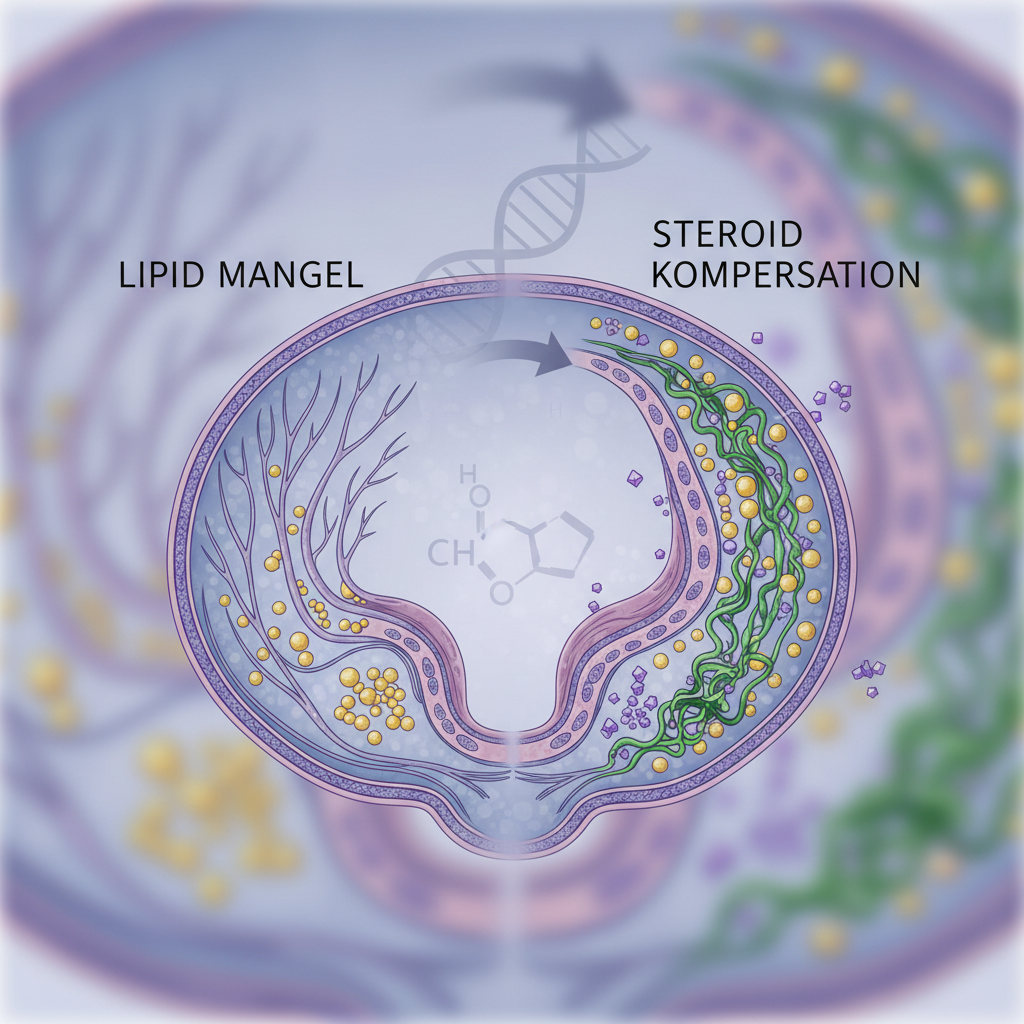
Die zentralen Ergebnisse waren beeindruckend und zeigten eine erstaunliche Anpassungsfähigkeit der Plazenta. Bei Plazenten von SGA-Babys stellten die Forschenden fest, dass die Aufnahme von Cholesterin und die Produktion von Steroidhormonen deutlich erhöht waren. Das ist ein Zeichen dafür, dass die Plazenta versucht, die Versorgung des Babys mit diesen wichtigen Bausteinen zu optimieren. Bei den extrem kleinen SGA3-Babys ging diese Veränderung sogar noch weiter: Hier wurde ein Stoffwechselweg namens NAD+-Salvage-Pathway aktiviert. Dieser Weg hilft, NAD+ zu recyceln, ein Molekül, das für die Energieproduktion und den Redoxhaushalt (also das Gleichgewicht zwischen schädlichen freien Radikalen und schützenden Antioxidantien) entscheidend ist. Dieser Mechanismus scheint die erhöhte Steroidproduktion zu unterstützen und die Plazenta unter Stress leistungsfähig zu halten.
Trotz dieser Kompensationsversuche zeigten sich aber auch klare Grenzen. Die Konzentrationen wichtiger Steroidmetaboliten, wie Androstendion-Sulfat und Östrogene, waren in den SGA-Plazenten reduziert. Das deutet darauf hin, dass die erhöhte Produktion nicht ausreicht, um den Bedarf vollständig zu decken. Noch besorgniserregender war ein weiteres Ergebnis der Stoffwechselanalyse: Es gab einen deutlichen Mangel an Phospholipiden, die reich an Omega-3- und Omega-6-Fettsäuren sind. Auch die freien Formen wichtiger Fettsäuren wie Arachidonsäure (ARA) und Docosahexaensäure (DHA) sowie bestimmte Prostaglandine und Thromboxane waren reduziert. Diese Moleküle sind enorm wichtig für die Entwicklung des Gehirns des Babys und die Regulation der Blutgefässe in der Plazenta. Die Forschenden vermuten, dass die Plazenta ihre eigenen Lipidspeicher mobilisiert, um den Mangel an diesen Fettsäuren auszugleichen, was wiederum ihre eigene Funktion beeinträchtigen könnte.
Zusammenfassend lässt sich sagen, dass die Studie die enorme Anpassungsfähigkeit der Plazenta bei Wachstumsverzögerung aufzeigt, aber auch die damit verbundenen Risiken für die Entwicklung des Babys. Es ist eine faszinierende Momentaufnahme der biochemischen Schlacht, die die Plazenta im Stillen schlägt, um das Ungeborene zu schützen.
Quelle: Xodo S, Driul L, Tolotto V, Di Giorgio E, Xodo LE (2026). Steroidogenic compensation and lipid deficiency with enhanced NAD(+) salvage in small-for-gestational-age placenta. The FEBS Journal. PubMed-ID: 41804554
Was heisst das wirklich? – Die kritische Einordnung
Diese Studie liefert uns tiefe Einblicke in die komplexen biochemischen Prozesse, die in der Plazenta ablaufen, wenn ein Baby im Mutterleib nicht optimal versorgt wird. Sie zeigt, dass die Plazenta nicht passiv ist, sondern aktiv versucht, Mängel auszugleichen. Doch was bedeuten diese Ergebnisse wirklich für dich, wenn du schwanger bist oder dich mit dem Thema Geburt und Entwicklung beschäftigst?
Zunächst einmal ist es wichtig zu verstehen, dass diese Studie auf zellulärer und molekularer Ebene an Plazentagewebe durchgeführt wurde, ergänzt durch Organoide. Das gibt uns zwar präzise Informationen über Stoffwechselwege, aber es ist noch ein Schritt davon entfernt, direkte Aussagen über die langfristige Gesundheit von Mutter und Kind zu treffen. Die Forschenden haben harte Endpunkte wie die Geburtsgrösse des Babys gemessen (SGA10, SGA3), aber die Auswirkungen der beobachteten biochemischen Veränderungen auf die spätere Entwicklung des Kindes sind noch nicht direkt Teil dieser Studie.
Die Stärken dieser Untersuchung liegen in ihrem umfassenden Ansatz. Die Kombination von RNA-Sequenzierung und Metabolomik ist ein hochmodernes Vorgehen, das ein sehr detailliertes Bild der molekularen Anpassungen ermöglicht. Die Unterscheidung zwischen SGA10 und SGA3 ist ebenfalls wertvoll, da sie zeigt, dass die Kompensationsmechanismen je nach Schweregrad der Wachstumsverzögerung unterschiedlich ausgeprägt sein können.
Eine Grenze ist, dass die Studie zwar Anpassungen feststellt, aber nicht alle Ursachen für die Wachstumsverzögerung beleuchten kann. FGR ist multifaktoriell bedingt und kann durch mütterliche Erkrankungen, Plazentafunktionsstörungen oder genetische Faktoren ausgelöst werden. Die Studie konzentriert sich auf die Reaktion der Plazenta auf die bereits bestehende Wachstumsverzögerung. Zudem ist die Stichprobengrösse in solchen spezialisierten Studien oft begrenzt, was die Verallgemeinerbarkeit der Ergebnisse einschränken könnte. Die Studie wurde an Plazenten aus westlichen Ländern durchgeführt, was bedeutet, dass die Ergebnisse nicht unbedingt auf andere Populationen übertragbar sind, die möglicherweise andere Ernährungsweisen oder genetische Prädispositionen haben.
Denkwerkzeug: Wenn du von Studienergebnissen hörst, die auf zellulärer oder molekularer Ebene gewonnen wurden, frage dich immer: Was wurde hier tatsächlich gemessen, und wie weit ist das von einem direkten Effekt auf meine Gesundheit oder die meines Kindes entfernt? Ein biochemischer Marker ist ein wichtiger Hinweis, aber noch keine Garantie für ein bestimmtes klinisches Ergebnis.
Der Geist im Körper – Die psychophysiologische Perspektive
Diese Studie konzentriert sich auf komplexe biochemische Prozesse, aber gerade hier wird die Relevanz des psychophysiologischen Interaktionsmodells besonders deutlich. Wenn die Plazenta unter Stress steht und das Baby nicht optimal versorgt wird, ist das für die werdende Mutter eine enorme Belastung. Chronischer mütterlicher Stress, Ängste und Sorgen können sich direkt auf die physiologischen Prozesse im Körper auswirken – auch auf die Plazenta.
Es ist gut denkbar, dass mütterlicher Stress die plazentare Dysfunktion, die zu einer Wachstumsverzögerung führt, verstärken oder sogar mitverursachen kann. Stresshormone wie Cortisol können die Blutgefässe verengen und die Durchblutung der Plazenta beeinträchtigen. Dies könnte die Verfügbarkeit von Nährstoffen und Sauerstoff reduzieren und die Plazenta zwingen, ihre Kompensationsmechanismen noch stärker zu aktivieren. Ein Teufelskreis könnte entstehen, bei dem mütterlicher Stress die Plazenta zusätzlich belastet, was wiederum die Wachstumsverzögerung begünstigt.
Die Studie zeigt, dass die Plazenta versucht, die Steroidproduktion zu erhöhen und den NAD+-Stoffwechsel zu optimieren, um die Versorgung aufrechtzuerhalten. Aber was, wenn die mütterliche Psyche diese Kompensationsfähigkeit beeinflusst? Zum Beispiel ist bekannt, dass chronischer Stress den Bedarf an bestimmten Nährstoffen, wie B-Vitaminen oder NAD+-Vorläufern, erhöhen kann. Wenn die Mutter aufgrund von Stress selbst schon einen erhöhten Bedarf hat, könnte dies die Fähigkeit der Plazenta, diese Stoffe für das Baby zu produzieren, zusätzlich einschränken.
Besonders interessant ist der Mangel an Omega-3- und Omega-6-Fettsäuren, der in den Plazenten von SGA-Babys festgestellt wurde. Diese Fettsäuren sind nicht nur für die Entwicklung des kindlichen Gehirns entscheidend, sondern auch für die Regulation von Entzündungsreaktionen und die Funktion der Blutgefässe. Mütterlicher Stress ist eng mit erhöhten Entzündungswerten verbunden. Es ist denkbar, dass chronischer Stress den Bedarf an diesen Fettsäuren erhöht oder ihren Stoffwechsel beeinträchtigt, was die beobachteten Mängel in der Plazenta erklären könnte. Die psychische Verfassung der Mutter könnte also direkt die Verfügbarkeit dieser kritischen Bausteine für das Baby beeinflussen.
Der grössere Kontext – Einordnung und Abhängigkeiten
Diese Studie ist ein wichtiges Puzzleteil im Verständnis der komplexen Prozesse, die bei einer fetalen Wachstumsrestriktion ablaufen. Sie bestätigt und erweitert unser Wissen darüber, dass die Plazenta ein hochaktives Organ ist, das unter schwierigen Bedingungen versucht, das Beste für das Baby herauszuholen. Die Erkenntnisse über die Rolle von Steroiden, NAD+-Metabolismus und Fettsäuren sind nicht völlig neu, aber die detaillierte Integration dieser Stoffwechselwege und ihre Verknüpfung mit dem Schweregrad der Wachstumsverzögerung sind ein bedeutender Fortschritt.
Die Studie wurde von Forschenden der Universitätsklinik für Geburtshilfe und Gynäkologie sowie des Biochemie-Labors der Universität Udine in Italien durchgeführt. Diese Institutionen sind akademisch und nicht auf Gewinn ausgerichtet, was die Glaubwürdigkeit der Ergebnisse stärkt. Im Abstract werden keine spezifischen Interessenkonflikte genannt, was ebenfalls positiv zu vermerken ist.
Was wurde nicht kontrolliert? Wie bei vielen Studien dieser Art konzentriert sich die Untersuchung auf die Biologie der Plazenta selbst. Faktoren wie die mütterliche Ernährung während der Schwangerschaft, ihr Stresslevel, ihr allgemeiner Gesundheitszustand (z.B. Vorerkrankungen wie Diabetes oder Bluthochdruck) oder Umweltfaktoren wurden in dieser spezifischen Analyse nicht detaillativ berücksichtigt. All diese Faktoren können jedoch die Plazentafunktion und das fetale Wachstum massgeblich beeinflussen und sind ein wichtiger Teil des Gesamtbildes. Eine Wachstumsverzögerung ist selten ein isoliertes Problem der Plazenta, sondern oft ein Zusammenspiel vieler Faktoren.
Denkwerkzeug: Wenn du über eine Einzelstudie liest, frage dich: Passt dieses Ergebnis zu dem, was ich bereits weiss, oder widerspricht es ihm? Und welche wichtigen Einflussfaktoren, die mein Leben betreffen könnten, wurden in dieser Studie nicht berücksichtigt? Das hilft dir, die Ergebnisse in einen grösseren Kontext einzuordnen.
Was heisst das für dich? – Fazit und Alltagsrelevanz
Was kannst du aus diesen komplexen biochemischen Erkenntnissen für deinen Alltag mitnehmen? Auch wenn diese Studie keine direkten Handlungsempfehlungen für Schwangere gibt, liefert sie wichtige Hintergrundinformationen, die zum Nachdenken anregen und deine Achtsamkeit für bestimmte Themen schärfen können.
- Die Bedeutung der Nährstoffversorgung: Die Studie unterstreicht, wie entscheidend eine optimale Versorgung mit Nährstoffen, insbesondere Omega-3- und Omega-6-Fettsäuren, während der Schwangerschaft ist. Ein Mangel an diesen Fettsäuren in der Plazenta, selbst wenn diese kompensatorisch arbeitet, kann die Entwicklung des Babys beeinträchtigen. Achte auf eine ausgewogene Ernährung mit ausreichend Quellen für diese wichtigen Fettsäuren (z.B. fetter Fisch, Leinsamen, Walnüsse, hochwertige Öle) oder sprich mit deiner Ärztin über eine Supplementierung.
- Achte auf dein Wohlbefinden: Obwohl nicht direkt in der Studie untersucht, erinnert uns das psychophysiologische Modell daran, dass mütterlicher Stress die Plazentafunktion beeinflussen kann. Versuche, Stress in der Schwangerschaft so gut wie möglich zu managen. Techniken wie Achtsamkeit, Yoga, leichte Bewegung oder einfach ausreichend Ruhe können einen grossen Unterschied machen. Eine entspannte Mutter ist oft eine besser versorgte Plazenta.
- Prävention ist wichtig: Die Studie zeigt, wie die Plazenta auf eine bereits bestehende Wachstumsverzögerung reagiert. Das unterstreicht die Wichtigkeit einer guten Vorsorge während der Schwangerschaft, um solche Probleme frühzeitig zu erkennen und idealerweise zu verhindern. Regelmässige Kontrollen und eine offene Kommunikation mit deiner Ärztin oder Hebamme sind unerlässlich.
Was solltest du NICHT daraus schliessen? Bitte interpretiere diese Studie nicht so, dass du dir bei einer Wachstumsverzögerung deines Babys selbst die Schuld gibst. FGR ist ein komplexes medizinisches Problem mit vielen möglichen Ursachen. Diese Studie hilft uns, die Mechanismen besser zu verstehen, aber sie ist keine Anklage an die Mutter. Sie ist ein Hinweis darauf, wie empfindlich das System ist und wie wichtig es ist, Körper und Geist in der Schwangerschaft bestmöglich zu unterstützen.
Diese Forschung ist besonders relevant für Schwangere, bei denen bereits eine Tendenz zu Wachstumsverzögerungen festgestellt wurde oder die Risikofaktoren dafür haben. Aber auch für alle anderen werdenden Mütter ist es eine Erinnerung daran, wie wunderbar und gleichzeitig anspruchsvoll die Aufgabe der Plazenta ist.
Dein Körper ist ein Meisterwerk der Anpassung, besonders während der Schwangerschaft. Die Plazenta ist ein herausragendes Beispiel dafür. Indem du auf deine Ernährung, dein inneres Gleichgewicht und deine Gesundheit achtest, unterstützt du nicht nur dich selbst, sondern schaffst auch die bestmöglichen Voraussetzungen für das Wachstum und die Entwicklung deines Babys.