Bisphenole in Kosmetika: Was die Forschung zur Belastung sagt
Bisphenole sind aus unserem Alltag kaum wegzudenken und finden sich auch in Kosmetika. Eine aktuelle Studie aus Korea untersucht, wie hoch die Belastung durch diese chemischen Verbindungen ist und ob ein hormonelles Risiko besteht. Erfahre, was das für dich bedeutet.
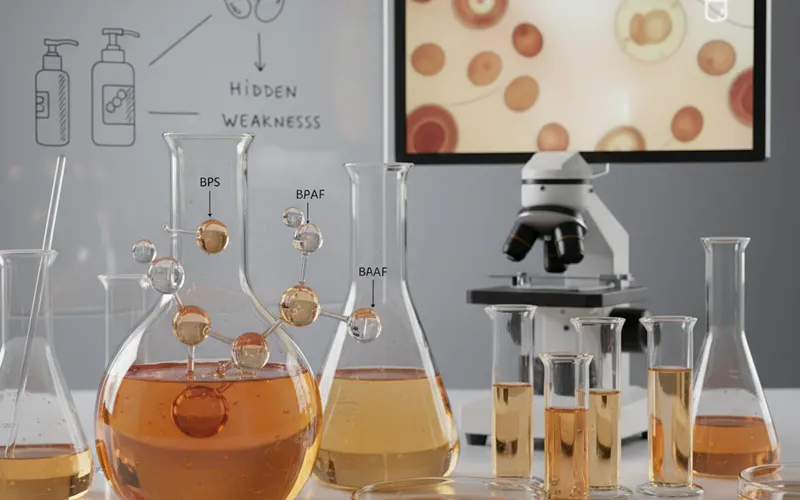
Die Studie – Was wurde untersucht und warum betrifft dich das?
Stell dir vor, du startest deinen Tag mit deiner morgendlichen Routine: Du putzt dir die Zähne, cremst dein Gesicht ein, vielleicht greifst du zu Make-up oder Haarspray. Was du dabei oft nicht bedenkst: Viele dieser Produkte, die dir helfen sollen, dich wohlzufühlen und zu pflegen, können Spuren von chemischen Verbindungen enthalten, die als Bisphenole bekannt sind. Diese Stoffe sind nicht nur in Plastikverpackungen zu finden, sondern eben auch in Kosmetika – und das wirft Fragen auf: Wie viel davon nimmt unser Körper auf? Und welche Auswirkungen könnte das haben?
Genau diese Fragen haben sich Forschende um Yang Y. und Kollegen von der Sejong University in Seoul, Südkorea, gestellt. Ihre Studie, die im Journal «Food and Chemical Toxicology» publiziert und online vorab veröffentlicht wurde, widmet sich der probabilistischen Aggregat- und kumulativen toxikologischen Risikobewertung von Bisphenol-Analogen wie BPA, BPS, BPF und BPAF aus Körperpflegeprodukten in der koreanischen Bevölkerung. Das Ziel war es, ein umfassendes Bild der Exposition gegenüber diesen potenziellen Hormonstörern zu zeichnen und das damit verbundene Risiko, insbesondere in Bezug auf östrogene Effekte, zu bewerten.
Die Forschenden nutzten Daten einer landesweiten Umfrage mit 3'000 Teilnehmern, kombiniert mit Konzentrationsdaten aus verschiedenen Körperpflegeprodukten. Um die tägliche externe Dosis präzise zu schätzen, führten sie 100'000 Monte-Carlo-Simulationen durch, die nach Geschlecht stratifiziert wurden. Die kumulative östrogene Exposition wurde dabei als BPA-Äquivalent ausgedrückt, basierend auf relativen Potenzfaktoren (RPF). Das Risiko wurde anschliessend mittels Margin of Exposure (MOE) und Hazard Quotient (HQ) Analysen bewertet. Eine Besonderheit der Studie ist die umfassende Unsicherheitsbewertung, die verschiedene Szenarien wie die Eliminationsrate, die Absorption durch die Haut und sogar die Retention von Zahnpasta beim Zähneputzen berücksichtigte. Dies zeigt den Anspruch der Forschenden, ein möglichst realistisches Bild der Exposition und des potenziellen Risikos zu erhalten.
Die zentralen Ergebnisse zeigen, dass BPF massenbasiert den grössten Anteil an der Exposition ausmachte (etwa 82%). Nach Berücksichtigung der Potenz trug jedoch BPAF am meisten zur kumulativen östrogenen Belastung bei. Die mediane kumulative Exposition wurde mit 4.1 × 10⁻³ µg/kg Körpergewicht pro Tag bestimmt. Die Risikobewertung ergab MOE-Werte über 104 und HQ-Werte, die deutlich unter 1 lagen. Diese Werte deuten auf ein geringes Risiko hin. Auch die Szenario-basierte Unsicherheitsbewertung bestätigte, dass die Schlussfolgerungen unter plausiblen Parameterbereichen robust blieben. Trotz des insgesamt geringen Risikos betonen die Autoren die Notwendigkeit einer fortlaufenden Überwachung hochpotenter Analoge wie BPAF.
Quelle: Yang Y, Choi K, Shin HJ, Hwang M, Lee Y (2026). Probabilistic Aggregate and Cumulative Toxicological Risk Assessment of Bisphenol Analogues (BPA, BPS, BPF, BPAF) from Personal Care Products in the Korean Population. Food and chemical toxicology : an international journal published for the British Industrial Biological Research Association. PubMed-ID: 41862048
Was heisst das wirklich? – Die kritische Einordnung
Die Studie liefert auf den ersten Blick beruhigende Ergebnisse: Die Belastung durch Bisphenole aus Kosmetika scheint gering zu sein und die östrogenen Risiken sind wohl minimal. Doch was bedeuten diese Zahlen wirklich für dich? Eine wichtige Unterscheidung ist der Unterschied zwischen «statistisch signifikant» und «klinisch bedeutsam». Die Studie spricht von MOE-Werten über 104 und HQ-Werten deutlich unter 1. Das sind wichtige Indikatoren für ein geringes toxikologisches Risiko auf Populationsebene. Aber du bist kein Durchschnittswert. Diese Werte sagen dir nicht, wie dein individueller Körper auf eine solche Exposition reagiert, insbesondere wenn du möglicherweise bereits anderen Belastungen ausgesetzt bist.
Ein weiterer Punkt ist die Messgrösse: Hier wurden hauptsächlich östrogene Effekte bewertet. Bisphenole können jedoch auch andere endokrine Wirkungen haben, die in dieser Studie möglicherweise nicht vollständig erfasst wurden. Die Studie hat ein robustes Studiendesign mit Monte-Carlo-Simulationen und einer breiten Unsicherheitsanalyse verwendet, was die Verlässlichkeit der Ergebnisse erhöht. Allerdings basiert die Risikobewertung auf Modellen und Annahmen über die Aufnahme und Wirkung der Stoffe, die in der Realität komplexer sein können. Es wurden Surrogatparameter (BPA-Äquivalente und RPFs) verwendet, um das östrogene Potenzial zu bewerten, was ein Standardverfahren ist, aber keine direkte Messung tatsächlicher physiologischer Veränderungen im Menschen darstellt. Für wen gelten die Ergebnisse? Die Studie wurde an der koreanischen Bevölkerung durchgeführt. Obwohl die chemischen Mechanismen universell sind, können Lebensgewohnheiten, Produktverwendungen und genetische Prädispositionen in anderen Populationen variieren. Daher ist eine direkte Übertragung auf dich, wenn du nicht in Korea lebst, nicht eins zu eins möglich.
Denkwerkzeug: Wenn du eine Studie liest, die von «geringem Risiko» spricht, frage dich: Gering für wen? Und gering in Bezug auf welche Aspekte? Was wurde gemessen, und was wurde vielleicht übersehen, das für meine individuelle Situation relevant sein könnte?
Der Geist im Körper – Die psychophysiologische Perspektive
Hier kommen wir zu einem Aspekt, der in toxikologischen Studien dieser Art oft unterbelichtet bleibt: die psychophysiologische Interaktion. Dein Körper ist keine isolierte Maschine, die chemische Stoffe rein mechanisch verarbeitet. Dein Stresslevel, dein Schlaf, deine Ernährung, deine emotionalen Zustände – all das beeinflusst, wie dein Körper auf Umwelteinflüsse reagiert.
Stell dir vor, du bist chronisch gestresst. Dein Cortisolspiegel ist erhöht, dein Immunsystem ist möglicherweise beeinträchtigt. Könnte das die Art und Weise beeinflussen, wie dein Körper Bisphenole verstoffwechselt oder eliminiert? Es ist gut denkbar, dass ein gestresster Körper empfindlicher auf chemische Belastungen reagiert oder weniger effizient bei der Entgiftung ist. Auch der Placebo-/Nocebo-Effekt spielt eine Rolle: Wenn du die Befürchtung hast, dass bestimmte Produkte schädlich sein könnten, kann allein diese Sorge physiologische Stressreaktionen auslösen, die wiederum die tatsächliche Wirkung der Substanzen verstärken oder abschwächen könnten. Diese Studie hat sich auf die externe Dosis und die potenziellen östrogenen Effekte konzentriert – ein wichtiger Schritt. Aber sie berücksichtigt nicht die individuelle Variabilität der internen Dosis, die durch Faktoren wie die Darmgesundheit (Mikrobiom), die Leberfunktion (Entgiftungskapazität) oder das bereits erwähnte Stresslevel stark beeinflusst werden kann. Eine Person mit einem gesunden Darm und einer gut funktionierenden Leber könnte Bisphenole effizienter ausscheiden als jemand, dessen Systeme durch chronischen Stress oder eine ungesunde Ernährung belastet sind. Die psychische Verfassung ist ein mächtiger Moderator für die körperliche Reaktion. Wenn du glaubst, dass du dich einer Gefahr aussetzt, kann das an sich schon physiologische Veränderungen hervorrufen, die unabhängig von der tatsächlichen toxischen Dosis wirken.
Der grössere Kontext – Einordnung und Abhängigkeiten
Diese Studie ist ein wichtiges Puzzleteil in der Bewertung der Bisphenol-Exposition, insbesondere da sie sich auf Kosmetika konzentriert, die oft als weniger kritische Quelle wahrgenommen werden als beispielsweise Lebensmittelverpackungen. Die Autoren betonen, dass keine Interessenkonflikte vorliegen, was die Unabhängigkeit und Glaubwürdigkeit der Forschung stärkt.
In der breiteren Forschungslandschaft bestätigen die Ergebnisse im Grossen und Ganzen die Annahme, dass die Belastung durch Bisphenole aus einzelnen Quellen in der Regel unterhalb der als schädlich eingestuften Grenzwerte liegt. Allerdings ist es wichtig zu beachten, dass dies eine Studie über die Exposition durch Körperpflegeprodukte ist. Bisphenole sind allgegenwärtig – in Plastikflaschen, Kassenzetteln, Konservendosen. Die kumulative Exposition aus allen Quellen ist eine viel komplexere Frage, die diese Studie nicht vollständig beantworten kann. Sie liefert jedoch eine wichtige Komponente für eine solche umfassendere Betrachtung.
Was wurde nicht kontrolliert? Die Studie bietet eine Momentaufnahme und Schätzung der Exposition. Sie berücksichtigt nicht die langfristige Akkumulation von Bisphenolen im Körper oder potenziell synergistische Effekte mit anderen Chemikalien, denen wir im Alltag ausgesetzt sind (dem sogenannten „Cocktail-Effekt“). Auch individuelle Unterschiede in der genetischen Ausstattung, die die Entgiftungskapazität beeinflussen, wurden nicht explizit berücksichtigt.
Denkwerkzeug: Wenn du Informationen zu chemischen Belastungen aufnimmst, frage dich immer: Ist das die ganze Geschichte? Welche anderen Quellen oder Faktoren könnten die Gesamtsituation beeinflussen, die in dieser einen Studie nicht erfasst wurden? Eine einzelne Studie ist immer nur ein Detail im grossen Ganzen.
Was heisst das für dich? – Fazit und Alltagsrelevanz
Die gute Nachricht ist: Basierend auf dieser Studie scheint die östrogene Belastung durch Bisphenole in Körperpflegeprodukten für die koreanische Bevölkerung insgesamt gering zu sein. Das bedeutet nicht, dass du dir überhaupt keine Gedanken machen solltest, aber es ist kein Grund zur Panik.
Was kannst du mitnehmen?
- Achtsamkeit entwickeln: Auch wenn das Risiko gering erscheint, kann es sinnvoll sein, bei Kosmetika und Körperpflegeprodukten auf Inhaltsstoffe zu achten. Produkte, die als «BPA-frei» oder «Bisphenol-frei» beworben werden, könnten eine Option sein, um die Exposition weiter zu minimieren, insbesondere wenn du bereits sensibel auf Umweltchemikalien reagierst oder ein erhöhtes Bewusstsein dafür hast.
- Ganzheitliche Gesundheit stärken: Dein Körper ist ein Meister der Selbstregulation. Ein gesunder Lebensstil mit ausreichend Schlaf, Stressmanagement und einer ausgewogenen Ernährung unterstützt deine natürlichen Entgiftungsmechanismen. Das ist oft wirksamer, als sich nur auf die Vermeidung einzelner Stoffe zu konzentrieren.
- Informationen kritisch bewerten: Lass dich nicht von reisserischen Schlagzeilen verunsichern. Die Studie zeigt, dass eine differenzierte Risikobewertung wichtig ist. Ein «geringes Risiko» auf Bevölkerungsebene ist nicht dasselbe wie «kein Risiko» für dich persönlich und auch nicht dasselbe wie «kein Risiko» für die Umwelt.
Was solltest du NICHT daraus schliessen?
- Du solltest nicht schliessen, dass Bisphenole generell harmlos sind. Sie sind endokrine Disruptoren, deren kumulative Wirkung aus allen Quellen weiterhin intensiv erforscht wird.
- Du solltest auch nicht schliessen, dass du deine gesamte Kosmetik wegwerfen musst. Die Studie deutet auf ein geringes Risiko aus dieser spezifischen Quelle hin.
Für wen ist das besonders relevant? Diese Erkenntnisse sind besonders relevant für Personen, die viele verschiedene Körperpflegeprodukte verwenden oder die aufgrund von Vorerkrankungen oder individueller Sensibilität besonders auf Umweltchemikalien achten möchten. Auch für Frauen in der Schwangerschaft oder Stillzeit kann ein bewusster Umgang mit potenziellen endokrinen Disruptoren sinnvoll sein, da der sich entwickelnde Organismus besonders empfindlich reagieren kann.
Der psychophysiologische Gedanke zum Schluss: Denk daran, dein Körper reagiert nicht nur auf die chemische Zusammensetzung deiner Kosmetika, sondern auch auf deine Gedanken, Gefühle und dein allgemeines Wohlbefinden. Ein stressfreier Geist und ein gesunder Lebensstil sind oft die besten Schutzmechanismen gegen die Herausforderungen unserer modernen Umwelt. Dein Körper und dein Geist bilden eine untrennbare Einheit – pflege beides gleichermassen.
Die Forschung zu Bisphenolen ist noch lange nicht abgeschlossen. Es bleiben Fragen offen, insbesondere zur Langzeitwirkung geringer Dosen und zur kumulativen Wirkung verschiedener endokriner Disruptoren. Bleibe neugierig und informiere dich weiterhin kritisch – das ist der beste Weg, um deine Gesundheit selbst in die Hand zu nehmen.
Wissenschaftliche Quelle
Food and chemical toxicology : an international journal published for the British Industrial Biological Research Association