Optimierte Sojabohnen: Omega-3 und Antioxidantien für nachhaltige Aquakultur
Eine neue Studie zeigt, wie Sojabohnen gentechnisch so verändert werden können, dass sie nicht nur Omega-3-Fettsäuren, sondern auch Astaxanthin und Tocotrienole produzieren. Was das für die Aquakultur und vielleicht auch für deine Ernährung bedeuten könnte, erfährst du hier.
Die Studie – Was wurde untersucht und warum betrifft dich das?
Stell dir vor, du könntest eine Pflanze so verändern, dass sie nicht nur die Nährstoffe liefert, die wir Menschen brauchen, sondern auch jene, die für eine nachhaltige Tierzucht unerlässlich sind. Das klingt nach Science-Fiction, ist aber der Kern einer wegweisenden Studie, die kürzlich im Journal Metabolic Engineering veröffentlicht wurde. Ein Team um die Forschenden Kim, Quach und Park von der University of Nebraska-Lincoln hat sich einer grossen Herausforderung unserer Zeit angenommen: Wie können wir die Aquakultur nachhaltiger gestalten und gleichzeitig den Nährwert von Fischfutter verbessern?
Die Aquakultur, also die Zucht von Fischen, Garnelen und anderen Wasserlebewesen, ist ein wichtiger Pfeiler der globalen Lebensmittelversorgung. Doch sie hat einen Haken: Viele Zuchtfische, insbesondere Raubfische wie Lachs, benötigen Omega-3-Fettsäuren wie Eicosapentaensäure (EPA), die sie normalerweise über ihre Nahrungskette in der Natur aufnehmen. Diese Omega-3-Fettsäuren sind für die Gesundheit der Fische essenziell, aber auch für uns Menschen, wenn wir diese Fische essen. Bislang werden diese wertvollen Fettsäuren oft aus Wildfisch gewonnen, was die Bestände zusätzlich belastet und nicht nachhaltig ist.
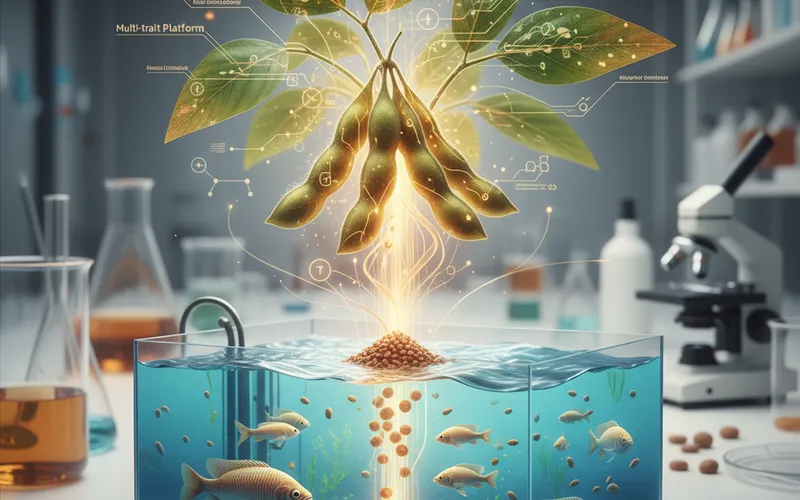
Genau hier setzt die Forschung an: Die Wissenschaftler wollten Sojabohnen so umprogrammieren, dass sie nicht nur EPA produzieren, sondern auch zwei weitere wichtige Stoffe: Astaxanthin, ein starkes Antioxidans, das Fischen ihre rosa Farbe verleiht und ihre Gesundheit unterstützt, sowie Tocotrienole, eine Form von Vitamin E, die ebenfalls als Antioxidans wirkt. Das Ziel war es, eine «Multifunktions-Sojabohne» zu schaffen, die als Futtermittel die Gesundheit der Zuchtfische verbessert und gleichzeitig die Abhängigkeit von Fischmehl reduziert.
Dafür haben die Forschenden gentechnische Methoden angewandt. Sie schleusten neun mikrobielle und pflanzliche Enzyme in Sojabohnensamen ein. Diese Enzyme sind dafür verantwortlich, die Stoffwechselwege in der Pflanze so umzuleiten, dass sie EPA, Astaxanthin und Tocotrienole produzieren. Es ist ein komplexer Prozess, bei dem verschiedene Gene kombiniert und optimiert werden müssen, damit die Pflanze diese Stoffe in ausreichender Menge herstellen kann. Die transgenen Sojabohnen konnten EPA in Mengen von bis zu 3,8% der gesamten Fettsäuren in den Samen anreichern. Gleichzeitig wurden auch Astaxanthin und Tocotrienole erfolgreich produziert, wenn auch die genauen Mengen für Astaxanthin und Tocotrienole im Abstract nicht detailliert aufgeführt werden, es aber heisst, dass hohe Konzentrationen erreicht wurden.
Die Studie ist ein Beispiel für «Metabolic Engineering», also die gezielte Veränderung von Stoffwechselwegen in Organismen, um gewünschte Produkte herzustellen. Sie zeigt, dass es grundsätzlich möglich ist, Pflanzen zu echten Nährstofffabriken zu machen, die über ihre ursprünglichen Fähigkeiten hinausgehen. Das könnte weitreichende Folgen für die Nachhaltigkeit unserer Lebensmittelproduktion haben. Doch was bedeutet das konkret, und wie relevant ist das für dich?
Quelle: Kim H, Quach T, Park K, Guo M, Kim HJ, Nguyen H, Nguyen HT, Cahoon RE, Sato S, Napier JA, Zhang C, Clemente TE, Cahoon EB (2026). Combining pathway engineering and precursor enrichment to build a multi-trait soybean platform for aquaculture feed applications. Metabolic Engineering, 96:68-79. PubMed-ID: 41802626
Was heisst das wirklich? – Die kritische Einordnung
Die Ergebnisse dieser Studie sind beeindruckend und zeigen das enorme Potenzial der Biotechnologie. Eine Sojabohne, die Omega-3-Fettsäuren und potente Antioxidantien liefert, könnte tatsächlich ein Gamechanger für die Aquakultur sein. Doch wie so oft lohnt sich ein genauerer Blick, um die Tragweite dieser Erkenntnisse richtig einzuordnen.
Zunächst zu den Stärken: Die Studie ist methodisch sehr anspruchsvoll. Das Team hat nicht nur ein, sondern gleich neun Enzyme in die Sojabohne integriert, um drei verschiedene, komplexe Stoffwechselwege zu aktivieren. Das ist eine Meisterleistung des Metabolic Engineering. Die Forschenden konnten zeigen, dass die Pflanzen tatsächlich EPA in relevanten Mengen produzieren – 3,8% der gesamten Fettsäuren sind ein guter Anfang, aber es gibt noch Steigerungspotenzial, um dem Gehalt von Fischöl nahe zu kommen. Das ist ein wichtiger Schritt, um die Abhängigkeit von Fischöl im Tierfutter zu reduzieren und dadurch die Überfischung zu mindern.
Nun zu den Grenzen: Es handelt sich hier um eine Grundlagenstudie im Labor. Die optimierten Sojabohnen wurden entwickelt, aber ihre Wirksamkeit als Futtermittel im grossen Massstab oder gar ihre Auswirkungen auf die Gesundheit von Zuchtfischen wurden in dieser Publikation noch nicht umfassend untersucht. Es ist ein grosser Schritt vom Labor zur landwirtschaftlichen Praxis. Der Anbau dieser gentechnisch veränderten Sojabohnen in grossem Massstab birgt eigene Herausforderungen, sowohl technischer als auch regulatorischer Natur.
Ein weiterer Punkt ist die Übertragbarkeit. Die Studie konzentriert sich auf die Produktion von Inhaltsstoffen für die Aquakultur. Für dich als Mensch, der sich gesund ernähren möchte, ist die direkte Relevanz noch begrenzt. Zwar sind EPA und Astaxanthin auch für uns wertvoll, aber die Frage ist, ob diese gentechnisch veränderten Sojabohnen jemals direkt in der menschlichen Ernährung landen werden und ob sie dann in Bioverfügbarkeit und Wirkung mit traditionellen Quellen mithalten können.
Denkwerkzeug: Wenn du von solchen Innovationen hörst, frag dich immer: Ist das ein Schritt im Labor, oder hat es bereits den Weg in die Anwendung gefunden? Wie viele weitere Schritte sind nötig, bis es meinen Alltag beeinflussen könnte, und welche Hürden müssen noch überwunden werden?
Die Forschung ist vielversprechend, aber es ist wichtig, die Ergebnisse im Kontext zu sehen: Es ist ein wichtiger Baustein für eine nachhaltigere Aquakultur, aber noch keine fertige Lösung, die morgen auf deinem Teller landet.
Der Geist im Körper – Die psychophysiologische Perspektive
Diese Studie konzentriert sich auf die biochemische Optimierung einer Pflanze, um bestimmte Nährstoffe zu produzieren. Aus psychophysiologischer Sicht mag das zunächst weit entfernt erscheinen. Doch auch hier gibt es interessante Anknüpfungspunkte, insbesondere wenn wir über die Auswirkungen auf die Aquakultur und letztlich auf unsere eigene Ernährung sprechen.
Stell dir vor, Fische erhalten durch optimiertes Futter eine bessere Nährstoffversorgung. Das kann ihre Stressresistenz erhöhen und ihre allgemeine Gesundheit verbessern. Ein gesünderer Fisch ist weniger anfällig für Krankheiten, was den Einsatz von Medikamenten in der Aquakultur reduzieren könnte. Das wiederum wirkt sich auf die Qualität des Fisches aus, den wir essen, und somit indirekt auch auf unsere eigene Gesundheit und unser Wohlbefinden.
Die Produktion von Omega-3-Fettsäuren wie EPA in Pflanzen ist auch aus einer anderen Perspektive spannend: Erwartungshaltung und Placebo-Effekt. Wenn wir wissen, dass wir Fisch essen, der mit hochwertigem, Omega-3-reichem Futter aufgezogen wurde, kann das unsere eigene Erwartung an die gesundheitlichen Vorteile beeinflussen. Der Glaube, etwas Gutes für sich zu tun, kann physiologische Effekte haben, die über die reine Nährstoffaufnahme hinausgehen. Auch wenn diese Effekte bei Fischen nicht direkt messbar sind, so ist der psychologische Aspekt auf der Konsumentenseite nicht zu unterschätzen.
Umgekehrt: Was passiert, wenn die Aquakultur aufgrund von Futtermangel oder schlechter Qualität unter Druck gerät? Stress bei den Zuchttieren, erhöhte Krankheitsraten, sinkende Produktivität – all das sind Faktoren, die nicht nur ökonomische, sondern auch ethische und letztlich psychologische Implikationen für die Menschen haben, die in diesem Sektor arbeiten oder diese Produkte konsumieren. Eine nachhaltigere und robustere Futterquelle, wie die hier entwickelte Sojabohne, kann somit indirekt auch zu einer Reduktion von Stress und Unsicherheit in einem ganzen Wirtschaftszweig beitragen.
Es ist gut denkbar, dass die Verfügbarkeit von hochwertigen Nährstoffen in der Aquakultur nicht nur die körperliche Gesundheit der Fische, sondern auch deren Stresslevel beeinflusst. Fische, die optimal versorgt sind, sind möglicherweise widerstandsfähiger gegenüber Stressfaktoren in ihrer Umgebung. Und wenn wir über die Ernährung des Menschen sprechen: Eine ausreichende Versorgung mit Omega-3-Fettsäuren hat nachweislich positive Effekte auf die Gehirnfunktion und die psychische Gesundheit. Indem wir die Quelle dieser Fettsäuren nachhaltiger und zugänglicher machen, könnten wir langfristig auch einen Beitrag zur mentalen Gesundheit der Bevölkerung leisten, indem wir die Versorgungssicherheit verbessern und die Qualität der Nahrung erhöhen. Hier sehen wir, wie selbst eine hochtechnische Pflanzenstudie im grösseren Kontext Auswirkungen auf das Zusammenspiel von Körper und Psyche haben kann.
Der grössere Kontext – Einordnung und Abhängigkeiten
Die vorliegende Studie ist ein wichtiges Puzzleteil im Bestreben, unsere Ernährungssysteme nachhaltiger zu gestalten. Sie steht im Kontext einer globalen Herausforderung: Wie ernähren wir eine wachsende Weltbevölkerung, ohne die natürlichen Ressourcen zu überlasten? Die Aquakultur wächst rasant, und mit ihr der Bedarf an Fischfutter. Traditionell wird dieses Futter oft aus Wildfisch gewonnen, was zu Überfischung und einer Belastung der marinen Ökosysteme führt. Studien wie diese suchen nach Alternativen.
Die Finanzierung dieser Art von Forschung kommt oft aus öffentlichen Geldern, da es sich um Grundlagenforschung mit grossem gesellschaftlichem Nutzen handelt. Die University of Nebraska-Lincoln ist ein anerkanntes Forschungszentrum im Bereich Pflanzenwissenschaften und Biotechnologie. Die Autorenliste ist lang und umfasst verschiedene Spezialisten, was auf eine kollaborative und interdisziplinäre Arbeit hindeutet. Im Abstract werden keine direkten Interessenkonflikte genannt, was für die Glaubwürdigkeit der Ergebnisse spricht.
Diese Studie bestätigt im Wesentlichen die Machbarkeit, komplexe Stoffwechselwege in Nutzpflanzen zu integrieren, um wertvolle Verbindungen herzustellen. Sie reiht sich ein in eine Reihe von Forschungsarbeiten, die darauf abzielen, Pflanzen als „Biofabriken“ zu nutzen. Was hier aber besonders ist, ist die Kombination von drei verschiedenen Zielsubstanzen (EPA, Astaxanthin, Tocotrienole) in einer einzigen Pflanze, was die Effizienz und den Nutzen als Futtermittel deutlich steigert. Das ist ein Fortschritt gegenüber früheren Studien, die sich oft auf die Produktion einer einzelnen Substanz konzentrierten.
Was jedoch nicht kontrolliert wurde, und in einer solchen Grundlagenstudie auch nicht das Ziel sein kann, sind die langfristigen ökologischen Auswirkungen des Anbaus dieser gentechnisch veränderten Sojabohnen. Wie verhalten sich diese Pflanzen in realen Anbausystemen? Welche Auswirkungen haben sie auf die Biodiversität oder auf andere Pflanzen und Tiere in der Umgebung? Das sind Fragen, die in nachfolgenden Studien geklärt werden müssen, bevor eine breite Anwendung in Betracht gezogen werden kann.
Denkwerkzeug: Wenn du von neuen technologischen Lösungen für die Landwirtschaft hörst, frag dich immer: Welche Probleme löst diese Technologie, und welche neuen Fragen wirft sie möglicherweise auf? Ist der potenzielle Nutzen die potenziellen Risiken wert, und wie werden diese Risiken gemanagt?
Diese Studie ist ein vielversprechender Schritt in Richtung einer nachhaltigeren Aquakultur, aber sie ist Teil eines viel grösseren und komplexeren Puzzles, das noch viele offene Fragen bereithält.
Was heisst das für dich? – Fazit und Alltagsrelevanz
Was kannst du nun aus dieser faszinierenden Studie für dein eigenes Leben mitnehmen? Auch wenn gentechnisch veränderte Sojabohnen mit EPA, Astaxanthin und Tocotrienolen noch nicht auf deinem Teller liegen werden, liefert die Forschung wichtige Impulse.
1. Achte auf Omega-3-Fettsäuren: Die Studie unterstreicht einmal mehr die Bedeutung von Omega-3-Fettsäuren wie EPA für die Gesundheit – nicht nur für Fische, sondern auch für uns Menschen. Sie sind essenziell für Gehirnfunktion, Herz-Kreislauf-System und entzündungshemmende Prozesse. Überlege, ob du genug Omega-3 durch fettreichen Fisch (Lachs, Makrele, Hering), Algenöl oder bestimmte pflanzliche Öle zu dir nimmst.
2. Antioxidantien sind wichtig: Astaxanthin und Tocotrienole sind potente Antioxidantien, die deine Zellen vor Schäden durch freie Radikale schützen können. Auch wenn du sie nicht aus gentechnisch veränderten Sojabohnen beziehst, kannst du deine Aufnahme durch eine bunte Ernährung mit viel Obst und Gemüse (reich an Carotinoiden und Vitamin E) oder durch gezielte Nahrungsergänzung optimieren.
3. Nachhaltigkeit geht uns alle an: Die Studie ist ein Beispiel dafür, wie Forschung an Lösungen für globale Nachhaltigkeitsprobleme arbeitet. Auch wenn du nicht direkt gentechnisch veränderte Produkte konsumierst, kannst du durch bewusste Kaufentscheidungen (z.B. nachhaltig gefangener oder gezüchteter Fisch, pflanzliche Alternativen) einen Beitrag leisten.
Was solltest du NICHT daraus schliessen? Diese Studie ist kein Freifahrtschein, alle Bedenken gegenüber Gentechnik über Bord zu werfen. Sie zeigt ein Potenzial auf, aber die Diskussion um Sicherheit, Ethik und Akzeptanz von gentechnisch veränderten Organismen bleibt relevant und muss weiterhin geführt werden. Es ist auch kein Grund, auf Omega-3-reiche Lebensmittel oder Antioxidantien zu verzichten, nur weil diese optimierte Sojabohne noch nicht verfügbar ist. Deine Gesundheit profitiert schon jetzt von einer ausgewogenen Ernährung.
Diese Erkenntnisse sind besonders relevant für dich, wenn du dich für nachhaltige Ernährung, die Herkunft deiner Lebensmittel und die Rolle von Wissenschaft und Technologie in der Lebensmittelproduktion interessierst. Für jemanden, der einfach nur wissen möchte, was er heute Abend essen soll, sind die direkten Auswirkungen noch geringer.
Vergiss nicht: Dein Körper reagiert nicht nur auf die Nährstoffe, die du ihm zuführst, sondern auch auf deine Überzeugungen und dein Wissen darüber. Wenn du weisst, dass du dich bewusst und nachhaltig ernährst, kann das dein Wohlbefinden positiv beeinflussen. Die Wissenschaft arbeitet daran, unsere Ernährungssysteme zu verbessern – sei neugierig auf die Entwicklungen und bleibe kritisch, aber offen.
Die Zukunft der Ernährung ist dynamisch und wird uns weiterhin mit spannenden Fragen konfrontieren. Bleib dran und gestalte mit deinem Wissen und deinen Entscheidungen eine gesündere Zukunft.