Rest-Cholesterin und seine Verbindung zu Zellalterung und Entzündungen
Eine chinesische Studie beleuchtet den Zusammenhang zwischen Rest-Cholesterin, Telomerlänge und dem Anti-Aging-Protein Alpha-Klotho. Erfahre, wie Entzündungen und oxidativer Stress hier eine zentrale Rolle spielen und was das für deine Gesundheit bedeutet.
1. Die Studie – Was wurde untersucht und warum betrifft dich das?
Stell dir vor, dein Körper hat eine Art innere Uhr, die unaufhaltsam tickt und bestimmt, wie schnell du alterst. Diese Uhr ist in jeder deiner Zellen verborgen, genauer gesagt an den Enden deiner Chromosomen – den sogenannten Telomeren. Je kürzer diese Telomere sind, desto älter sind deine Zellen biologisch gesehen. Aber was beeinflusst diese Telomerlänge? Und welche Rolle spielt dabei ein oft übersehener Cholesterin-Wert, das sogenannte Rest-Cholesterin?
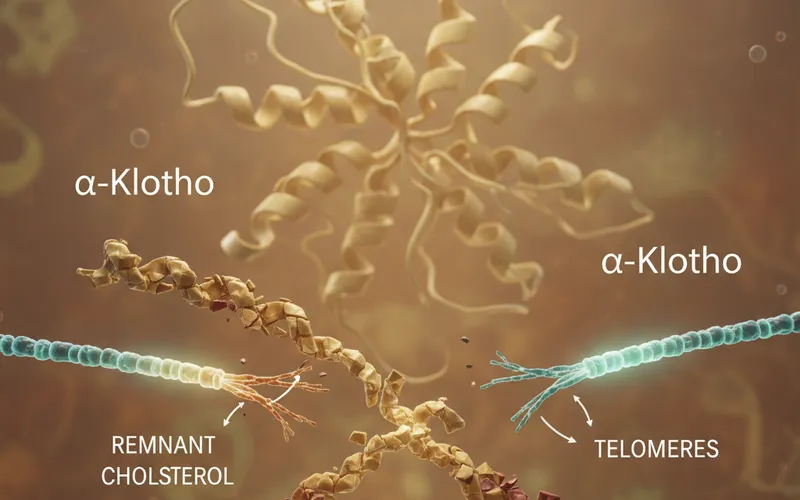
Genau diesen Fragen ist ein Team von Forschenden aus China nachgegangen. Die Arbeitsgruppe um Xing B. vom Department of Endocrinology des Peking Union Medical College Hospital hat untersucht, wie Rest-Cholesterin mit der Länge der Leukozyten-Telomere (LTL) und dem Anti-Aging-Protein Alpha-Klotho zusammenhängt. Sie wollten herausfinden, ob Entzündungen und oxidativer Stress dabei eine vermittelnde Rolle spielen. Diese Studie ist besonders relevant, weil sie aufzeigt, dass nicht nur die bekannten Cholesterinwerte wie LDL oder HDL wichtig sind, sondern auch dieser oft vernachlässigte Rest-Cholesterin-Wert einen tiefgreifenden Einfluss auf unsere Zellgesundheit und damit auf unseren Alterungsprozess haben könnte.
Für ihre Analyse nutzten die Forschenden Daten einer grossen Population. Sie führten eine Querschnittsstudie durch, die aufzeigte, dass ein hoher Wert an Rest-Cholesterin mit kürzeren Telomeren und niedrigeren Alpha-Klotho-Werten verbunden ist. Das Studiendesign einer Querschnittsstudie gibt uns eine Momentaufnahme dieses Zusammenhangs, erlaubt aber noch keine Aussagen über Ursache und Wirkung. Die zentralen Ergebnisse der Studie legen nahe, dass die negativen Effekte des Rest-Cholesterins auf Telomerlänge und Alpha-Klotho teilweise durch Entzündungsmarker und oxidativen Stress vermittelt werden. Das bedeutet: Hohes Rest-Cholesterin könnte Entzündungen und oxidativen Stress fördern, welche wiederum die Zellalterung beschleunigen.
Quelle: Xing B, Yu J, Liu Y, Gao Q, Chen X, He S, Ping F, Xu L, Li W, Zhang H, Li Y. (2026). Correction: Remnant cholesterol shows inverse and nonlinear associations with leukocyte telomere length and serum α-Klotho, mediated by inflammation and oxidative stress. Front Endocrinol (Lausanne), 16:1748130. PubMed-ID: 41635534
2. Was heisst das wirklich? – Die kritische Einordnung
Die Studie aus China liefert uns spannende Einblicke, aber wie ordnest du diese Ergebnisse für dich persönlich ein? Wenn eine Studie von «inversen und nicht-linearen Assoziationen» spricht, klingt das sehr wissenschaftlich. Es bedeutet, dass ein höherer Wert des einen Faktors (Rest-Cholesterin) mit niedrigeren Werten des anderen Faktors (Telomerlänge und Alpha-Klotho) einhergeht, und das nicht immer in einem geraden Verhältnis. Stell dir vor, du gibst Gas im Auto: Am Anfang beschleunigt es schnell, später wird der Effekt geringer. So ähnlich kann man sich eine nicht-lineare Beziehung vorstellen.
Die Erwähnung von Leukozyten-Telomeren (LTL) ist wichtig. LTL sind ein gängiger Biomarker für die biologische Alterung. Sie sind relativ einfach zu messen und gelten als guter Indikator für die Gesundheit auf zellulärer Ebene. Alpha-Klotho ist ein Protein, das oft als «Anti-Aging-Hormon» bezeichnet wird und eine Rolle bei verschiedenen Alterungsprozessen spielt. Ein niedriger Klotho-Spiegel wird mit altersbedingten Krankheiten in Verbindung gebracht. Die Messung dieser Parameter ist also ein starker Punkt der Studie.
Ein wichtiger Aspekt ist die Vermittlung durch Entzündungen und oxidativen Stress. Das heisst, Rest-Cholesterin ist nicht direkt der Bösewicht, sondern es scheint über diese Prozesse seine negativen Auswirkungen zu entfalten. Das ist ein wichtiger Hinweis für mögliche Interventionsstrategien: Wenn wir Entzündungen und oxidativen Stress reduzieren können, könnten wir möglicherweise die negativen Effekte von hohem Rest-Cholesterin abmildern.
Die Studie ist eine Querschnittsstudie. Das bedeutet, sie hat die Daten zu einem bestimmten Zeitpunkt gesammelt. Eine Querschnittsstudie kann zwar Zusammenhänge aufzeigen, aber sie kann nicht beweisen, dass A die Ursache für B ist. Es könnte auch sein, dass eine dritte, unbekannte Variable beides beeinflusst. Oder dass der Zusammenhang in die andere Richtung geht. Trotzdem ist diese Momentaufnahme wertvoll, da sie Hypothesen für weiterführende, kausalitätsprüfende Studien (z.B. Langzeitstudien) aufstellt.
Denkwerkzeug: Wenn du von «Assosiationen» liest, frag dich immer: Ist das nur eine zufällige Begegnung oder eine echte Freundschaft? Was müsste noch gezeigt werden, damit ich diese Beziehung als Ursache-Wirkungs-Zusammenhang verstehen kann?
Was die Studiengrösse und die Teilnehmer angeht, so wurde dies im Abstract nicht detailliert beschrieben. Für eine umfassende Einordnung müsste man die vollständige Studie lesen, um zu beurteilen, wie repräsentativ die Stichprobe für die allgemeine Bevölkerung ist. Aber auch hier gilt: Jede Studie, selbst mit kleineren Stichproben, bringt uns im Verständnis weiter und macht neugierig auf die nächste Ebene der Analyse.
3. Der Geist im Körper – Die psychophysiologische Perspektive
Hier kommen wir zum spannenden Teil, der oft in rein medizinischen Studien zu kurz kommt: die untrennbare Verbindung von Psyche und Körper. Wenn wir über Entzündungen und oxidativen Stress sprechen, denken wir oft an Ernährung, Bewegung oder Umweltgifte. Doch es gibt einen enormen, oft unterschätzten Faktor, der all diese Prozesse massgeblich beeinflusst: chronischer Stress und psychische Belastung.
Stell dir vor, du bist ständig unter Druck – sei es beruflich, privat oder durch ungelöste Konflikte. Dein Körper reagiert darauf mit einer permanenten Aktivierung des Stresssystems. Das bedeutet eine erhöhte Ausschüttung von Stresshormonen wie Cortisol. Und Cortisol wiederum ist ein bekannter Treiber für Entzündungen und oxidativen Stress. Das psychophysiologische Interaktionsmodell lehrt uns, dass deine inneren Überzeugungen, deine emotionale Verfassung und dein Stresslevel direkte Auswirkungen auf deine Physiologie haben.
Es ist gut denkbar, dass Menschen mit chronischem Stress nicht nur anfälliger für Entzündungen und oxidativen Stress sind, sondern dass dies auch ihren Lipidstoffwechsel beeinflusst und zu höheren Rest-Cholesterin-Werten führen könnte. Hier schliesst sich der Kreis: Psychischer Stress -> Entzündungen/Oxidativer Stress -> erhöhte Rest-Cholesterin-Werte -> beschleunigte Zellalterung (kürzere Telomere, weniger Alpha-Klotho). Die Studie selbst hat diesen psychischen Aspekt nicht direkt untersucht, aber aus einer psychophysiologischen Perspektive ist es eine zwingende Hypothese, die weiter erforscht werden sollte.
Vielleicht glaubst du auch, dass du keine Kontrolle über deinen Cholesterinspiegel hast, weil «es in der Familie liegt». Diese Überzeugung allein kann schon einen Einfluss haben. Der Nocebo-Effekt zeigt, wie negative Erwartungen physiologische Reaktionen auslösen können. Umgekehrt kann der Glaube an die Wirksamkeit von Massnahmen – sei es eine Ernährungsumstellung oder Stressmanagement – den Placebo-Effekt aktivieren und positive physiologische Veränderungen bewirken.
Dein Körper reagiert nicht nur auf die Makronährstoffe, die du ihm zuführst, sondern auch auf die Gedanken und Gefühle, die du hegst. Eine ganzheitliche Betrachtung von Cholesterin, Telomeren und Alpha-Klotho muss daher immer auch die mentale und emotionale Gesundheit miteinbeziehen.
4. Der grössere Kontext – Einordnung und Abhängigkeiten
Diese Studie ist ein Puzzleteil in einem immer komplexer werdenden Bild der Gesundheitsforschung. Sie bestätigt die wachsende Erkenntnis, dass Entzündungen und oxidativer Stress zentrale Mechanismen der Alterung und vieler chronischer Krankheiten sind. Die Rolle des Rest-Cholesterins, das lange im Schatten von LDL- und HDL-Cholesterin stand, rückt zunehmend in den Fokus. Rest-Cholesterin sind die Cholesterin-Anteile, die in Triglycerid-reichen Lipoproteinen wie Chylomikronen-Resten und VLDL verbleiben, nachdem sie einen Grossteil ihrer Triglyceride an Gewebe abgegeben haben. Diese Partikel gelten als besonders atherogen, also Arterienverkalkung fördernd.
Die Finanzierung und die Autoren der Studie stammen aus dem Peking Union Medical College Hospital, einer renommierten Institution in China. Im Abstract werden keine spezifischen Interessenkonflikte genannt, was die Glaubwürdigkeit der Ergebnisse stärkt. Es ist wichtig zu sehen, dass diese Forschung nicht von der Pharmaindustrie finanziert wurde, was die Objektivität der Ergebnisse tendenziell erhöht.
In der Forschungslandschaft fügt sich diese Studie gut in die aktuelle Diskussion um die Bedeutung von Entzündungsprozessen bei Herz-Kreislauf-Erkrankungen und Alterung ein. Sie liefert weitere Argumente dafür, dass ein hohes Mass an Rest-Cholesterin nicht nur ein Risikofaktor für Herz-Kreislauf-Erkrankungen ist, sondern auch für die biologische Alterung. Bestätigt werden auch die Erkenntnisse über die Rolle von Alpha-Klotho als Marker und möglicher Regulator des Alterungsprozesses.
Was in dieser Studie nicht kontrolliert wurde, sind die vielen komplexen Lebensstilfaktoren, die Entzündungen und oxidativen Stress beeinflussen. Dazu gehören beispielsweise die Qualität der Ernährung über die reinen Makronährstoffe hinaus (z.B. der Anteil an verarbeiteten Lebensmitteln), das Ausmass körperlicher Aktivität, Schlafgewohnheiten, aber eben auch chronischer Stress und die psychische Verfassung, wie im vorherigen Abschnitt erwähnt. Eine Studie kann nicht alles abbilden, aber es ist wichtig, sich dieser unkontrollierten Variablen bewusst zu sein, wenn man die Ergebnisse interpretiert.
Denkwerkzeug: Stell dir vor, du siehst einen einzelnen Baum. Was kannst du über den ganzen Wald sagen? Eine Studie ist ein einzelner Baum. Welche anderen Bäume (Studien) kennst du, die das Bild vervollständigen oder vielleicht sogar in eine andere Richtung weisen?
5. Was heisst das für dich? – Fazit und Alltagsrelevanz
Was können wir nun aus dieser chinesischen Studie für deinen Alltag mitnehmen? Erstens: Es lohnt sich, einen Blick auf dein Rest-Cholesterin zu werfen. Wenn deine Werte erhöht sind, ist das ein Signal, das du nicht ignorieren solltest. Es könnte ein Hinweis darauf sein, dass dein Körper mit erhöhten Entzündungen und oxidativem Stress zu kämpfen hat und deine Zellen schneller altern könnten.
Zweitens: Die Studie unterstreicht einmal mehr die Bedeutung eines gesunden Lebensstils, der Entzündungen und oxidativen Stress reduziert. Das bedeutet konkret: eine entzündungshemmende Ernährung (viel Gemüse, Obst, gesunde Fette, wenig Zucker und verarbeitete Lebensmittel), regelmässige Bewegung und ausreichend Schlaf. Diese Massnahmen wirken nicht nur auf dein Rest-Cholesterin, sondern auf deinen gesamten Körper.
Drittens, und das ist der psychophysiologische Kern: Unterschätze niemals die Kraft deines Geistes. Dein Stressmanagement ist keine Nebensache, sondern ein zentraler Pfeiler deiner Gesundheit. Techniken zur Stressreduktion wie Achtsamkeit, Meditation, Yoga oder einfach regelmässige Entspannungspausen können dazu beitragen, chronische Entzündungen und oxidativen Stress zu senken. Und das wiederum könnte sich positiv auf deine Rest-Cholesterin-Werte, deine Telomerlänge und dein Alpha-Klotho auswirken.
Was solltest du nicht daraus schliessen? Bitte nicht in Panik verfallen, wenn dein Arzt das nächste Mal von Cholesterin spricht. Diese Studie ist ein Hinweis, kein Grund zur Angst. Sie bedeutet auch nicht, dass du sofort alle deine Medikamente absetzen oder radikale Diäten starten solltest. Sprich immer mit deinem Arzt über deine Befunde und mögliche Massnahmen. Die Studie ist eine Momentaufnahme und zeigt Korrelationen, keine absoluten Kausalitäten.
Diese Erkenntnisse sind besonders relevant für Menschen, die bereits erhöhte Cholesterinwerte haben oder ein erhöhtes Risiko für Herz-Kreislauf-Erkrankungen aufweisen. Aber auch für jeden, der präventiv etwas für seine Langlebigkeit und Zellgesundheit tun möchte, bietet die Studie wertvolle Anstösse. Für Menschen, die bereits einen sehr gesunden Lebensstil pflegen und normale Werte haben, ist es eine Bestätigung, dass sie auf dem richtigen Weg sind.
Der psychophysiologische Gedanke zum Schluss: Deine Gesundheit ist ein komplexes Orchester, in dem jedes Instrument – von deinen Genen über deine Ernährung bis hin zu deinen Gedanken – eine Rolle spielt. Die Melodie ist am schönsten, wenn alle Instrumente harmonieren. Achte auf deinen Körper, aber vergiss nie, dass dein Geist der Dirigent ist. Welche Rolle spielst du in diesem Orchester?
Diese Studie eröffnet spannende Fragen für die Zukunft: Können gezielte Interventionen zur Reduktion von Rest-Cholesterin, Entzündungen oder oxidativem Stress die Telomerlänge beeinflussen und den Alpha-Klotho-Spiegel erhöhen? Und welche Rolle spielt dabei die mentale Gesundheit? Bleib neugierig und hör auf die Signale deines Körpers – er hat dir viel zu erzählen.