Psoriasis und Fettleber: Wie Entzündungen beide Erkrankungen verbinden
Eine aktuelle Studie aus China zeigt, dass Psoriasis und Fettleber eng miteinander verbunden sind. Entzündungsmarker spielen dabei eine zentrale Rolle. Erfahre, was das für deine Gesundheit bedeutet.
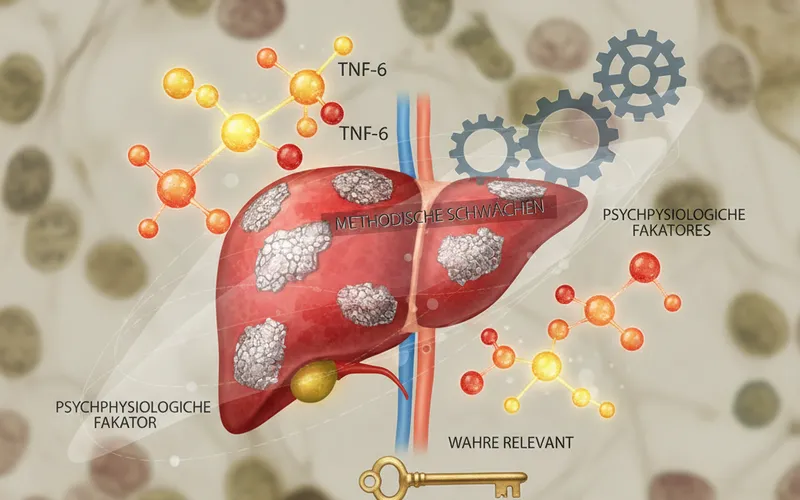
Die Studie – Was wurde untersucht und warum betrifft dich das?
Stell dir vor, deine Haut sendet dir nicht nur äussere Signale, sondern auch innere. Bei Psoriasis, der Schuppenflechte, ist die Haut entzündet, gerötet und schuppig. Doch was, wenn diese sichtbaren Entzündungen ein Spiegelbild dessen sind, was unsichtbar in deinem Körper geschieht? Eine brandneue Studie, die im März 2026 in der Fachzeitschrift PLoS One veröffentlicht wurde, beleuchtet genau diese faszinierende Verbindung: den Zusammenhang zwischen Psoriasis und einer nicht-alkoholischen Fettleber (NAFLD).
Forschende der Beijing University of Chinese Medicine in China haben untersucht, ob Entzündungsmarker eine Brücke zwischen diesen beiden scheinbar unterschiedlichen Erkrankungen schlagen. Sie wollten herausfinden, ob die chronische Entzündung, die Psoriasis begleitet, auch ein Treiber für die Entwicklung einer Fettleber sein könnte. Eine wichtige Frage, denn sowohl Psoriasis als auch NAFLD nehmen weltweit zu und sind mit ernsthaften Gesundheitsrisiken verbunden.
Für ihre Analyse nutzten die Wissenschaftler Daten der National Health and Nutrition Examination Survey (NHANES) aus den Jahren 2003–2006 und 2009–2014. Diese umfassende US-amerikanische Studie sammelt Gesundheitsdaten von Tausenden Erwachsenen. Insgesamt wurden Daten von 9.439 Teilnehmenden im Alter von 20 bis 60 Jahren ausgewertet. Von diesen hatten 3.961 eine Fettleber, was einer gewichteten Prävalenz von 41,96% entspricht. Bei den Teilnehmenden mit Psoriasis war die Prävalenz der Fettleber sogar noch höher und erreichte 50,99%.
Mithilfe von logistischer Regression untersuchten die Forschenden den Zusammenhang zwischen Psoriasis und NAFLD in verschiedenen Modellen. Besonderes Augenmerk legten sie auf die Rolle von zwei spezifischen Entzündungsmarkern: dem Systemic Immune-Inflammation Index (SII) und dem Neutrophil-to-Lymphocyte Ratio (NLR). Diese Marker geben Aufschluss über das Ausmass systemischer Entzündungen im Körper.
Die Ergebnisse waren deutlich: Psoriasis war in allen Modellen positiv mit einem erhöhten Risiko für NAFLD assoziiert. Es gab sogar eine signifikante Dosis-Wirkungs-Beziehung, was bedeutet, dass das Risiko mit dem Schweregrad der Psoriasis zunahm. Die Mediationsanalyse zeigte schliesslich, dass Ln-SII und Ln-NLR statistisch signifikant einen Teil dieser Verbindung vermittelten, nämlich 8.52% bzw. 3.58%. Das deutet darauf hin, dass die Entzündungsreaktion bei Psoriasis tatsächlich ein Bindeglied zur Fettleber sein könnte.
Quelle: Wang X, Xie C, Deng Y, Ren X, Li Y, Liu T, Hu B, Feng H, Li Y (2026). The association between psoriasis and nonalcoholic fatty liver disease: Mediation analysis involving inflammatory biomarkers among U.S. adults. PloS one, 21(3). PubMed-ID: 41860855
Diese Erkenntnisse sind ein wichtiger Schritt, um die komplexen Zusammenhänge in unserem Körper besser zu verstehen. Doch was bedeuten diese Zahlen und Prozentsätze wirklich für dich?
Was heisst das wirklich? – Die kritische Einordnung
Die Studie liefert spannende Ergebnisse, die den Verdacht erhärten, dass Psoriasis und Fettleber nicht nur gleichzeitig auftreten, sondern durch gemeinsame Mechanismen verbunden sein könnten. Aber wie immer ist es wichtig, die Resultate nüchtern zu betrachten und nicht zu überinterpretieren.
Zunächst einmal: Die Studie zeigt eine Assoziation, keine direkte Ursache-Wirkung-Beziehung. Das heisst, Psoriasis und Fettleber treten häufiger zusammen auf, und Entzündungsmarker spielen dabei eine Rolle. Es ist aber nicht so, dass Psoriasis direkt die Fettleber verursacht, oder umgekehrt. Es ist eher, als würden beide Krankheiten aus derselben Quelle schöpfen – der systemischen Entzündung.
Die Forschenden haben Daten der NHANES verwendet, einer sehr grossen und repräsentativen Studie. Das ist eine Stärke, weil die Ergebnisse auf die US-amerikanische erwachsene Bevölkerung übertragbar sind. Allerdings handelt es sich um eine Querschnittsstudie, die Momentaufnahmen liefert. Sie kann Zusammenhänge identifizieren, aber keine langfristigen Entwicklungen oder kausalen Ketten beweisen. Idealer wären longitudinale Studien, die Menschen über Jahre oder Jahrzehnte begleiten.
Die gemessenen Entzündungsmarker SII und NLR sind Surrogatparameter. Sie geben uns Hinweise auf das Ausmass der Entzündung, sind aber keine direkten Messgrössen für die Schwere der Krankheiten selbst. Die Tatsache, dass sie nur 8.52% bzw. 3.58% der Verbindung vermitteln, zeigt, dass Entzündungen zwar wichtig sind, aber lange nicht der einzige Faktor. Es gibt also noch viele andere unbekannte Variablen, die zur Beziehung zwischen Psoriasis und Fettleber beitragen.
Ein grosser Pluspunkt ist, dass die Studie in einem renommierten Journal publiziert wurde und keine Interessenkonflikte der Autoren deklariert wurden. Das erhöht die Glaubwürdigkeit der Ergebnisse. Aber wie bei jeder Studie ist es wichtig, den Kontext zu beachten. Die Teilnehmenden waren zwischen 20 und 60 Jahre alt. Wenn du älter oder jünger bist, oder aus einer anderen Bevölkerungsgruppe stammst, könnten die Ergebnisse für dich anders aussehen.
Denkwerkzeug: Wenn du von Psoriasis betroffen bist, frage dich: Welche anderen Gesundheitsfaktoren könnten bei mir eine Rolle spielen, die in dieser Studie nicht direkt erfasst wurden, aber meine Lebergesundheit beeinflussen könnten?
Diese Studie erinnert uns daran, dass der Körper keine isolierten Systeme hat. Alles hängt mit allem zusammen. Und genau hier kommt ein oft übersehener Aspekt ins Spiel: die Rolle deines Inneren.
Der Geist im Körper – Die psychophysiologische Perspektive
Wenn wir von chronischen Entzündungen sprechen, denken wir oft an Bakterien, Viren oder Autoimmunprozesse. Doch die psychophysiologische Perspektive lehrt uns, dass auch Stress, Emotionen und unsere inneren Überzeugungen massive Auswirkungen auf das Entzündungsgeschehen im Körper haben können. Und genau hier liegt ein entscheidender, oft übersehener Faktor im Zusammenhang zwischen Psoriasis und Fettleber.
Psoriasis ist eine sichtbare Erkrankung, die oft mit erheblichem psychischen Leid verbunden ist. Scham, Stigmatisierung, Angst vor Blicken, Schlafstörungen durch Juckreiz – all das sind massive Stressoren. Chronischer Stress wiederum ist ein bekannter Treiber für systemische Entzündungen. Die Stresshormone Adrenalin und Cortisol, die bei Dauerstress ausgeschüttet werden, beeinflussen das Immunsystem und können Entzündungsreaktionen verstärken. Das ist kein Zufall, sondern eine direkte Verbindung zwischen Psyche und Physiologie.
Es ist gut denkbar, dass ein Teil der erhöhten Entzündungsmarker (SII und NLR) bei Psoriasis-Patienten nicht nur durch die Hauterkrankung selbst, sondern auch durch den damit verbundenen psychischen Stress und die emotionale Belastung mitverursacht wird. Dieser chronische Stress und die daraus resultierende Entzündung könnten dann wiederum die Entwicklung einer Fettleber begünstigen. Die Leber ist ein zentrales Organ im Stoffwechsel, und Dauerstress kann die Insulinresistenz fördern und die Fettansammlung in der Leber erleichtern.
Vielleicht hast du selbst schon erlebt, wie Stress deine Haut verschlechtert oder Verdauungsprobleme verursacht. Das ist kein Zufall, sondern dein Körper, der auf deine Psyche reagiert. Die Studie misst zwar Entzündungsmarker, aber sie erfasst nicht die psychische Belastung der Teilnehmenden. Es ist eine fundierte Hypothese, dass die psychische Komponente einen nicht unerheblichen Teil der hier beobachteten Entzündungsreaktion erklären und somit indirekt zur Fettleber beitragen könnte.
Dein Körper reagiert nicht nur auf das, was du isst und tust, sondern auch auf das, was du denkst und fühlst. Das ist die Essenz des psychophysiologischen Interaktionsmodells und ein Aspekt, der in der rein biomedizinischen Forschung oft zu kurz kommt.
Der grössere Kontext – Einordnung und Abhängigkeiten
Diese Studie ist ein weiteres Puzzleteil in einem immer klarer werdenden Bild: Chronische Entzündungen sind ein zentraler Faktor bei vielen modernen Zivilisationskrankheiten. Die Verbindung zwischen Psoriasis und Fettleber ist nicht neu, aber diese Studie untermauert sie mit konkreten Entzündungsmarkern als Mediatoren.
Die Forschenden der Beijing University of Chinese Medicine haben hier sauber gearbeitet. Die Datenquelle (NHANES) ist robust, und die statistischen Methoden sind angemessen. Es ist positiv hervorzuheben, dass die Autoren keine Interessenkonflikte deklariert haben, was die Unabhängigkeit der Forschung unterstreicht.
Was wurde nicht kontrolliert, was aber wichtig sein könnte? Lebensstilfaktoren spielen eine riesige Rolle. Ernährungsgewohnheiten, körperliche Aktivität, Alkoholkonsum (auch wenn es eine nicht-alkoholische Fettleber ist, kann moderater Alkoholkonsum eine Rolle spielen), Schlafqualität und natürlich das Stressmanagement wurden in dieser Form nicht detailliert berücksichtigt, obwohl sie alle sowohl Psoriasis als auch Fettleber beeinflussen können. Eine fettreiche, zuckerhaltige Ernährung fördert Entzündungen und Fettleber. Bewegungsmangel tut dasselbe. Diese Faktoren sind oft eng mit psychischem Wohlbefinden verknüpft.
Diese Studie bestätigt im Wesentlichen bestehende Hypothesen und liefert zusätzliche biologische Erklärungsansätze. Sie ist kein revolutionärer Game Changer, sondern eine solide Bestätigung und Verfeinerung unseres Verständnisses. Eine einzelne Studie liefert selten die ganze Wahrheit, aber sie trägt dazu bei, das Gesamtbild zu schärfen. Sie ist ein Mosaikstein, der uns hilft, die komplexen Wechselwirkungen im Körper besser zu verstehen.
Denkwerkzeug: Bevor du aufgrund einer einzelnen Studie weitreichende Schlüsse ziehst, frage dich: Passt diese Erkenntnis zu dem, was ich bereits über meine Gesundheit und meinen Lebensstil weiss, oder widerspricht sie stark anderen Informationen, die ich habe?
Es geht nicht darum, die Studie in Frage zu stellen, sondern ihre Aussagekraft im Kontext deines eigenen Lebens zu bewerten.
Was heisst das für dich? – Fazit und Alltagsrelevanz
Was kannst du aus dieser Studie für deinen Alltag mitnehmen? Hier sind 2–3 konkrete Erkenntnisse:
- Entzündungen ernst nehmen: Wenn du an Psoriasis leidest, betrachte sie nicht nur als Hautproblem. Sie ist ein sichtbares Zeichen für eine systemische Entzündungsreaktion in deinem Körper. Diese Entzündung kann auch andere Organe wie deine Leber betreffen. Sprich mit deinem Arzt nicht nur über deine Haut, sondern auch über deine allgemeine Gesundheit und mögliche Risiken für andere Erkrankungen.
- Ganzheitlicher Ansatz für die Leber: Eine Fettleber kann lange unbemerkt bleiben. Diese Studie unterstreicht, wie wichtig es ist, die Lebergesundheit im Blick zu behalten, besonders wenn du eine chronische Entzündungskrankheit wie Psoriasis hast. Ein gesunder Lebensstil mit ausgewogener Ernährung, regelmässiger Bewegung und dem Verzicht auf übermässigen Alkoholkonsum ist essentiell – und das gilt für jeden, aber besonders für dich, wenn du Risikofaktoren mitbringst.
- Stressmanagement ist Lebermanagement: Das ist der psychophysiologische Gedanke, der hier besonders wichtig ist. Der Stress, der mit einer chronischen Krankheit wie Psoriasis einhergeht, kann die Entzündung weiter anheizen und somit indirekt auch deine Leber belasten. Methoden zur Stressreduktion – sei es Achtsamkeit, Yoga, ausreichend Schlaf oder einfach mehr Zeit für Dinge, die dir Freude bereiten – sind nicht nur gut für deine Psyche, sondern können auch messbare physiologische Effekte haben und Entzündungen reduzieren.
Was solltest du NICHT daraus schliessen? Diese Studie bedeutet nicht, dass jeder Psoriasis-Patient automatisch eine Fettleber entwickelt. Es ist ein erhöhtes Risiko und ein Hinweis auf gemeinsame Mechanismen, keine unabwendbare Prognose. Panik ist hier fehl am Platz. Vielmehr solltest du die Erkenntnisse als Motivation nutzen, proaktiv deine Gesundheit in die Hand zu nehmen.
Diese Erkenntnisse sind besonders relevant für Menschen, die bereits mit Psoriasis leben oder ein erhöhtes Risiko für chronische Entzündungen haben. Für alle anderen ist es eine gute Erinnerung daran, wie vernetzt unser Körper ist und wie wichtig ein ganzheitlicher Blick auf die Gesundheit ist.
Am Ende des Tages reagiert dein Körper nicht nur auf das, was du isst und wie du dich bewegst, sondern auch auf das, wie du dich fühlst und was du denkst. Diese Studie ist ein weiterer Beweis dafür, dass die Gesundheit von Haut, Leber und Psyche keine getrennten Inseln sind, sondern ein zusammenhängendes Ökosystem. Kümmere dich um alle Teile, und dein ganzes System wird es dir danken.
Welche Rolle spielen weitere Lebensstilfaktoren wie spezifische Diäten oder die Darmgesundheit in diesem Zusammenhang? Das sind spannende Fragen, die hoffentlich in zukünftigen Studien beleuchtet werden.