Gefährdete Arten retten: Wie die Kryokonservierung von Spermien funktioniert – und wo die Risiken liegen
Die Erhaltung gefährdeter Tierarten ist eine enorme Herausforderung. Eine neue Studie blickt tief in die Biologie von Spermien, um die Kryokonservierung zu verbessern und so das Überleben seltener Tiere zu sichern. Was das mit deiner Gesundheit zu tun hat, erfährst du hier.
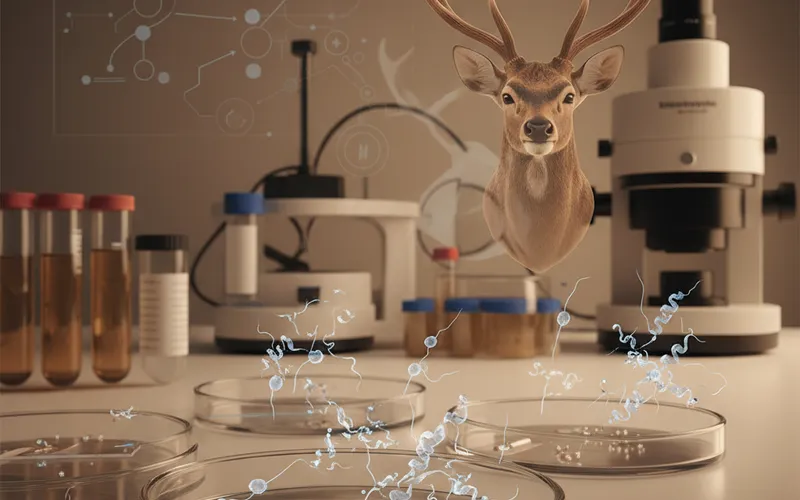
1. Die Studie – Was wurde untersucht und warum betrifft dich das?
Stell dir vor, du hältst den Schlüssel zur Zukunft einer ganzen Tierart in der Hand. Ein einziger Tropfen, eingefroren bei minus 196 Grad Celsius, könnte die Population einer Spezies retten, die kurz vor dem Aussterben steht. Genau das ist die Vision hinter der Kryokonservierung von Spermien. Doch dieser Prozess ist alles andere als einfach. Das Einfrieren und Auftauen kann die empfindlichen Spermienzellen stark schädigen, ihre Funktion beeinträchtigen und so die Erfolgschancen der künstlichen Befruchtung mindern.
Dieses Problem ist besonders drängend bei seltenen und gefährdeten Tierarten, wie dem Eld-Hirsch (Rucervus eldii). Eine Gruppe von Forschenden aus Thailand, darunter M. Nijaran, S. Roytrakul und G. Suriyaphol, hat sich dieser Herausforderung angenommen. Sie wollten herausfinden, welche molekularen Veränderungen in den Spermien des Eld-Hirschs während der Kryokonservierung stattfinden. Ihr Ziel: ein besseres Verständnis dieser Prozesse, um die Methoden zu optimieren und so den Arterhaltungsprogrammen eine grössere Erfolgschance zu geben.
Die Forschenden untersuchten die proteomischen Profile – also die Gesamtheit der Proteine – von Spermien des siamesischen und burmesischen Eld-Hirschs. Sie verglichen drei verschiedene Stadien: frische Spermien, Spermien vor dem Einfrieren (Pre-Freeze) und Spermien nach dem Auftauen (Post-Thaw). Mithilfe einer hochentwickelten Technik namens Flüssigchromatographie-Tandem-Massenspektrometrie (LC-MS/MS) konnten sie Tausende von Proteinen identifizieren und messen, wie sich deren Mengen in den verschiedenen Stadien veränderten.
Insgesamt identifizierten sie 2294 Proteine. Besonders interessant waren 16 Proteine, die sich zwischen frischen und Pre-Freeze-Spermien signifikant unterschieden, und 14 Proteine, die zwischen frischen und kryokonservierten (aufgetauten) Spermien eine signifikant abweichende Expression zeigten. Zum Beispiel fanden sie erhöhte Werte von Proteinen wie CCDC136 und STAT3 in den Pre-Freeze-Spermien. Dies deutet darauf hin, dass die Zellen möglicherweise versuchen, ihr Zytoskelett zu stabilisieren und eine Immunantwort während des Kühlprozesses zu aktivieren. Nach dem Auftauen hingegen waren Proteine wie NME1 und ZFPL1 reduziert, was auf Störungen des Stoffwechsels und des Chromatins hindeutet. Gleichzeitig waren CUL4B und SUMO1 erhöht, was auf die Aktivierung von DNA-Reparatur- und Protein-Umsatz-Prozessen schliessen lässt. Diese molekularen Veränderungen korrelierten mit einer verminderten Beweglichkeit, Viabilität sowie einer schlechteren Membran- und Akrosom-Integrität der aufgetauten Spermien. Die Forschenden hoffen, dass diese identifizierten Proteine als Biomarker für die Spermienqualität dienen und zur Entwicklung besserer Kryokonservierungsstrategien beitragen können.
Quelle: Nijaran M, Roytrakul S, Phaonakrop N, Thongphakdee A, Boonorrana I, Kiatsomboon S, Karoon S, Suriyaphol G (2026). Proteomic insights into the effects of cryopreservation on sperm of endangered Eld's deer (Rucervus eldii). Reproductive biology, 26(2). PubMed-ID: 41806660
2. Was heisst das wirklich? – Die kritische Einordnung
Diese Studie liefert faszinierende Einblicke in die molekularen Prozesse, die während der Kryokonservierung von Spermien ablaufen. Sie zeigt, dass das Einfrieren und Auftauen eine Kaskade von Veränderungen auf Proteinebene auslöst, die letztlich die Funktion der Spermien beeinträchtigen. Für die Arterhaltung ist das Wissen um diese spezifischen Proteine von unschätzbarem Wert, da es Ansatzpunkte für die Optimierung der Kryoprotokolle bietet.
Doch wie bei jeder wissenschaftlichen Arbeit ist es wichtig, die Ergebnisse kritisch zu beleuchten. Die Forschenden haben hier einen sogenannten Surrogatparameter gemessen: die Proteinexpression und die Qualität der Spermien (Beweglichkeit, Viabilität). Das ist ein wichtiger Schritt, aber es ist noch kein direkter Beweis für eine erfolgreiche Befruchtung oder gar die Geburt gesunder Nachkommen. Ein verbessertes molekulares Profil ist zwar vielversprechend, aber es muss sich letztlich in höheren Reproduktionsraten widerspiegeln.
Die Studie ist methodisch sauber und nutzt modernste Proteomik-Technologien. Die Stichprobengrösse ist für Studien an gefährdeten Wildtieren oft begrenzt, was hier aber in der Natur der Sache liegt. Die Ergebnisse sind statistisch signifikant, was bedeutet, dass die beobachteten Unterschiede wahrscheinlich nicht zufällig sind. Die Frage, die sich hier stellt, ist jedoch die der klinischen Relevanz. Ein statistisch signifikanter Unterschied in der Expression eines Proteins muss nicht zwangsläufig zu einem biologisch bedeutsamen Unterschied in der Fortpflanzungsfähigkeit führen.
Denkwerkzeug: Wenn du eine Studie liest, die über neue Biomarker berichtet, frage dich: Zeigen diese Biomarker nur eine Veränderung an, oder führen sie tatsächlich zu einem messbaren, spürbaren Unterschied im Endergebnis – sei es Gesundheit, Fortpflanzung oder Lebensqualität?
3. Der Geist im Körper – Die psychophysiologische Perspektive
Auch wenn diese Studie sich auf tierische Spermien konzentriert, können wir interessante Parallelen zu menschlichen physiologischen Prozessen ziehen und die psychophysiologische Perspektive anwenden. Betrachte die Spermienzelle als ein hochkomplexes System, das auf Stress reagiert. Der Prozess des Einfrierens und Auftauens ist für diese Zellen ein massiver Stressor. Die Studie zeigt, dass die Spermien mit einer Vielzahl von molekularen Anpassungen reagieren, um diesen Stress zu bewältigen – von der Stabilisierung des Zytoskeletts bis hin zur Aktivierung von DNA-Reparaturmechanismen.
Übertragen wir dies auf den menschlichen Körper: Unser Körper ist ebenfalls ein Meister der Anpassung an Stress. Chronischer psychischer Stress, wie er durch Überforderung, Ängste oder Trauer entsteht, löst im Körper eine ähnliche Kaskade von molekularen und physiologischen Reaktionen aus. Auch hier geht es um die Aufrechterhaltung der Homöostase, um Reparaturprozesse und um die Bewältigung schädlicher Einflüsse.
Ein Aspekt, der in solchen Studien – sei es an Tieren oder Menschen – oft übersehen wird, ist die Erwartungshaltung und der Placebo-/Nocebo-Effekt. Bei Tieren ist dies natürlich nicht direkt anwendbar, aber bei menschlichen Reproduktionsstudien spielt die mentale Verfassung der Paare eine grosse Rolle. Der Stress und die Erwartungen rund um eine künstliche Befruchtung können sich auf hormonelle Profile und sogar auf die Qualität der Keimzellen auswirken. Auch wenn die Spermien von Hirschen nicht denken oder fühlen, reagiert ihr System auf die Umweltbedingungen. Diese Interaktion von externem Stress und zellulärer Reaktion ist ein Kernprinzip des psychophysiologischen Interaktionsmodells.
Es ist gut denkbar, dass auch bei den Hirschen die Qualität des Samens vor der Entnahme durch stressige Umweltbedingungen oder den Fangprozess beeinflusst werden könnte, was sich wiederum auf die Kryokonservierung auswirken würde. Die psychische Verfassung des Spenders (oder des Tieres) ist also nie ganz losgelöst von der physiologischen Qualität des Spendenmaterials.
4. Der grössere Kontext – Einordnung und Abhängigkeiten
Diese Studie ist ein wichtiges Puzzleteil in den globalen Bemühungen zur Arterhaltung. Sie bestätigt und erweitert unser Verständnis, dass die Kryokonservierung von Keimzellen eine komplexe Angelegenheit ist, die weit über das reine Einfrieren hinausgeht. Sie reiht sich ein in eine wachsende Zahl von Forschungen, die darauf abzielen, die molekularen Mechanismen der Kälteschädigung zu entschlüsseln und so die Erfolgsraten von Reproduktionstechnologien zu verbessern.
Finanziert wurde die Studie von verschiedenen Institutionen in Thailand, darunter die Chulalongkorn Universität und das National Center for Genetic Engineering and Biotechnology (BIOTEC). Dies verleiht der Studie eine hohe Glaubwürdigkeit, da keine kommerziellen Interessenkonflikte erkennbar sind, die die Ergebnisse beeinflussen könnten. Es ist erfreulich zu sehen, wie nationale Forschungsgelder in Projekte investiert werden, die einen direkten Bezug zum Naturschutz und zur Erhaltung der Biodiversität haben.
Was wurde nicht kontrolliert? Wie bei vielen Studien an Wildtieren ist es schwierig, alle Lebensstilfaktoren der Tiere zu kontrollieren. Die genetische Variabilität innerhalb der Eld-Hirsch-Populationen, die Ernährung, das Alter oder der allgemeine Gesundheitszustand der Spendertiere könnten ebenfalls die Spermienqualität beeinflusst haben. Die Studie konzentrierte sich auf die proteomischen Veränderungen während des Kryoprozesses, aber die Ausgangsqualität der Spermien ist natürlich ein entscheidender Faktor, der von vielen externen Variablen abhängt.
Denkwerkzeug: Wenn du eine Studie liest, die sich auf einen bestimmten Faktor konzentriert (z.B. ein Supplement, eine Übung), frage dich immer: Welche anderen Lebensstilfaktoren oder Umweltbedingungen könnten die Ergebnisse genauso stark oder sogar stärker beeinflusst haben, wurden aber in dieser Studie nicht berücksichtigt?
5. Was heisst das für dich? – Fazit und Alltagsrelevanz
Was können wir aus der molekularen Analyse von Hirschspermien für unser eigenes Leben mitnehmen? Auch wenn du wahrscheinlich keine Spermien einfrierst, lehrt uns diese Studie eine wichtige Lektion über die Resilienz des Körpers und die Bedeutung von Stressmanagement.
- Dein Körper ist ein Anpassungskünstler: Die Spermien versuchen, sich an den extremen Stress des Einfrierens anzupassen. Auch dein Körper ist ständig damit beschäftigt, sich an Stressoren aus deiner Umwelt anzupassen. Ob es nun Schlafmangel, schlechte Ernährung oder psychischer Druck ist – dein System aktiviert Reparaturmechanismen und versucht, das Gleichgewicht wiederherzustellen. Unterstütze es dabei aktiv!
- Qualität vor Quantität: Die Studie zeigt, dass nicht nur die Menge der Spermien wichtig ist, sondern vor allem deren Qualität. Das Gleiche gilt für viele Aspekte deiner Gesundheit: Es ist nicht nur die Menge an Sport, die zählt, sondern die Qualität der Bewegung. Nicht nur die Menge an Schlaf, sondern die Qualität deines Schlafs.
- Der Wert der Prävention: Die Forschenden wollen durch ein besseres Verständnis der Proteine die Schäden durch Kryokonservierung minimieren. Für dich bedeutet das: Prävention ist der beste Schutz. Ein gesunder Lebensstil mit ausgewogener Ernährung, regelmässiger Bewegung und effektivem Stressmanagement ist wie ein optimiertes Kryoprotokoll für deinen Körper – es schützt deine Zellen und Systeme vor Schäden.
Was solltest du NICHT daraus schliessen? Du solltest nicht annehmen, dass du jetzt alle Proteine im Detail verstehen musst, um gesund zu sein. Die Botschaft ist viel grundlegender: Dein Körper ist ein Wunderwerk der Anpassung, aber er braucht deine Unterstützung, um optimal zu funktionieren. Die Studie ist besonders relevant für alle, die sich für Biologie, Naturschutz und die komplexen Mechanismen des Lebens interessieren.
Der psychophysiologische Gedanke zum Schluss: Jede Zelle in deinem Körper, wie die Spermienzellen des Eld-Hirschs, reagiert auf ihre Umgebung und auf Stress. Deine Gedanken, deine Gefühle, dein Stresslevel – all das ist Teil dieser Umgebung und beeinflusst die molekularen Prozesse in dir. Ein gesunder Geist ist oft der beste Schutz für einen gesunden Körper. Was können wir also noch alles lernen, wenn wir die Natur genauer beobachten und die Interaktionen zwischen Psyche und Physiologie noch besser verstehen?
Bleib neugierig, denn das Leben steckt voller faszinierender Zusammenhänge, die es zu entdecken gilt.