NAD+ oder NR als Infusion: Was ist besser verträglich?
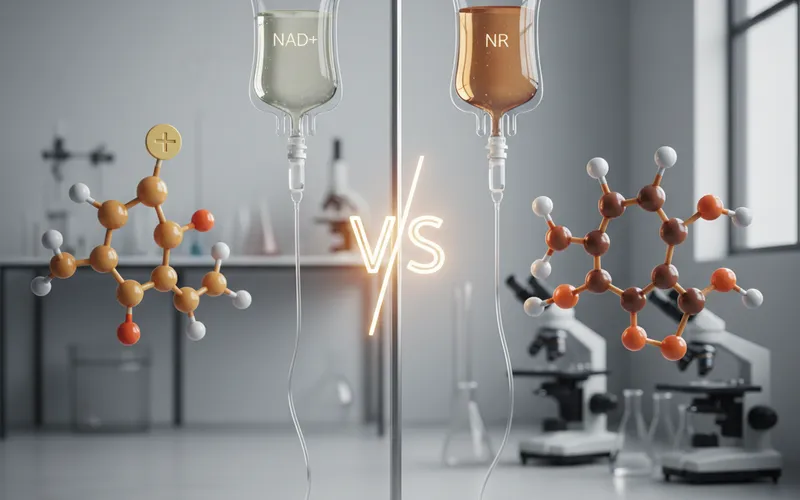
Intravenöse Infusionen mit NAD+ und Nicotinamid-Ribosid (NR) sind im Anti-Aging-Bereich beliebt. Doch wie verträglich sind sie wirklich, und welche Unterschiede gibt es? Eine aktuelle Studie vergleicht die Nebenwirkungen und Infusionszeiten in einem realen Umfeld.
1. Die Studie – Was wurde untersucht und warum betrifft dich das?
Stell dir vor, du möchtest deinem Körper etwas Gutes tun, vielleicht um die Zellregeneration anzukurbeln oder dein Energielevel zu steigern. In den letzten Jahren sind Infusionen mit NAD+ (Nicotinamid-Adenin-Dinukleotid) und dessen Vorläufer NR (Nicotinamid-Ribosid) immer populärer geworden, besonders im Wellness- und Anti-Aging-Bereich. Viele Menschen schwören darauf, aber wie steht es um die Verträglichkeit und Sicherheit dieser Behandlungen, besonders wenn sie nicht in einem streng klinischen Rahmen, sondern in kommerziellen Einrichtungen verabreicht werden?
Genau diese Frage haben sich Forschende um Reyna K. und Pojednic R. von RestoreLabs und der University of Connecticut gestellt. Ihre retrospektive Pilotstudie, publiziert in Frontiers in Aging, untersuchte die Verträglichkeit von intravenös verabreichtem NAD+ und NR in einem «real-world setting». Die Autoren wollten herausfinden, wie sich die beiden Substanzen in Bezug auf Infusionszeit, Nebenwirkungen, Sicherheitsmarker und sogar einige Stoffwechselparameter unterscheiden.
Für diese Untersuchung wurden elektronische Patientenakten von Klienten einer kommerziellen Einrichtung ausgewertet. Die Teilnehmer erhielten entweder vier aufeinanderfolgende Tage lang 500 mg NAD+-Infusionen oder 500 mg NR-Infusionen, gefolgt von einer 30-tägigen Beobachtungsphase. Das Studiendesign war eine retrospektive Analyse, was bedeutet, dass bereits vorhandene Daten ausgewertet wurden. Dies ist zwar kein randomisiertes, kontrolliertes Studiendesign, bietet aber wertvolle Einblicke in die Anwendung unter Alltagsbedingungen.
Die Hauptziele der Studie waren die Erfassung von berichteten Symptomen, der gesamten Infusionszeit, des Blutdrucks, der Ruheherzfrequenz und bestimmter Biomarker wie ALT, AST, hsCRP, BUN/Kreatinin und TSH, die Hinweise auf die Organfunktion und Entzündung geben. Zusätzlich wurden explorative Analysen von Stoffwechsel-Biomarkern wie HbA1c (Langzeitblutzucker), Nüchternglukose, HDL-C, LDL-C und Triglyceriden durchgeführt.
Die Ergebnisse zeigten deutliche Unterschiede in der Verträglichkeit: Die NAD+-Gruppe berichtete über moderate bis schwere gastrointestinale Symptome, erhöhte Herzfrequenz und Brustdruck während der Infusionen. Im Gegensatz dazu erlebten die NR-Teilnehmer nur leichte Kribbelgefühle an Zunge, Kiefer und Arm sowie milde Krämpfe. Alle Symptome verschwanden nach Beendigung der Infusion. Aufgrund der stärkeren Symptome benötigten die NAD+-Infusionen mit durchschnittlich 97 Minuten deutlich länger als die NR-Infusionen mit 37 Minuten.
Erfreulicherweise wurden keine signifikanten Veränderungen bei wichtigen Sicherheitsmarkern wie ALT, AST, hsCRP, BUN/Kreatinin oder TSH in beiden Gruppen festgestellt. Lediglich die alkalische Phosphatase (ALP) sank signifikant in der NAD+-Gruppe, blieb aber im normalen Bereich. Bei den Stoffwechselparametern zeigte die NR-Gruppe eine signifikante Reduktion des HbA1c, während die NAD+-Gruppe eine signifikante Reduktion des HDL-C aufwies. Nüchternglukose und LDL-C blieben in beiden Gruppen unverändert.
Quelle: Reyna K, Heinzen G, Patel N, Ritter M, Siojo A, Legere H, Pojednic R (2026). Intravenous infusion of nicotinamide adenine dinucleotide (NAD+) versus nicotinamide riboside (NR): a retrospective tolerability pilot study in a real-world setting. Front Aging, 7:1652582. PubMed-ID: 41704678
2. Was heisst das wirklich? – Die kritische Einordnung
Diese Studie liefert spannende Einblicke in die praktische Anwendung von NAD+- und NR-Infusionen. Doch was bedeuten die Ergebnisse wirklich für dich? Zunächst einmal ist es wichtig zu verstehen, dass dies eine retrospektive Pilotstudie ist. Das heisst, die Forschenden haben vorhandene Daten analysiert, anstatt ein kontrolliertes Experiment von Grund auf neu zu planen. Solche Studien sind wertvoll für die Generierung von Hypothesen und das Aufzeigen von Trends im realen Leben, aber sie können keine kausalen Zusammenhänge beweisen wie eine randomisierte, placebokontrollierte Studie.
Ein zentraler Punkt ist die Verträglichkeit. Die deutlichen Unterschiede in den berichteten Symptomen zwischen NAD+ und NR sind klinisch bedeutsam. Niemand möchte eine Infusion erhalten, die mit starken Magen-Darm-Beschwerden, Herzrasen oder Brustdruck einhergeht. Die längere Infusionszeit für NAD+ ist eine direkte Folge dieser schlechteren Verträglichkeit – die Infusion muss langsamer laufen, um die Symptome zu minimieren. Das ist ein praktischer Aspekt, der für Anwender und Anbieter gleichermaßen wichtig ist.
Die Tatsache, dass wichtige Sicherheitsmarker unverändert blieben, ist beruhigend. Es deutet darauf hin, dass die Infusionen in der verwendeten Dosierung und Häufigkeit die Leber-, Nieren- und Schilddrüsenfunktion nicht negativ beeinflussten. Die Abnahme der alkalischen Phosphatase in der NAD+-Gruppe, die im normalen Bereich blieb, ist wahrscheinlich nicht klinisch relevant. Interessanter sind die explorativen Ergebnisse zu den Stoffwechselparametern: Die Senkung des HbA1c in der NR-Gruppe und des HDL-C in der NAD+-Gruppe. Diese Ergebnisse sind jedoch mit Vorsicht zu geniessen. Es handelt sich um explorative Analysen mit einer kleinen Stichprobe, und die klinische Relevanz dieser Veränderungen über eine so kurze Beobachtungszeit ist unklar.
Ein weiterer wichtiger Punkt ist die Stichprobengrösse und die Art der Teilnehmer. Es war eine Pilotstudie mit einer begrenzten Anzahl von Teilnehmern aus einer kommerziellen Einrichtung. Diese Personen suchen wahrscheinlich bewusst nach solchen Behandlungen und sind möglicherweise gesundheitsbewusster oder haben spezifische Erwartungen. Die Ergebnisse lassen sich daher nicht ohne Weiteres auf die Allgemeinbevölkerung übertragen. Du bist kein Durchschnitt, und die Reaktion deines Körpers könnte anders sein.
Dein Denkwerkzeug: Wenn du überlegst, eine solche Infusion in Anspruch zu nehmen, frage dich: Wie wichtig ist mir die reine Verträglichkeit im Vergleich zu potenziellen, aber noch nicht eindeutig bewiesenen Vorteilen? Bin ich bereit, für eine potenziell unangenehmere Infusion einen längeren Zeitraum in Kauf zu nehmen?
3. Der Geist im Körper – Die psychophysiologische Perspektive
Was diese Studie nicht direkt misst, aber implizit stark beeinflussen könnte, sind die psychophysiologischen Faktoren. Die Erwartungshaltung und die Überzeugung, etwas Wirksames zu erhalten, spielen bei jeder Intervention eine enorme Rolle – besonders bei Infusionen, die oft mit einem Gefühl von «direkter Wirkung» verbunden sind. Wir sprechen hier vom Placebo-Effekt, der weit über reine Einbildung hinausgeht und messbare physiologische Veränderungen hervorrufen kann.
Wenn jemand eine NAD+-Infusion erhält und fest daran glaubt, dass sie ihm Energie und Vitalität zurückgibt, kann diese positive Erwartung die subjektive Wahrnehmung der Wirkung verstärken. Gleichzeitig sehen wir hier auch das Gegenteil: den Nocebo-Effekt. Die NAD+-Gruppe berichtete über moderate bis schwere Symptome wie Brustdruck und gastrointestinale Beschwerden. Während dies sicherlich auf die Substanz selbst zurückzuführen ist, könnte die anfängliche Erwartung von Unwohlsein oder die negative Erfahrung bei den ersten Symptomen diese weiter verstärken und zu einer erhöhten Sensibilität führen.
Es ist gut denkbar, dass die Teilnehmer, die sich für solche Behandlungen entscheiden, bereits eine hohe Motivation und Selbstwirksamkeitserwartung mitbringen. Sie sind proaktiv in ihrer Gesundheitsgestaltung. Diese innere Haltung kann die Wirkung jeder Intervention, sei es eine Infusion, eine Ernährungsumstellung oder ein Trainingsprogramm, positiv beeinflussen. Wer fest davon überzeugt ist, dass eine Behandlung hilft, wird möglicherweise auch subtile Verbesserungen stärker wahrnehmen oder sich besser fühlen, selbst wenn die objektiven Veränderungen gering sind.
In dieser Studie wurden die psychischen Zustände der Teilnehmer – ihr Stresslevel, ihre Überzeugungen, ihre emotionale Verfassung – nicht erfasst. Doch wir wissen aus der Psychophysiologie, dass diese Faktoren direkten Einfluss auf die Herzfrequenz, die Darmtätigkeit und die Schmerzempfindung haben können. Ein erhöhtes Stresslevel könnte beispielsweise die Wahrnehmung von Brustdruck oder Magen-Darm-Beschwerden verstärken, selbst wenn die physiologische Veränderung durch die Infusion nur gering ist. Auch der Hawthorne-Effekt, also die Veränderung des Verhaltens oder der Symptomwahrnehmung, weil man weiss, dass man beobachtet wird, könnte eine Rolle gespielt haben.
4. Der grössere Kontext – Einordnung und Abhängigkeiten
Diese Studie ist ein kleiner, aber wichtiger Mosaikstein in der wachsenden Forschung rund um NAD+ und seine Vorläufer. Die Tatsache, dass sie in einem «real-world setting» durchgeführt wurde, ist ein Vorteil, da sie zeigt, wie diese Infusionen tatsächlich ausserhalb streng kontrollierter Laborbedingungen angewendet werden. Die Autoren sind mit RestoreLabs affiliiert, einem Anbieter dieser Infusionen, was ein potenzieller Interessenkonflikt sein könnte. Allerdings ist die Offenlegung dieser Affiliation transparent, und die Ergebnisse bezüglich der schlechteren Verträglichkeit von NAD+ sind kritisch genug, um die Glaubwürdigkeit der Studie nicht gänzlich zu untergraben. Die Untersuchung von Nebenwirkungen ist im Interesse aller Beteiligten.
Die Ergebnisse zur Verträglichkeit bestätigen teilweise anekdotische Berichte aus der Praxis, dass NAD+-Infusionen oft mit stärkeren Nebenwirkungen verbunden sind als andere Substanzen. Die Beobachtungen zu HbA1c und HDL-C sind interessant, aber als explorative Analysen in einer Pilotstudie müssen sie durch grössere, kontrollierte Studien bestätigt werden. Eine einzelne Studie, besonders eine retrospektive Pilotstudie, ist nie die ganze Wahrheit. Sie ist ein Hinweis, der weitere Forschung anstösst.
Was in dieser Studie nicht kontrolliert wurde, sind zahlreiche Lebensstilfaktoren, die die Gesundheit und das Wohlbefinden der Teilnehmer beeinflussen könnten. Ernährung, Bewegung, Schlafqualität, chronischer Stress und Vorerkrankungen wurden zwar möglicherweise in den Akten vermerkt, aber ihre systematische Kontrolle und Berücksichtigung in der Analyse ist bei retrospektiven Studien oft begrenzt. Diese Faktoren können die Stoffwechselparameter und die allgemeine Symptomwahrnehmung erheblich beeinflussen.
Dein Denkwerkzeug: Frage dich: Würde ich meine Entscheidung für oder gegen eine NAD+/NR-Infusion allein auf Basis dieser einen Pilotstudie treffen, oder brauche ich mehr Beweise – insbesondere aus grösseren, placebokontrollierten Studien, die auch meine individuellen Gesundheitsziele und meinen Lebensstil berücksichtigen?
5. Was heisst das für dich? – Fazit und Alltagsrelevanz
Was kannst du nun aus dieser Studie für dich mitnehmen?
- Verträglichkeit ist ein entscheidender Faktor: Wenn du über eine NAD+- oder NR-Infusion nachdenkst, ist es wichtig zu wissen, dass NAD+ deutlich häufiger und stärkere Nebenwirkungen wie Magen-Darm-Beschwerden und Herzrasen verursachen kann, was zu längeren Infusionszeiten führt. NR scheint hier die deutlich verträglichere Option zu sein.
- Sicherheit scheint gegeben, aber Langzeitdaten fehlen: Kurzfristig zeigten sich keine alarmierenden Veränderungen bei wichtigen Organfunktionen. Das ist beruhigend. Es gibt jedoch noch keine Langzeitstudien, die die Sicherheit über Monate oder Jahre hinweg umfassend untersucht haben.
- Stoffwechseleffekte sind noch unklar: Die beobachteten Veränderungen bei HbA1c und HDL-C sind vorläufig und bedürfen weiterer Forschung. Verlass dich nicht allein auf solche explorativen Ergebnisse, um deine Gesundheitsstrategie zu bestimmen.
Was solltest du aus dieser Studie **NICHT** schliessen? Leite nicht ab, dass NAD+ prinzipiell «schlecht» oder NR «gut» ist. Die Studie beleuchtet primär die Verträglichkeit und erste Hinweise auf Stoffwechseleffekte. Sie beweist keine umfassende Wirksamkeit im Sinne von Anti-Aging oder Gesundheitsverbesserung. Sei vorsichtig mit Versprechungen, die über die Studienlage hinausgehen.
Diese Erkenntnisse sind besonders relevant für Menschen, die mit dem Gedanken spielen, solche Infusionen in kommerziellen Wellness-Einrichtungen in Anspruch zu nehmen. Es gibt dir eine bessere Grundlage für ein Gespräch mit deinem Arzt oder Therapeuten über die Vor- und Nachteile sowie die zu erwartenden Erfahrungen.
Denke immer daran: Dein Körper reagiert nicht nur auf die chemischen Substanzen, die du ihm zuführst, sondern auch auf deine Erwartungen, deine innere Haltung und dein allgemeines Wohlbefinden. Eine Infusion kann ein Puzzleteil sein, aber sie ersetzt niemals einen gesunden Lebensstil, Stressmanagement und eine positive Grundeinstellung. Die psychophysiologische Verbindung ist der Schlüssel zu deiner Gesundheit.
Welche Fragen bleiben offen? Es wäre spannend zu sehen, wie sich diese Infusionen in grösseren, randomisierten Studien mit Placebo-Kontrolle auf objektive Gesundheitsmarker und das subjektive Wohlbefinden auswirken. Auch die Langzeitwirkungen sind noch unzureichend erforscht. Bleib neugierig und hinterfrage weiterhin kritisch, was deinem Körper wirklich guttut.