Mundgesundheit als Frühindikator für Gebrechlichkeit im Alter
Deine Mundgesundheit ist mehr als nur schöne Zähne. Eine aktuelle Studie aus der Türkei zeigt, wie eng der Zustand deines Mundes mit allgemeiner Gebrechlichkeit, Mangelernährung und Muskelschwund im Alter zusammenhängt. Ein einfacher Test könnte bald helfen, Risiken frühzeitig zu erkennen.
Die Studie – Was wurde untersucht und warum betrifft dich das?
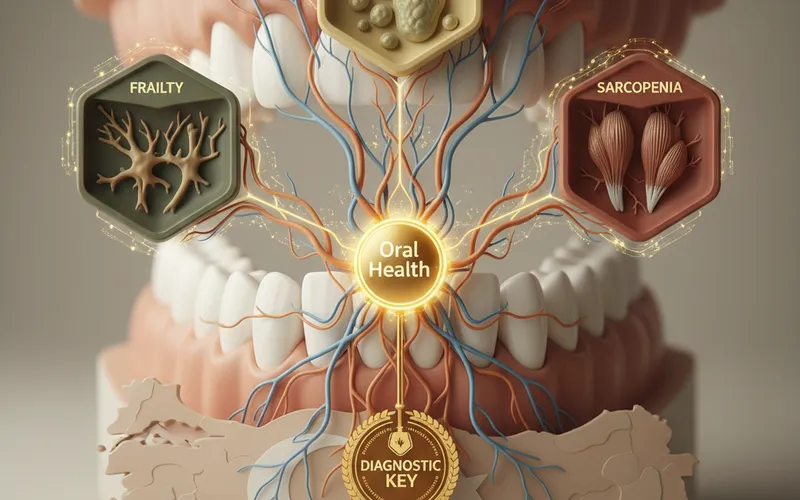
Stell dir vor, dein Mund könnte dir nicht nur sagen, ob du Karies hast, sondern auch, wie es um deine allgemeine körperliche Verfassung steht, wie hoch dein Risiko für Gebrechlichkeit oder sogar Muskelschwund ist. Eine faszinierende Vorstellung, oder? Genau dieser Frage ist ein Forschungsteam aus der Türkei nachgegangen. Sie haben untersucht, ob ein einfacher Index zur Erfassung der Mundgesundheit – der Oral Frailty Index-8 (OFI-8) – zuverlässig Gebrechlichkeit, Mangelernährung und Sarkopenie (altersbedingter Muskelschwund) bei älteren Menschen vorhersagen kann.
Die Wissenschaftler um Koçyiğit SE und Kollegen wollten nicht nur die türkische Version des OFI-8 auf ihre Zuverlässigkeit und Gültigkeit prüfen, sondern auch einen spezifischen Schwellenwert für die türkische Bevölkerung festlegen. Das ist wichtig, denn die Mundgesundheit ist ein oft unterschätzter Aspekt der Gesamtgesundheit, der tiefgreifende Auswirkungen auf die Lebensqualität und Selbstständigkeit im Alter haben kann. Denk nur daran, wie schwer es wird, richtig zu kauen, wenn die Zähne fehlen oder schmerzen, oder wie sehr das Sprechen leidet. Solche Einschränkungen beeinflussen nicht nur die Ernährung, sondern auch die soziale Interaktion und das allgemeine Wohlbefinden.
Für ihre Untersuchung haben die Forschenden Patientinnen und Patienten rekrutiert, die zwischen Januar 2024 und Januar 2025 eine geriatrische Ambulanz aufsuchten. Insgesamt wurden 162 Personen in die Studie eingeschlossen. Sie bewerteten die interne Konsistenz (misst, ob verschiedene Teile eines Tests dasselbe Konstrukt messen) und die Test-Retest-Reliabilität (misst die Stabilität eines Tests über die Zeit) des OFI-8. Um die «divergente Validität» zu prüfen – also ob der OFI-8 tatsächlich etwas anderes misst als bestehende Gebrechlichkeitsskalen, aber dennoch sinnvoll mit ihnen zusammenhängt – verglichen sie die OFI-8-Ergebnisse mit etablierten Scores für Gebrechlichkeit, Muskelkraft und Ernährungszustand. Anschliessend erstellten sie eine sogenannte Receiver Operating Characteristic (ROC) Kurve, um den optimalen Schwellenwert für den OFI-8 zu bestimmen, der Gebrechlichkeit, Mangelernährung und wahrscheinliche Sarkopenie am besten vorhersagen kann. Schliesslich analysierten sie den Zusammenhang zwischen der oralen Gebrechlichkeit und demografischen Merkmalen, Begleiterkrankungen sowie geriatrischen Syndromen und führten Regressionsanalysen durch, um Störfaktoren zu kontrollieren.
Die Ergebnisse waren vielversprechend: Der OFI-8 zeigte eine gute interne Konsistenz mit einem Cronbach’s α von 0.728 und eine exzellente Test-Retest-Reliabilität mit einem Intraclass Correlation Coefficient (ICC) von 0.961. Das bedeutet, der Test ist sowohl in sich stimmig als auch über die Zeit stabil. Die «konstruktive Validität» wurde durch eine explorative Faktorenanalyse gestützt, und die «divergente Validität» wurde durch signifikante Korrelationen mit Gebrechlichkeit, Muskelkraft und Ernährungszustand bestätigt. Als optimaler Schwellenwert zur Vorhersage von körperlicher Gebrechlichkeit, Mangelernährung und wahrscheinlicher Sarkopenie wurde ein Wert von ≥ 5 auf dem OFI-8 identifiziert. Für die Vorhersage von Gebrechlichkeit betrug die Fläche unter der Kurve (AUC) 0.75 (95% CI 0.67-0.82; p < 0.001) mit einer Sensitivität von 0.85 und einer Spezifität von 0.56. Für wahrscheinliche Sarkopenie lag die AUC bei 0.68 (95% CI 0.60-0.77; p < 001) mit einer Sensitivität von 0.71 und einer Spezifität von 0.52. Und für den Ernährungszustand betrug die AUC 0.76 (95% CI 0.68-0.84; p < 0.001) mit einer Sensitivität von 0.86 und einer Spezifität von 0.55. Diese Ergebnisse blieben auch nach Berücksichtigung von Störfaktoren bestehen.
Quelle: Koçyiğit SE, Katipoğlu B, Önal Y, et al. (2025). Validity of the Turkish version of the Oral Frailty Index-8 and its relationship with frailty, malnutrition, and sarcopenia in older adults. Turkish Journal of Medical Sciences, 56(1). PubMed-ID: 41816754
Was heisst das wirklich? – Die kritische Einordnung
Diese Studie liefert uns einen wichtigen Hinweis darauf, wie umfassend wir Gesundheit betrachten müssen. Dein Mund ist eben nicht nur ein isoliertes Organ, sondern ein Spiegel deiner gesamten körperlichen Verfassung. Wenn es um die Mundgesundheit geht, denken viele zuerst an Zahnbürste und Zahnseide. Doch diese Studie zeigt, dass der Zustand deines Mundes weitreichendere Implikationen haben könnte, insbesondere im Alter.
Die Forschenden haben den OFI-8 erfolgreich validiert und einen Schwellenwert festgelegt, der potenziell helfen könnte, Risikopersonen frühzeitig zu erkennen. Die Werte für Sensitivität und Spezifität sind ordentlich, wenn auch nicht perfekt. Eine Sensitivität von 0.85 für Gebrechlichkeit bedeutet, dass der Test 85% der tatsächlich gebrechlichen Personen korrekt identifiziert. Die Spezifität von 0.56 heisst jedoch, dass fast die Hälfte der nicht-gebrechlichen Personen fälschlicherweise als gebrechlich eingestuft werden könnte. Das ist ein Kompromiss, der in Screening-Tests oft eingegangen wird: Man möchte möglichst viele Betroffene finden, auch wenn das bedeutet, dass es mehr «falsch-positive» Ergebnisse gibt. Für ein Screening-Tool ist das oft akzeptabel, da ein positiver Test dann weitere, genauere Untersuchungen nach sich ziehen würde.
Ein wichtiger methodischer Punkt ist die Stichprobengrösse von 162 Patientinnen und Patienten. Das ist für eine Validierungsstudie in Ordnung, aber es ist eine relativ kleine Gruppe, was die Verallgemeinerbarkeit der Ergebnisse einschränken könnte. Zudem wurden die Daten an Patientinnen und Patienten einer geriatrischen Ambulanz erhoben, was bedeutet, dass es sich um eine Population handelt, die bereits gesundheitliche Herausforderungen hat. Ob die Ergebnisse in einer gesünderen älteren Allgemeinbevölkerung ähnlich aussehen würden, ist nicht sicher. Es ist auch zu bedenken, dass die Studie in der Türkei durchgeführt wurde. Kulturelle, ernährungsbedingte oder genetische Faktoren könnten die Mundgesundheit und die Gebrechlichkeitsmarker beeinflussen, was die direkte Übertragbarkeit auf andere Populationen, wie beispielsweise die Schweizer Bevölkerung, einschränken könnte.
Die Studie konzentriert sich auf die Validierung eines Index und die Korrelationen mit Gebrechlichkeit, Mangelernährung und Sarkopenie. Das sind wichtige Zusammenhänge, aber es handelt sich um Querschnittsdaten, die keine Aussage über Ursache und Wirkung zulassen. Ob eine schlechte Mundgesundheit zu Gebrechlichkeit führt oder ob Gebrechlichkeit die Mundgesundheit verschlechtert, kann diese Studie nicht beantworten. Es ist wahrscheinlich ein komplexes Zusammenspiel.
Denkwerkzeug: Wenn du über diese Ergebnisse nachdenkst, frag dich: Wie oft achte ich aktiv auf den Zustand meines Mundes, abgesehen vom Zähneputzen? Sehe ich meinen Mund als integralen Bestandteil meiner Gesamtgesundheit oder eher als separate Baustelle?
Der Geist im Körper – Die psychophysiologische Perspektive
Hier wird es besonders spannend, denn die psychophysiologische Linse offenbart, wie viel mehr hinter den beobachteten Korrelationen stecken könnte. Eine schlechte Mundgesundheit – sei es durch Zahnverlust, Entzündungen oder Schmerzen – hat nicht nur mechanische Folgen für die Nahrungsaufnahme, sondern auch tiefgreifende psychische Auswirkungen. Stell dir vor, du kannst nicht mehr richtig kauen: Das führt zu einer eingeschränkten Nahrungsauswahl, möglicherweise zu Mangelernährung, wie die Studie andeutet. Aber es beeinflusst auch den Genuss am Essen, die soziale Teilhabe bei Mahlzeiten mit Freunden oder Familie. Essen wird von einem freudvollen Erlebnis zu einer mühsamen Notwendigkeit. Das kann zu sozialem Rückzug, Einsamkeit und sogar Depressionen führen.
Chronische Entzündungen im Mund, wie Parodontitis, sind bekanntermassen Stressoren für den Körper. Sie setzen Entzündungsmediatoren frei, die systemische Auswirkungen haben können. Das ist ein klassisches Beispiel für die Interaktion zwischen Körper und Geist: Eine lokale Entzündung wird zu einem chronischen Stressor, der die Cortisol-Achse beeinflussen und damit den gesamten Stoffwechsel, die Immunfunktion und die Regeneration des Körpers beeinträchtigen kann. Wenn du ständig Schmerzen im Mund hast, ist das ein permanenter Stressor, der deine Schlafqualität mindert, deine Stimmung drückt und deine Motivation für körperliche Aktivität reduziert. All das sind Faktoren, die Gebrechlichkeit und Muskelschwund begünstigen.
Umgekehrt kann auch der psychische Zustand die Mundgesundheit beeinflussen. Menschen unter chronischem Stress neigen dazu, Zähneknirschen (Bruxismus) zu entwickeln oder ihre Mundhygiene zu vernachlässigen. Medikamente gegen Depressionen oder Angststörungen können Mundtrockenheit verursachen, was das Kariesrisiko erhöht. Es ist ein Teufelskreis: Psychischer Stress wirkt sich auf den Mund aus, der Mundzustand wiederum verstärkt den psychischen Stress und die körperliche Gebrechlichkeit.
Die Erwartungshaltung spielt ebenfalls eine Rolle. Wenn du das Gefühl hast, dass dein Körper langsam «verfällt», weil dein Mund Probleme macht, kann das deine Selbstwirksamkeit untergraben. Die Überzeugung, dass man nichts mehr tun kann, kann zu einer Art «Nocebo-Effekt» führen, bei dem sich der Körper schneller abbaut, als es physiologisch notwendig wäre. Die psychische Komponente der Gebrechlichkeit – das Gefühl der Hilflosigkeit und des Kontrollverlusts – ist massgeblich und wird durch physische Einschränkungen, wie sie durch eine schlechte Mundgesundheit entstehen, verstärkt.
Der grössere Kontext – Einordnung und Abhängigkeiten
Diese Studie ist ein weiteres Puzzleteil in einem immer klarer werdenden Bild: Die Mundgesundheit ist kein Nischenthema der Zahnmedizin, sondern ein zentraler Pfeiler der allgemeinen Gesundheit, insbesondere im Alter. Sie bestätigt und ergänzt frühere Forschung, die bereits Zusammenhänge zwischen Mundgesundheit und Herz-Kreislauf-Erkrankungen, Diabetes oder Demenz aufgezeigt hat. Die Arbeit aus der Türkei trägt dazu bei, ein validiertes Screening-Instrument für die orale Gebrechlichkeit zur Verfügung zu stellen, was ein wichtiger Schritt für die klinische Praxis sein könnte.
Interessant ist die Finanzierung der Studie, die im Abstract nicht explizit genannt wird. Es ist jedoch üblich, dass solche Validierungsstudien von universitären oder staatlichen Forschungsgeldern getragen werden. Es gibt keine Hinweise auf Interessenkonflikte, was die Glaubwürdigkeit der Ergebnisse stärkt.
Was in dieser Studie nicht kontrolliert wurde, sind die spezifischen psychologischen und sozialen Faktoren, die die Mundgesundheit und die allgemeine Gebrechlichkeit beeinflussen. Zum Beispiel: Wie hoch war der Bildungsgrad der Teilnehmenden? Welchen sozioökonomischen Status hatten sie? Wie war ihre soziale Integration? All diese Faktoren spielen eine Rolle bei der Gesundheitskompetenz, dem Zugang zu zahnärztlicher Versorgung und dem allgemeinen Stresslevel, die wiederum die Mundgesundheit und die Gebrechlichkeit beeinflussen können. Auch die genaue Qualität der Ernährung, jenseits des reinen Ernährungszustands, wurde nicht detailliert erfasst. Ein Mensch kann zwar ausreichend Kalorien zu sich nehmen, aber dennoch Mangel an spezifischen Mikronährstoffen haben, die für die Mundgesundheit und die Muskelregeneration wichtig sind.
Denkwerkzeug: Überlege dir: Wenn du die Ergebnisse dieser Studie hörst, neigst du dazu, die Schuld für schlechte Mundgesundheit bei dir selbst zu suchen, oder siehst du auch systemische Faktoren, wie den Zugang zu guter zahnärztlicher Versorgung oder die Rolle von Stress im Alltag? Und wie könntest du diese systemischen Faktoren für dich positiv beeinflussen?
Was heisst das für dich? – Fazit und Alltagsrelevanz
Was kannst du aus dieser Studie für dein eigenes Leben mitnehmen? Zunächst einmal: Deine Mundgesundheit ist extrem wichtig und verdient deine volle Aufmerksamkeit. Es geht nicht nur um ein schönes Lächeln, sondern um einen integralen Bestandteil deiner körperlichen und psychischen Gesundheit. Nimm Mundschmerzen, Zahnfleischbluten oder Schwierigkeiten beim Kauen ernst und such professionelle Hilfe auf. Eine regelmässige und gute Mundhygiene sowie Zahnarztbesuche sind keine Luxusausgaben, sondern Investitionen in deine langfristige Gesundheit und Lebensqualität.
Zweitens: Sei dir bewusst, dass dein Mund ein Frühwarnsystem sein kann. Wenn du bei dir selbst oder bei älteren Angehörigen Anzeichen einer verschlechterten Mundgesundheit bemerkst – zum Beispiel Zahnverlust, Schmerzen, Schwierigkeiten beim Essen bestimmter Speisen oder sogar Mundtrockenheit –, könnte dies ein Hinweis auf beginnende Gebrechlichkeit oder Mangelernährung sein. Sprich mit deinem Arzt oder Zahnarzt darüber und lass dich gründlich untersuchen. Es ist eine Chance, frühzeitig gegenzusteuern.
Was du jedoch nicht daraus schliessen solltest: Eine schlechte Mundgesundheit ist nicht zwangsläufig dein Schicksal und führt nicht unweigerlich zu Gebrechlichkeit. Die Studie zeigt Korrelationen, keine unvermeidlichen Kausalitäten. Du hast die Macht, durch präventive Massnahmen und eine aufmerksame Haltung viel zu bewirken. Mach dich nicht verrückt, wenn du mal ein Problem im Mund hast, sondern nutze es als Anstoss, genauer hinzuschauen und aktiv zu werden.
Diese Erkenntnisse sind besonders relevant für ältere Menschen und ihre Angehörigen, aber auch für alle, die präventiv handeln wollen. Die Pflege der Mundgesundheit ist ein einfacher, aber effektiver Weg, um länger vital und selbstständig zu bleiben. Und vergiss nie den psychophysiologischen Gedanken zum Schluss: Dein Körper reagiert nicht nur auf das, was du isst oder wie du dich bewegst, sondern auch auf das, was du denkst und fühlst. Ein gesunder Mund trägt massgeblich zu deinem Wohlbefinden bei, und ein gutes Wohlbefinden wiederum stärkt deine Fähigkeit, für deine Mundgesundheit zu sorgen. Es ist ein wunderbares Zusammenspiel. Welche Fragen bleiben offen? Wie könnten wir die psychologischen Auswirkungen von Mundgesundheitsproblemen noch besser messen und in die Prävention integrieren? Es gibt noch viel zu entdecken.
Bleib neugierig auf die Zusammenhänge deines Körpers und Geistes – denn sie sind untrennbar miteinander verbunden.