Milchkonsum und Telomerlänge: Was eine taiwanesische Studie über unser biologisches Alter andeutet
Eine aktuelle Studie aus Taiwan untersucht den Zusammenhang zwischen Milchkonsum und Telomerlänge, einem Marker für biologisches Alter. Die Ergebnisse könnten überraschend sein und werfen Fragen zur individuellen Ernährungsberatung auf – besonders für normotensive Erwachsene. Entdecke, wie deine Ernährung dein Inneres beeinflussen könnte.
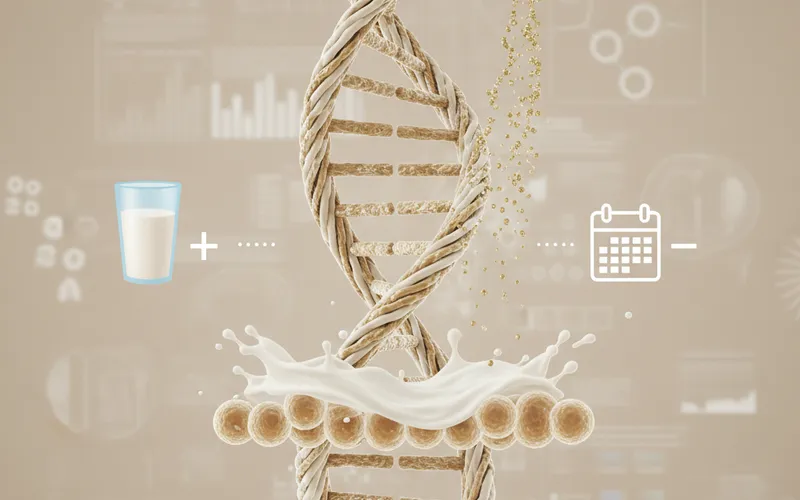
1. Die Studie – Was wurde untersucht und warum betrifft dich das?
Stell dir vor, du könntest an einem kleinen Detail in deinen Zellen ablesen, wie schnell dein Körper altert. Klingt nach Science-Fiction, ist aber Realität: Unsere Telomere, die Schutzkappen an den Enden unserer Chromosomen, sind genau solche Indikatoren. Je kürzer sie sind, desto älter ist unser biologisches Alter und desto höher das Risiko für altersbedingte Krankheiten. Die Länge dieser Telomere wird von vielen Faktoren beeinflusst – und dazu gehören auch unsere Ernährungsgewohnheiten.
Genau an diesem Punkt setzt eine spannende neue Studie aus Taiwan an. Ein Forschungsteam um Tsai HH von der China Medical University in Taichung hat untersucht, wie der Konsum von Milchprodukten mit der Länge der Telomere zusammenhängt. Bisher gab es dazu nur begrenzte Erkenntnisse, besonders in asiatischen Populationen, was diese Untersuchung besonders relevant macht. Die zentrale Frage war: Gibt es einen Zusammenhang zwischen dem Verzehr von Milchprodukten und der relativen Telomerlänge (RTL) bei taiwanesischen Erwachsenen, und spielt dabei der Blutdruckstatus eine Rolle?
Für ihre Studie führten die Wissenschaftler eine Querschnittsbefragung unter 259 Erwachsenen in Taipei durch. Das bedeutet, sie haben zu einem bestimmten Zeitpunkt Daten gesammelt, um bestehende Zusammenhänge zu erkennen – aber nicht, um Ursache und Wirkung direkt zu beweisen. Die relative Telomerlänge wurde mittels quantitativer PCR aus Mundschleimhautzellen gemessen, einer gängigen und nicht-invasiven Methode. Die Ernährungsgewohnheiten, insbesondere die Häufigkeit des Milchkonsums und der Fettgehalt der konsumierten Produkte, wurden über selbstberichtete Fragebögen erfasst. Anschliessend nutzten die Forschenden multiple lineare Regressionsmodelle, um die Verbindung zwischen Milchkonsum und Telomerlänge zu analysieren, wobei sie demografische und Lebensstilfaktoren berücksichtigten.
Die Ergebnisse waren aufschlussreich: Bei Personen mit normalem Blutdruck (normotensiv) zeigte sich ein signifikanter Zusammenhang: Eine höhere Häufigkeit des Milchkonsums war mit kürzeren Telomeren verbunden (β = -0.082, p < 0.01). Besonders ausgeprägt war dieser Effekt bei fettarmen und fettfreien Milchprodukten (β = -0.106, p < 0.01). Interessanterweise wurde dieser Zusammenhang in der Gruppe der Bluthochdruckpatienten (hypertensiv) nicht beobachtet. Die Autoren vermuten, dass dies möglicherweise auf einen sogenannten «Ceiling-Effekt» aufgrund chronischer Entzündungen bei hypertensiven Personen zurückzuführen ist, was bedeutet, dass die Telomere in dieser Gruppe bereits so kurz waren, dass der Milchkonsum keinen zusätzlichen Effekt mehr hatte.
Die Forschenden schliessen daraus, dass der Verzehr von Milchprodukten, insbesondere fettarmer Varianten, zur Telomerverkürzung bei normotensiven Erwachsenen beitragen könnte. Diese Erkenntnisse unterstreichen die Notwendigkeit einer individualisierten Ernährungsberatung im Rahmen von Strategien für gesundes Altern.
Quelle: Tsai HH, Su YD, Lai ZL, Lin CY, Lin SF, Hsu HC, Lin WY, Hsueh PR (2026). Increased dairy product consumption is associated with shorter telomere length in buccal cells among normotensive adults. BioMedicine (Taipei), 16(1):1-11. PubMed-ID: 41799033
Diese Ergebnisse werfen natürlich die Frage auf, was das nun für dich und deine tägliche Tasse Milch bedeutet.
2. Was heisst das wirklich? – Die kritische Einordnung
Die Studie aus Taiwan liefert interessante Hinweise, die wir aber sorgfältig einordnen müssen. Zunächst ist es wichtig zu verstehen, dass dies eine Querschnittsstudie ist. Das bedeutet, sie zeigt eine Momentaufnahme und identifiziert Korrelationen, aber keine Kausalität. Wir wissen also, dass erhöhter Milchkonsum und kürzere Telomere bei normotensiven Menschen gleichzeitig auftreten, aber wir können nicht mit Sicherheit sagen, dass der Milchkonsum die Telomere verkürzt hat. Es könnte auch andere, ungemessene Faktoren geben, die beides beeinflussen.
Die Forschenden haben die relative Telomerlänge in Mundschleimhautzellen gemessen. Telomere sind zwar ein anerkannter Biomarker für biologisches Altern, aber ihre Länge in Mundschleimhautzellen spiegelt nicht unbedingt die Telomerlänge in allen Körperzellen wider. Zudem ist die Telomerlänge ein Surrogatparameter – ein Stellvertreter. Ein kürzeres Telomer ist ein Hinweis auf beschleunigtes Altern und ein erhöhtes Krankheitsrisiko, aber es ist noch kein direkter Beweis für eine schlechtere Gesundheit oder eine kürzere Lebenserwartung. Es ist ein Warnsignal, kein endgültiges Urteil.
Ein starker Punkt der Studie ist die Berücksichtigung demografischer und Lebensstilfaktoren in den Regressionsmodellen, was die Ergebnisse robuster macht. Die Unterscheidung zwischen normotensiven und hypertensiven Personen ist ebenfalls ein wertvoller Aspekt, da sie auf unterschiedliche physiologische Reaktionen hindeutet. Die Autoren sprechen hier von einem möglichen «Ceiling-Effekt» bei Hypertonikern, was bedeutet, dass ihre Telomere aufgrund ihrer Grunderkrankung und den damit verbundenen Entzündungsprozessen möglicherweise bereits so stark verkürzt sind, dass der Milchkonsum keinen zusätzlichen negativen Effekt mehr hat. Dies ist eine plausible Hypothese, die weitere Forschung verdient.
Die Ergebnisse gelten spezifisch für die untersuchte Population: taiwanesische Erwachsene. Ernährungsweisen und genetische Prädispositionen können sich zwischen verschiedenen Ethnien unterscheiden, was die direkte Übertragbarkeit auf europäische oder andere Populationen einschränkt. Auch die Stichprobengrösse von 259 Personen ist nicht riesig, was die Aussagekraft begrenzt.
Denkwerkzeug für dich: Wenn du diese Studie liest, frage dich: «Wie sehr ähneln meine Ernährungsgewohnheiten und mein Gesundheitszustand (insbesondere mein Blutdruck) den Teilnehmern dieser Studie, und welche anderen Faktoren in meinem Leben könnten meine Telomerlänge beeinflussen?»
Diese Studie fordert uns auf, genauer hinzuschauen. Aber was ist mit all den subtilen Faktoren, die oft übersehen werden?
3. Der Geist im Körper – Die psychophysiologische Perspektive
Obwohl diese taiwanesische Studie sorgfältig demografische und Lebensstilfaktoren berücksichtigt hat, bleibt ein entscheidender Aspekt oft aussen vor: die psychophysiologische Dimension. Unser Körper reagiert nicht nur auf das, was wir physisch konsumieren, sondern auch stark auf unsere Gedanken, Gefühle und Überzeugungen.
Betrachten wir beispielsweise den Konsum von fettarmen oder fettfreien Milchprodukten, der in der Studie besonders mit kürzeren Telomeren assoziiert war. Oft greifen Menschen zu diesen Produkten, weil sie glauben, damit etwas Gutes für ihre Gesundheit zu tun. Sie folgen Empfehlungen, die fettarme Ernährung als gesünder anpreisen. Hier kommt der Placebo- und Nocebo-Effekt ins Spiel. Wenn wir etwas konsumieren, von dem wir überzeugt sind, dass es uns guttut, kann diese positive Erwartung physiologische Prozesse beeinflussen, oft im positiven Sinne. Umgekehrt kann die Sorge, etwas «Falsches» zu essen, Stress auslösen.
Doch was, wenn das vermeintlich Gesunde – wie fettarme Milchprodukte – in bestimmten Kontexten physiologisch gar nicht so vorteilhaft ist, wie wir glauben? Die Diskrepanz zwischen der Erwartung («Ich tue mir etwas Gutes») und einer potenziell ungünstigen physiologischen Reaktion könnte unbewussten Stress erzeugen. Ein permanenter, subtiler Stress, der durch widersprüchliche Gesundheitsbotschaften oder die Sorge um die eigene Ernährung entsteht, ist ein bekannter Faktor, der die Telomerverkürzung beschleunigen kann. Chronischer Stress führt zu einer erhöhten Ausschüttung von Cortisol, was wiederum oxidativen Stress und Entzündungsprozesse im Körper fördert – beides direkte Treiber der Telomerverkürzung.
Es ist gut denkbar, dass Personen, die sich sehr bewusst ernähren und dabei auf fettarme Produkte setzen, gleichzeitig einem höheren Druck ausgesetzt sind, «alles richtig zu machen». Dieser Perfektionismus und die ständige Selbstoptimierung können zu einem subtilen, chronischen Stressor werden, der in der Studie nicht erfasst wurde. Die Psyche beeinflusst, wie wir mit Ernährungsinformationen umgehen, welche Entscheidungen wir treffen und wie unser Körper darauf reagiert. Ein Gefühl der Überforderung durch die schiere Menge an Ernährungsratschlägen oder die Angst, sich falsch zu ernähren, könnte hier eine Rolle spielen.
Die psychophysiologische Perspektive lädt uns ein, nicht nur auf die Inhaltsstoffe der Nahrung zu schauen, sondern auch auf die mentale und emotionale Haltung, mit der wir essen und unsere Ernährung wählen. Wie fühlen wir uns dabei? Ist es Genuss oder ein weiterer Punkt auf der To-Do-Liste der Selbstoptimierung?
4. Der grössere Kontext – Einordnung und Abhängigkeiten
Diese taiwanesische Studie ist ein weiteres Puzzleteil in der komplexen Landschaft der Ernährungsforschung und des Alterns. Sie widerspricht teilweise der gängigen Empfehlung, fettarme Milchprodukte zu bevorzugen, und fordert uns auf, differenzierter hinzuschauen. Es ist wichtig zu beachten, dass eine einzelne Studie, insbesondere eine Querschnittsstudie, nie die ganze Wahrheit darstellt. Sie ist ein Hinweis, der weitere, idealerweise prospektive Längsschnittstudien oder Interventionsstudien, anregen sollte, um Kausalitäten zu untersuchen.
Hinsichtlich der Finanzierung und möglicher Interessenkonflikte ist positiv hervorzuheben, dass die Autoren ausdrücklich angeben, keine bekannten konkurrierenden finanziellen Interessen oder persönlichen Beziehungen zu haben, die die Arbeit beeinflusst haben könnten. Dies spricht für die Objektivität der Studie und stärkt ihre Glaubwürdigkeit.
Die Studie steht im Kontext einer wachsenden Erkenntnis, dass die traditionellen Ernährungsempfehlungen, insbesondere bezüglich Fett und Zucker, überdacht werden müssen. Während lange Zeit Fett als Hauptschuldiger für viele Gesundheitsprobleme galt und fettarme Produkte als die bessere Wahl beworben wurden, zeigen immer mehr Studien, dass dies zu vereinfacht ist. Oft wurden Fette durch Zucker oder andere Zusatzstoffe ersetzt, die ihrerseits negative Auswirkungen haben können.
Was in dieser Studie nicht kontrolliert werden konnte, sind viele andere Lebensstilfaktoren, die die Telomerlänge beeinflussen. Dazu gehören beispielsweise der Konsum von verarbeiteten Lebensmitteln insgesamt, der genaue Nährstoffgehalt der gesamten Ernährung, das Mass an körperlicher Aktivität, die Schlafqualität und natürlich das individuelle Stressmanagement. All diese Faktoren spielen eine Rolle für Entzündungen und oxidativen Stress im Körper, die wiederum die Telomerlänge beeinflussen. Die Studie hat sich auf den Milchkonsum konzentriert und andere Faktoren als potenzielle Störgrössen statistisch adjustiert, aber die Komplexität des menschlichen Lebensstils ist schwer vollständig abzubilden.
Denkwerkzeug für dich: Frage dich: «Welche anderen Aspekte meines Lebensstils – jenseits des Milchkonsums – könnten meine Zellgesundheit beeinflussen, und wie könnte ich diese Faktoren besser in mein Gesamtbild integrieren?»
Diese Studie ist ein guter Anlass, unsere Annahmen über «gesunde» Lebensmittel zu hinterfragen und den Blick zu weiten.
5. Was heisst das für dich? – Fazit und Alltagsrelevanz
Was nehmen wir nun aus dieser taiwanesischen Studie mit? Es ist verständlich, wenn du dich jetzt fragst, ob du deinen Milchkonsum überdenken solltest. Hier sind 2–3 konkrete Erkenntnisse, die du mitnehmen kannst:
- Achte auf dein Bauchgefühl und deine Beobachtungen: Die Studie ist ein Hinweis, kein absolutes Dogma. Wenn du normotensiv bist und regelmässig fettarme Milchprodukte konsumierst, könntest du beobachten, wie dein Körper darauf reagiert. Fühlst du dich gut? Oder gibt es vielleicht andere Milchprodukte oder Alternativen, die dir besser bekommen? Experimentiere achtsam.
- Hinterfrage «fettarm»-Empfehlungen: Die Assoziation mit kürzeren Telomeren war bei fettarmen und fettfreien Produkten am stärksten. Dies passt zu einer wachsenden Evidenz, die die pauschale Dämonisierung von Nahrungsfett infrage stellt. Konzentriere dich auf unverarbeitete Lebensmittel und eine ausgewogene Ernährung, anstatt isoliert auf den Fettgehalt zu achten.
- Individualität ist entscheidend: Die Studie zeigte keine Assoziation bei hypertensiven Personen. Das unterstreicht, wie wichtig es ist, individuelle Gesundheitszustände bei Ernährungsempfehlungen zu berücksichtigen. Was für den einen gilt, muss nicht für den anderen zutreffen.
Was du NICHT daraus schliessen solltest: Diese Studie ist kein Grund, in Panik zu verfallen und sofort alle Milchprodukte aus deinem Speiseplan zu streichen. Es ist ein einzelnes Puzzleteil, das weitere Forschung benötigt, um Kausalitäten zu beweisen und die Mechanismen zu verstehen. Es gibt keine «bösen» Lebensmittel an sich; es geht immer um den Kontext, die Menge und die individuelle Reaktion.
Für wen ist das besonders relevant? Vor allem für gesunde, normotensive Erwachsene, die bewusst auf ihre Ernährung achten und möglicherweise einen hohen Anteil an fettarmen Milchprodukten konsumieren. Für Menschen mit Bluthochdruck scheint der Milchkonsum in Bezug auf Telomere weniger relevant zu sein, möglicherweise weil andere Faktoren bei ihnen bereits eine grössere Rolle spielen.
Der psychophysiologische Gedanke zum Schluss bleibt: Dein Körper reagiert nicht nur auf die Nährstoffe, die du ihm zuführst, sondern auch auf deine Überzeugungen, deine Erwartungen und dein Stresslevel. Wenn du dich durch Ernährungsempfehlungen unter Druck gesetzt fühlst oder ständig Angst hast, etwas falsch zu machen, könnte dieser mentale Stress einen grösseren Einfluss auf dein biologisches Alter haben als einzelne Lebensmittel. Achte auf eine entspannte Haltung zum Essen und höre auf die Signale deines Körpers.
Welche Fragen bleiben offen? Es wäre spannend, in Längsschnittstudien zu untersuchen, ob eine Reduktion des Milchkonsums oder der Umstieg auf Vollfettprodukte tatsächlich die Telomerlänge beeinflusst. Auch die genauen biochemischen Mechanismen, die hier im Spiel sein könnten, bedürfen weiterer Forschung. Die Wissenschaft ist ein fortlaufender Prozess, und jede Studie öffnet neue Türen für unser Verständnis.
Bleib neugierig, sei achtsam mit deinem Körper und vertraue auf deine innere Weisheit – sie ist oft der beste Ratgeber.