Ätherische Öle im Futter: Wie Broiler davon profitieren und was das für dich bedeutet
Eine Studie untersuchte, wie mikroverkapselte ätherische Öle die Leistung und Fleischqualität von Masthühnern beeinflussen. Die Ergebnisse sind vielversprechend, werfen aber auch Fragen auf, die weit über den Hühnerstall hinausgehen und deine eigene Ernährung betreffen.
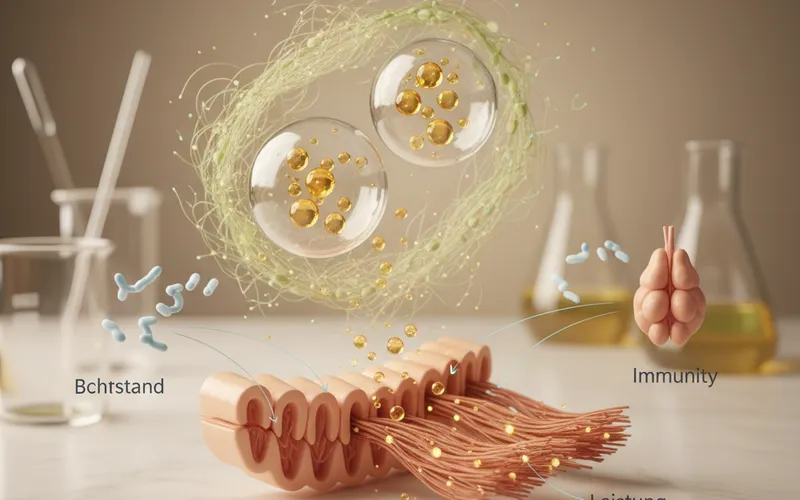
Die Studie – Was wurde untersucht und warum betrifft dich das?
Stell dir vor, du könntest durch eine kleine Zugabe im Futter nicht nur die Gesundheit und das Wachstum von Nutztieren verbessern, sondern auch die Qualität des Fleisches, das am Ende auf deinem Teller landet. Klingt fast zu schön, um wahr zu sein, oder? Genau dieser Frage widmete sich ein Forschungsteam aus dem Iran in einer aktuellen Studie, deren Ergebnisse auch für dich als Konsumentin oder Konsument relevant sind.
Die Forschenden um Safari, Mohammadpour und Jafaryani von der Universität Guilan in Rasht, Iran, haben untersucht, welche Auswirkungen eine Mischung aus mikroverkapselten ätherischen Ölen (BMEOs) auf die Leistung, den wirtschaftlichen Index, das Fettsäureprofil des Fleisches, die Schlachtkörpermerkmale und den Immunstatus von Masthühnern hat. Der Hintergrund: In der modernen Tierhaltung sucht man ständig nach Wegen, die Tiergesundheit und Produktivität zu steigern, oft auch als Alternative zu Antibiotika-Wachstumsförderern.
Für ihre Untersuchung teilten sie insgesamt 640 eintägige Ross 308 Masthühner (gemischtes Geschlecht) zufällig in vier Gruppen ein. Über einen Zeitraum von 42 Tagen erhielten die Hühner entweder ein Basisfutter (Kontrollgruppe) oder das Basisfutter ergänzt mit 300, 600 oder 900 mg/kg einer BMEO-Mischung. Diese Mischung enthielt ätherische Öle aus Eukalyptus (mit α-Pinen, γ-Terpinen, 1,8-Cineol, Limonen, α-Terpineol), Oregano (Carvacrol, Thymol, ρ-Cymen, Linalool), Rosmarin (1,8-Cineol, α-Pinen, Borneol, Kampfer) und Thymian (Thymol, Carvacrol, ρ-Cymen).
Die Ergebnisse waren deutlich: Die Gruppe, die die höchste Dosis (BMEOs-900) erhielt, zeigte signifikante Verbesserungen. Sie nahm im Durchschnitt täglich 69.3 g an Körpergewicht zu, verglichen mit 62.0 g in der Kontrollgruppe. Auch der Europäische Produktions-Effizienz-Faktor (EPEF) und der Europäische Broiler-Index (EBI) waren in dieser Gruppe deutlich höher. Gleichzeitig sank die Futterverwertungsrate (FCR) von 1.75 g/g in der Kontrollgruppe auf 1.60 g/g bei den Hühnern, die BMEOs-900 erhielten. Das bedeutet, sie brauchten weniger Futter, um das gleiche Gewicht zuzulegen.
Interessant waren auch die Auswirkungen auf die Organe und die Fleischqualität. Die BMEOs-900-Gruppe hatte ein erhöhtes relatives Gewicht der Immunorgane (Bursa Fabricii, Milz, Thymus), des Vormagens und der Bauchspeicheldrüse, während das relative Bauchfett um 75.1% reduziert war. Das Fleisch dieser Hühner wies zudem ein verbessertes Fettsäureprofil auf: Es enthielt höhere Mengen an mehrfach ungesättigten Fettsäuren (PUFA), insbesondere Omega-3- und Omega-6-PUFA, und ein besseres PUFA/gesättigte Fettsäuren-Verhältnis. Das Verhältnis von Omega-6 zu Omega-3-Fettsäuren war ebenfalls günstiger. Die Forschenden vermuten, dass die aktiven Komponenten der ätherischen Öle die antioxidative Funktion des Körpers und die Beta-Oxidation von Fettsäuren verbessern könnten.
Quelle: Safari H, Mohammadpour F, Jafaryani O (2026). A blend of microencapsulated essential oils improves performance, economic index, meat fatty acid profile, carcass characteristics, and immune index of broilers. Transl Anim Sci, 10:txaf172. PubMed-ID: 41799845
Was heisst das wirklich? – Die kritische Einordnung
Diese Studie liefert spannende Einblicke in das Potenzial ätherischer Öle in der Tierernährung. Die Ergebnisse sind statistisch signifikant, das heisst, die beobachteten Unterschiede sind höchstwahrscheinlich nicht zufällig. Doch was bedeutet das für dich, wenn du das nächste Mal Hühnerfleisch kaufst oder dich fragst, wie deine eigene Ernährung optimiert werden könnte?
Zunächst einmal spricht die Grösse der Stichprobe (640 Hühner) und das randomisierte Design für eine solide Methodik. Die verwendete Methode der Mikroverkapselung ist wichtig, da sie die Stabilität und Bioverfügbarkeit der empfindlichen ätherischen Öle im Verdauungstrakt der Tiere verbessert. Die Messung von harten Endpunkten wie Gewichtszunahme, Futterverwertung und Schlachtkörpermerkmalen ist aussagekräftig. Besonders interessant ist die Verbesserung des Fettsäureprofils im Fleisch, da dies einen direkten Einfluss auf die menschliche Ernährung hat. Ein besseres Verhältnis von PUFA zu gesättigten Fettsäuren und ein günstigeres Omega-6/Omega-3-Verhältnis sind ernährungsphysiologisch wünschenswert.
Allerdings gibt es auch Grenzen. Es handelt sich um eine Studie an Masthühnern, nicht an Menschen. Auch wenn einige der Stoffwechselwege und Wirkmechanismen übertragbar sein mögen, können wir die Ergebnisse nicht direkt auf den menschlichen Körper anwenden. Zudem wurden die Hühner unter kontrollierten Bedingungen gehalten. Im realen Leben können Umweltfaktoren, Stress oder Krankheiten das Ergebnis beeinflussen. Die Studie konzentriert sich auf die Zugabe von BMEOs zum Futter; sie untersucht nicht die langfristigen Auswirkungen oder mögliche Rückstände in den Produkten, die für den menschlichen Verzehr bestimmt sind.
Ein wichtiges Denkwerkzeug für dich: Wenn du überlegst, wie du deine Ernährung verbessern kannst, frag dich: Wird hier ein einzelner Faktor isoliert betrachtet, oder wird das grosse Ganze berücksichtigt, das meinen Körper als komplexes System ausmacht?
Der Geist im Körper – Die psychophysiologische Perspektive
Auch wenn wir hier über Hühner sprechen, lässt sich die psychophysiologische Linse anlegen. Bei Tieren, genau wie bei Menschen, spielen Stress, Wohlbefinden und die Umwelt eine entscheidende Rolle für Gesundheit und Stoffwechsel. Ätherische Öle sind bekannt für ihre vielfältigen Wirkungen, die über reine Nährstoffe hinausgehen. Viele Inhaltsstoffe wie Carvacrol und Thymol haben antioxidative und entzündungshemmende Eigenschaften, die sich direkt auf die Zellfunktion auswirken können.
Aus psychophysiologischer Sicht ist es denkbar, dass die BMEOs nicht nur direkt auf den Stoffwechsel wirken, sondern auch das allgemeine Wohlbefinden der Hühner verbessern. Weniger Stress, ein stärkeres Immunsystem und eine bessere Darmgesundheit – all das sind Faktoren, die eng miteinander verbunden sind und das Tier in einen optimaleren physiologischen Zustand versetzen können. Wenn ein Tier sich besser fühlt, ist es auch wahrscheinlicher, dass es Futter effizienter verwertet und gesünder ist. Dies könnte auch die erhöhte Entwicklung der Immunorgane erklären. Es ist gut denkbar, dass die Tiere durch die Einnahme der ätherischen Öle weniger unter oxidativem Stress standen oder eine geringere chronische Entzündungsaktivität hatten, was wiederum Ressourcen für Wachstum und Immunsystem freisetzt.
Die Studie erwähnt die Verbesserung der antioxidativen Funktion und der Fettsäure-β-Oxidation. Dies sind Prozesse, die auch beim Menschen durch Stress und psychische Belastung beeinflusst werden. Chronischer Stress kann die antioxidativen Kapazitäten des Körpers erschöpfen und Entzündungen fördern, was sich wiederum auf den Stoffwechsel und die Fettsäurezusammensetzung auswirken kann. Wenn ätherische Öle hier eine schützende Wirkung entfalten, ist das ein starkes Argument dafür, wie subtile Einflüsse auf Zellebene weitreichende physiologische Effekte haben können.
Der grössere Kontext – Einordnung und Abhängigkeiten
Diese Studie reiht sich ein in eine wachsende Zahl von Forschungsarbeiten, die sich mit dem Einsatz natürlicher Zusätze in der Tierernährung befassen. Angesichts des zunehmenden Drucks, den Einsatz von Antibiotika in der Landwirtschaft zu reduzieren, sind Alternativen wie ätherische Öle von grossem Interesse. Sie bestätigen die Hypothese, dass Pflanzenextrakte positive Effekte auf Wachstum und Gesundheit von Nutztieren haben können.
Die Finanzierung dieser Studie wird im Abstract nicht explizit erwähnt, was eine übliche Praxis ist. Es ist jedoch wichtig zu bedenken, dass die Entwicklung und Vermarktung solcher Futtermittelzusätze ein grosses Geschäft ist. Mögliche Interessenkonflikte sollten immer im Hinterkopf behalten werden, auch wenn in dieser speziellen Studie keine offengelegt wurden. Die Forschung wurde von der Universität Guilan durchgeführt, was auf eine akademische Motivation hindeutet.
Was wurde nicht kontrolliert? In einer solchen kontrollierten Studienumgebung sind viele externe Faktoren ausgeschlossen. Im realen Betrieb spielen jedoch Faktoren wie die Qualität des Futters, die Haltungsbedingungen, die Dichte der Tiere, die Luftqualität und das Management eine grosse Rolle. All diese können die Gesundheit und Leistung der Tiere beeinflussen und somit auch die Wirksamkeit von Futterzusätzen modifizieren. Eine einzelne Studie, so gut sie auch sein mag, ist immer nur ein Puzzleteil im grossen Bild der Tierernährung und Gesundheit.
Dein Denkwerkzeug hier: Bevor du eine neue Ernährungsempfehlung oder ein neues Produkt für dich selbst in Betracht ziehst, frag dich: Wie passen diese Informationen in das Gesamtbild meines Lebensstils und meiner Bedürfnisse? Ist dieser eine Faktor wirklich der entscheidende, oder gibt es viele andere, die ich zuerst optimieren sollte?
Was heisst das für dich? – Fazit und Alltagsrelevanz
Was kannst du aus dieser Studie für dich mitnehmen? Auch wenn sie an Hühnern durchgeführt wurde, gibt sie uns wichtige Denkanstösse. Erstens: Die Qualität dessen, was Tiere fressen, beeinflusst direkt die Qualität des Fleisches, das wir konsumieren. Eine verbesserte Nährstoffzusammensetzung im Hühnerfleisch durch ätherische Öle könnte also einen indirekten Nutzen für deine eigene Ernährung haben.
Zweitens zeigt die Studie, wie wirksam natürliche Pflanzenstoffe sein können, um physiologische Prozesse positiv zu beeinflussen – von der Verdauung über das Immunsystem bis hin zum Stoffwechsel. Dies bestärkt die Idee, dass eine nährstoffreiche Ernährung mit einer Vielzahl von Pflanzenstoffen auch für den Menschen von Vorteil ist. Es geht nicht nur um Kalorien und Makros, sondern auch um die bioaktiven Verbindungen.
Was solltest du NICHT daraus schliessen? Bitte fang jetzt nicht an, dir selbst ätherische Öle ins Essen zu mischen! Die Dosierungen, die Verabreichungsformen und die Sicherheitsaspekte sind bei Tieren und Menschen völlig unterschiedlich. Diese Studie ist kein Freibrief für die Selbstmedikation mit ätherischen Ölen. Die Forschung ist noch lange nicht so weit, dass sie dir konkrete Empfehlungen für den menschlichen Verzehr geben könnte.
Für wen ist das besonders relevant? Für dich als bewusste Konsumentin oder bewussten Konsumenten ist es relevant zu wissen, dass die Forschung ständig nach Wegen sucht, die Qualität unserer Lebensmittel zu verbessern. Es ist auch ein Hinweis darauf, dass die Tiergesundheit und die Fleischqualität eng miteinander verbunden sind. Für dich als Individuum ist es ein weiterer Beleg dafür, wie wichtig eine ausgewogene, vielfältige Ernährung mit vielen Pflanzenstoffen ist, um deine eigenen physiologischen Prozesse optimal zu unterstützen.
Erinnere dich daran: Dein Körper ist ein komplexes System, das nicht nur auf das reagiert, was du isst, sondern auch auf deine Gedanken, Gefühle und dein Stresslevel. Die Wirkung von Nährstoffen und bioaktiven Verbindungen ist immer im Kontext deines gesamten psychophysiologischen Zustands zu sehen. Diese Studie ist ein kleiner Blick in die Welt der subtilen, aber wirkungsvollen Interaktionen zwischen Nahrung und Physiologie. Sie lädt uns ein, weiter neugierig zu bleiben und zu hinterfragen, wie wir unsere Gesundheit und die Qualität unserer Lebensmittel ganzheitlich verbessern können.
Bleib neugierig, denn die Wissenschaft hält noch viele Überraschungen bereit, die dein Verständnis für dein eigenes Wohlbefinden erweitern können.