Das Leber-Hormon Ihh: Wie Fasten den Stoffwechsel und die Wärmeproduktion beeinflusst
Eine neue Studie enthüllt, wie ein bisher wenig beachtetes Leber-Hormon namens Ihh den Übergang zwischen Fasten und Essen steuert und damit Stoffwechsel und Körpertemperatur reguliert. Könnte dieses Wissen neue Wege im Kampf gegen Übergewicht und Diabetes eröffnen?
Die Studie – Was wurde untersucht und warum betrifft dich das?
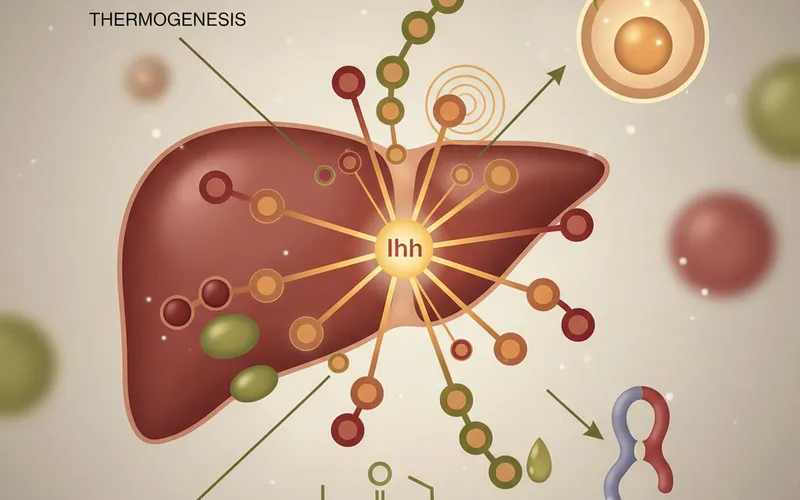
Stell dir vor, dein Körper hat einen inneren Dirigenten, der genau weiss, wann du gegessen hast und wann nicht, und der daraufhin fein abgestimmt deine Energieproduktion und sogar deine Körpertemperatur reguliert. Eine aktuelle Studie enthüllt nun, dass ein bisher wenig beachtetes Hormon aus der Leber, genannt Indian hedgehog (Ihh), genau diese Rolle spielen könnte. Dieses Hormon scheint ein zentraler Akteur zu sein, der den Übergang zwischen Fasten und Essen koordiniert und damit grundlegende Stoffwechselprozesse und die Wärmeproduktion deines Körpers beeinflusst.
Die Forscher um Teperino und Pospisilik vom Max-Planck-Institut für Immunbiologie und Epigenetik in Freiburg und dem Helmholtz Zentrum München haben sich der Frage gewidmet, wie die Leber – ein zentrales Stoffwechselorgan – den gesamten Körper beeinflusst, insbesondere im Hinblick auf Ernährungsumstellungen. Übergewicht und Typ-2-Diabetes sind globale Gesundheitsprobleme, und obwohl wir wissen, dass intermittierendes Fasten den Stoffwechsel verbessern kann, sind die genauen Mechanismen, die die Leber dabei nutzt, noch nicht vollständig verstanden. Hier kommt Ihh ins Spiel.
In ihrer Untersuchung, die hauptsächlich an Mäusen durchgeführt wurde, analysierten die Wissenschaftler die Rolle von Ihh bei der Reaktion des Körpers auf Nahrung und Fasten. Sie setzten genetisch veränderte Mäuse ein, bei denen die Ihh-Produktion in der Leber ausgeschaltet oder hochreguliert wurde, und beobachteten deren Stoffwechselverhalten unter verschiedenen Ernährungsbedingungen. Das Studiendesign umfasste detaillierte Analysen von Genexpression, Hormonspiegeln, Energieverbrauch, Körpertemperatur und der Zusammensetzung des braunen Fettgewebes.
Die zentralen Ergebnisse der Studie sind beeindruckend: Die Forscher fanden heraus, dass die Leber Ihh als Reaktion auf den Übergang vom Fasten zur Nahrungsaufnahme freisetzt. Dieses Hormon signalisiert dem Körper, mehr Wärme zu produzieren (Thermogenese) und beeinflusst gleichzeitig den Fettstoffwechsel. Mäuse ohne Leber-Ihh zeigten eine verringerte Wärmeproduktion und entwickelten eher Übergewicht und Insulinresistenz, insbesondere bei fettreicher Ernährung. Umgekehrt führte eine erhöhte Ihh-Produktion zu einem schlankeren Phänotyp und einer verbesserten Stoffwechselgesundheit. Ihh scheint also eine Schlüsselrolle dabei zu spielen, wie dein Körper Kalorien verbrennt und mit Nahrung umgeht, was es zu einem potenziellen Ziel für neue Therapien gegen Stoffwechselerkrankungen macht.
Quelle: Teperino R, Adamová M, Aljabali SM, Pai S, Gerlini R, Paez-Perez I, Matz-Soja M, Heyne S, Lempradl A, Basilicata MF, Hrabě de Angelis M, Gebhardt R, Schleicher E, Häring HU, Pospisilik JA (2026). Liver-derived Indian hedgehog (Ihh) couples fast-feed transition to thermogenic and metabolic homeostasis. Molecular Metabolism, 106. PubMed-ID: 41763608
Was heisst das wirklich? – Die kritische Einordnung
Diese Studie liefert faszinierende Einblicke in die komplexe Regulation unseres Stoffwechsels. Doch wie bei jeder wissenschaftlichen Veröffentlichung ist es wichtig, die Ergebnisse richtig einzuordnen und zu verstehen, was sie für dich persönlich bedeuten.
Du bist kein Durchschnitt. Die Studie zeigt statistisch signifikante Effekte bei Mäusen. Das bedeutet, dass die beobachteten Unterschiede zwischen den Gruppen nicht zufällig waren. Aber statistische Signifikanz ist nicht dasselbe wie klinische Relevanz. Der Effekt von Ihh war bei Mäusen klar messbar und führte zu Unterschieden im Körpergewicht und der Insulinempfindlichkeit. Ob diese Effekte in ähnlicher Stärke und Relevanz beim Menschen auftreten, muss sich erst noch zeigen. Was bei Mäusen funktioniert, lässt sich nicht immer eins zu eins auf den menschlichen Körper übertragen, auch wenn sie gute Modellorganismen sind.
Was wurde wirklich gemessen? Die Forscher haben eine Reihe von «harten» Endpunkten gemessen, die direkt mit dem Stoffwechsel zusammenhängen: Körpergewicht, Körperzusammensetzung, Glukosetoleranz, Insulinsensitivität und Energieverbrauch. Sie haben auch die Genexpression und Hormonspiegel analysiert, um die Mechanismen zu verstehen. Das ist eine Stärke der Studie. Allerdings sind die Ergebnisse noch auf zellulärer und Tiermodellebene. Bevor wir von einer neuen Therapie sprechen können, braucht es weitere Forschung, insbesondere Studien am Menschen.
Methodische Stärken und Grenzen: Die Studie ist methodisch sehr sauber aufgebaut, mit genetisch manipulierten Mäusen, die eine präzise Untersuchung der Ihh-Funktion ermöglichen. Die detaillierten Analysen des Stoffwechsels und der Thermogenese sind umfassend. Eine Grenze ist natürlich der Fokus auf Mäuse. Zudem wurden die Tiere unter kontrollierten Laborbedingungen gehalten – ein Umfeld, das sich stark von der komplexen Lebenswelt des Menschen unterscheidet, wo unzählige weitere Faktoren den Stoffwechsel beeinflussen.
Für wen gelten die Ergebnisse? Die Ergebnisse gelten primär für die untersuchten Mäusemodelle. Sie legen aber eine wichtige Grundlage für die Forschung am Menschen, insbesondere für Menschen, die mit Übergewicht, Insulinresistenz oder Typ-2-Diabetes zu kämpfen haben. Es ist ein Puzzleteil, das uns hilft, die zugrunde liegenden Mechanismen dieser Krankheiten besser zu verstehen.
Denkwerkzeug: Wenn du von einer solchen Entdeckung hörst, die bei Tieren gemacht wurde, frag dich: Wie ähnlich ist mein Stoffwechsel dem einer Maus, und welche anderen Faktoren in meinem Leben könnten einen potenziellen Effekt beeinflussen, die in dieser sehr kontrollierten Laborumgebung nicht berücksichtigt wurden?
Der Geist im Körper – Die psychophysiologische Perspektive
Hier wird es spannend, denn das psychophysiologische Interaktionsmodell lehrt uns, dass Körper und Geist untrennbar verbunden sind. Auch wenn diese Studie primär molekulare Mechanismen untersucht, können wir die psychische Komponente nicht ignorieren, besonders wenn es um Fasten, Essen und Stoffwechsel geht.
Erwartungshaltungen und der Placebo-Effekt: Stell dir vor, du beginnst mit intermittierendem Fasten. Allein die Überzeugung, dass dies deinem Körper guttut, kann physiologische Veränderungen anstossen. Der Placebo-Effekt ist ein mächtiger Faktor, der auch Stoffwechselprozesse beeinflussen kann. Wenn wir in Zukunft ein Medikament hätten, das Ihh moduliert, könnte die Erwartung der Wirksamkeit die tatsächliche physiologische Reaktion noch verstärken. Umgekehrt könnten Nocebo-Effekte auftreten, wenn Menschen von Nebenwirkungen ausgehen.
Stress und Hormonregulation: Chronischer Stress ist ein bekannter Störfaktor für den gesamten Stoffwechsel. Die Cortisol-Achse, die bei Stress aktiviert wird, beeinflusst Insulinresistenz, Fettverteilung und Entzündungsprozesse. Es ist gut denkbar, dass Stress auch die Feinregulation von Hormonen wie Ihh beeinflusst oder zumindest die Fähigkeit des Körpers, effektiv auf Ihh-Signale zu reagieren, beeinträchtigt. Jemand, der unter Dauerstress steht, könnte möglicherweise nicht die gleichen metabolischen Vorteile aus Fasten ziehen, selbst wenn sein Ihh-Spiegel optimal wäre.
Motivation und Selbstwirksamkeit: Fasten oder eine Ernährungsumstellung erfordert Disziplin und Motivation. Wer sich selbstwirksam fühlt, also die Überzeugung hat, dass er seine Ziele erreichen kann, wird eher dranbleiben und positive Ergebnisse erzielen. Diese psychische Stärke kann die physiologischen Effekte des Fastens – und damit indirekt auch die Wirkung von Ihh – verstärken. Eine Person, die glaubt, dass sie ihren Stoffwechsel positiv beeinflussen kann, wird wahrscheinlich auch physiologisch besser reagieren.
Der Hawthorne-Effekt: Auch wenn es sich um Tiermodelle handelt, ist es wichtig zu bedenken, dass die Beobachtung und die Interaktion mit den Forschern selbst subtile Auswirkungen auf die Tiere haben könnten, die über die reine Genmanipulation hinausgehen. Beim Menschen ist dieser Effekt noch ausgeprägter: Allein das Wissen, an einer Studie teilzunehmen oder ein neues Regime zu befolgen, kann das Verhalten und die Physiologie verändern.
Diese psychophysiologische Perspektive verdeutlicht, dass die Entdeckung von Ihh zwar ein wichtiger Schritt ist, aber der menschliche Stoffwechsel weit mehr ist als die Summe seiner Hormone. Unsere Gedanken, Gefühle und Überzeugungen spielen eine entscheidende Rolle im komplexen Tanz der physiologischen Regulation.
Der grössere Kontext – Einordnung und Abhängigkeiten
Diese Studie ist ein weiteres wichtiges Puzzleteil im immer komplexer werdenden Bild des Stoffwechsels und der Energiehomöostase. Sie ordnet sich in eine wachsende Forschungslandschaft ein, die die Leber als zentrales endokrines Organ betrachtet, das nicht nur Nährstoffe verarbeitet, sondern auch Hormone freisetzt, die den gesamten Körper beeinflussen.
Wer steht dahinter? Die Studie wurde von einem internationalen Konsortium von Forschenden aus Deutschland und den USA durchgeführt, darunter renommierte Institute wie das Max-Planck-Institut und das Helmholtz Zentrum. Die Finanzierung durch öffentliche Forschungsgelder (Max-Planck-Gesellschaft, Helmholtz Gemeinschaft, Deutsche Forschungsgemeinschaft) deutet auf eine unabhängige Wissenschaft hin, was die Glaubwürdigkeit der Ergebnisse stärkt. Es wurden keine offensichtlichen Interessenkonflikte angegeben, was positiv ist.
Wo steht diese Studie in der Forschungslandschaft? Die Forschung zu sogenannten Hepatokinen (Hormone aus der Leber) nimmt zu. Ihh ist Teil der Hedgehog-Signalwege, die in der Entwicklungsbiologie gut bekannt sind, aber ihre Rolle im adulten Stoffwechsel wird erst allmählich entschlüsselt. Diese Studie bestätigt die Idee, dass die Leber eine viel aktivere Rolle in der systemischen Stoffwechselregulation spielt, als lange angenommen. Sie ergänzt andere Studien, die die Bedeutung von Leber-Hormonen wie FGF21 oder Fetuin-A für den Energiehaushalt und die Insulinempfindlichkeit hervorheben. Es ist kein Ausreisser, sondern fügt sich in ein konsistentes Bild ein, das die Leber als Schnittstelle zwischen Ernährung und globaler Stoffwechselkontrolle sieht.
Was wurde nicht kontrolliert? Obwohl die Studie umfassend ist, können auch hier nicht alle potenziellen Einflussfaktoren kontrolliert werden. Zum Beispiel wurden die Mäuse unter standardisierten Laborbedingungen gehalten, was bedeutet, dass Faktoren wie die Mikrobiota im Darm, die individuelle Stressreaktion oder subtile Umweltreize, die den menschlichen Alltag prägen, nicht berücksichtigt werden konnten. Auch die genaue Zusammensetzung des Futters (abgesehen von fettreich vs. normal) und die Timing-Effekte der Nahrungsaufnahme könnten weitere Nuancen in der Ihh-Regulation spielen.
Denkwerkzeug: Wenn du überlegst, wie diese Forschung dein Leben beeinflussen könnte, frag dich: Welche anderen Lebensstilfaktoren – über Ernährung und Fasten hinaus – könnten die Funktionsweise eines solchen Hormons in meinem Körper beeinflussen, und wie könnte ich diese optimieren, auch wenn die Wissenschaft die genauen Mechanismen noch nicht vollständig kennt?
Was heisst das für dich? – Fazit und Alltagsrelevanz
Die Entdeckung der Rolle von Ihh ist ein spannender Schritt in unserem Verständnis des Stoffwechsels. Auch wenn die Forschung noch am Anfang steht und primär an Mäusen durchgeführt wurde, können wir bereits einige wichtige Erkenntnisse für dich ableiten:
- Achte auf deinen Körper im Übergang: Dein Körper reagiert sehr sensibel auf den Wechsel zwischen Fasten und Essen. Die Leber ist dabei ein zentraler Dirigent. Dies unterstreicht die Bedeutung von bewusster Ernährung und potentiell auch von Fastenstrategien wie dem intermittierenden Fasten, um diese körpereigenen Regulationsmechanismen zu optimieren.
- Die Leber ist mehr als ein Filter: Diese Studie stärkt die Erkenntnis, dass die Leber nicht nur ein Entgiftungsorgan ist, sondern aktiv Hormone produziert, die deinen gesamten Stoffwechsel, deine Energieverbrennung und sogar deine Körpertemperatur beeinflussen. Eine gesunde Leberfunktion ist also entscheidend für dein Wohlbefinden.
- Forschung braucht Zeit: Sei geduldig. Es ist unwahrscheinlich, dass morgen ein Medikament auf dem Markt ist, das Ihh moduliert. Diese Grundlagenforschung ebnet jedoch den Weg für zukünftige Therapien, die möglicherweise Menschen mit Stoffwechselerkrankungen helfen könnten. Es zeigt, wie komplex und faszinierend die Mechanismen in unserem Körper sind.
Was solltest du NICHT daraus schliessen? Es wäre verfrüht, aufgrund dieser Studie dein gesamtes Ernährungsverhalten radikal zu ändern oder auf ein Wundermittel gegen Übergewicht zu hoffen. Die Ergebnisse sind vielversprechend, aber es braucht noch viel weitere Forschung, um zu verstehen, wie diese Erkenntnisse am Menschen angewendet werden können.
Für wen ist das besonders relevant? Diese Forschung ist besonders relevant für Menschen, die sich für die grundlegenden Mechanismen des Stoffwechsels interessieren, sowie für Forschende und Mediziner, die nach neuen Ansätzen zur Behandlung von Übergewicht und Typ-2-Diabetes suchen. Für dich als gesundheitsbewussten Menschen ist es eine weitere Bestätigung, dass die Pflege deines Stoffwechsels – durch bewusste Ernährung, Bewegung und Stressmanagement – von fundamentaler Bedeutung ist.
Der psychophysiologische Gedanke zum Schluss bleibt bestehen: Dein Körper reagiert nicht nur auf das, was du isst und wie du dich bewegst, sondern auch auf das, was du denkst und fühlst. Eine ausgewogene Psyche kann die physiologischen Prozesse, die durch Hormone wie Ihh gesteuert werden, positiv unterstützen. Bleibe neugierig, höre auf die Signale deines Körpers und vertraue auf die erstaunlichen Selbstregulationskräfte, die in dir stecken. Die Wissenschaft gibt uns immer wieder neue Einblicke, wie diese Kräfte wirken.
Welche weiteren Leberhormone warten wohl noch darauf, entdeckt zu werden, und welche Rolle spielen sie im Zusammenspiel mit unserer Psyche? Die Reise des Verständnisses geht weiter.