Fruktose und Fettleber: Wie ein spezielles Darmbakterium helfen könnte
Eine aktuelle Studie zeigt, wie der hohe Konsum von Fruktose die Leber belastet und wie ein spezifisches Darmbakterium namens Lactobacillus murinus möglicherweise schützend wirken kann. Erfahre, was das für deine Ernährung und deine Gesundheit bedeutet.
Die Studie – Was wurde untersucht und warum betrifft dich das?
Stell dir vor, du geniesst täglich süsse Getränke oder verarbeitete Lebensmittel, ohne dir gross Gedanken über die Inhaltsstoffe zu machen. Viele dieser Produkte enthalten grosse Mengen an Fruktose, einem Zucker, der in den letzten Jahrzehnten immer präsenter in unserer Ernährung geworden ist. Was viele nicht wissen: Dieser hohe Fruktosekonsum kann weitreichende Folgen für deine Leber haben. Tatsächlich gilt eine Fettleber, die nicht durch Alkohol verursacht wird (heute als MASLD, Metabolic Dysfunction-Associated Steatotic Liver Disease, bezeichnet), als eine der häufigsten chronischen Lebererkrankungen weltweit. Ein grosses Problem, das dich vielleicht auch betrifft, ohne dass du es weisst.
Genau an diesem Punkt setzt eine spannende neue Studie an, die im Journal Food Science & Nutrition veröffentlicht wurde. Ein Team um Mo X. und Wu F. vom Hepatobiliary Surgery Department der Guangxi Medical University Cancer Hospital in Nanning, China, hat untersucht, wie ein hoher Fruktosekonsum die Entwicklung einer MASLD beeinflusst und welche Rolle dabei unsere Darmflora spielt. Insbesondere haben sie ein spezifisches Darmbakterium namens Lactobacillus murinus (L. murinus) genauer unter die Lupe genommen.
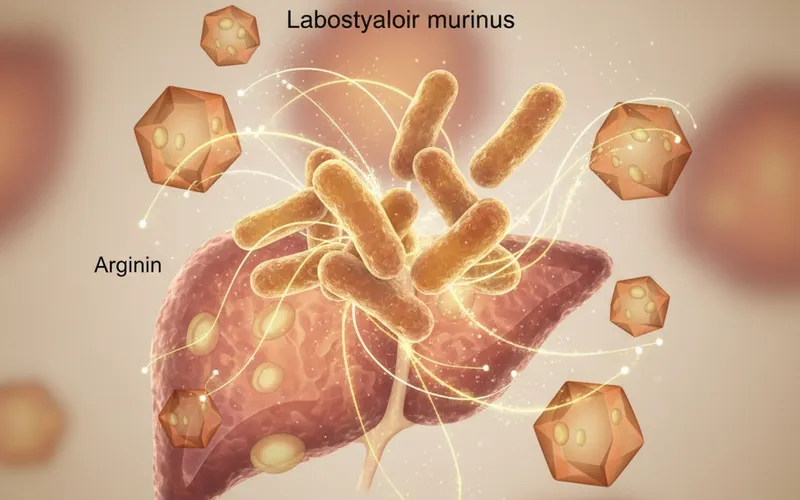
Die Forschenden führten ihre Experimente an Wildtyp C57BL/6 Mäusen durch. Ein Teil der Mäuse erhielt über längere Zeit Fruktose – entweder im Trinkwasser oder über die Nahrung –, um eine Fettleber zu induzieren. Anschliessend analysierten die Wissenschaftler die Darmmikrobiota dieser Mäuse mittels 16S rDNA Sequenzierung. Dabei stellten sie fest, dass die Fruktosebelastung die Menge an L. murinus im Darm der Tiere deutlich reduzierte. Daraufhin verabreichten sie einer anderen Gruppe von Mäusen, die ebenfalls eine Fruktose-Diät erhielten, zusätzlich L. murinus, um zu sehen, ob dies die Fettleber-Symptome lindern könnte. Und tatsächlich: Die Zugabe von L. murinus verbesserte die Lebergesundheit der Mäuse signifikant. Es wurden weniger Fetteinlagerungen und Entzündungen in der Leber beobachtet, und auch die Leberenzyme (ALT, AST), Cholesterin- und Triglyceridwerte im Blut waren niedriger.
Um den Mechanismus dahinter zu verstehen, führten die Forschenden umfangreiche Stoffwechselanalysen im Blut und im Kot der Mäuse durch. Dabei identifizierten sie Arginin als den einzigen Metaboliten, dessen Spiegel sowohl im Blut als auch im Darm deutlich reduziert war. Eine integrierte Analyse zeigte eine starke positive Korrelation zwischen der Menge an L. murinus im Darm und den Arginin-Spiegeln. Die Gabe von L. murinus stellte die Arginin-Konzentrationen im Blut der Mäuse wieder her. Interessanterweise zeigte sich auch, dass die direkte Gabe von Arginin ähnliche schützende Effekte wie L. murinus hatte.
Quelle: Mo X, Zhao G, Liu L, Zhen L, Huang Q, Wang Y, Yang X, Huang L, Wan L, Wei C, Zhao R, Hu J, Li Y, Yuan J, Ma C, Wu F (2026). Lactobacillus murinus Alleviates High Fructose-Induced MASLD by Boosting Arginine Production. Food Sci Nutr, 14(2):e71502. PubMed-ID: 41710809
Was heisst das wirklich? – Die kritische Einordnung
Diese Studie liefert faszinierende Einblicke in die komplexen Zusammenhänge zwischen Fruktosekonsum, Darmflora und Lebergesundheit. Doch wie immer gilt es, die Ergebnisse genau einzuordnen und nicht vorschnell Schlüsse für den menschlichen Alltag zu ziehen.
Zunächst ist es wichtig zu betonen, dass es sich hier um eine Mausstudie handelt. Mäuse sind zwar gute Modelle, um grundlegende Mechanismen zu erforschen, aber die Übertragbarkeit auf den Menschen ist nicht immer eins zu eins gegeben. Unser Stoffwechsel und unsere Darmflora unterscheiden sich in vielen Details von denen der Mäuse. Was bei Mäusen funktioniert, muss nicht zwangsläufig auch beim Menschen die gleiche Wirkung zeigen.
Die Studie hat jedoch methodische Stärken. Die Forschenden haben verschiedene Ansätze kombiniert – von der Analyse der Darmmikrobiota über Stoffwechselanalysen bis hin zur direkten Intervention mit L. murinus und Arginin. Das zeigt ein umfassendes Bestreben, die zugrunde liegenden Mechanismen zu verstehen. Die Messung von Leberfett, Entzündungsmarkern und Blutwerten sind harte Endpunkte, die die Schwere der MASLD gut widerspiegeln.
Ein zentrales Ergebnis ist die identifizierte Rolle von Arginin. Wenn L. murinus die Arginin-Produktion ankurbelt und Arginin wiederum die Fettleber-Symptome lindert, dann haben wir hier einen plausiblen Wirkmechanismus. Das ist ein wichtiger Schritt, um nicht nur Korrelationen, sondern auch kausale Zusammenhänge zu erkennen.
Allerdings dürfen wir nicht vergessen, dass die Fruktose-Exposition in der Studie sehr hoch war – sowohl über das Trinkwasser als auch über die Nahrung. Während viele Menschen heutzutage tatsächlich zu viel Fruktose konsumieren, ist es schwierig, die exakten Mengen in der Studie mit den durchschnittlichen menschlichen Konsummengen zu vergleichen. Die Dosis macht hier oft das Gift. Es ist eine Frage, die du dir stellen solltest: Wie hoch ist dein eigener Fruktosekonsum im Alltag, und könnte dieser bereits im kritischen Bereich liegen, wie er in der Studie angedeutet wird?
Die Studie zeigt, dass ein einzelnes Darmbakterium eine wichtige Rolle spielen könnte. Doch unsere Darmflora ist ein hochkomplexes Ökosystem aus Billionen von Mikroorganismen. Es ist unwahrscheinlich, dass die Lösung für komplexe Stoffwechselerkrankungen wie MASLD allein in der Zufuhr eines einzigen Bakterienstammes liegt. Oft ist es das Zusammenspiel vieler Faktoren, das den Unterschied macht.
Der Geist im Körper – Die psychophysiologische Perspektive
Die psychophysiologische Perspektive lehrt uns, dass Körper und Geist untrennbar miteinander verbunden sind. Auch wenn diese Studie primär biochemische und mikrobielle Prozesse beleuchtet, können wir uns fragen, welche Rolle psychische Faktoren hier spielen könnten – selbst wenn sie in der Studie nicht direkt gemessen wurden.
Stell dir vor, du bist jemand, der regelmässig grosse Mengen Fruktose konsumiert – oft in Form von zuckerhaltigen Getränken oder stark verarbeiteten Lebensmitteln. Dieser Konsum ist selten eine bewusste, isolierte Entscheidung. Er ist oft eingebettet in Gewohnheiten, Stressmuster oder emotionale Zustände. Chronischer Stress beispielsweise kann nicht nur zu ungesunden Ernährungsgewohnheiten führen, sondern auch direkt die Darmflora beeinflussen. Studien zeigen, dass Stress die Zusammensetzung der Darmbakterien verändern und die Darmbarriere beeinträchtigen kann, was wiederum Entzündungen fördert. Es ist gut denkbar, dass ein stressbedingter Lebensstil nicht nur den Fruktosekonsum erhöht, sondern auch die Abnahme von nützlichen Bakterien wie Lactobacillus murinus begünstigt.
Auch unsere Erwartungen spielen eine Rolle. Wenn jemand beispielsweise weiss, dass er sich ungesund ernährt, kann dies zu Schuldgefühlen oder einem Gefühl der Hilflosigkeit führen. Solche negativen Emotionen können den Körper zusätzlich belasten. Umgekehrt könnte die bewusste Entscheidung, die Ernährung umzustellen – vielleicht auch mit der Einnahme eines Probiotikums, das L. murinus enthält – ein Gefühl der Selbstwirksamkeit stärken. Alleine die Überzeugung, etwas Gutes für sich zu tun, kann physiologische Effekte haben, die über den reinen biochemischen Effekt des Probiotikums hinausgehen (Placebo-Effekt).
Die Studie konzentriert sich auf die physiologischen Auswirkungen von Fruktose und die Rolle eines Bakteriums. Doch der Mensch, der diese Fruktose konsumiert, bringt seine gesamte psychische Verfassung mit. Hatte die Fruktose-Diät bei den Mäusen vielleicht auch eine Stresskomponente, die sich auf ihre Darmflora auswirkte? Und wie würde ein Mensch, der versucht, seine Fettleber zu heilen, psychisch reagieren, wenn er ein Probiotikum einnimmt? Diese ungemessenen Faktoren sind oft die unsichtbaren Mitspieler, die den Erfolg von Interventionen in der realen Welt mitbestimmen.
Der grössere Kontext – Einordnung und Abhängigkeiten
Diese Studie reiht sich ein in eine wachsende Zahl von Forschungsarbeiten, die den Zusammenhang zwischen Ernährung, Darmmikrobiom und Stoffwechselerkrankungen beleuchten. Die Erkenntnis, dass unsere Darmbakterien eine entscheidende Rolle für unsere Gesundheit spielen, ist nicht neu, aber jede Studie, die spezifische Mechanismen aufdeckt, ist ein wichtiges Puzzleteil.
Die Finanzierung der Studie und mögliche Interessenkonflikte sind in diesem Fall nicht explizit im Abstract genannt. Die beteiligten Institutionen sind hauptsächlich medizinische und biotechnologische Forschungseinrichtungen in China, was auf eine akademische Motivation hindeutet. Das ist positiv zu bewerten, da es die Glaubwürdigkeit der Ergebnisse stärkt, wenn keine direkten kommerziellen Interessen im Vordergrund stehen.
Es ist wichtig zu verstehen, dass eine einzelne Studie, selbst wenn sie gut gemacht ist, nie die ganze Wahrheit darstellt. Sie ist ein Mosaikstein im grossen Bild der Wissenschaft. Diese Ergebnisse bestätigen die allgemeine Annahme, dass ein hoher Fruktosekonsum problematisch ist und dass das Darmmikrobiom eine Rolle spielt. Sie erweitern unser Wissen, indem sie L. murinus und Arginin als potenzielle Schlüsselakteure identifizieren.
Was in dieser Studie nicht kontrolliert wurde, sind die vielen anderen Lebensstilfaktoren, die ebenfalls zur Entwicklung einer Fettleber beitragen können: Schlafmangel, Bewegungsmangel, chronischer Stress oder der Konsum anderer ungesunder Lebensmittel. In der Realität treten Fruktosekonsum und diese Faktoren oft gemeinsam auf. Eine isolierte Betrachtung der Fruktose kann daher das Gesamtbild verzerren, auch wenn sie für die wissenschaftliche Untersuchung eines spezifischen Mechanismus notwendig ist. Es ist eine gute Übung, sich zu fragen: Welche anderen Aspekte deines Lebensstils könnten die Wirkung von Fruktose (oder eines Probiotikums) beeinflussen, die in einer Laborstudie nicht berücksichtigt werden können?
Die Forschung zum Darmmikrobiom ist noch relativ jung, und wir lernen ständig dazu. Es gibt noch viel zu entdecken über das komplexe Zusammenspiel der verschiedenen Bakterienstämme und deren Metaboliten. Diese Studie ist ein vielversprechender Schritt, aber es braucht weitere Forschung, insbesondere Humanstudien, um die Ergebnisse zu bestätigen und in die klinische Praxis zu übertragen.
Was heisst das für dich? – Fazit und Alltagsrelevanz
Was können wir nun aus dieser spannenden Studie für unseren Alltag mitnehmen? Auch wenn es sich um eine Mausstudie handelt, gibt sie uns wichtige Denkanstösse.
- Achte auf deinen Fruktosekonsum: Die Studie unterstreicht einmal mehr, wie schädlich ein übermässiger Fruktosekonsum für deine Leber sein kann. Fruktose steckt nicht nur in Süssigkeiten, sondern auch in vielen verarbeiteten Lebensmitteln, Fruchtsäften und gesüssten Getränken. Versuche, diese Quellen zu reduzieren, um deine Leber zu entlasten. Frisches Obst in Massen ist in der Regel unbedenklich, da die Fruktose dort in eine Matrix aus Ballaststoffen und anderen Nährstoffen eingebettet ist.
- Die Bedeutung des Mikrobioms: Diese Studie zeigt, dass spezifische Darmbakterien wie Lactobacillus murinus eine schützende Rolle spielen können. Eine gesunde und vielfältige Darmflora ist also ein wichtiger Pfeiler für deine Stoffwechselgesundheit. Du kannst dein Mikrobiom unterstützen, indem du eine abwechslungsreiche Ernährung mit vielen Ballaststoffen, fermentierten Lebensmitteln und präbiotischen Lebensmitteln (z.B. Zwiebeln, Knoblauch, Spargel) zu dir nimmst.
- Arginin als potenzieller Helfer: Die Rolle von Arginin ist interessant. Arginin ist eine Aminosäure, die an vielen Stoffwechselprozessen beteiligt ist. Es ist in proteinreichen Lebensmitteln wie Fleisch, Fisch, Nüssen und Hülsenfrüchten enthalten. Bevor du jedoch zu Arginin-Supplementen greifst, sprich mit einem Arzt oder Ernährungsberater.
Was du NICHT daraus schliessen solltest: Diese Studie ist kein Freifahrtschein, weiterhin viel Fruktose zu konsumieren und dann einfach ein Probiotikum mit L. murinus oder Arginin zu schlucken. Der Fokus sollte immer auf einer gesunden und ausgewogenen Ernährung liegen. Ein einzelnes Bakterium oder eine Aminosäure kann die langfristigen Auswirkungen einer ungesunden Lebensweise nicht aufheben.
Diese Erkenntnisse sind besonders relevant für Menschen, die bereits Anzeichen einer Fettleber aufweisen oder ein hohes Risiko dafür haben. Aber auch für alle, die präventiv ihre Stoffwechselgesundheit unterstützen möchten, ist die Reduktion von Fruktose und die Pflege des Darmmikrobioms eine kluge Strategie.
Denke immer daran: Dein Körper reagiert nicht nur auf das, was du isst, sondern auch auf das, was du denkst und fühlst. Eine gesunde Ernährung in Kombination mit Stressmanagement und einem positiven Mindset ist der wirkungsvollste Weg zu langfristiger Gesundheit. Beobachte, experimentiere und höre auf deinen eigenen Körper – er wird dir zeigen, was ihm guttut.