Lactobacillus-Kombination bei entzündlichen Darmerkrankungen: Was Minischweine uns lehren
Eine neue Studie an Minischweinen zeigt vielversprechende Ergebnisse für eine Lactobacillus-Kombination bei Kolitis. Erfahre, wie Probiotika Entzündungen lindern und die Darmgesundheit verbessern können und was das für dich bedeutet.
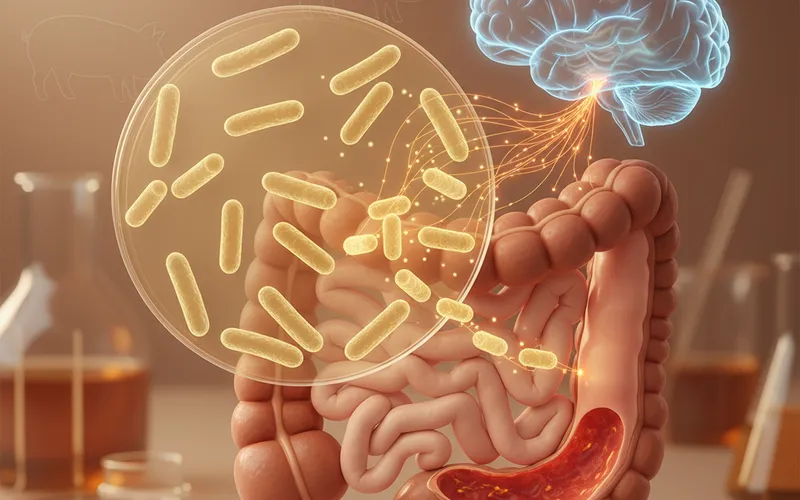
1. Die Studie – Was wurde untersucht und warum betrifft dich das?
Stell dir vor, dein Darm ist wie ein empfindliches Ökosystem, und manchmal gerät dieses System aus dem Gleichgewicht. Das kann zu Entzündungen führen, die nicht nur unangenehm sind, sondern auch langfristig deine Gesundheit beeinträchtigen können. Entzündliche Darmerkrankungen (IBD) wie Morbus Crohn oder Colitis ulcerosa sind genau solche Zustände, die das Leben vieler Menschen massiv einschränken. Sie sind eine ernsthafte Bedrohung für die menschliche Gesundheit, und die Forschung sucht ständig nach neuen Wegen, um sie zu behandeln.
Genau hier setzt eine faszinierende neue Studie an, die in Food & function publiziert wurde. Ein Forschungsteam um Wang X. und Wu Z. von der China Agricultural University hat untersucht, ob eine spezifische Kombination aus drei Lactobacillus-Stämmen helfen kann, entzündliche Prozesse im Darm zu lindern. Und das Besondere: Sie haben dafür Minischweine verwendet, die in ihrer Physiologie dem Menschen ähnlicher sind als die oft genutzten Nagetiere.
Die Forschenden wollten herausfinden, welche Rolle eine Mischung aus Lactobacillus crispatus, Lactobacillus johnsonii und Lactobacillus reuteri bei einer durch Dextransulfat-Natrium (DSS) ausgelösten Kolitis spielt. DSS wird verwendet, um im Tiermodell eine Darmentzündung zu erzeugen, die der menschlichen IBD ähnelt. Insgesamt wurden dreizehn gesunde Wuzhishan-Minischweine in drei Gruppen aufgeteilt: eine Kontrollgruppe (CON), eine DSS-Gruppe, die nur die Entzündung auslösenden Stoffe erhielt, und eine DSS + LAB-Gruppe, die zusätzlich die Lactobacillus-Mischung bekam.
Die Ergebnisse waren vielversprechend: Die Lactobacillus-Mischung zeigte einen positiven Effekt auf die Gewichtsabnahme (die bei Kolitis oft ein Problem ist) und verbesserte die Histopathologie des Dickdarms – das heisst, die Gewebeschäden im Darm waren geringer. Während in der DSS-Gruppe entzündungsfördernde Zytokine wie Interleukin-1 beta (IL-1β) und Tumornekrosefaktor alpha (TNF-α) stark anstiegen, konnte die Lactobacillus-Mischung diesen Anstieg unterdrücken. Gleichzeitig förderte sie entzündungshemmende Zytokine wie TGF-β1 und erhöhte die Expression von wichtigen Proteinen für die Darmbarriere, wie Zonula occludens-1 (ZO-1) und Mucin 1 (MUC1). Die Darmbarriere ist entscheidend, um das Eindringen von schädlichen Stoffen in den Körper zu verhindern.
Darüber hinaus wurden Verbesserungen bei oxidativem Stress und den Konzentrationen von kurzkettigen Fettsäuren (SCFAs) festgestellt. SCFAs sind wichtige Energiequellen für die Darmzellen und spielen eine Schlüsselrolle für die Darmgesundheit. Mit Hilfe der 16S rRNA-Sequenzierung konnten die Forschenden zudem zeigen, dass die Lactobacillus-Mischung die Zusammensetzung der Darmmikrobiota positiv veränderte: Sie reduzierte schädliche Bakterien und erhöhte nützliche Bakterien, wodurch sich das gesamte mikrobielle Ökosystem im Darm neu ordnete.
Diese Studie bietet eine neue Referenz und wissenschaftliche Grundlage für die Anwendung von Laktobazillen in der Behandlung von Kolitis und für die Lebensmittelindustrie, um funktionelle probiotische Produkte zu entwickeln.
Quelle: Wang X, Ma X, Zhang X, He Y, Chen Y, Fu Q, Yang Y, Yin X, Wu Z (2026). Lactobacillus combination alleviates dextran sulfate sodium-induced colitis in Wuzhishan minipigs. Food & Function. PubMed-ID: 41860415
2. Was heisst das wirklich? – Die kritische Einordnung
Diese Studie liefert spannende Einblicke, aber lass uns die Ergebnisse gemeinsam einordnen. Grosse Studien können uns viel erzählen, doch gerade bei der Übertragung auf dich persönlich ist Vorsicht geboten. Statistisch signifikante Ergebnisse sind wichtig für die Wissenschaft, aber sie bedeuten nicht immer, dass sie für jeden Einzelnen gleich bedeutsam sind.
Was wurde hier wirklich gemessen? Die Forschenden haben eine Reihe von Biomarkern untersucht, die für Entzündungen, Darmbarrierefunktion und Mikrobiota-Zusammensetzung relevant sind. Das sind alles wichtige Indikatoren. Die Verbesserung von Gewichtsreduktion und Dickdarmhistopathologie sind bereits gute Anzeichen für einen positiven Effekt auf harte Endpunkte der Entzündung. Die Messung von Zytokinen (IL-1β, TNF-α, TGF-β1) und Proteinen der Darmbarriere (ZO-1, MUC1) sind Surrogatparameter, die uns Aufschluss über die zugrunde liegenden Mechanismen geben. Ein Anstieg entzündungshemmender Zytokine oder eine verbesserte Darmbarriere sind starke Hinweise darauf, dass die Probiotika wirken.
Die Stärke dieser Studie liegt sicherlich in der Verwendung von Minischweinen. Ihr Verdauungssystem und ihre Immunantwort sind dem des Menschen ähnlicher als die von Mäusen oder Ratten. Das erhöht die Wahrscheinlichkeit, dass die Ergebnisse auch auf den Menschen übertragbar sind. Zudem wurde das Modell der DSS-induzierten Kolitis verwendet, das eine gute Annäherung an menschliche entzündliche Darmerkrankungen darstellt.
Eine Grenze ist natürlich, dass es sich um ein Tiermodell handelt. Auch wenn Minischweine dem Menschen ähneln, sind sie keine Menschen. Die genaue Dosis der Probiotika und die Dauer der Behandlung müssten in menschlichen Studien noch angepasst und optimiert werden. Auch die genaue Zusammensetzung der Mikrobiota kann sich zwischen Mensch und Tier unterscheiden.
Dein Denkwerkzeug: Wenn du eine Studie liest, die an Tieren durchgeführt wurde, frage dich immer: Wie ähnlich ist das untersuchte Tiermodell dem Menschen in Bezug auf die Fragestellung, und welche zusätzlichen Schritte wären nötig, um diese Ergebnisse auf den Menschen zu übertragen?
Die Studie zeigt, dass die Lactobacillus-Mischung das Potenzial hat, die Darmgesundheit bei Kolitis zu verbessern. Aber was, wenn wir noch tiefer blicken und die psychische Komponente mit einbeziehen?
3. Der Geist im Körper – Die psychophysiologische Perspektive
Hier kommen wir zum Kern dessen, was wir auf der Hösli-Plattform immer wieder betonen: Körper und Psyche sind untrennbar miteinander verbunden. Gerade bei Darmerkrankungen ist diese Verbindung besonders deutlich. Der Darm wird nicht umsonst als unser «zweites Gehirn» bezeichnet, und seine Gesundheit ist eng mit unserem emotionalen Zustand verknüpft.
Die Studie an den Minischweinen zeigt, dass die Lactobacillus-Mischung Entzündungen reduziert und die Darmbarriere stärkt. Aber was wäre, wenn die Minischweine nicht nur die Probiotika, sondern auch eine Form von «Fürsorge» oder «Aufmerksamkeit» erhalten hätten? Bei menschlichen Studien wissen wir, dass der Placebo-Effekt bei Darmerkrankungen enorm sein kann. Allein die Erwartung, dass eine Behandlung hilft, kann messbare physiologische Veränderungen hervorrufen. Wenn du glaubst, dass ein Probiotikum deine Beschwerden lindert, kann diese Überzeugung die Wirkung der Mikroorganismen im Darm verstärken.
Denke an den Stress. Chronischer Stress beeinflusst die Darmmikrobiota massiv. Er kann die Zusammensetzung der Bakterien verändern, die Darmbarriere schwächen und Entzündungen fördern. Es ist gut denkbar, dass ein gestresstes Minischwein (oder ein gestresster Mensch) anders auf Probiotika reagiert als ein entspanntes. Die Studie hat diesen Aspekt nicht explizit untersucht, aber in der Realität sind entzündliche Darmerkrankungen oft von Stress und psychischer Belastung begleitet.
Auch die Selbstwirksamkeitserwartung spielt eine Rolle. Wenn du das Gefühl hast, aktiv etwas für deine Darmgesundheit tun zu können – sei es durch Probiotika, Ernährungsumstellung oder Stressmanagement – dann stärkt das dein Gefühl der Kontrolle und kann sich positiv auf deine Physiologie auswirken. Das ist keine Einbildung, sondern messbare Psychophysiologie.
Es ist also nicht nur das Probiotikum selbst, das wirkt, sondern auch das komplexe Zusammenspiel mit dem Organismus, der es aufnimmt. Und dazu gehört auch der psychische Zustand.
4. Der grössere Kontext – Einordnung und Abhängigkeiten
Diese Studie ist ein weiteres Puzzleteil in der wachsenden Forschung über die Rolle von Probiotika bei entzündlichen Darmerkrankungen. Sie bestätigt im Wesentlichen, was wir aus anderen Studien an Tiermodellen und auch ersten menschlichen Studien bereits wissen: Bestimmte Bakterienstämme haben das Potenzial, Entzündungen zu modulieren und die Darmgesundheit zu unterstützen.
Die Finanzierung der Studie und mögliche Interessenkonflikte werden in der Publikation nicht explizit genannt. Es ist jedoch üblich, dass solche Forschungsarbeiten oft von staatlichen Forschungsgeldern oder auch von der Lebensmittelindustrie unterstützt werden, die ein Interesse an der Entwicklung funktioneller Produkte hat. Das muss nicht negativ sein, ist aber immer ein Kontext, den man im Hinterkopf behalten sollte.
Was wurde nicht kontrolliert? Die Studie konzentrierte sich auf die Wirkung der Lactobacillus-Kombination in einem kontrollierten Umfeld. Im realen Leben gibt es jedoch unzählige Faktoren, die die Darmgesundheit beeinflussen: die Ernährung (abgesehen von den Probiotika), der Lebensstil, Medikamenteneinnahme, andere Umweltfaktoren und eben auch der individuelle Stresslevel. All diese Faktoren können die Wirkung von Probiotika beeinflussen und wurden in dieser spezifischen Studie nicht erfasst.
Dein Denkwerkzeug: Wenn du überlegst, ein Probiotikum einzunehmen, frage dich: Welche anderen Aspekte meines Lebensstils (Ernährung, Stress, Schlaf) könnten meine Darmgesundheit ebenfalls beeinflussen, und wie könnte ich diese Faktoren in meine Strategie einbeziehen? Eine einzelne Studie ist immer nur ein Ausschnitt der Realität.
5. Was heisst das für dich? – Fazit und Alltagsrelevanz
Was kannst du aus dieser Studie über Minischweine für dein eigenes Leben mitnehmen? Hier sind ein paar konkrete Erkenntnisse:
- Probiotika haben Potenzial: Die Studie untermauert die Idee, dass spezifische Lactobacillus-Stämme eine unterstützende Rolle bei der Linderung von Darmentzündungen spielen können. Wenn du an entzündlichen Darmerkrankungen leidest oder deine Darmgesundheit stärken möchtest, könnte die gezielte Einnahme von Probiotika eine Überlegung wert sein.
- Achte auf die Darmbarriere: Die Stärkung der Darmbarriere (durch ZO-1 und MUC1) ist entscheidend. Eine intakte Darmwand verhindert, dass unerwünschte Stoffe in den Körper gelangen und Entzündungen auslösen. Probiotika können dabei helfen, aber auch eine ballaststoffreiche Ernährung und Stressreduktion sind wichtige Pfeiler.
- Die Rolle der Mikrobiota: Die Studie zeigt, wie Probiotika die Zusammensetzung deiner Darmbakterien positiv beeinflussen können. Eine vielfältige und ausgewogene Darmflora ist der Schlüssel zu einem gesunden Darm und einem starken Immunsystem.
Was solltest du NICHT daraus schliessen? Diese Studie ist kein Freifahrtschein, um bei ernsthaften Darmerkrankungen auf medizinische Behandlung zu verzichten. Probiotika sollten als Ergänzung und nicht als Ersatz für eine ärztliche Therapie gesehen werden. Zudem ist die genaue Zusammensetzung und Dosierung der Lactobacillus-Stämme entscheidend, und nicht jedes Probiotikum ist gleich wirksam.
Für wen ist das besonders relevant? Diese Erkenntnisse sind besonders wichtig für Menschen, die an entzündlichen Darmerkrankungen leiden oder zu Darmproblemen neigen. Aber auch für jeden, der seine allgemeine Darmgesundheit und damit sein Wohlbefinden verbessern möchte, bietet die Studie interessante Anhaltspunkte.
Denke immer daran: Dein Körper reagiert nicht nur auf das, was du isst oder wie du dich bewegst, sondern auch auf das, was du denkst und fühlst. Die Gesundheit deines Darms ist eng mit deinem emotionalen Zustand verknüpft. Eine ganzheitliche Herangehensweise, die Ernährung, Bewegung, Stressmanagement und gegebenenfalls gezielte Probiotika kombiniert, ist oft der wirkungsvollste Weg. Welche Fragen bleiben offen? Wie genau interagieren diese Lactobacillus-Stämme mit der menschlichen Darmmikrobiota und dem Immunsystem? Und welche Rolle spielen individuelle Unterschiede in der Reaktion auf Probiotika? Die Forschung wird uns hier sicher noch viele Antworten liefern.
Bleib neugierig, höre auf deinen Körper und experimentiere mit achtsamen Strategien, die deine Darmgesundheit fördern.
_