Kurze DHA-Gabe schützt ApoE4-Mäuse vor kognitivem Abbau
Vergesslichkeit im Alter ist eine grosse Sorge. Eine neue Studie an Mäusen mit dem Alzheimer-Risikogen ApoE4 zeigt nun, dass eine kurzzeitige DHA-Supplementierung im mittleren Alter ausreichen könnte, um kognitive Defizite zu verhindern. Was heisst das für uns?
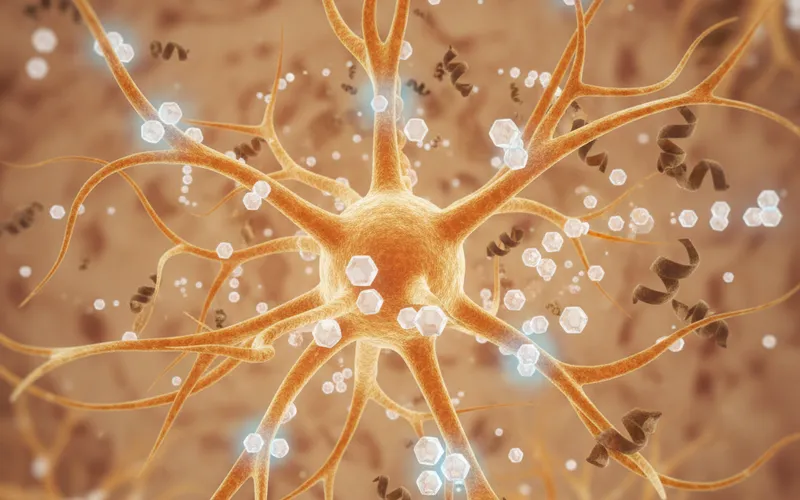
Die Studie – Was wurde untersucht und warum betrifft dich das?
Stell dir vor, du könntest mit einer gezielten Massnahme im mittleren Alter das Risiko für kognitive Einbussen im Alter deutlich reduzieren. Insbesondere dann, wenn du genetisch vorbelastet bist. Für viele Menschen ist die Angst vor Vergesslichkeit und Demenz, allen voran Alzheimer, eine der grössten Sorgen im Alter. Und tatsächlich ist das ApoE4-Gen, genauer gesagt das Epsilon-4-Allel des Apolipoprotein E (APOE4), einer der Hauptrisikofaktoren für die spät beginnende Alzheimer-Krankheit. Es ist bekannt, dass der Stoffwechsel von Docosahexaensäure (DHA), einer wichtigen Omega-3-Fettsäure, bei Trägern dieses Gens anders abläuft als bei Menschen ohne diese genetische Veranlagung. Bisherige Forschungen deuteten darauf hin, dass die Zufuhr von DHA dem kognitiven Verfall bei ApoE4-Trägern entgegenwirken kann. Doch eine entscheidende Frage blieb offen: Muss DHA ein Leben lang konsumiert werden, um diesen Schutz zu gewährleisten, oder reicht eine gezielte, kürzere Intervention aus?
Genau dieser Frage widmete sich ein Forschungsteam um R. Raffoul und M. Plourde von der Université de Sherbrooke in Kanada. Sie wollten herausfinden, ob eine DHA-Gabe, die erst später im Leben und für eine kürzere Dauer beginnt, ausreicht, um kognitive Defizite bei ApoE4-Mäusen zu verhindern. Für ihre Studie nutzten sie Mäuse, die gentechnisch so verändert wurden, dass sie das menschliche ApoE3-Allel (als Kontrollgruppe) oder das ApoE4-Allel trugen. Insgesamt wurden 168 Mäuse (84 ApoE3, 84 ApoE4) in die Studie eingeschlossen. Die ApoE4-Mäuse wurden dann in vier Gruppen unterteilt: Eine Gruppe erhielt über 8 Monate eine DHA-freie Kontrolldiät, während die anderen drei Gruppen eine DHA-reiche Diät (0.5 g DHA/100 g Futter als Calciumsalz) für 2, 4 oder 8 Monate erhielten. Die ApoE3-Kontrollmäuse erhielten ebenfalls die DHA-freie Diät über 8 Monate.
Um die kognitive Leistung zu beurteilen, setzten die Forschenden den «Novel Object Recognition Test» ein. Dieser Test misst die Fähigkeit der Mäuse, ein neues Objekt von einem bereits bekannten zu unterscheiden – ein Indikator für das Wiedererkennungsgedächtnis. Zusätzlich wurde der DHA-Gehalt im Gehirn der Mäuse mittels Gaschromatographie quantifiziert. Die Ergebnisse waren vielversprechend: ApoE4-Mäuse, die die DHA-freie Kontrolldiät erhielten, zeigten im Vergleich zu den ApoE3-Mäusen deutliche kognitive Defizite – sie erkannten das neue Objekt nicht wie erwartet. Überraschenderweise konnte eine DHA-reiche Diät über nur 2 oder 4 Monate diese kognitiven Defizite sowohl bei männlichen als auch bei weiblichen ApoE4-Mäusen verhindern. Bei den Männchen war der Effekt nach 2 Monaten bereits signifikant (P = 0.0414) und nach 4 Monaten noch stärker (P = 0.0073). Bei den Weibchen war der Effekt nach 2 Monaten sogar hochsignifikant (P < 0.0001). Eine 2-monatige DHA-Gabe führte zudem zu einem 18–25% höheren relativen DHA-Anteil in der Hirnrinde bei beiden Geschlechtern im Vergleich zur Kontrolldiät (Weibchen: P = 0.0031; Männchen: P = 0.0010).
Die Forschenden schlussfolgern, dass es bei ApoE4-Mäusen nicht notwendig ist, DHA-Calciumsalz ein Leben lang zu konsumieren, um kognitivem Verfall vorzubeugen. Eine kurzzeitige Intervention im mittleren Alter könnte bereits ausreichen.
Quelle: Raffoul R, Lopez JA, Vachon A, Laurent B, Plourde M (2026). Short-term docosahexaenoic acid rich diet prevents cognitive deficits in human apolipoprotein E epsilon 4-targeted replacement mice. Prostaglandins, leukotrienes, and essential fatty acids. PubMed-ID: 41806661
Was heisst das wirklich? – Die kritische Einordnung
Diese Studie liefert spannende Hinweise, doch bevor wir zu voreiligen Schlüssen kommen, lass uns die Ergebnisse gemeinsam einordnen. Zunächst einmal ist es wichtig zu betonen, dass es sich hier um eine Tierstudie an Mäusen handelt. Auch wenn diese Mäuse genetisch so modifiziert wurden, dass sie das menschliche ApoE4-Allel tragen, bleiben sie immer noch Mäuse. Die Physiologie, der Stoffwechsel und die Komplexität des Gehirns unterscheiden sich erheblich von denen des Menschen. Ergebnisse aus Tierstudien lassen sich nicht eins zu eins auf den Menschen übertragen, sie dienen vielmehr als Grundlage für weitere Forschung und als Hypothesengenerator.
Die Studie hat einige methodische Stärken: Sie vergleicht ApoE3- mit ApoE4-Mäusen und nutzt verschiedene Interventionsdauern, was eine wichtige Frage zur Optimalität der DHA-Gabe beantworten hilft. Die Messung des DHA-Gehalts im Gehirn ist ein harter Endpunkt und bestätigt, dass die DHA-Gabe auch tatsächlich dort ankommt, wo sie wirken soll. Allerdings wurde die kognitive Leistung nur mit einem einzigen Test, dem «Novel Object Recognition Test», beurteilt. Dies ist zwar ein gängiger und valider Test für das Wiedererkennungsgedächtnis, aber kognitive Funktionen sind vielfältig. Es wäre interessant zu sehen, ob auch andere kognitive Bereiche wie Lernfähigkeit oder räumliches Gedächtnis beeinflusst werden.
Ein weiterer Punkt ist die Dauer der Intervention. Obwohl die Studie zeigt, dass 2 oder 4 Monate ausreichen, um kurzfristige kognitive Defizite zu verhindern, wissen wir nicht, wie lange dieser Schutzeffekt anhält. Wird er nach Absetzen der DHA-Gabe wieder aufgehoben? Oder ist eine einmalige, kurzzeitige Intervention ausreichend für den Rest des Lebens? Diese Fragen bleiben offen und sind für die Übertragbarkeit auf den Menschen von grosser Bedeutung.
Denkwerkzeug: Wenn du von einer Studie liest, die an Tieren durchgeführt wurde, frage dich immer: Wie ähnlich bin ich dem untersuchten Tier in Bezug auf den relevanten Mechanismus? Und welche zusätzlichen Faktoren könnten bei mir eine Rolle spielen, die in dieser Tierstudie nicht berücksichtigt wurden?
Die Studie spricht von «kognitiven Defiziten», die bei den ApoE4-Mäusen in der Kontrollgruppe auftraten. Es handelt sich hierbei um eine präventive Wirkung, nicht um die Umkehrung bereits bestehender, schwerer kognitiver Beeinträchtigungen. Das ist ein wichtiger Unterschied. Die Ergebnisse sind statistisch signifikant, was bedeutet, dass die beobachteten Effekte wahrscheinlich nicht zufällig sind. Ob sie aber auch «klinisch bedeutsam» sind, also einen spürbaren Unterschied für das Leben eines Menschen machen würden, kann diese Mausstudie nicht beantworten.
Der Geist im Körper – Die psychophysiologische Perspektive
Die Studie konzentriert sich auf die biochemische Wirkung von DHA auf das Gehirn, was absolut legitim und wichtig ist. Doch aus psychophysiologischer Sicht ist es entscheidend, den Blick zu erweitern. Selbst wenn DHA eine direkte positive Wirkung auf die Gehirnfunktion und den Schutz vor neuronalen Schäden hat, dürfen wir die Wechselwirkung mit psychischen Faktoren nicht unterschätzen. Wie wirken sich Stress, Schlafqualität und die allgemeine psychische Verfassung auf den DHA-Stoffwechsel und die kognitive Gesundheit aus?
Chronischer Stress beispielsweise kann Entzündungsprozesse im Körper fördern und die Blut-Hirn-Schranke beeinträchtigen, was die Aufnahme und Verwertung von Nährstoffen, einschliesslich DHA, im Gehirn beeinflussen könnte. Auch die genetische Prädisposition durch ApoE4 kann die Stressreaktion des Körpers verändern. Ein Mensch mit ApoE4-Gen, der unter hohem chronischem Stress leidet, könnte eine andere DHA-Verstoffwechselung oder einen höheren Bedarf haben als jemand mit demselben Gen, der ein ausgeglichenes Leben führt. Die Studie hat diese psychischen Parameter bei den Mäusen nicht erfasst, was verständlich ist, aber für die Übertragbarkeit auf den Menschen eine wichtige Lücke darstellt.
Es ist gut denkbar, dass die Wirksamkeit einer DHA-Supplementierung beim Menschen stark davon abhängt, wie gut die psychische und emotionale Regulation funktioniert. Wenn jemand beispielsweise aufgrund von Ängsten oder Depressionen chronisch schlecht schläft, könnten die positiven Effekte von DHA auf die Kognition untergraben werden. Umgekehrt könnte die Überzeugung, etwas Gutes für sein Gehirn zu tun – der sogenannte Placebo-Effekt –, die Wirkung von DHA verstärken. Das Gehirn ist keine isolierte Einheit; es ist untrennbar mit dem gesamten Organismus und der Psyche verbunden. Jegliche Intervention, sei es durch Ernährung oder Medikamente, wirkt immer im Kontext dieser komplexen psychophysiologischen Dynamik.
Der grössere Kontext – Einordnung und Abhängigkeiten
Diese Studie ist ein weiteres Puzzleteil in der langen Forschungsgeschichte über die Rolle von Omega-3-Fettsäuren, insbesondere DHA, für die Gehirngesundheit. Sie reiht sich ein in eine Vielzahl von Studien, die auf die potenzielle präventive Wirkung von DHA bei neurodegenerativen Erkrankungen hinweisen. Das Besondere an dieser Arbeit ist die gezielte Untersuchung der Interventionsdauer und die Fokussierung auf das ApoE4-Risikogen. Dies ist ein wichtiger Schritt, da es die Möglichkeit eröffnet, präventive Strategien zu entwickeln, die auf die individuellen genetischen Risikoprofile zugeschnitten sind.
Was die Finanzierung angeht, so ist im Abstract keine direkte Angabe zu externen Geldgebern oder Interessenkonflikten aufgeführt, abgesehen von einer allgemeinen Erklärung, dass die Autoren ihre Interessenkonflikte offenlegen werden. Dies ist ein wichtiger Aspekt, da die Ernährungsforschung oft von Industrieinteressen beeinflusst wird. Eine transparente Darstellung der Finanzierung ist essenziell für die Glaubwürdigkeit einer Studie.
Es ist wichtig zu beachten, dass eine einzelne Studie, auch wenn sie gut gemacht ist, niemals die ganze Wahrheit darstellt. Sie ist ein Beitrag zum wissenschaftlichen Diskurs. Diese Ergebnisse müssen in weiteren Studien, idealerweise an Menschen und über längere Zeiträume, bestätigt werden. Insbesondere die Frage nach der optimalen Dauer und dem Zeitpunkt der DHA-Gabe, sowie die Interaktion mit anderen Lebensstilfaktoren, bleibt offen. Was wurde nicht kontrolliert? Bei Mäusestudien ist die Umgebung oft stark standardisiert. Bei Menschen spielen Faktoren wie Bewegung, soziale Interaktion, Bildungsgrad, Stressmanagement und die allgemeine Ernährung eine enorme Rolle für die kognitive Gesundheit. Eine isolierte Betrachtung von DHA ohne Berücksichtigung dieser komplexen Einflüsse ist immer nur ein Teil der Wahrheit.
Denkwerkzeug: Bevor du aufgrund einer einzelnen Studie eine drastische Änderung in deinem Leben vornimmst, frage dich: Wie robust ist dieser Befund? Wurde er in anderen Studien bestätigt? Und wie gut passt er zu meinem gesamten Lebensstil und meinen individuellen Bedürfnissen?
Was heisst das für dich? – Fazit und Alltagsrelevanz
Was kannst du nun aus dieser Mausstudie für dich mitnehmen? Zunächst einmal ist es eine ermutigende Nachricht, dass selbst bei einer genetischen Prädisposition für kognitive Defizite präventive Massnahmen möglich sind. Es deutet darauf hin, dass eine gezielte DHA-Zufuhr im mittleren Alter, auch wenn sie nicht ein Leben lang erfolgt, einen schützenden Effekt haben kann. Das ist besonders relevant, wenn du weisst, dass du das ApoE4-Risikogen trägst oder eine familiäre Vorbelastung für Alzheimer hast.
Konkrete, umsetzbare Erkenntnisse:
- DHA ist wichtig für die Gehirngesundheit: Diese Studie unterstreicht einmal mehr die zentrale Rolle von DHA für die kognitive Funktion. Achte auf eine ausreichende Zufuhr über die Ernährung (fetter Fisch wie Lachs, Makrele, Hering) oder durch hochwertige Nahrungsergänzungsmittel, insbesondere im mittleren Alter.
- Kurzzeitige Interventionen könnten ausreichen: Während wir auf Humanstudien warten müssen, deutet die Mausstudie an, dass du möglicherweise nicht ein Leben lang exzessiv supplementieren musst. Eine gezielte, bewusste Phase der DHA-Zufuhr könnte bereits von grossem Nutzen sein.
- Kenne dein Risiko: Wenn du Bedenken hast oder eine familiäre Vorbelastung besteht, sprich mit deinem Arzt über die Möglichkeit eines Gentests auf das ApoE4-Allel. Dieses Wissen kann dir helfen, präventive Massnahmen, wie eine gezielte DHA-Zufuhr, bewusster in deinen Alltag zu integrieren.
Was du NICHT daraus schliessen solltest:
- DHA ist ein Allheilmittel gegen Alzheimer: Die Studie zeigt eine präventive Wirkung auf kognitive Defizite bei Mäusen, nicht eine Heilung oder Umkehrung von Alzheimer beim Menschen. Es ist ein wichtiger Baustein, aber nicht die alleinige Lösung.
- Du kannst jetzt aufhören, auf deine Ernährung zu achten: Auch wenn eine kurzzeitige Intervention vielversprechend scheint, ist eine ausgewogene, nährstoffreiche Ernährung, die reich an Omega-3-Fettsäuren ist, weiterhin die Basis für deine allgemeine Gesundheit und dein Wohlbefinden.
Für wen ist das besonders relevant? Diese Erkenntnisse sind vor allem für Menschen mit einem erhöhten genetischen Risiko für Alzheimer (ApoE4-Träger) von grossem Interesse. Aber auch für jeden, der seine kognitive Gesundheit im Alter aktiv unterstützen möchte, bieten sie einen Anhaltspunkt. Dein Körper reagiert nicht nur auf das, was du isst und wie du dich bewegst, sondern auch auf das, was du denkst und fühlst. Die psychophysiologische Verbindung ist hier entscheidend: Ein gesunder Lebensstil, der Stressmanagement, ausreichend Schlaf und soziale Interaktion umfasst, ist die beste Grundlage, auf der Nährstoffe wie DHA ihre volle Wirkung entfalten können.
Diese Studie wirft viele weitere Fragen auf: Wie genau wirkt DHA auf molekularer Ebene bei ApoE4-Trägern? Welche optimale Dosis und Dauer der Supplementierung ist für den Menschen nötig? Und wie interagiert DHA mit anderen Nährstoffen und Lebensstilfaktoren? Die Forschung geht weiter, und es bleibt spannend zu sehen, welche weiteren Erkenntnisse uns die Wissenschaft noch liefern wird. Bleib neugierig und achte gut auf dein Gehirn – es ist dein wertvollstes Kapital.
Wissenschaftliche Quelle
Prostaglandins, leukotrienes, and essential fatty acids