Immuntherapie bei Nierenkrebs: T-Zell-Erschöpfung im Fokus
Eine neue Studie beleuchtet, warum Immuntherapien bei Nierenkrebs nicht immer wirken. Sie zeigt, wie die körpereigene Abwehr im Kampf gegen den Tumor ermüdet und was das für neue Therapieansätze bedeuten könnte.
1. Die Studie – Was wurde untersucht und warum betrifft dich das?
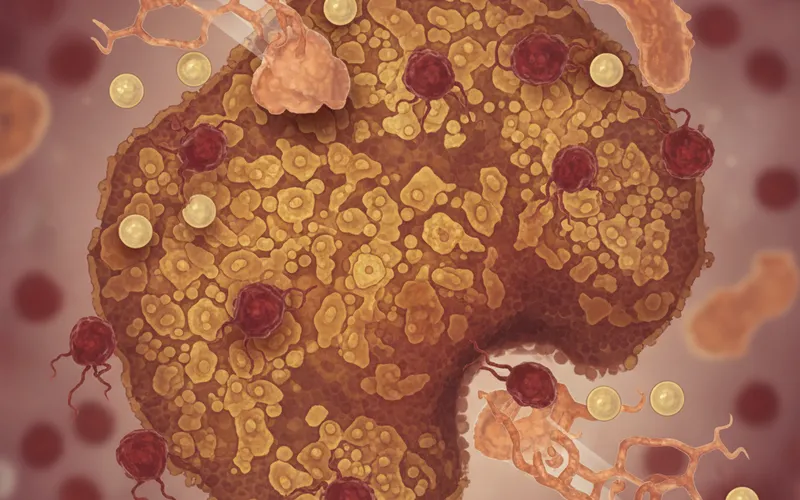
Stell dir vor, dein Körper ist eine Festung, und deine Immunzellen sind die tapferen Wächter, die eindringende Feinde abwehren. Bei Krebs sind diese Feinde entartete Zellen, die sich unkontrolliert vermehren. Die moderne Medizin hat gelernt, diese Wächter zu stärken – das ist die Idee hinter der Immuntherapie. Gerade bei Nierenkrebs, auch Nierenzellkarzinom (RCC) genannt, haben Immuntherapien vielen Betroffenen geholfen. Doch leider sprechen nicht alle gleich gut darauf an, und die Gründe dafür sind noch nicht vollständig geklärt. Warum ermüden manche Wächter im Kampf, während andere standhaft bleiben?
Genau dieser Frage gingen Forschende der University of Alabama at Birmingham in den USA nach. Unter der Leitung von Dr. Stephens und dem Team um Dr. Norian entwickelten sie ein neuartiges Mausmodell, um die Reaktion spezifischer Immunzellen, der CD8+ T-Zellen, im Nierentumor besser verfolgen zu können. Bisher fehlte es an Modellen, die es erlaubten, diese sogenannten tumorantigen-spezifischen (TAS) CD8+ T-Zellen direkt im Nierentumor zu beobachten.
Die Forschenden nutzten ein Nierenkrebsmodell (Renca-LUC-Zellen), das so verändert wurde, dass es ein spezifisches Antigen (tERK) exprimiert. Dadurch konnten sie adoptiv übertragene, auf dieses Antigen spezialisierte CD8+ T-Zellen verfolgen. Sie untersuchten dann, wie sich diese T-Zellen im Tumormilieu verhielten, insbesondere unter kombinierter Immuntherapie. Ihr Ziel war es, die Mechanismen zu entschlüsseln, die zur Therapie-Resistenz oder -Sensitivität führen.
Die zentralen Ergebnisse der Studie, die im Journal of Immunology veröffentlicht wurde, zeigen, dass eine kombinierte Immuntherapie, die zwar anfänglich eine starke Reaktion der T-Zellen hervorruft, gleichzeitig zu einer Erschöpfung dieser tumorantigen-spezifischen CD8+ T-Zellen im Tumormikromilieu der Niere führen kann. Diese Erschöpfung ist gekennzeichnet durch spezifische Marker und eine verminderte Fähigkeit, den Tumor zu bekämpfen.
Quelle: Stephens HR, Elkins E, Li J, Swalley ZN, Ogbonna HN, Muri P, Roberts Z, Dempsey FR, Ali MA, Siam MHB, Kirkman R, Zhang J, Sudarshan S, Tyrrell DJ, Tse HM, Smith DL Jr, Norian LA (2026). Combinatorial immunotherapy drives exhaustion in tumor antigen-specific CD8+ T cells within the mouse renal tumor microenvironment. Journal of immunology (Baltimore, Md. : 1950), 215(3). PubMed-ID: 41847866
2. Was heisst das wirklich? – Die kritische Einordnung
Diese Studie liefert wichtige Einblicke in die komplexen Prozesse, die während einer Immuntherapie ablaufen. Bevor wir jedoch vorschnelle Schlüsse ziehen, lass uns die Ergebnisse gemeinsam einordnen.
Du bist kein Durchschnitt, und das ist auch gut so! Grosse Studien liefern oft Durchschnittswerte, aber dein Körper, deine einzigartige Biologie, reagiert immer individuell. Die Studie zeigt, dass eine Immuntherapie zwar wirksam sein kann, aber auch ihre Schattenseiten hat, indem sie die Immunzellen erschöpfen kann. Dies ist ein wichtiger Fund, den man nicht unterschätzen sollte. Es ist der Unterschied zwischen «statistisch signifikant» – also ein messbarer Effekt – und «klinisch bedeutsam» – also ein Effekt, der für den einzelnen Patienten einen spürbaren Unterschied macht. Die Erschöpfung der T-Zellen ist statistisch signifikant und potenziell klinisch sehr bedeutsam.
Was wurde wirklich gemessen? Hier handelt es sich um eine präklinische Studie an Mäusen. Das ist ein wichtiger Schritt in der Forschung, denn es erlaubt den Forschenden, Mechanismen zu untersuchen, die am Menschen nur schwer oder gar nicht direkt beobachtet werden könnten. Die Forschenden haben die T-Zell-Aktivität und ihre Erschöpfungsmarker direkt im Tumorgewebe gemessen, was als harter Endpunkt im Mausmodell gelten kann. Es sind jedoch noch keine direkten Auswirkungen auf die Überlebensrate oder Lebensqualität der Mäuse berichtet worden, was in späteren Studien zu untersuchen wäre.
Die methodische Stärke dieser Studie liegt in der Entwicklung eines neuen, innovativen Mausmodells, das erstmals die Verfolgung von tumorantigen-spezifischen CD8+ T-Zellen im orthotopen Nierentumormilieu ermöglicht. Dies schliesst eine wichtige Forschungslücke und bietet eine hervorragende Plattform für zukünftige Untersuchungen. Die Grenzen liegen natürlich darin, dass es sich um ein Tiermodell handelt. Ergebnisse an Mäusen lassen sich nicht immer 1:1 auf den Menschen übertragen. Der menschliche Immunapparat ist noch komplexer und wird von vielen weiteren Faktoren beeinflusst.
Denkwerkzeug: Stell dir vor, du bist ein Marathonläufer. Wenn du am Anfang zu schnell läufst, bist du am Ende erschöpft und kannst nicht mehr deine volle Leistung bringen. Diese Studie deutet darauf hin, dass die Immunzellen Ähnliches erleben können. Überlege dir: Wenn man im Kampf gegen eine Krankheit auf das körpereigene Immunsystem setzt, wie könnte man dieses System langfristig unterstützen, anstatt es zu überfordern?
Diese Erkenntnis führt uns direkt zu der Frage, welche Rolle die Psyche und der gesamte Lebensstil bei solchen Prozessen spielen könnten, Aspekte, die in reinen Laborstudien oft ausgeklammert werden.
3. Der Geist im Körper – Die psychophysiologische Perspektive
Immunzellen, die erschöpft sind – das klingt doch sehr menschlich, oder? Auch wenn diese Studie an Mäusen durchgeführt wurde, bietet sie eine faszinierende Brücke zu unserem psychophysiologischen Interaktionsmodell. Der Körper und der Geist sind keine getrennten Einheiten, sondern ein untrennbares System. Deine Gedanken, deine Gefühle, dein Stresslevel – all das beeinflusst deine Physiologie, einschliesslich deines Immunsystems.
Gerade bei einer so ernsten Erkrankung wie Krebs und den damit verbundenen Therapien sind Stress, Angst und Unsicherheit allgegenwärtig. Chronischer Stress ist bekannt dafür, das Immunsystem zu modulieren und kann die Funktion von T-Zellen beeinträchtigen. Es ist gut denkbar, dass die psychische Belastung, die eine Krebserkrankung und ihre Behandlung mit sich bringen, einen zusätzlichen Faktor für die beobachtete T-Zell-Erschöpfung darstellen könnte. Die Überzeugung, dass eine Therapie wirkt, oder auch die Angst, dass sie versagen könnte, sind mächtige Kräfte, die physiologische Reaktionen beeinflussen können.
Ein Aspekt, der in dieser Studie nicht erfasst wurde, ist die Rolle des psychosozialen Umfelds und der eigenen Resilienz. Ein Patient, der sich gut unterstützt fühlt, der Techniken zur Stressbewältigung anwendet und eine positive Einstellung bewahrt, könnte möglicherweise ein «robusteres» Immunsystem haben, das weniger anfällig für Erschöpfung ist. Oder ist es umgekehrt? Gerade bei Immuntherapien spielen auch Placebo- und Nocebo-Effekte eine Rolle. Allein die Erwartungshaltung, dass eine Therapie hilft oder schadet, kann die physiologischen Reaktionen beeinflussen. Eine erschöpfte Psyche könnte ein erschöpftes Immunsystem begünstigen.
Diese Studie erinnert uns daran, dass der Körper kein isoliertes Schlachtfeld ist. Die Leistung unserer Immunwächter hängt nicht nur von der Kampfstrategie (der Immuntherapie) ab, sondern auch von ihrer inneren Verfassung – und diese wird massgeblich von unserem Geist, unseren Emotionen und unserem gesamten Lebensstil geprägt.
4. Der grössere Kontext – Einordnung und Abhängigkeiten
Diese Studie ist ein wichtiges Puzzleteil in der onkologischen Forschung. Sie bestätigt und erweitert unser Verständnis, dass Immuntherapien zwar revolutionär sind, aber auch ihre Grenzen haben. Die Erforschung der T-Zell-Erschöpfung ist ein heisses Thema in der Krebsimmunologie, da sie einen Schlüssel zur Verbesserung von Therapieantworten darstellen könnte.
Die Studie wurde von einem grossen Team der University of Alabama at Birmingham durchgeführt, einer renommierten Forschungseinrichtung. Die Liste der Autoren und deren Zugehörigkeiten zeigt eine breite interdisziplinäre Zusammenarbeit, was für die Qualität der Forschung spricht. Informationen zu spezifischen Finanzierungen oder potenziellen Interessenkonflikten sind im Abstract nicht detailliert aufgeführt, was üblich ist für eine präklinische Studie. Es ist jedoch anzunehmen, dass öffentliche Forschungsgelder oder institutionelle Mittel die Arbeit unterstützt haben.
Diese Erkenntnis, dass Immunzellen im Tumormilieu erschöpfen können, ist nicht neu, aber die detaillierte Untersuchung im Nierenkrebs-Modell und die Möglichkeit, tumorantigen-spezifische T-Zellen zu verfolgen, ist ein grosser Fortschritt. Sie ergänzt bestehende Forschung, die zeigt, dass das Tumormikromilieu eine feindliche Umgebung für Immunzellen ist, die ihre Funktion beeinträchtigen kann. Die Studie ist somit kein Ausreisser, sondern fügt sich nahtlos in den grösseren Forschungsverbund ein, der die Mechanismen der Immunresistenz bei Krebs entschlüsseln will.
Was wurde nicht kontrolliert? In einem präklinischen Mausmodell ist es schwierig, alle menschlichen Lebensstilfaktoren zu berücksichtigen. Ernährung, Schlaf, körperliche Aktivität, Stresslevel oder die Zusammensetzung des Mikrobioms – all das sind Faktoren, die das Immunsystem beim Menschen massgeblich beeinflussen können, in einem Mausmodell aber nur begrenzt simuliert werden. Diese Studie konzentrierte sich auf die zellulären und molekularen Mechanismen der T-Zell-Erschöpfung, was für die Grundlagenforschung entscheidend ist.
Denkwerkzeug: Wenn du eine neue Information über Gesundheit oder Krankheit hörst, frage dich immer: Ist das die ganze Geschichte, oder gibt es noch andere Faktoren, die hier eine Rolle spielen könnten? Was aus meinem Alltag könnte diese Ergebnisse beeinflussen oder von ihnen beeinflusst werden, das in der Studie nicht berücksichtigt wurde?
5. Was heisst das für dich? – Fazit und Alltagsrelevanz
Auch wenn diese Studie noch am Anfang der Forschungskette steht und an Mäusen durchgeführt wurde, kannst du daraus wichtige Erkenntnisse für dein Verständnis von Gesundheit und Krankheit ziehen:
- Die Erschöpfung des Immunsystems ist real: Dein Immunsystem ist keine unermüdliche Maschine. Es kann ermüden, besonders unter Dauerstress oder im Kampf gegen hartnäckige Krankheiten. Das gilt nicht nur für Krebs, sondern auch für chronische Infektionen oder Autoimmunerkrankungen.
- Unterstütze dein Immunsystem ganzheitlich: Wenn dein Immunsystem Höchstleistungen erbringen muss, sei es im Kampf gegen eine Krankheit oder zur Prävention, ist es umso wichtiger, es optimal zu unterstützen. Das bedeutet nicht nur eine ausgewogene Ernährung und ausreichend Schlaf, sondern auch aktives Stressmanagement und psychische Resilienz.
- Erwartungshaltung zählt: Auch wenn es hier nicht direkt untersucht wurde, ist im grösseren Kontext klar: Deine Überzeugungen und deine psychische Verfassung können die Effektivität von Therapien mitbeeinflussen. Eine positive, informierte Haltung mag keine Wunder bewirken, aber sie kann dein inneres Milieu so gestalten, dass dein Körper optimal auf Herausforderungen reagieren kann.
Was solltest du NICHT daraus schliessen? Bitte interpretiere diese Studie nicht so, dass Immuntherapien bei Nierenkrebs unwirksam sind oder dass du dich nur auf dein Mindset verlassen solltest. Immuntherapien sind ein enormer Fortschritt in der Krebsbehandlung und können Leben retten. Diese Studie hilft lediglich, sie noch besser zu verstehen und zukünftig noch weiter zu optimieren.
Für wen ist das besonders relevant? Diese Erkenntnisse sind besonders wichtig für Menschen, die selbst von einer Krebserkrankung betroffen sind oder waren, sowie für ihre Angehörigen. Es unterstreicht die Bedeutung einer ganzheitlichen Betrachtung der Gesundheit, die über die reine medikamentöse Behandlung hinausgeht.
Dein Körper reagiert nicht nur auf das, was du isst oder wie du dich bewegst – sondern auch auf das, was du denkst und fühlst. Das Immunsystem ist ein Spiegel deiner inneren und äusseren Welt. Diese Studie öffnet die Tür zu weiteren Forschungen, die untersuchen könnten, wie wir die Erschöpfung von Immunzellen verhindern oder rückgängig machen können, vielleicht sogar durch die Integration psychologischer Unterstützung in den Therapieplan. Die Zukunft der Medizin liegt in der intelligenten Kombination von hochspezifischen Therapien mit einem tiefen Verständnis für die Komplexität des menschlichen Organismus.
Bleib neugierig und achte gut auf dein inneres Gleichgewicht – deine Immunzellen werden es dir danken.