Hohe Triglyceride und Lupus: Wenn das Immunsystem den Fettstoffwechsel stört
Eine junge Patientin mit Lupus entwickelt extrem hohe Triglyceridwerte, die sich als seltene Autoimmunerkrankung entpuppen. Erfahre, wie dein Immunsystem deinen Fettstoffwechsel beeinflussen kann und warum es wichtig ist, über den Tellerrand zu blicken.
1. Die Studie – Was wurde untersucht und warum betrifft dich das?
Stell dir vor, du bist 12 Jahre alt und leidest an einer chronischen Autoimmunerkrankung wie systemischem Lupus erythematodes (SLE). Und als ob das nicht genug wäre, kämpfst du zusätzlich mit extrem hohen Blutfettwerten, genauer gesagt mit Triglyceriden, die so hoch sind, dass sie wiederholt zu schweren Bauchspeicheldrüsenentzündungen führen. Eine solche Geschichte beschreibt ein aktueller Fallbericht aus Hongkong, der uns auf eine seltene, aber faszinierende Verbindung zwischen unserem Immunsystem und dem Fettstoffwechsel aufmerksam macht.
Die Medizinerinnen und Mediziner untersuchten ein 12-jähriges chinesisches Mädchen, bei dem kürzlich SLE diagnostiziert worden war. Bereits im Alter von achteinhalb Jahren hatte sie zum ersten Mal sehr hohe Triglyceridwerte gezeigt, die in den folgenden zwei Jahren zu drei akuten Pankreatitis-Episoden führten. Zwischen diesen Schüben blieben ihre Triglyceride erhöht, wenn auch auf einem niedrigeren Niveau. Das Forschungsteam suchte nach den Ursachen dieser Hypertriglyceridämie, also dieser erhöhten Triglyceridwerte. Eine genetische Untersuchung, die üblicherweise bei primärer Hypertriglyceridämie durchgeführt wird, brachte keine relevanten Ergebnisse. Auch gängige sekundäre Ursachen wie erhöhter Blutzucker (gemessen an Nüchternzucker und HbA1c) oder Schilddrüsenfunktionsstörungen konnten ausgeschlossen werden.
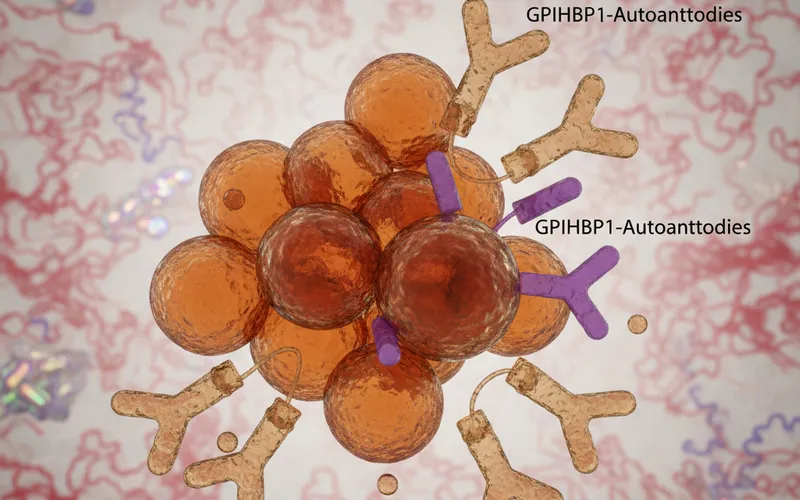
Angesichts der schwankenden Triglyceridwerte und des negativen Gentests im Kontext ihrer Autoimmunerkrankung SLE, hegten die Ärzte den Verdacht auf eine autoimmune Hypertriglyceridämie. Diese Vermutung bestätigte sich: Bei dem Mädchen wurde ein erhöhter Titer von Autoantikörpern gegen das GPIHBP1-Protein (Glycosylphosphatidylinositol-anchored high-density lipoprotein-binding protein 1) sowie eine niedrige Lipoproteinlipase (LPL)-Masse im Serum festgestellt. GPIHBP1 ist ein entscheidendes Protein, das die Lipoproteinlipase (LPL) zu den Kapillaren transportiert. Dort ist die LPL dafür zuständig, Triglyceride in den fettreichen Lipoproteinen abzubauen. Wenn nun Autoantikörper dieses wichtige GPIHBP1-Protein angreifen, kann die LPL ihre Arbeit nicht mehr richtig machen, und die Triglyceride bleiben im Blut erhöht.
Die gute Nachricht: Der SLE des Mädchens wurde erfolgreich mit Immunsuppressiva und Belimumab behandelt. Die ursprünglich verschriebenen Medikamente zur Senkung der Triglyceride, Fenofibrat und Omega-3-Fettsäuren, konnten später abgesetzt werden. Zwei Jahre nach der Diagnose normalisierten sich sowohl die GPIHBP1-Autoantikörper als auch die LPL-Masse. Dieser Fallbericht illustriert eindrücklich eine Hypertriglyceridämie, die durch eine seltene Erkrankung verursacht wird, die mit Autoantikörpern gegen das GPIHBP1-Protein einhergeht. Die Autoren betonen, dass diese Ursache in Betracht gezogen werden sollte, wenn genetische und häufige sekundäre Ursachen ausgeschlossen wurden, insbesondere bei Patienten mit einer Autoimmunerkrankung.
Quelle: Lai ST, Chan SS, Yu SCY, Cheng JYK, Tsui KT, Ho CA, Yau HC (2026). GPIHBP1 Autoantibody-Related Hypertriglyceridemia in a 12-Year-Old Girl With Systemic Lupus Erythematosus. Case Rep Endocrinol, 2026. PubMed-ID: 41783132
Dieser Fall zeigt uns, wie komplex die Zusammenhänge in unserem Körper sein können und wie ein scheinbar isoliertes Problem – wie hohe Blutfettwerte – ganz unerwartete Wurzeln haben kann. Doch was bedeutet dieser hochinteressante Einzelfall für dich und dein Verständnis von Gesundheit?
2. Was heisst das wirklich? – Die kritische Einordnung
Dieser Fallbericht ist ein exzellentes Beispiel dafür, wie einzelne Beobachtungen unser Verständnis von Krankheiten erweitern können. Es ist wichtig zu verstehen, dass es sich hier um einen Einzelfall handelt, nicht um eine grosse randomisierte Studie. Das bedeutet, wir können aus diesem Bericht keine allgemeingültigen statistischen Schlüsse ziehen oder Häufigkeiten ableiten. Aber Fallstudien sind ungemein wertvoll, weil sie uns auf seltene Phänomene aufmerksam machen, die in grossen Studien schlicht untergehen würden.
Du bist kein Durchschnitt. Grosse Studien liefern oft Durchschnittswerte, aber dieser Fallbericht zeigt dir, wie weit das individuelle Erleben und die individuelle Biologie vom Durchschnitt abweichen können. Für das betroffene Mädchen war diese seltene Diagnose lebensrettend, da sie die Ursache ihrer wiederkehrenden Bauchspeicheldrüsenentzündungen erklärte und eine gezielte Therapie ermöglichte.
Was wurde hier wirklich gemessen? Die Messung der GPIHBP1-Autoantikörper und der LPL-Masse sind harte, spezifische Laborparameter, die direkt den vermuteten Mechanismus der Hypertriglyceridämie abbilden. Das ist ein grosser Vorteil dieses Berichts, da er über die reine Beobachtung von Symptomen hinausgeht und eine klare physiologische Erklärung liefert.
Methodische Stärken und Grenzen: Die Stärke dieses Fallberichts liegt in seiner Detailtiefe und der umfassenden Ausschlussdiagnostik. Bevor die Ärzte die seltene Ursache in Betracht zogen, haben sie systematisch alle gängigen Erklärungen, von Genetik bis zu Stoffwechselstörungen, abgeklärt. Das ist vorbildlich und zeigt, wie sorgfältig vorgegangen wurde. Die offensichtliche Grenze ist die Übertragbarkeit: Dieser Fall ist selten, und die meisten Menschen mit erhöhten Triglyceriden werden keine GPIHBP1-Autoantikörper haben. Aber er erweitert das Spektrum der möglichen Diagnosen für Ärzte.
Für wen gelten die Ergebnisse? Direkt relevant ist dieser Bericht für Mediziner, die Patienten mit unerklärlich hoher Hypertriglyceridämie, besonders im Kontext von Autoimmunerkrankungen, behandeln. Für dich als gesundheitsbewussten Menschen ist es eine Erinnerung daran, dass unser Körper ein unglaublich komplexes System ist und es manchmal tiefgründige, unerwartete Ursachen für Symptome gibt, die auf den ersten Blick einfach erscheinen.
Denkwerkzeug: Wenn du oder jemand in deinem Umfeld mit hartnäckigen oder ungewöhnlichen Symptomen kämpft, die sich nicht schlüssig erklären lassen: Wie offen seid ihr (oder sind eure Ärzte) dafür, auch seltene und unkonventionelle Ursachen in Betracht zu ziehen, wenn die gängigen Erklärungen versagen?
Dieser Fallbericht zeigt uns auch, wie eng Körper und Immunsystem miteinander verwoben sind. Doch wie spielt hier die Psyche mit rein, ein Aspekt, der in den meisten medizinischen Berichten oft zu kurz kommt?
3. Der Geist im Körper – Die psychophysiologische Perspektive
Dieser Fallbericht ist eine hervorragende Illustration des psychophysiologischen Interaktionsmodells, auch wenn die psychischen Aspekte des Mädchens im Bericht selbst nicht explizit thematisiert werden. Hier geht es nicht nur um eine Autoimmunerkrankung, die den Körper angreift, sondern um die Frage, wie die Psyche in diesem komplexen Zusammenspiel eine Rolle spielen könnte.
Denke an das Mädchen selbst: Eine Diagnose von systemischem Lupus erythematodes, einer chronischen und oft unberechenbaren Autoimmunerkrankung, ist für ein Kind emotional extrem belastend. Hinzu kommen die wiederkehrenden, schmerzhaften Bauchspeicheldrüsenentzündungen, die Angst vor weiteren Schüben und die Einschränkungen im Alltag. All dies führt zu massiven Stressreaktionen.
Die Cortisol-Achse und chronischer Stress: Wir wissen, dass chronischer psychischer Stress die Hypothalamus-Hypophysen-Nebennierenrinden-Achse (HPA-Achse) dauerhaft aktivieren kann. Dies führt zu erhöhten Cortisolspiegeln. Cortisol wiederum beeinflusst das Immunsystem auf vielfältige Weise. Es kann entzündliche Prozesse modulieren, aber auch zu einer Dysregulation des Immunsystems beitragen, die Autoimmunerkrankungen wie Lupus verschlimmern oder beeinflussen kann. Es ist gut denkbar, dass der Stress, den das Mädchen durch ihre Erkrankung erlebte, eine Rolle in der Aktivierung oder Aufrechterhaltung der Autoimmunreaktion spielte, die letztlich zu den GPIHBP1-Antikörpern führte.
Emotionale Regulation und Schlafmangel: Die ständige Sorge um die Gesundheit, die Schmerzen und die medizinischen Behandlungen können zu Schlafstörungen und einer beeinträchtigten emotionalen Regulation führen. Beides sind Faktoren, die den Immunstatus weiter schwächen und die Anfälligkeit für Entzündungen erhöhen können. Zwar wissen wir nicht, wie das Mädchen psychisch mit ihrer Situation umging, aber es ist eine wichtige, oft übersehene Dimension.
Placebo-/Nocebo-Effekte und Erwartungshaltung: Auch wenn es hier um eine sehr spezifische physiologische Störung geht, ist der psychophysiologische Einfluss auf den Verlauf von Autoimmunerkrankungen und die Reaktion auf Therapien nicht zu unterschätzen. Die Überzeugung, dass eine Behandlung hilft, kann die Genesung positiv beeinflussen, während Angst und negative Erwartungen den Heilungsprozess behindern können. Obwohl die Behandlung mit Immunsuppressiva und Belimumab direkt auf die Autoimmunerkrankung abzielte, ist es denkbar, dass die psychische Entlastung durch die erfolgreiche Behandlung und das Abklingen der Symptome dem Körper half, sich zu erholen und die Autoantikörper zu reduzieren.
Dieser Fall erinnert uns daran, dass selbst bei so spezifischen molekularen Mechanismen wie Autoantikörpern die ganzheitliche Betrachtung des Menschen – einschliesslich seiner psychischen Verfassung – entscheidend ist. Der Geist ist kein passiver Beobachter, sondern ein aktiver Mitspieler in der Orchestrierung unserer physiologischen Prozesse.
4. Der grössere Kontext – Einordnung und Abhängigkeiten
Dieser Fallbericht ist ein kleines, aber wichtiges Puzzleteil im grossen Bild der Autoimmunerkrankungen und des Fettstoffwechsels. Er erweitert unser Verständnis von Hypertriglyceridämie, indem er eine seltene autoimmune Ursache beleuchtet, die über die gängigen genetischen oder lebensstilbedingten Faktoren hinausgeht.
Wer steht dahinter? Die Autoren sind Mediziner aus Hongkong, die an einem Universitätsspital forschen. Der Fallbericht wurde in einem renommierten Journal für Fallstudien in der Endokrinologie veröffentlicht. Die Autoren geben an, keine Interessenkonflikte zu haben, was die Glaubwürdigkeit ihrer Ergebnisse unterstreicht. Das ist wichtig, denn die Finanzierung und mögliche Interessenkonflikte können die Interpretation von Studienergebnissen beeinflussen. Hier scheint der Fokus rein auf der medizinischen Erkenntnis zu liegen.
Wo steht diese Studie in der Forschungslandschaft? Autoimmune Hypertriglyceridämie ist ein bekanntes, wenngleich seltenes Phänomen. Es gibt bereits Berichte über Autoantikörper, die andere Komponenten des Fettstoffwechsels stören können. Dieser Fall bestätigt und erweitert das Wissen um die Rolle von GPIHBP1 als Ziel solcher Autoantikörper. Er ist kein Ausreisser, sondern fügt sich in die wachsende Erkenntnis ein, dass das Immunsystem auf vielfältige Weise in den Stoffwechsel eingreifen kann.
Was wurde nicht kontrolliert? In einem Fallbericht werden naturgemäss viele Faktoren nicht kontrolliert, die in einer randomisierten Studie relevant wären. Hierzu gehören beispielsweise die detaillierte Ernährungsweise des Mädchens, ihr Bewegungsverhalten, Schlafqualität oder psychische Belastungen über die reine Krankheitsdiagnose hinaus. Obwohl die Ärzte andere Ursachen ausgeschlossen haben, könnten diese Lebensstilfaktoren den Verlauf der Erkrankung und die Schwere der Symptome beeinflusst haben. Es ist wichtig zu verstehen, dass selbst bei einer klaren molekularen Ursache wie Autoantikörpern, der gesamte Lebensstil und die Umwelt des Patienten eine Rolle spielen können.
Denkwerkzeug: Wenn du eine neue medizinische Information hörst, sei es über eine Krankheit oder eine Behandlung: Hinterfrage immer, welche Faktoren aus deinem eigenen Leben (Ernährung, Stress, Schlaf, Bewegung) in der jeweiligen Studie oder dem Bericht möglicherweise nicht berücksichtigt wurden, aber für dich persönlich relevant sein könnten.
Dieser Fall zeigt uns, dass du selbst bei seltenen Krankheiten eine aktive Rolle spielen kannst, indem du deinen Körper ganzheitlich betrachtest. Doch was bedeutet dieser Fallbericht nun konkret für deinen Alltag?
5. Was heisst das für dich? – Fazit und Alltagsrelevanz
Auch wenn dieser Fallbericht eine seltene Erkrankung beschreibt, kannst du daraus wichtige Erkenntnisse für dein eigenes Gesundheitsverständnis ziehen:
- Sei ein aktiver Partner in deiner Gesundheit: Wenn du oder jemand, den du kennst, mit hartnäckigen oder unerklärlichen Symptomen kämpft, die trotz gängiger Diagnostik unklar bleiben, scheue dich nicht, eine zweite Meinung einzuholen oder tiefergehende Untersuchungen anzustossen. Dieser Fall zeigt, dass manchmal seltene Ursachen hinter scheinbar bekannten Problemen stecken können.
- Verstehe die Komplexität deines Körpers: Dein Körper ist kein Baukasten einzelner Organe, sondern ein fein aufeinander abgestimmtes System. Erkrankungen können an unerwarteten Stellen auftreten und sich auf vielfältige Weise manifestieren. Ein Problem im Immunsystem kann sich zum Beispiel als Stoffwechselstörung zeigen.
- Die psychophysiologische Verbindung ist immer relevant: Auch wenn eine Erkrankung eine klare molekulare Ursache hat, spielt dein psychischer Zustand eine entscheidende Rolle im Umgang mit Krankheit, der Genesung und der allgemeinen Lebensqualität. Chronischer Stress, Angst und Sorge können den Verlauf von Autoimmunerkrankungen beeinflussen und die Heilung erschweren. Kümmere dich also nicht nur um deine körperlichen Symptome, sondern auch um dein seelisches Wohlbefinden.
Was solltest du NICHT daraus schliessen? Du solltest jetzt nicht bei jeder Erhöhung deiner Triglyceridwerte sofort an seltene Autoimmunerkrankungen denken. Die häufigsten Ursachen für Hypertriglyceridämie sind immer noch Lebensstilfaktoren wie ungesunde Ernährung, Übergewicht, mangelnde Bewegung oder unkontrollierter Diabetes. Diese solltest du zuerst in den Griff bekommen. Dieser Fall ist eine Ausnahme, kein Regelfall.
Für wen ist das besonders relevant? Dieser Bericht ist besonders relevant für Menschen mit Autoimmunerkrankungen, die auch unter unerklärlichen Stoffwechselstörungen leiden. Er ist auch für Ärzte und Therapeuten wichtig, die in der Diagnostik und Behandlung von komplexen Fällen tätig sind.
Der psychophysiologische Gedanke zum Schluss bleibt bestehen: Dein Körper reagiert nicht nur auf das, was du isst oder wie du dich bewegst, sondern auch auf das, was du denkst und fühlst. Die Heilung des Mädchens in diesem Fall ist ein beeindruckendes Beispiel dafür, wie eine gezielte medizinische Intervention, gepaart mit der natürlichen Fähigkeit des Körpers zur Regeneration, zu einer Normalisierung führen kann. Es bleibt die Frage, wie die psychische Unterstützung des Mädchens zu diesem positiven Verlauf beigetragen haben könnte.
Bleibe neugierig, höre auf deinen Körper und vergiss nie die untrennbare Verbindung von Körper und Geist auf deinem Weg zu mehr Gesundheit und Wohlbefinden. Dein Körper birgt noch so viele Geheimnisse, die es zu entdecken gilt!