Hohe Omega-3-Dosen in der Schwangerschaft: Ein Blick auf die Nachkommen
Eine aktuelle Rattenstudie rüttelt an der pauschalen Annahme, dass mehr Omega-3 in der Schwangerschaft immer besser ist. Sie zeigt auf, wie extrem hohe Dosen spezifische Entwicklungsrisiken bergen könnten – insbesondere für männliche Nachkommen. Ein wichtiger Hinweis für die Diskussion um sichere Dosierungen.
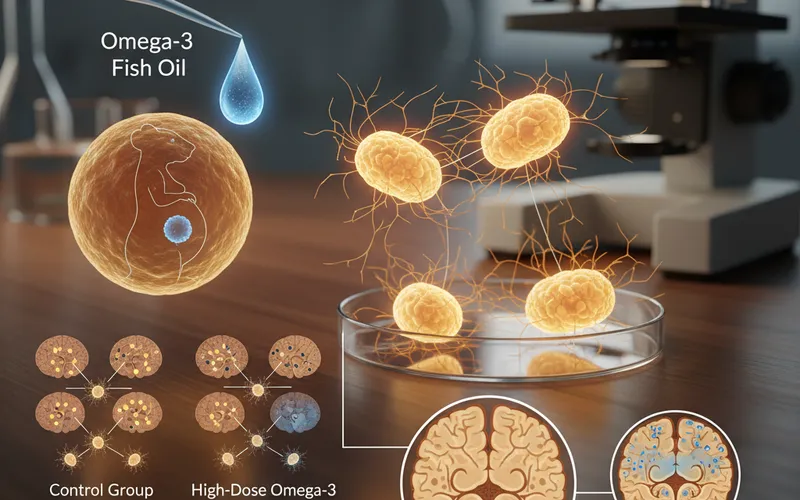
Die Studie – Was wurde untersucht und warum betrifft dich das?
Du hast vielleicht schon oft gehört, wie wichtig Omega-3-Fettsäuren für die Entwicklung deines Babys sind, besonders während der Schwangerschaft. Viele Empfehlungen raten zu einer erhöhten Zufuhr, und es gibt gute Gründe dafür: Omega-3 ist essenziell für die Gehirn- und Augenentwicklung. Aber wie so oft im Leben stellt sich die Frage: Gibt es auch ein Zuviel des Guten? Eine spannende, wenn auch noch sehr frühe Studie aus der Türkei hat genau diese Frage aufgegriffen und im Tiermodell untersucht, welche Auswirkungen extrem hohe Dosen Omega-3-Fischöl während der Schwangerschaft auf die Nachkommen haben könnten.
Die Forschenden um Erdoğan und Erbaş von der Katip Çelebi University und der Biruni University wollten herausfinden, ob eine sehr hohe Dosis Omega-3-Fischöl bei Rattenmüttern geschlechtsspezifische Verhaltens- und neurobiologische Veränderungen im Zusammenhang mit Autismus bei den Nachkommen auslösen kann. Dazu gaben sie trächtigen Sprague-Dawley-Ratten während der gesamten Trächtigkeit entweder normales Leitungswasser oder eine extrem hohe Dosis Fischöl (5000 mg/kg/Tag, bestehend aus 60% EPA und 40% DHA). Zum Vergleich: Eine typische empfohlene Dosis für schwangere Frauen liegt oft bei etwa 200–300 mg DHA pro Tag, was umgerechnet auf ein durchschnittliches Körpergewicht von 60 kg etwa 3–5 mg/kg/Tag wäre – die in der Studie verwendete Dosis ist also um ein Vielfaches höher.
Nach der Geburt wurden die Würfe standardisiert und die Jungtiere am 21. Tag entwöhnt. Im Alter von 50 Tagen untersuchten die Wissenschaftler dann die Sozialfähigkeit der Nachkommen mittels eines Drei-Kammer-Tests sowie ihre lokomotorische Aktivität in einem Open-Field-Test. Zusätzlich wurden verschiedene Biomarker gemessen, darunter IGF-1 (Insulin-like Growth Factor 1) im Gehirn, biochemische Marker im Plasma und Testosteron im Serum. Auch das Gehirn wurde histologisch untersucht, insbesondere die CA1/CA3-Neuronen im Hippocampus und die GFAP-Immunreaktivität, ein Marker für Astrozyten, die eine wichtige Rolle bei der Unterstützung von Neuronen spielen.
Die Ergebnisse waren bemerkenswert und spezifisch: Männliche Nachkommen, die pränatal dem hohen Omega-3 ausgesetzt waren, zeigten ein deutliches Defizit in ihrer Sozialfähigkeit (nur 15.4 ± 4.8% Interaktion im Vergleich zu 78.3 ± 6.1% in der Kontrollgruppe; p < 0.001). Bei weiblichen Nachkommen wurde dieser Effekt nicht beobachtet. Die allgemeine Bewegungsaktivität war in keiner Gruppe verändert. IGF-1 im Gehirn war in beiden Geschlechtern erhöht, jedoch stärker bei den Männchen. Darüber hinaus führte die pränatale Omega-3-Zufuhr bei beiden Geschlechtern zu erhöhten Triglyceriden, Harnsäure und ALT-Werten (ein Leberenzym) und selektiv zu erhöhtem Cholesterin und Testosteron bei den männlichen Tieren. Die histologischen Untersuchungen des Gehirns zeigten bei den männlichen Tieren Veränderungen an den CA1-Neuronen und eine ausgeprägte Astrozytenaktivierung (Astrogliose) im Hippocampus.
Die Forschenden schlussfolgern, dass eine sehr hohe pränatale Omega-3-Zufuhr bei männlichen Ratten einen autismusähnlichen Phänotyp hervorruft, der mit einer Hochregulierung von IGF-1, einer Aktivierung von Gliazellen im Hippocampus und metabolischen Veränderungen einhergeht. Dies unterstreicht die Wichtigkeit, obere Sicherheitsgrenzen für die Omega-3-Zufuhr während der Schwangerschaft zu definieren.
Quelle: Erdoğan MA, Erbaş O (2026). High-dose prenatal omega-3 fish oil induces autism-like social deficits and hippocampal glial changes in rat offspring. Food and chemical toxicology : an international journal published for the British Industrial Biological Research Association, 212. PubMed-ID: 41831811
Diese Ergebnisse werfen wichtige Fragen auf, die weit über das Labor hinausgehen und dich als werdende Mutter oder interessierte Person direkt betreffen könnten. Doch was bedeuten diese Befunde wirklich im Kontext deines Lebens?
Was heisst das wirklich? – Die kritische Einordnung
Diese Rattenstudie liefert faszinierende und auf den ersten Blick vielleicht beunruhigende Ergebnisse. Doch bevor wir voreilige Schlüsse ziehen, ist es wichtig, sie kritisch einzuordnen. Zunächst einmal handelt es sich um eine Tierstudie. Ratten sind keine Menschen, und die Übertragbarkeit von Ergebnissen aus Tiermodellen auf den Menschen ist immer begrenzt. Was bei Ratten passiert, muss nicht zwangsläufig in gleicher Weise bei Menschen auftreten.
Ein entscheidender Punkt ist die Dosis. Die in dieser Studie verwendete Omega-3-Dosis von 5000 mg/kg/Tag ist, wie bereits erwähnt, extrem hoch – weit über dem, was normalerweise in der Schwangerschaft empfohlen oder selbst bei hoher Supplementierung erreicht wird. Es ist vergleichbar damit, wenn du eine ganze Packung Schmerzmittel auf einmal nehmen würdest, anstatt die empfohlene Einzeldosis. Bei jeder Substanz, selbst bei lebensnotwendigen Nährstoffen, kann eine Überdosierung schädlich sein.
Die Studie identifiziert statistisch signifikante Unterschiede (p < 0.001), insbesondere bei der Sozialfähigkeit der männlichen Ratten. Das bedeutet, dass die beobachteten Effekte sehr wahrscheinlich nicht zufällig sind. Ob diese Effekte jedoch auch klinisch bedeutsam im Sinne einer menschlichen Autismus-Diagnose sind, lässt sich aus dieser Studie nicht ableiten. Die Verhaltensänderungen bei Ratten sind ein Modell für autismusähnliche Merkmale, aber keine direkte Entsprechung zur komplexen menschlichen Autismus-Spektrum-Störung.
Die Forschenden haben hart an harten Endpunkten geforscht, wie Verhaltensänderungen und histologischen Veränderungen im Gehirn. Das ist ein Pluspunkt. Die gemessenen Biomarker wie IGF-1, Triglyceride oder Testosteron sind zwar Surrogatparameter, die aber gut mit den beobachteten Veränderungen korrelieren. Die Methodik scheint solide, und die Stichprobengrösse war für eine Tiermodellstudie angemessen. Die geschlechtsspezifischen Effekte sind besonders interessant und fordern weitere Forschung heraus.
Für wen gelten diese Ergebnisse? Primär für männliche Ratten, die extrem hohen Omega-3-Dosen ausgesetzt waren. Es ist wichtig, dies zu betonen. Die Ergebnisse sind ein Warnsignal für die Forschung, nicht aber eine sofortige Handlungsanweisung für werdende Mütter, die moderate Dosen Omega-3 einnehmen.
Denkwerkzeug: Wenn du eine Studie liest, die über die potenziellen Risiken eines Nährstoffs bei extrem hohen Dosen berichtet, frage dich: „Wie weit weicht die in der Studie verwendete Dosis von dem ab, was ich persönlich oder allgemein empfohlen bekomme?“ Dieser Vergleich hilft dir, die Relevanz für deine eigene Situation besser einzuschätzen.
Doch selbst wenn wir die Dosis in dieser Studie als extrem ansehen, bleibt die Frage, was jenseits der reinen Biochemie noch eine Rolle spielen könnte – ein Aspekt, der in solchen Studien oft zu kurz kommt.
Der Geist im Körper – Die psychophysiologische Perspektive
Diese Studie konzentriert sich auf die reine biochemische Wirkung von Omega-3 auf die Physiologie der Ratten. Was jedoch in den meisten pharmakologisch orientierten Studien oft übersehen wird, ist die psychophysiologische Interaktion, selbst im Tiermodell. Zwar können wir Ratten keine Gedanken oder Emotionen zuschreiben wie Menschen, aber ihr Stresslevel, ihre Umgebung und die Interaktion mit der Mutter können sich auf die Entwicklung auswirken.
Stell dir vor, die extrem hohe Dosis Fischöl könnte bei der Mutterratte selbst zu Unwohlsein oder Stress geführt haben. Solche Faktoren können den mütterlichen Stresspegel erhöhen, was wiederum über die Cortisol-Achse die fetale Entwicklung beeinflusst und möglicherweise die beobachteten neurologischen Veränderungen bei den Nachkommen verstärken oder sogar mitverursachen könnte. Chronischer Stress während der Schwangerschaft ist bekannt dafür, die Entwicklung des fetalen Gehirns zu beeinflussen und kann das Risiko für Entwicklungsstörungen erhöhen.
Auch die Erwartungshaltung – im Tiermodell eher als „Umweltkontext“ zu verstehen – spielt eine Rolle. Obwohl Ratten keine bewussten Erwartungen haben, können Veränderungen in ihrer Ernährung oder Umgebung subtile Auswirkungen auf ihr Verhalten und ihre Physiologie haben, die über die direkte Wirkung der Substanz hinausgehen. Ein verändertes Mikrobiom der Mutter durch die hohe Öl-Zufuhr könnte ebenfalls eine Rolle spielen, da das Mikrobiom zunehmend als wichtiger Faktor für die Gehirnentwicklung und das Verhalten betrachtet wird und eng mit der psychophysiologie verbunden ist.
Es ist gut denkbar, dass die beobachteten metabolischen Veränderungen wie erhöhte Triglyceride und Harnsäure nicht nur direkte Folgen der Omega-3-Überdosis sind, sondern auch Ausdruck eines gestörten metabolischen Gleichgewichts, das sich wiederum auf die Stressantwort und die Gehirnentwicklung auswirkt. Die Aktivierung von Gliazellen im Hippocampus, die in der Studie gefunden wurde, ist ein Marker für Neuroinflammation oder Stress im Gehirn. Dies könnte eine direkte Folge der Omega-3-Überdosis sein, aber auch durch eine erhöhte Stressantwort des mütterlichen Organismus vermittelt werden.
Die psychophysiologische Perspektive lehrt uns, dass Körper und Geist untrennbar miteinander verbunden sind. Selbst bei Ratten können Umweltstressoren oder physiologische Ungleichgewichte, die durch eine extreme Intervention ausgelöst werden, die Entwicklung auf eine Weise beeinflussen, die über die isolierte Wirkung eines Nährstoffs hinausgeht. Dies ist ein wichtiger Aspekt, der bei der Interpretation solcher Studien stets mitgedacht werden sollte.
Diese Studie ist ein Puzzleteil in einem grossen Bild. Doch wie passt sie in den breiteren Forschungsrahmen und welche Abhängigkeiten müssen wir noch betrachten?
Der grössere Kontext – Einordnung und Abhängigkeiten
Diese Studie ist eine Einzelstudie im Tiermodell und sollte als solche interpretiert werden: als ein erster Hinweis, der weitere Forschung anstösst. Sie widerspricht nicht den zahlreichen Studien, die die positiven Effekte moderater Omega-3-Dosen in der Schwangerschaft aufzeigen. Vielmehr ergänzt sie diese, indem sie die Frage nach potenziellen Obergrenzen aufwirft.
Die Studie wurde im Journal Food and Chemical Toxicology veröffentlicht, einem renommierten Fachblatt für Toxikologie. Die Autoren deklarierten keine Interessenkonflikte, was die Glaubwürdigkeit der Ergebnisse stärkt. Die Finanzierung der Studie wird im Abstract nicht explizit genannt, was eine übliche Praxis ist und keinen Hinweis auf unlautere Absichten gibt. Es ist jedoch immer von Interesse, wer die Forschung unterstützt.
In der Forschungslandschaft ist die Diskussion um die optimale Omega-3-Zufuhr in der Schwangerschaft noch nicht abgeschlossen. Während die meisten Studien die positiven Effekte von DHA und EPA auf die kindliche Entwicklung betonen, gibt es auch vereinzelt Studien, die bei sehr hohen Dosen potenzielle Risiken andeuten könnten, etwa im Hinblick auf das Blutungsrisiko oder Immunreaktionen. Diese Studie reiht sich in die Kategorie ein, die auf die Notwendigkeit hinweist, nicht nur die Unterversorgung, sondern auch die Überversorgung kritisch zu beleuchten.
Was wurde nicht kontrolliert? Wie bei jeder Studie im Tiermodell gibt es unzählige Faktoren, die nicht explizit gemessen oder kontrolliert wurden. Dazu gehören die genaue Zusammensetzung des Mikrobioms der Muttertiere, mögliche individuelle genetische Prädispositionen der Ratten für bestimmte Reaktionen auf die Omega-3-Zufuhr oder subtile Unterschiede in der Stressreaktion der einzelnen Tiere. Auch die genaue Ernährung ausserhalb der Omega-3-Zufuhr könnte eine Rolle spielen. Solche Faktoren sind nicht als Kritik an den Forschenden zu verstehen, sondern als Hinweis darauf, dass die Realität komplexer ist als jedes Laborexperiment.
Denkwerkzeug: Bevor du auf Basis einer einzelnen Studie dein Verhalten änderst, frage dich: „Gibt es eine breite wissenschaftliche Übereinstimmung zu diesem Thema, oder ist diese Studie ein Ausreisser oder ein erster Hinweis in einem noch wenig erforschten Bereich?“ Eine einzelne Studie, besonders eine Tierstudie mit extremen Dosen, liefert selten die ganze Wahrheit. Sie ist eher ein Startpunkt für weitere Untersuchungen.
Nach all diesen Überlegungen – was bedeutet das nun für dich und deinen Alltag?
Was heisst das für dich? – Fazit und Alltagsrelevanz
Diese Studie ist ein faszinierender, aber auch komplexer Beitrag zur Diskussion um Omega-3 in der Schwangerschaft. Was kannst du konkret daraus mitnehmen?
- Achte auf die Dosis: Die wichtigste Botschaft ist, dass „mehr ist besser“ nicht immer zutrifft, auch nicht bei gesunden Nährstoffen. Die in dieser Studie verwendete Dosis ist extrem hoch und liegt weit über den gängigen Empfehlungen. Halte dich an die Empfehlungen deines Arztes oder deiner Ärztin für Omega-3-Supplemente während der Schwangerschaft. Diese liegen in der Regel bei moderaten Mengen, die als sicher und vorteilhaft gelten.
- Qualität und Beratung sind entscheidend: Wenn du Omega-3-Präparate nimmst, achte auf hochwertige Produkte und sprich immer mit deiner Ärztin oder Apothekerin über die richtige Dosierung. Eine individuelle Beratung ist hier Gold wert.
- Die psychophysiologische Komponente nicht vergessen: Denk daran, dass dein Körper ein komplexes System ist. Stress, Schlaf und dein allgemeines Wohlbefinden beeinflussen, wie dein Körper Nährstoffe verarbeitet und wie sich dein Baby entwickelt. Eine ausgewogene Ernährung und ein gesunder Lebensstil, begleitet von psychischer Ausgeglichenheit, sind oft wichtiger als die isolierte Zufuhr eines einzelnen Nährstoffs in extremen Mengen.
Was solltest du NICHT daraus schliessen? Du solltest diese Studie auf keinen Fall so interpretieren, dass Omega-3-Fettsäuren in der Schwangerschaft generell schädlich sind oder dass du auf eine angemessene Zufuhr verzichten solltest. Ganz im Gegenteil: Omega-3-Fettsäuren sind essenziell für die Entwicklung deines Kindes. Diese Studie ist ein Hinweis auf die potenziellen Risiken einer extremen Überdosierung, nicht auf die Gefahren einer normalen, empfohlenen Zufuhr.
Für wen ist das besonders relevant? Diese Erkenntnisse sind besonders wichtig für Forschende, die sich mit der Toxikologie von Nährstoffen befassen, und für alle, die extrem hohe Dosen von Nahrungsergänzungsmitteln in Betracht ziehen. Für die meisten werdenden Mütter, die sich an empfohlene Dosierungen halten, gibt es keinen Grund zur Beunruhigung. Es ist eine Erinnerung daran, dass Selbstmedikation mit hochdosierten Präparaten immer mit Vorsicht zu geniessen ist.
Dein Körper reagiert nicht nur auf das, was du isst, sondern auch auf das, was du denkst und fühlst. Achte auf dein inneres Gleichgewicht und lass dich bei Fragen zu Nahrungsergänzungsmitteln immer professionell beraten. Die Wissenschaft ist ein ständiger Prozess des Lernens und Verstehens, und diese Studie ist ein wertvoller Schritt auf diesem Weg.
Bleib neugierig, bleib kritisch und vertraue auf die Signale deines Körpers – das ist der beste Weg zu einem gesunden und erfüllten Leben.
Wissenschaftliche Quelle
Food and chemical toxicology : an international journal published for the British Industrial Biological Research Association