Lungenentzündung und Herzrisiko: Kann Omega-3 Herz-Kreislauf-Probleme nach einer Lungenentzündung reduzieren?
Eine Lungenentzündung kann das Herz belasten und das Risiko für Herzinfarkt und Schlaganfall erhöhen. Eine aktuelle Studie will untersuchen, ob Omega-3-Fettsäuren diese Entzündung dämpfen und das Herz schützen können. Was steckt hinter diesem Ansatz?
1. Die Studie – Was wurde untersucht und warum betrifft dich das?
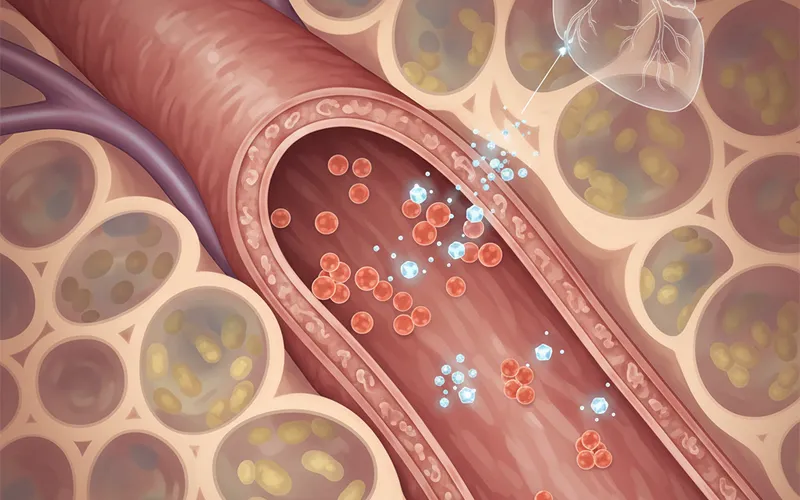
Stell dir vor, du hast eine hartnäckige Lungenentzündung hinter dir. Du bist froh, wieder auf den Beinen zu sein, doch dein Körper hat Schwerstarbeit geleistet. Was viele nicht wissen: Eine schwere Lungenentzündung, auch als ambulant erworbene Pneumonie (CAP) bekannt, kann weit mehr als nur die Lunge belasten. Sie erhöht auch dein Risiko für ernsthafte Herz-Kreislauf-Ereignisse wie Herzinfarkt und Schlaganfall – und das nicht nur kurzfristig, sondern über Jahre hinweg. Das liegt daran, dass eine solche Infektion eine massive Entzündungsreaktion im ganzen Körper auslöst, die auch die Blutgefässe schädigen kann.
Genau hier setzt eine vielversprechende Studie namens TIN-CAP (Targeting Vascular Inflammation In Patients with Community-Acquired Pneumonia) an. Ein interdisziplinäres Team von Forschenden aus Kanada, unter anderem vom University of Ottawa Heart Institute, will untersuchen, ob ein spezielles Omega-3-Fettsäurepräparat, Icosapent-Ethyl (IPE), diese Entzündungsreaktion dämpfen und damit das erhöhte Herzrisiko nach einer Lungenentzündung reduzieren kann. Die Studie, deren Protokoll im BMJ Open veröffentlicht wurde, ist als multizentrische, randomisierte, doppelblinde, placebokontrollierte Studie konzipiert – ein Goldstandard der klinischen Forschung.
Die zentrale Frage ist, ob IPE, das sowohl entzündungshemmende als auch herzschützende Eigenschaften besitzt, die Gefässentzündung bei Patienten nach einer Lungenentzündung gezielt beeinflussen kann. Dazu werden insgesamt 360 Patienten nach einer akuten Lungenentzündung in zwei Gruppen aufgeteilt: Eine Gruppe erhält über sechs Monate hinweg zweimal täglich 2 Gramm IPE, die andere ein Placebo. Die Forschenden werden dabei nicht nur klinische Ereignisse wie Herzinfarkte oder Schlaganfälle erfassen, sondern auch detaillierte Bildgebung des Herzens und der Gefässe (z.B. PET/CT und MRT) nutzen, um die Entzündung der Gefässe direkt zu messen. Zudem werden Biomarker im Blut analysiert, die Aufschluss über den Entzündungszustand geben. Die Studie ist darauf ausgelegt, die Sicherheit und Wirksamkeit von IPE in dieser spezifischen Patientengruppe zu bewerten und ein besseres Verständnis der zugrundeliegenden Mechanismen zu gewinnen.
Quelle: Stotts C, Corrales-Medina VF, deKemp RA, et al. (2026). Targeting Vascular Inflammation In Patients with Community-Acquired Pneumonia (TIN-CAP): protocol for a multicentre, randomised, double-blind, placebo-controlled trial. BMJ open, 16(3). PubMed-ID: 41781043
2. Was heisst das wirklich? – Die kritische Einordnung
Die TIN-CAP-Studie ist noch ein Studienprotokoll, die Ergebnisse stehen also noch aus. Doch schon die Anlage der Studie ist vielversprechend. Ein multizentrisches, randomisiertes, doppelblindes und placebokontrolliertes Design ist die wissenschaftlich fundierteste Art, eine solche Fragestellung zu untersuchen. Das minimiert Verzerrungen und erhöht die Glaubwürdigkeit der späteren Ergebnisse erheblich. Die Stichprobengrösse von 360 Patienten ist zudem ausreichend, um statistisch aussagekräftige Resultate zu erzielen, falls ein Effekt vorhanden ist.
Ein grosser Pluspunkt ist die Kombination aus harten klinischen Endpunkten (Herz-Kreislauf-Ereignisse) und detaillierten Surrogatparametern. Die Bildgebung der Gefässe mittels PET/CT und MRT erlaubt es, die Entzündungsaktivität direkt zu visualisieren. Das ist präziser, als sich allein auf Blutmarker zu verlassen. Blutmarker sind zwar wichtig, geben aber oft nur ein Momentbild wieder und sind weniger spezifisch für die Gefässentzündung.
Die Studie zielt darauf ab, einen klinisch bedeutsamen Effekt zu finden – nämlich die Reduktion von Herz-Kreislauf-Ereignissen. Das ist entscheidend, denn statistische Signifikanz bedeutet nicht immer klinische Relevanz. Ein kleiner p-Wert sagt uns, dass ein Ergebnis wahrscheinlich nicht zufällig ist, aber nicht unbedingt, dass es für dich im Alltag einen grossen Unterschied macht. Hier wird jedoch auf ein Outcome abgezielt, das für die Patienten wirklich spürbar wäre.
Eine Limitation, die bei Protokollen immer im Auge behalten werden muss, ist die Übertragbarkeit. Die Studie konzentriert sich auf Patienten mit ambulant erworbener Lungenentzündung. Haben die Ergebnisse auch Relevanz für andere Arten von Entzündungen oder Patientengruppen? Das wird man erst nach der Veröffentlichung der finalen Daten und weiteren Studien beurteilen können. Zudem ist Icosapent-Ethyl ein spezielles, hochreines EPA-Präparat. Die Ergebnisse lassen sich nicht direkt auf andere Omega-3-Produkte oder die Einnahme von Fischöl im Allgemeinen übertragen.
Dein Denkwerkzeug: Wenn du in Zukunft von Studienergebnissen zu Nahrungsergänzungsmitteln hörst, frage dich: Wurde das Präparat in einer so streng kontrollierten Studie getestet, und sind die gemessenen Effekte für meine Gesundheit wirklich relevant, oder nur statistisch signifikant?
3. Der Geist im Körper – Die psychophysiologische Perspektive
Die TIN-CAP-Studie konzentriert sich auf die physiologischen Mechanismen der Entzündung und deren Dämpfung durch Omega-3-Fettsäuren. Doch aus psychophysiologischer Sicht ist es wichtig, die Wechselwirkungen zwischen Körper und Psyche zu beleuchten, die hier eine Rolle spielen könnten – auch wenn die Studie diese Aspekte nicht direkt untersucht.
Stell dir vor, du hast gerade eine Lungenentzündung überstanden. Das ist eine massive Belastung für den Körper, aber auch für die Psyche. Die Angst vor Atemnot, die Sorge um die eigene Gesundheit, die Einschränkung im Alltag – all das löst Stress aus. Wir wissen, dass chronischer Stress das Immunsystem beeinflusst und Entzündungsprozesse im Körper verstärken kann. Es ist gut denkbar, dass die psychische Belastung nach einer Lungenentzündung die Entzündungsreaktion im Körper aufrechterhält und damit indirekt das Herz-Kreislauf-Risiko erhöht. Ein Omega-3-Präparat, das möglicherweise Entzündungen dämpft, könnte also nicht nur auf physiologischer Ebene wirken, sondern auch einen Teufelskreis aus körperlicher Entzündung und psychischem Stress unterbrechen helfen.
Ein weiterer Aspekt ist der Placebo-Effekt. Auch wenn die Studie doppelblind und placebokontrolliert ist, kann die Erwartungshaltung der Patienten einen Einfluss haben. Allein das Wissen, an einer Studie teilzunehmen und ein potenziell wirksames Mittel zu erhalten, kann das Wohlbefinden steigern und physiologische Veränderungen auslösen. Eine positive Erwartung kann die Stressreaktion dämpfen und damit indirekt entzündungshemmend wirken, selbst im Placebo-Arm. Umgekehrt könnten Nocebo-Effekte bei Patienten auftreten, die mit Skepsis oder Ängsten an die Behandlung herangehen.
Die Studie wird zwar Biomarker messen, aber die Rolle von psychischen Faktoren wie Angst, Depression oder chronischem Stress, die das Entzündungsgeschehen ebenfalls beeinflussen können, wird voraussichtlich nicht explizit erfasst. Dies ist keine Schwäche der Studie an sich, da sie ein klares physiologisches Ziel verfolgt. Es ist jedoch ein wichtiger Hinweis für uns, dass die Genesung nach einer schweren Krankheit immer auch eine psychische Komponente hat, die den Heilungsprozess massgeblich mitbestimmen kann.
4. Der grössere Kontext – Einordnung und Abhängigkeiten
Die Idee, Entzündungen zur Prävention von Herz-Kreislauf-Erkrankungen zu nutzen, ist nicht neu. Es gibt bereits Studien, die zeigen, dass Icosapent-Ethyl bei Patienten mit erhöhtem Risiko für Herz-Kreislauf-Erkrankungen positive Effekte haben kann. Die TIN-CAP-Studie ist ein weiteres Puzzleteil in diesem Forschungsbereich und konzentriert sich auf eine spezifische Hochrisikogruppe: Patienten nach einer Lungenentzündung.
Die Finanzierung dieser Art von Forschung ist oft komplex. Da Icosapent-Ethyl ein verschreibungspflichtiges Medikament ist, ist es wahrscheinlich, dass die pharmazeutische Industrie an der Finanzierung beteiligt ist. Das ist nicht per se ein Problem, aber es ist wichtig, mögliche Interessenkonflikte transparent zu machen. Das Studienprotokoll im BMJ Open sollte hierzu Informationen liefern. Solange die Studie nach höchsten wissenschaftlichen Standards durchgeführt wird, mit unabhängiger Datenanalyse und Publikation, ist die Finanzierung kein Hinderungsgrund für die Validität der Ergebnisse.
Was in der Studie nicht direkt kontrolliert wird, sind die vielen anderen Lebensstilfaktoren, die das Herz-Kreislauf-Risiko und die Entzündungsreaktion beeinflussen. Dazu gehören Ernährungsgewohnheiten (abgesehen von der Omega-3-Supplementierung), körperliche Aktivität, Raucherstatus, Alkoholkonsum, Schlafqualität und das allgemeine Stressmanagement der Probanden. Obwohl randomisierte Studien versuchen, diese Faktoren durch die zufällige Zuteilung zu den Gruppen auszugleichen, können sie im Einzelfall immer noch eine Rolle spielen. Eine Lungenentzündung ist oft auch ein Indikator für einen generell geschwächten Gesundheitszustand oder ungünstige Lebensstilfaktoren, die das Risiko für weitere Komplikationen erhöhen.
Dein Denkwerkzeug: Wenn du von einer Studie hörst, die ein Nahrungsergänzungsmittel oder eine Intervention untersucht, frage dich: Welche anderen wichtigen Lebensstilfaktoren wurden in dieser Studie nicht berücksichtigt, die meine persönliche Situation beeinflussen könnten?
5. Was heisst das für dich? – Fazit und Alltagsrelevanz
Auch wenn die Ergebnisse der TIN-CAP-Studie noch ausstehen, liefert das Studienprotokoll bereits wichtige Erkenntnisse und Denkanstösse für dich:
- Nimm Lungenentzündungen ernst: Eine Lungenentzündung ist nicht nur eine akute Erkrankung, sondern kann langfristige Auswirkungen auf deine Herzgesundheit haben. Achte auf eine vollständige Genesung und sprich mit deinem Arzt über mögliche Risiken.
- Entzündungen sind ein Risikofaktor: Diese Studie unterstreicht erneut, wie wichtig es ist, chronische Entzündungen im Körper zu managen. Omega-3-Fettsäuren sind nur ein Baustein; eine ausgewogene Ernährung, regelmässige Bewegung und Stressreduktion sind ebenfalls essenziell.
- Die Rolle von Omega-3: Sollten die Ergebnisse positiv ausfallen, könnte ein spezifisches Omega-3-Präparat eine wichtige Rolle bei der Reduktion des Herz-Kreislauf-Risikos nach einer Lungenentzündung spielen. Es ist jedoch wichtig zu betonen, dass dies ein Medikament und kein allgemeines Nahrungsergänzungsmittel ist.
Was du daraus NICHT schliessen solltest: Diese Studie ist kein Freifahrtschein, um nach einer Lungenentzündung einfach ein Omega-3-Präparat einzunehmen und alle anderen Aspekte deiner Gesundheit zu ignorieren. Auch solltest du nicht erwarten, dass jedes beliebige Fischölpräparat die gleichen Effekte hat wie das hier untersuchte hochreine Icosapent-Ethyl.
Für wen ist das besonders relevant? Vor allem für Menschen, die bereits eine Lungenentzündung hatten oder ein erhöhtes Herz-Kreislauf-Risiko aufweisen. Für gesunde Menschen ohne diese Vorgeschichte sind die Erkenntnisse weniger direkt anwendbar, aber sie unterstreichen die allgemeine Bedeutung einer entzündungshemmenden Lebensweise.
Der psychophysiologische Gedanke zum Schluss: Denk daran, dass dein Körper und deine Psyche untrennbar miteinander verbunden sind. Eine schwere Krankheit wie eine Lungenentzündung belastet beides. Eine umfassende Genesung erfordert nicht nur die Behandlung der physiologischen Aspekte, sondern auch die Pflege deiner psychischen Gesundheit. Stressmanagement und eine positive Einstellung können die Heilung unterstützen und die entzündlichen Prozesse im Körper beeinflussen. Achte auf dich – ganzheitlich.
Welche Fragen bleiben offen? Es bleibt abzuwarten, wie aussagekräftig die Studienergebnisse sein werden und ob sie tatsächlich einen klinisch relevanten Nutzen für die Patienten zeigen. Auch die genauen Mechanismen, wie IPE auf die Gefässentzündung wirkt, werden sicherlich Gegenstand weiterer Forschung sein. Eine spannende Entwicklung, die wir im Auge behalten werden.
Bleib neugierig, bleib gesund und höre auf die Signale deines Körpers – er hat dir viel zu erzählen.