Wie Futter die Stressachse von Doraden beeinflusst
Eine aktuelle Studie zeigt, wie Ernährung die Stressreaktion von Fischen auf molekularer Ebene verändern kann. Erfahre, welche Rolle B-Vitamine und Genistein spielen und was wir daraus für unsere eigene Stressbewältigung lernen können – auch wenn wir keine Fische sind.
Die Studie – Was wurde untersucht und warum betrifft dich das?
Stell dir vor, du könntest durch deine Ernährung nicht nur deine körperliche Gesundheit beeinflussen, sondern auch, wie gut du mit Stress umgehst. Klingt nach Science-Fiction? Eine aktuelle Studie aus Spanien gibt uns interessante Einblicke, wie genau das auf molekularer Ebene funktionieren könnte – wenn auch bei Fischen. Das Team um Navarro-Guillén und Perera vom Andalusischen Institut für Meereswissenschaften (ICMAN) hat sich genauer angesehen, wie bestimmte Futterzusätze die Stressachse von Doraden, auch bekannt als Goldbrassen, beeinflussen.
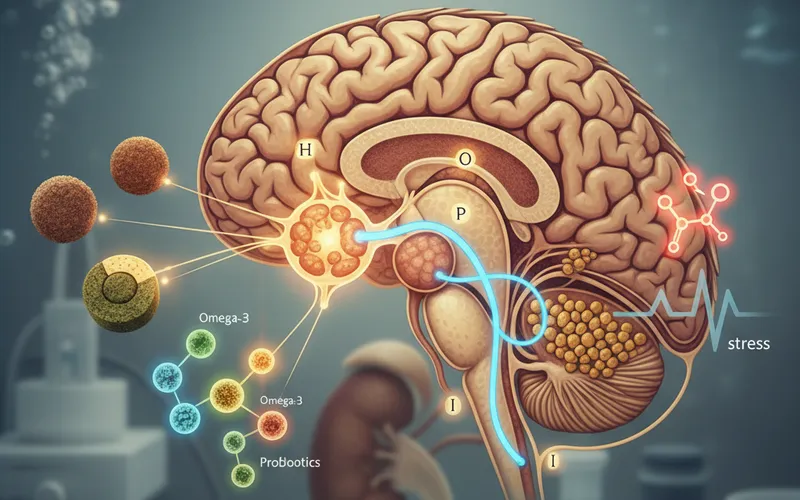
Die zentrale Frage war: Kann die Ernährung die Expression von Schlüsselgenen der sogenannten Hypothalamus-Hypophysen-Interrenal-Achse (HPI-Achse) verändern? Diese HPI-Achse ist das Äquivalent zur Hypothalamus-Hypophysen-Nebennierenrinden-Achse (HHN-Achse) bei Säugetieren – also genau jener Teil deines Körpers, der deine Stressreaktion koordiniert und mit Cortisol reguliert. Das Forschungsteam wusste bereits aus früheren Arbeiten, dass B-Vitamine die Cortisol-Reaktion auf akuten Stress dämpfen können, während eine Ernährung mit dem Pflanzenstoff Genistein zu erhöhten Cortisol-Grundwerten und einer veränderten Stressreaktivität führte. Nun wollten sie verstehen, welche molekularen Mechanismen dahinterstecken.
Für ihre Untersuchung verwendeten die Forschenden Goldbrassen, die über einen längeren Zeitraum mit verschiedenen Diäten gefüttert wurden: einer Kontrolldiät, einer Diät mit zusätzlichen B-Vitaminen und einer Diät mit Genistein. Anschliessend untersuchten sie die Genexpression wichtiger HPI-Achsen-Gene in verschiedenen Geweben wie der Hypophyse und der Vorniere (dem Fisch-Äquivalent der Nebenniere). Sie analysierten auch die Reaktion auf akuten Stress und massen Cortisol-Spiegel im Plasma.
Die Ergebnisse waren faszinierend: Bei den Kontrollfischen korrelierte der Cortisol-Spiegel mit der Expression des Glukokortikoid-Rezeptorgens (nr3c1) in der Hypophyse. Bei Fischen, die B-Vitamine erhielten, änderte sich diese Beziehung, und sie zeigten eine höhere basale nr3c1-Expression in der Vorniere. Zudem war bei diesen Fischen nach akutem Stress weniger oxidativer Stress in der Leber zu beobachten, was mit unterschiedlichen Cortisol-Spiegeln und Leberstoffwechsel-Reaktionen einherging.
Die Genistein-Diät führte zu einer veränderten Regulation der Proopiomelanocortin (POMC)-Paraloge in der Hypophyse: Nach Stress war die Expression von pomcb reduziert und die von pomca erhöht. Diese Veränderungen hielten sogar 4,5 Monate nach der eigentlichen diätetischen Exposition an! Genistein war auch mit einer höheren Basalexpression des ACTH-Rezeptors (mc2r) in der Vorniere verbunden. Interessanterweise glichen sich die Cortisol-Reaktionen der verschiedenen Diätgruppen bei Stress-Challenges, die bis zu einem Jahr nach der Ernährungsintervention durchgeführt wurden, wieder an. Das deutet darauf hin, dass die diätetischen Komponenten kurzfristige, aber nicht unbedingt langfristige Veränderungen in der Regulation der HPI-Achse bewirken können.
Quelle: Navarro-Guillén C, Huesa-Cerdán R, Hidalgo-Pérez JA, Martínez-Rodríguez G, Rodríguez-Viera L, Martos-Sitcha JA, Blanco-Benítez JJ, Perera E (2026). Diet-associated modulation of HPI axis gene expression and POMC paralogs in gilthead seabream. Comp Biochem Physiol A Mol Integr Physiol, 315. PubMed-ID: 41722644
Was heisst das wirklich? – Die kritische Einordnung
Diese Studie liefert spannende Einblicke in die molekularen Mechanismen, wie Ernährung die Stressachse beeinflussen kann. Aber was bedeutet das für dich? Zunächst einmal ist es wichtig zu verstehen, dass wir hier von Goldbrassen sprechen – nicht von Menschen. Auch wenn Fische und Säugetiere eine ähnliche grundlegende Stressphysiologie teilen, sind die Übertragbarkeit von Ergebnissen immer mit Vorsicht zu geniessen.
Die Forschenden haben hier auf der Ebene der Genexpression gearbeitet, was sehr präzise ist und uns hilft, die zugrunde liegenden Mechanismen zu verstehen. Es handelt sich um einen Tierversuch, der unter kontrollierten Bedingungen durchgeführt wurde, was die Reproduzierbarkeit und die Kausalitätsannahmen stärkt. Die Stichprobengrösse und die Dauer der Intervention sind für Tierstudien angemessen. Besonders interessant ist, dass Effekte noch Monate nach der diätetischen Exposition nachweisbar waren – das deutet auf eine nachhaltige Prägung hin, auch wenn die Cortisol-Reaktionen nach einem Jahr wieder konvergierten.
Allerdings handelt es sich um Surrogatparameter: Genexpression und Cortisol-Spiegel sind wichtige Marker, aber sie sind keine direkten Messgrössen für das subjektive Stresserleben oder die langfristige Gesundheit und Lebensqualität. Ein veränderter Cortisol-Spiegel bedeutet nicht zwangsläufig, dass der Fisch sich besser oder schlechter fühlt oder länger lebt. Es ist ein Hinweis auf eine physiologische Anpassung. Zudem wurde die Ernährung der Fische stark manipuliert; in deinem Alltag ist die Ernährung komplexer und vielfältiger.
Ein wichtiges «Denkwerkzeug» für dich ist hier die Frage: Wenn eine Intervention bei einem Tiermodell auf molekularer Ebene wirkt, heisst das automatisch, dass sie bei mir im Alltag spürbare Effekte hat? Oft ist die Kette von molekularem Effekt zu spürbarer Veränderung lang und von vielen anderen Faktoren beeinflusst.
Der Geist im Körper – Die psychophysiologische Perspektive
Hier kommen wir zum Kern dessen, was diese Studie aus einer psychophysiologischen Perspektive so interessant macht – auch wenn sie bei Fischen durchgeführt wurde. Die Studie zeigt, wie Ernährung direkt in die Regulation der Stressachse eingreifen kann. Das ist ein starkes Argument dafür, dass unser Körper keine isolierten Systeme hat, sondern alles miteinander verbunden ist.
In der Humanphysiologie wissen wir, dass die HHN-Achse nicht nur auf physische Stressoren wie Hunger oder Verletzungen reagiert, sondern massgeblich durch psychische Faktoren beeinflusst wird: Gedanken, Emotionen, Erwartungen und Überzeugungen. Wenn wir uns gestresst fühlen, feuert unsere HHN-Achse, und Cortisol wird ausgeschüttet. Die Fische in dieser Studie wurden physischen Stressoren (akuter Stress) ausgesetzt, und ihre physiologische Reaktion wurde durch die Ernährung moduliert. Was wäre, wenn wir diesen Gedanken auf den Menschen übertragen?
Es ist gut denkbar, dass bestimmte Nährstoffe oder Pflanzenstoffe nicht nur direkt auf die molekulare Ebene der Stressachse wirken, sondern auch indirekt über die Psyche. Stell dir vor, du glaubst fest daran, dass eine bestimmte Ernährungsweise dich stressresistenter macht. Allein diese Erwartung kann über den Placebo-Effekt die Stressphysiologie beeinflussen. Umgekehrt könnte der Glaube, dass bestimmte Lebensmittel schlecht für dich sind, einen Nocebo-Effekt auslösen.
Die B-Vitamine, von denen bekannt ist, dass sie eine Rolle im Nervensystem spielen, könnten die Stressreaktion nicht nur direkt über die Genexpression dämpfen, sondern auch, indem sie die neuronale Stabilität und damit die subjektive Stresswahrnehmung verbessern. Genistein, das die basalen Cortisol-Spiegel veränderte, könnte beim Menschen ähnliche Effekte haben, die dann nicht nur durch die Substanz selbst, sondern auch durch die psychische Verarbeitung dieser veränderten Grundstimmung moduliert werden. Ein Fisch mag keine Überzeugungen haben, aber ein Mensch hat sie – und diese Überzeugungen sind mächtige Modulatoren unserer Physiologie.
Der grössere Kontext – Einordnung und Abhängigkeiten
Diese Studie ist ein kleines, aber wichtiges Puzzleteil in der wachsenden Erkenntnis, dass Ernährung weit über die reine Kalorien- und Nährstoffversorgung hinausgeht. Sie bestätigt auf molekularer Ebene, was wir intuitiv oft spüren: Was wir essen, beeinflusst, wie wir uns fühlen und wie wir auf Stress reagieren.
Die Forschung wurde von einem Team des spanischen National Research Council (CSIC) durchgeführt, einer öffentlichen Forschungseinrichtung. Die Autoren haben angegeben, dass keine Interessenkonflikte bestehen, was die Glaubwürdigkeit der Ergebnisse stärkt. Es ist wichtig, solche Informationen transparent zu machen, da Finanzierungsquellen und potenzielle Interessenkonflikte die Interpretation von Studienergebnissen beeinflussen können.
Diese Ergebnisse reihen sich ein in eine breitere Forschungslandschaft, die den Zusammenhang zwischen Darm-Hirn-Achse, Mikrobiom, Ernährung und psychischer Gesundheit untersucht. Während diese Studie sich auf spezifische Nährstoffe und deren direkte Wirkung auf die HPI-Achse konzentriert, gibt es viele andere Faktoren, die die Stressantwort beeinflussen können, wie zum Beispiel die Zusammensetzung des Darmmikrobioms, entzündliche Prozesse oder auch die soziale Umgebung. Diese Studie kontrollierte diese Faktoren im Tiermodell, aber in der realen Welt spielen sie eine grosse Rolle.
Ein weiteres «Denkwerkzeug» für dich ist die Frage: Was wurde in dieser Studie nicht kontrolliert, was aber in meinem Leben eine grosse Rolle spielt, wenn es um Stress und Ernährung geht? Vielleicht ist es dein Schlaf, dein Bewegungsverhalten, deine sozialen Kontakte oder deine psychische Belastung. Eine einzelne Studie kann immer nur einen kleinen Ausschnitt der Realität beleuchten.
Was heisst das für dich? – Fazit und Alltagsrelevanz
Was können wir also aus den gestressten Doraden lernen? Auch wenn wir keine Fische sind, liefert uns diese Studie wertvolle Hinweise:
- Ernährung ist ein Einflussfaktor für die Stressachse: Die Studie untermauert die Idee, dass deine Ernährung tatsächlich auf molekularer Ebene beeinflussen kann, wie dein Körper mit Stress umgeht. Auch wenn die Details bei Fischen anders sind, ist die Grundbotschaft relevant: Eine bewusste Ernährung kann ein Werkzeug in deinem Stressmanagement sein.
- Achte auf B-Vitamine: Die positiven Effekte der B-Vitamine auf die Stressdämpfung bei Fischen sind ein Hinweis darauf, dass diese Nährstoffe auch für deine Stressresistenz wichtig sein könnten. B-Vitamine sind essenziell für die Nervenfunktion und die Energieproduktion. Eine ausgewogene Zufuhr durch Vollkornprodukte, Hülsenfrüchte, Nüsse, Samen, grünes Blattgemüse und tierische Produkte ist daher sinnvoll, besonders in stressigen Zeiten.
- Ein ganzheitlicher Blick ist entscheidend: Die Studie zeigt, wie tiefgreifend einzelne Nahrungsbestandteile wirken können. Doch vergiss nicht: Dein Körper reagiert nicht nur auf das, was du isst, sondern auch auf das, was du denkst und fühlst. Die psychophysiologische Verbindung ist hier der Schlüssel. Eine gesunde Ernährung ist wichtig, aber sie ist nur ein Teil des Puzzles. Dein Mindset, dein Umgang mit Emotionen und deine Erwartungen spielen eine ebenso grosse Rolle.
Was solltest du NICHT daraus schliessen? Bitte fang jetzt nicht an, Doradenfutter zu essen oder riesige Mengen an Genistein zu dir zu nehmen! Die Übertragung von Dosierungen und Effekten von Fischen auf den Menschen ist nicht direkt möglich und könnte sogar schädlich sein. Diese Studie ist ein Grundlagenforschungsbeitrag, der uns hilft, die komplexen Zusammenhänge besser zu verstehen.
Diese Erkenntnisse sind besonders relevant für dich, wenn du das Gefühl hast, dass dein Stresslevel hoch ist und du nach Wegen suchst, deine Resilienz zu stärken. Es ist ein Aufruf, deine Ernährung als einen weiteren Hebel für dein Wohlbefinden zu betrachten – aber immer im Kontext deines gesamten Lebensstils und deiner mentalen Verfassung. Beobachte, wie sich verschiedene Lebensmittel auf dein Energielevel und deine Stimmung auswirken, und sei offen für Experimente mit deiner eigenen Ernährung.
Es bleibt spannend zu sehen, welche weiteren Mechanismen in zukünftigen Studien entschlüsselt werden. Vielleicht entdecken wir schon bald noch präzisere Wege, wie wir über die Ernährung unsere Stressantwort modulieren können. Doch bis dahin gilt: Dein Körper ist ein komplexes System, und du bist der beste Forscher für dein eigenes Wohlbefinden. Höre auf die Signale, die er dir sendet, und pflege sowohl deinen Geist als auch deinen Körper.
Wissenschaftliche Quelle
Comparative biochemistry and physiology. Part A, Molecular & integrative physiology