Durchbruch in der Omega-3-Produktion: Mikroalgen als EPA-Quelle
Eine neue Studie zeigt, wie die Produktion der wichtigen Omega-3-Fettsäure EPA in Mikroalgen deutlich gesteigert werden kann. Das könnte unsere Versorgung mit gesunden Fetten revolutionieren und bietet spannende Perspektiven für deine Gesundheit.
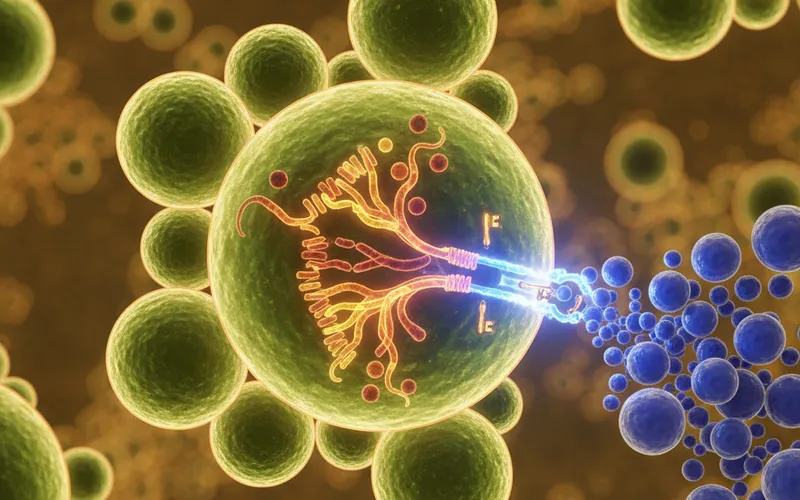
Die Studie – Was wurde untersucht und warum betrifft dich das?
Stell dir vor, du könntest deine Omega-3-Fettsäuren nicht mehr nur aus Fischöl, sondern direkt aus einer nachhaltigen, pflanzlichen Quelle beziehen, die noch dazu extrem effizient ist. Klingt nach Zukunftsmusik? Eine aktuelle Studie aus China bringt uns diesem Szenario einen grossen Schritt näher. Forschende haben einen Weg gefunden, die Produktion der wertvollen Omega-3-Fettsäure Eicosapentaensäure (EPA) in Mikroalgen drastisch zu steigern.
Warum ist das für dich relevant? Omega-3-Fettsäuren, insbesondere EPA, sind entscheidend für deine Herzgesundheit, dein Gehirn, deine Augen und zur Entzündungshemmung. Sie sind essenziell, das heisst, dein Körper kann sie nicht selbst herstellen. Bisher sind fettreiche Fische wie Lachs oder Makrele die bekanntesten Quellen, aber auch Fischöl-Supplemente sind weit verbreitet. Doch die Überfischung der Meere und die Belastung mit Schwermetallen machen die Suche nach nachhaltigen Alternativen dringend notwendig. Mikroalgen, die ursprüngliche Quelle der Omega-3-Fettsäuren in der Nahrungskette, sind hier vielversprechend.
Die Forschenden um Zheng J. und Kollegen konzentrierten sich auf die industrielle Mikroalge Nannochloropsis oceanica. Diese Alge ist bekannt dafür, hohe Mengen an Lipiden anzureichern und EPA zu produzieren. Allerdings war die EPA-Biosynthese in dieser Alge bisher durch einen Engpass eingeschränkt: Die in grosser Menge vorhandenen C16-Fettsäuren konnten nur ineffizient in die für die EPA-Produktion notwendigen C18-Vorläufer umgewandelt werden. Das Team wollte diesen Engpass identifizieren und beheben.
Sie identifizierten ein spezifisches Enzym namens NoELO2, eine sogenannte Fettsäure-Elongase, als den Schlüsselregulator für diesen frühen Schritt in der EPA-Biosynthese. Durch die heterologe Expression in Hefe konnten sie zeigen, dass NoELO2 tatsächlich die Umwandlung von C16- zu C18-Fettsäuren katalysiert. Ausserdem stellten sie fest, dass NoELO2 strategisch im Endoplasmatischen Retikulum angesiedelt ist, welches mit den Chloroplasten verbunden ist – genau dort, wo die Fettsäuresynthese stattfindet und der Lipidstoffwechsel ausserhalb der Plastiden beginnt. Im Wesentlichen sitzt NoELO2 an einer wichtigen Schnittstelle.
Das Studiendesign umfasste sowohl die Überexpression (Steigerung der Produktion) als auch den Knockout (Ausschalten) dieses NoELO2-Enzyms in N. oceanica. Das ist eine elegante Methode, um die genaue Funktion eines Gens zu ergründen. Die Ergebnisse waren beeindruckend: Durch die Steigerung der NoELO2-Expression konnte der EPA-Gehalt der Alge signifikant erhöht werden, ohne das Wachstum zu beeinträchtigen. Der EPA-Gehalt erreichte bis zu 66,1 mg pro Gramm Trockengewicht, was einer Steigerung von 49,2% entspricht. Dies ist der höchste Wert, der bisher in transgenen N. oceanica-Algen durch die Manipulation eines einzelnen endogenen Enzyms erzielt wurde. Umgekehrt führte das Ausschalten von NoELO2 zu einer Reduzierung der EPA-Spiegel und löste kompensatorische Veränderungen in anderen Elongase-Genen aus. Diese Ergebnisse bestätigen die zentrale Rolle von NoELO2 als entscheidendes „metabolisches Tor“, das einen bisher unterschätzten Engpass in der EPA-Biosynthese überwindet. Diese Arbeit liefert sowohl mechanistische Einblicke in die Steuerung des Fettsäureflusses in Mikroalgen als auch eine praktische Strategie für die biotechnologische Verbesserung der Omega-3-Fettsäureproduktion.
Quelle: Zheng J, Liu Y, Liu Y, Mao H, Zhong Z, Li Y, Zhang CC, Han D, Liu J, Ma H (2026). Relieving an elongation bottleneck unlocks eicosapentaenoic acid biosynthesis in the industrial microalga Nannochloropsis oceanica. The Plant journal : for cell and molecular biology, 125(5). PubMed-ID: 41770904
Was heisst das wirklich? – Die kritische Einordnung
Diese Studie ist ein faszinierender Erfolg in der Pflanzenbiotechnologie und hat das Potenzial, die Art und Weise, wie wir über Omega-3-Quellen denken, grundlegend zu verändern. Doch wie immer gilt: Eine einzelne Studie ist ein Puzzleteil, kein vollständiges Bild. Lassen wir uns die Ergebnisse genauer ansehen.
Zunächst zur Methode: Die Forschenden haben mit genetischen Veränderungen an Mikroalgen gearbeitet. Das ist hochpräzise Wissenschaft, die es erlaubt, sehr spezifische Effekte zu erzielen. Die Ergebnisse sind klar und die Steigerung von fast 50% im EPA-Gehalt ist beachtlich. Dass dies ohne Beeinträchtigung des Algenwachstums gelang, ist ebenfalls ein wichtiger Punkt, denn in der kommerziellen Produktion spielt die Biomasse-Produktion eine grosse Rolle.
Was wurde wirklich gemessen? Hier geht es um die Produktion von EPA in Mikroalgen. Das ist ein wichtiger Surrogatparameter für die Verfügbarkeit von Omega-3. Es ist aber noch kein direkter “harter Endpunkt” für deine Gesundheit. Das heisst, die Studie sagt uns, dass wir potenziell mehr EPA aus Algen gewinnen können, aber nicht, was das konkret für die menschliche Gesundheit bedeutet, wenn wir diese Algen konsumieren. Die EPA-Gehalte wurden in mg/g Trockengewicht gemessen, was ein klares Mass für die Effizienz der Algen ist.
Die methodischen Stärken liegen in der klaren Identifikation des Engpasses und der präzisen genetischen Manipulation. Die Verwendung von Hefe zur Bestätigung der Enzymfunktion ist ebenfalls ein solides Vorgehen. Die Grenzen der Studie liegen darin, dass sie sich auf die Algenproduktion konzentriert und nicht auf die Bioverfügbarkeit oder Wirksamkeit dieser neuen EPA-Quelle im menschlichen Körper. Auch ist es eine Laborstudie, die die Bedingungen einer grossindustriellen Produktion noch nicht vollständig abbildet.
Für wen gelten die Ergebnisse? Primär für die Forschung und Entwicklung im Bereich der Biotechnologie. Indirekt aber auch für dich, wenn du an nachhaltigen und veganen Omega-3-Quellen interessiert bist. Die Teilnehmer der Studie waren hier die Algen selbst, nicht Menschen. Daher können wir keine direkten Rückschlüsse auf menschliche Gesundheitswirkungen ziehen.
Denkwerkzeug: Stell dir die Frage: Wenn du ein Omega-3-Nahrungsergänzungsmittel wählst, achtest du nur auf den EPA-Gehalt oder auch auf die Nachhaltigkeit und Reinheit der Quelle?
Der Geist im Körper – Die psychophysiologische Perspektive
Auch wenn diese Studie vordergründig wenig mit Psychologie zu tun hat, können wir sie doch durch die psychophysiologische Brille betrachten, um die grössere Bedeutung für deine Gesundheit zu verstehen. Omega-3-Fettsäuren, insbesondere EPA, sind nicht nur für deine körperliche, sondern auch für deine mentale Gesundheit von Bedeutung. Sie spielen eine Rolle bei der Neurotransmission, der Entzündungsregulation im Gehirn und werden in Studien mit der Prävention von Depressionen und Angstzuständen in Verbindung gebracht.
Wenn wir in Zukunft Zugang zu einer zuverlässigeren, nachhaltigeren und potenziell günstigeren Quelle für EPA haben, könnte das die allgemeine Verfügbarkeit dieser wichtigen Fettsäure verbessern. Und hier kommt die Psychophysiologie ins Spiel: Ein Mensch, der weiss, dass er sich ausreichend mit essenziellen Nährstoffen versorgt, erlebt oft ein Gefühl von Sicherheit und Selbstwirksamkeit. Allein die Überzeugung, etwas Gutes für sich zu tun, kann psychologische Effekte haben, die sich wiederum auf die Physiologie auswirken.
Stell dir vor, du bist Vegetarier oder Veganer und fühlst dich oft unsicher bezüglich deiner Omega-3-Versorgung. Eine hochwirksame Algenquelle könnte diese Sorge mindern. Weniger Sorge, weniger chronischer Stress, der wiederum als Risikofaktor für Entzündungen und Herz-Kreislauf-Erkrankungen gilt. Dein Körper reagiert nicht nur auf die chemische Zusammensetzung der Nahrung, sondern auch auf deine Erwartungen und Überzeugungen darüber, was diese Nahrung für dich tut. Würde ein veganes, nachhaltiges EPA-Supplement bei dir anders wirken als ein Fischöl-Produkt, wenn du stark an die ethischen Vorteile des ersteren glaubst? Es ist gut denkbar, dass dies deine Adhärenz (Regelmässigkeit der Einnahme) und damit auch die wahrgenommene und tatsächliche Wirkung positiv beeinflusst.
Darüber hinaus könnte eine verbesserte Omega-3-Versorgung auch indirekt die psychische Resilienz stärken, indem sie Entzündungsprozesse dämpft, die mit Stress und psychischen Belastungen korrelieren. Das ist zwar nicht direkt Gegenstand dieser Algenstudie, aber es zeigt, wie die Verfügbarkeit von Nährstoffen in einem grösseren Kontext der psychophysiologischen Gesundheit betrachtet werden kann.
Der grössere Kontext – Einordnung und Abhängigkeiten
Diese Studie ist ein vielversprechendes Beispiel für die Fortschritte in der Biotechnologie, die uns helfen könnten, globale Herausforderungen zu meistern. Die Finanzierung der Studie erfolgte durch chinesische Institutionen, was auf ein nationales Interesse an der Entwicklung nachhaltiger Nahrungsmittelquellen hindeutet. Es sind keine offensichtlichen Interessenkonflikte angegeben, die die Glaubwürdigkeit der Ergebnisse schmälern würden.
Diese Arbeit reiht sich in eine wachsende Zahl von Studien ein, die die Mikroalgen als Quelle für wertvolle Nährstoffe erforschen. Sie bestätigt und erweitert das Wissen um die Biosynthesewege von EPA in diesen Organismen. Bisherige Forschungen hatten bereits das Potenzial von Algen als Omega-3-Quelle aufgezeigt, aber diese Studie liefert einen konkreten, hochwirksamen Ansatz zur Steigerung der Produktion. Sie ist somit ein wichtiges Puzzleteil, das die Machbarkeit einer grossskaligen, nachhaltigen EPA-Produktion aus Algen weiter untermauert.
Was wurde nicht kontrolliert? In dieser Grundlagenstudie wurden die Algen unter optimierten Laborbedingungen kultiviert. Faktoren wie die Skalierbarkeit der Produktion in grossen Bioreaktoren, die Kosten-Nutzen-Analyse im Vergleich zu Fischöl oder anderen Algenquellen und die Akzeptanz bei den Konsumenten wurden hier nicht untersucht. Auch die Stabilität der EPA in den Algenprodukten während der Lagerung oder Verarbeitung wäre ein wichtiger nächster Schritt. Diese Faktoren sind entscheidend, wenn es darum geht, die Ergebnisse der Studie in die breite Anwendung zu überführen.
Denkwerkzeug: Überlege dir: Wenn ein Nahrungsergänzungsmittel als „nachhaltig“ beworben wird, ist es für dich wichtig, die genaue Herkunft und Produktionsweise zu kennen, oder vertraust du dem Label?
Was heisst das für dich? – Fazit und Alltagsrelevanz
Was bedeutet dieser biotechnologische Fortschritt nun konkret für dich in deinem Alltag?
- Nachhaltige Omega-3-Quelle: Du kannst hoffen, dass in Zukunft noch mehr und bessere vegane Omega-3-Optionen auf den Markt kommen. Dies ist besonders relevant, wenn du dich pflanzlich ernährst oder die Umweltbelastung durch Fischerei reduzieren möchtest. Algen-basierte EPA könnte eine ethisch vertretbare und umweltfreundliche Alternative zu Fischöl darstellen.
- Potenziell höhere Verfügbarkeit: Eine effizientere Produktion könnte dazu führen, dass EPA-Supplemente aus Algen günstiger und für mehr Menschen zugänglich werden. Das würde die Versorgung mit dieser essenziellen Fettsäure verbessern, was sich positiv auf Herz-Kreislauf-Gesundheit, Gehirnfunktion und Entzündungsregulation auswirken kann.
- Qualität und Reinheit: Algen, die in kontrollierten Bioreaktoren gezüchtet werden, können potenziell reiner sein und weniger Belastungen durch Schwermetalle oder Mikroplastik aufweisen als Fischöl. Das gibt dir eine zusätzliche Sicherheit bei der Auswahl deiner Supplemente.
Was solltest du NICHT daraus schliessen? Diese Studie ist ein Grundlagenforschungserfolg. Sie bedeutet nicht, dass du sofort deine aktuellen Omega-3-Supplemente wegwerfen oder erwarten solltest, dass morgen eine neue Generation von Algenprodukten im Supermarktregal steht. Es wird noch Zeit brauchen, bis diese Forschung in kommerzielle Produkte umgesetzt wird und die Skalierung der Produktion erfolgreich ist. Auch ersetzt ein Supplement niemals eine ausgewogene Ernährung – es ist eine Ergänzung.
Für wen ist das besonders relevant? Dies ist besonders relevant für Menschen, die sich vegan oder vegetarisch ernähren und auf eine optimale Omega-3-Versorgung achten möchten, sowie für alle, die Wert auf Nachhaltigkeit und Reinheit ihrer Nahrungsergänzungsmittel legen. Auch für die Lebensmittelindustrie, die nach neuen Wegen sucht, Produkte mit Omega-3 anzureichern, ist diese Forschung von grosser Bedeutung.
Der psychophysiologische Gedanke zum Schluss: Denk daran, dass deine Gesundheit immer ein Zusammenspiel von Körper und Geist ist. Die besten Nährstoffe wirken am besten, wenn du sie mit einer positiven Einstellung, ausreichend Schlaf und reduziertem Stress kombinierst. Wenn du dich gut versorgt fühlst, weil du bewusst und nachhaltig handelst, nährt das nicht nur deinen Körper, sondern auch deine Seele. Es ist die Überzeugung von der Wirksamkeit und die Freude am bewussten Handeln, die die Effekte von Ernährung und Supplementen verstärken kann.
Welche Fragen bleiben offen? Wie gut werden diese hochkonzentrierten Algen-EPA-Produkte vom menschlichen Körper aufgenommen? Wie stabil sind sie in verarbeiteten Lebensmitteln? Und wie wird sich der Markt für Omega-3-Fettsäuren entwickeln, wenn Algen die dominanteste Quelle werden? Die Forschung bleibt spannend.
Bleib neugierig, sei achtsam mit deinem Körper und vertraue auf die Kraft der Natur – ob aus dem Meer oder dem Bioreaktor.
Wissenschaftliche Quelle
The Plant journal : for cell and molecular biology