Mikroalgen als Omega-3-Quelle: Ein Durchbruch für EPA
Eine neue Studie zeigt, wie die Produktion des wichtigen Omega-3-Fetts EPA in Mikroalgen deutlich gesteigert werden kann. Erfahre, was das für deine Versorgung mit diesen essentiellen Nährstoffen bedeutet und welche Rolle dein Körper dabei spielt.
Die Studie – Was wurde untersucht und warum betrifft dich das?
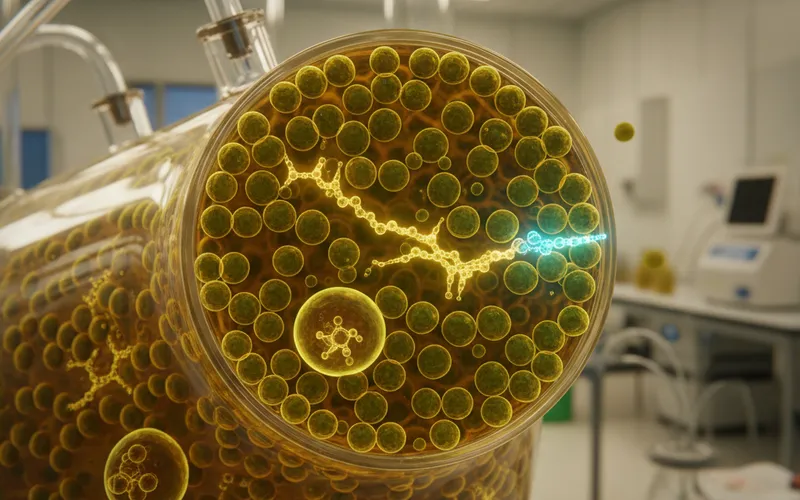
Stell dir vor, du könntest deinen Bedarf an wichtigen Omega-3-Fettsäuren decken, ohne auf Fisch oder Fischöl angewiesen zu sein. Für viele Menschen ist das eine attraktive Vorstellung – sei es aus ethischen Gründen, wegen Allergien oder aus Sorge um die Umwelt. Genau hier setzt eine faszinierende neue Forschungsarbeit an, die das Potenzial von Mikroalgen als nachhaltige Quelle für Eicosapentaensäure (EPA), eine der wertvollsten Omega-3-Fettsäuren, auf ein neues Level hebt.
Ein Team von Forschenden unter der Leitung von J. Zheng, Y. Liu und H. Ma aus China hat sich in ihrer Studie die Mikroalge Nannochloropsis oceanica vorgenommen. Diese winzigen Organismen sind bekannt dafür, hohe Mengen an Lipiden anzusammeln und auch EPA zu produzieren. Das Problem bisher: Die EPA-Produktion war durch einen Engpass in der Biosynthese begrenzt. Konkret ging es darum, dass C16-Fettsäuren nicht effizient genug in die längeren C18-Vorstufen umgewandelt wurden, die für die weitere Produktion von EPA notwendig sind.
Die Wissenschaftler identifizierten ein bestimmtes Enzym, die Fettsäure-Elongase namens NoELO2, als den entscheidenden Faktor für diesen Engpass. Sie zeigten, dass NoELO2 die Verlängerung von C16- zu C18-Fettsäuren katalysiert. Durch die gezielte Steigerung der Expression dieses Enzyms in den Mikroalgen konnten sie die EPA-Akkumulation signifikant erhöhen – und das, ohne das Algenwachstum zu beeinträchtigen. Das Ergebnis ist beeindruckend: Der EPA-Gehalt erreichte bis zu 66.1 mg pro Gramm Trockengewicht, was einer Steigerung von 49.2% entspricht. Dies ist der bisher höchste Wert, der in transgenen N. oceanica durch die Manipulation eines einzelnen endogenen Enzyms erzielt wurde.
Umgekehrt führte das Ausschalten des NoELO2-Gens zu einer Reduzierung der EPA-Spiegel und löste kompensatorische Veränderungen in anderen Elongase-Genen aus. Die Studie liefert damit nicht nur einen detaillierten Einblick in die Fettsäure-Flusskontrolle in Mikroalgen, sondern auch eine praktische Strategie für die biotechnologische Verbesserung der Omega-3-Fettsäureproduktion. Diese Erkenntnisse könnten wegweisend sein für die Entwicklung nachhaltiger und effizienter Methoden zur Gewinnung von EPA, was uns allen zugutekommen könnte.
Quelle: Zheng J, Liu Y, Liu Y, Mao H, Zhong Z, Li Y, Zhang CC, Han D, Liu J, Ma H (2026). Relieving an elongation bottleneck unlocks eicosapentaenoic acid biosynthesis in the industrial microalga Nannochloropsis oceanica. The Plant Journal, 125(5). PubMed-ID: 41770904
Was heisst das wirklich? – Die kritische Einordnung
Diese Studie liefert spannende Ergebnisse im Bereich der Biotechnologie, doch was bedeuten sie konkret für dich und deine Ernährung? Zunächst einmal ist es wichtig zu verstehen, dass hier Grundlagenforschung betrieben wurde. Die Forschenden haben einen Weg gefunden, die interne Maschinerie einer Mikroalge zu optimieren, um mehr EPA zu produzieren. Das ist ein grosser Schritt in Richtung einer effizienteren und nachhaltigeren Produktion von Omega-3-Fettsäuren.
Ein zentraler Punkt ist die Steigerung des EPA-Gehalts um fast 50%. Das ist statistisch signifikant und zeigt, dass die Manipulation des NoELO2-Enzyms einen starken Effekt hat. Für die industrielle Produktion ist das ein entscheidender Vorteil, da so mehr des gewünschten Produkts aus der gleichen Menge Biomasse gewonnen werden kann. Die Studie misst hier harte Endpunkte im Sinne der Bioengineering-Effizienz – nämlich die Menge an produziertem EPA pro Gramm Trockengewicht der Alge.
Die methodischen Stärken liegen in der präzisen Identifikation und Manipulation eines spezifischen Gens, dessen Funktion sowohl durch Überexpression als auch durch Knockout bestätigt wurde. Die heterologe Expression in Hefe und die subzelluläre Lokalisierung des Enzyms untermauern die mechanistischen Erkenntnisse. Die Studie ist sauber durchgeführt und die Ergebnisse sind klar.
Die Grenzen der Übertragbarkeit liegen jedoch darin, dass dies eine Laborstudie an Mikroalgen ist. Die Ergebnisse sagen nichts über die Bioverfügbarkeit oder Wirksamkeit dieses Algen-EPA im menschlichen Körper aus. Es ist ein Fortschritt in der Produktion, nicht in der menschlichen Physiologie oder Ernährungswissenschaft. Die Teilnehmer der Studie waren Mikroalgen, keine Menschen. Die Ergebnisse gelten also für die Algen, nicht direkt für dich.
Denkwerkzeug: Wenn du überlegst, ob diese Studie für deine Ernährung relevant ist, frag dich: Wie verändert eine höhere EPA-Produktion in Algen meine persönliche Omega-3-Versorgung, wenn diese Algen noch nicht als Lebensmittel oder Supplement auf dem Markt sind und meine individuelle Aufnahmefähigkeit unberücksichtigt bleibt?
Der Geist im Körper – Die psychophysiologische Perspektive
Gerade bei Nährstoffen wie Omega-3-Fettsäuren, die oft mit Gesundheitsvorteilen wie Entzündungshemmung, Herzgesundheit und Gehirnfunktion in Verbindung gebracht werden, spielt die psychophysiologische Interaktion eine enorme Rolle. Obwohl diese Studie sich auf die Algenproduktion konzentriert, können wir dennoch eine Brücke zu deinem Körper schlagen.
Stell dir vor, diese optimierten Algen würden zu einem Nahrungsergänzungsmittel verarbeitet. Allein die Erwartung, ein „hochwirksames“ oder „verbessertes“ Omega-3-Präparat einzunehmen, kann über den Placebo-Effekt bereits physiologische Veränderungen auslösen. Dein Glaube an die Wirksamkeit kann die Art und Weise beeinflussen, wie dein Körper Nährstoffe aufnimmt und verwertet, wie er auf Entzündungen reagiert oder wie du dich mental fühlst. Das ist keine Einbildung, sondern ein messbarer Effekt, bei dem das Gehirn über das Nerven- und Hormonsystem direkt in die Körperfunktionen eingreift.
Chronischer Stress, schlechter Schlaf oder eine negative Einstellung zur eigenen Gesundheit können die Aufnahme und Verwertung von Nährstoffen beeinträchtigen – selbst von den besten. Wenn dein Körper ständig im Alarmzustand ist, können entzündliche Prozesse verstärkt werden, die wiederum den Bedarf an entzündungshemmenden Omega-3-Fettsäuren erhöhen könnten. Eine optimale Versorgung mit EPA ist also nicht nur eine Frage der Zufuhr, sondern auch der inneren Balance.
Diese psychophysiologische Linse erinnert uns daran, dass selbst ein biotechnologischer Fortschritt wie dieser nur ein Puzzleteil ist. Der Körper ist kein separates Labor, das Nährstoffe isoliert verarbeitet. Deine mentale Verfassung, deine Überzeugungen und dein Stresslevel sind integrale Bestandteile deines Stoffwechsels und beeinflussen, wie gut du von solchen Fortschritten profitieren kannst.
Der grössere Kontext – Einordnung und Abhängigkeiten
Diese Studie ist ein kleines, aber wichtiges Puzzleteil in der grossen Welt der nachhaltigen Ernährung und der biotechnologischen Produktion. Sie steht im Kontext einer wachsenden Forschung, die nach Alternativen zu traditionellen Quellen von Omega-3-Fettsäuren sucht, insbesondere zu Fisch. Die Überfischung der Meere und die Belastung mit Schwermetallen und Mikroplastik machen Algen zu einer attraktiven Option.
Die Finanzierung der Studie erfolgte durch verschiedene chinesische Institutionen, darunter das Forschungszentrum für Kohlenstoffneutralität im Einzugsgebiet des Bildungsministeriums und die Chinesische Akademie der Wissenschaften. Dies deutet auf ein nationales Interesse an der Entwicklung nachhaltiger Biotechnologien hin. Interessenkonflikte werden im Abstract nicht explizit genannt, was in der Grundlagenforschung oft der Fall ist, da die direkte kommerzielle Verwertung noch weit entfernt sein kann.
Diese Studie bestätigt im Wesentlichen die Machbarkeit, die Produktion spezifischer Fettsäuren in Mikroalgen durch gezielte Genmanipulation zu steigern. Sie ist kein Ausreisser, sondern fügt sich nahtlos in die Bemühungen ein, Mikroorganismen als „zelluläre Fabriken“ für wertvolle Stoffe zu nutzen. Was nicht kontrolliert wurde – und auch nicht Ziel der Studie war – sind die Auswirkungen auf das gesamte Ökosystem der Alge, falls diese im grossen Massstab in offenen Systemen angebaut würden, oder die langfristigen Auswirkungen auf die menschliche Gesundheit beim Konsum dieser genetisch modifizierten Algenprodukte.
Denkwerkzeug: Bevor du dich von solchen Forschungsergebnissen zu schnellen Schlussfolgerungen verleiten lässt, frage dich: Wie passen diese neuen Erkenntnisse in das Gesamtbild der Omega-3-Versorgung und welche anderen Faktoren (Umwelt, Ethik, individuelle Bedürfnisse) sollten bei der Bewertung dieser Technologie noch berücksichtigt werden?
Was heisst das für dich? – Fazit und Alltagsrelevanz
Was kannst du nun aus dieser faszinierenden Studie über Algen und Omega-3 für deinen Alltag mitnehmen? Erstens: Die Wissenschaft macht grosse Fortschritte bei der Entwicklung nachhaltiger Alternativen zu herkömmlichen Nährstoffquellen. Die optimierte Produktion von EPA in Mikroalgen ist ein vielversprechender Schritt, um die Versorgung mit dieser wichtigen Fettsäure langfristig zu sichern, insbesondere für Menschen, die keinen Fisch essen.
Zweitens: Auch wenn diese Studie ein biotechnologischer Erfolg ist, bedeutet das nicht, dass du morgen sofort ein neues, super-effizientes Algenprodukt kaufen kannst. Es braucht Zeit, bis solche Forschungsergebnisse in kommerzielle Produkte überführt werden, inklusive weiterer Tests zur Sicherheit und Wirksamkeit beim Menschen. Bis dahin bleiben Fisch und hochwertige Algenöle aus nicht-gentechnisch veränderten Quellen die relevantesten Optionen für deine EPA-Versorgung.
Drittens – und das ist ein zentraler Gedanke aus psychophysiologischer Sicht: Dein Körper ist keine Maschine, die einfach nur mit den richtigen Nährstoffen befüllt werden muss. Wie gut du die zugeführten Omega-3-Fettsäuren verwerten kannst, hängt auch stark von deinem allgemeinen Gesundheitszustand, deinem Stresslevel und deiner mentalen Einstellung ab. Achte auf eine ausgewogene Lebensweise, ausreichend Schlaf und gute Stressbewältigung, denn sie sind ebenso wichtig für die Wirkung von Nährstoffen wie die Nährstoffe selbst.
Was solltest du aus dieser Studie nicht schliessen? Du solltest nicht annehmen, dass deine aktuelle Omega-3-Versorgung unzureichend ist oder dass du auf ein vermeintliches Wundermittel warten musst. Dein Körper hat erstaunliche Anpassungsfähigkeiten. Höre auf ihn, beobachte, wie du dich fühlst, und konsultiere bei Bedarf Fachpersonen für eine individuelle Diagnostik, um deinen tatsächlichen Bedarf zu ermitteln.
Diese Forschung ist besonders relevant für Menschen, die sich vegan oder vegetarisch ernähren und nach zuverlässigen EPA-Quellen suchen, sowie für die Lebensmittelindustrie, die an nachhaltigen und ethisch vertretbaren Inhaltsstoffen interessiert ist. Für alle anderen ist es eine spannende Zukunftsperspektive, die zeigt, wie weit die Biotechnologie gekommen ist, um unsere Ernährung sicherer und nachhaltiger zu machen.
Letztlich zeigt uns diese Studie, dass die Natur – selbst in ihren kleinsten Vertretern wie Mikroalgen – ein unglaubliches Potenzial birgt. Und es liegt an uns, dieses Potenzial verantwortungsvoll zu nutzen, immer im Bewusstsein, dass der Mensch ein komplexes System aus Körper und Geist ist, das weit über die Summe seiner einzelnen Nährstoffe hinausgeht.
Wissenschaftliche Quelle
The Plant journal : for cell and molecular biology