Seltene Infektion im Mund: Wenn systemische Schwäche die Tür öffnet
Eine seltene parasitäre Infektion, Myiasis, tritt normalerweise in tropischen Gebieten auf. Ein aktueller Fallbericht aus der Türkei zeigt jedoch, wie eine Kombination aus schwerwiegenden Vorerkrankungen selbst in nichttropischen Regionen die Tür für solche ungewöhnlichen Leiden öffnen kann. Erfahre, was dieser Fall über die Bedeutung ganzheitlicher Gesundheit lehrt.
1. Die Studie – Was wurde untersucht und warum betrifft dich das?
Stell dir vor, du liegst im Krankenhaus, schwer krank, und plötzlich entdecken die Ärzte eine Infektion, die du eher in einem Dschungelfilm als in einem modernen Spital vermuten würdest. Genau das ist einem Patienten in der Türkei passiert, und es ist ein eindringliches Beispiel dafür, wie unser Körper unter extremen Bedingungen auf unerwartete Weise verwundbar werden kann.
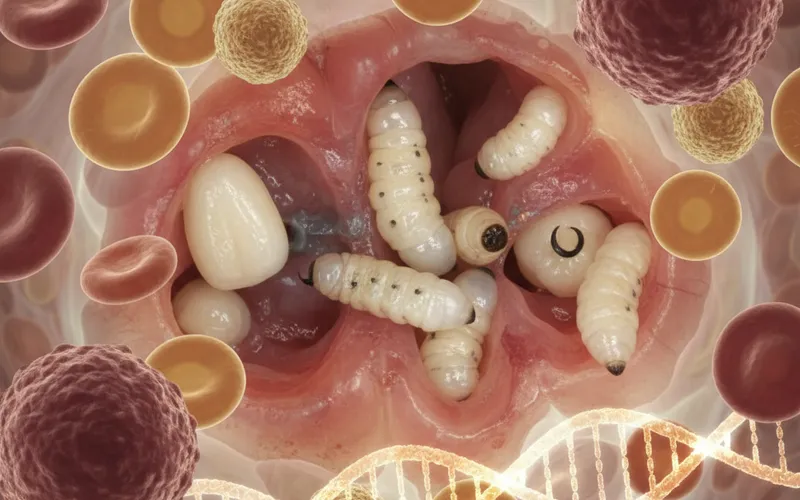
Ein Team von Ärztinnen und Ärzten um Kayıkc GK vom Kastamonu Training and Research Hospital hat einen ungewöhnlichen Fall von oraler Myiasis – einer parasitären Infektion durch Fliegenlarven – in einer nichttropischen Region dokumentiert. Veröffentlicht wurde dieser Fallbericht im Revista do Instituto de Medicina Tropical de Sao Paulo. Die zentrale Frage, die dieser Fall aufwirft, ist: Wie kann eine solche Infektion, die typischerweise in warmen, feuchten Klimazonen vorkommt, in einer Region wie der Türkei entstehen, und welche Rolle spielen dabei die Vorerkrankungen des Patienten?
Myiasis ist eine parasitäre Erkrankung, die durch die Larven von Fliegen (Diptera) verursacht wird, welche sich in menschliches oder tierisches Gewebe einnisten. Im Mundbereich ist dies bei gesunden Menschen äusserst selten. Meistens legen erwachsene Fliegen ihre Eier oder Larven in der Nähe des Mundes oder auf offene Wunden ab. Bekannte Risikofaktoren sind Mangelernährung, Immunschwäche, mangelnde Mundhygiene, Zahnprobleme, neurologische oder psychiatrische Erkrankungen und Alkoholismus.
Der Fall betraf einen Patienten mit einer Vielzahl von schwerwiegenden Vorerkrankungen, darunter Lungenkarzinom, Leberzirrhose, Kachexie (extreme Auszehrung), Parkinson-Krankheit und neurologische Dysfunktion. Der Patient wurde wegen Verwirrtheit, Atemversagen und Sepsis auf die Intensivstation eingeliefert und intubiert. Dort wurde die orale Myiasis entdeckt. Aufgrund der zahlreichen Komorbiditäten des Patienten konnte das üblicherweise eingesetzte Medikament Ivermectin nicht verabreicht werden. Stattdessen wurde ein konservativer Ansatz gewählt: Tägliche Reinigung mit verdünntem Wasserstoffperoxid und Povidon-Jod sowie die mechanische Entfernung der Larven. Innerhalb von drei Tagen war die Infektion vollständig beseitigt.
Dieser Fallbericht unterstreicht, dass orale Myiasis auch in nichttropischen Umgebungen auftreten kann, wenn eine «systemische Vulnerabilität» vorliegt. Er hebt die Bedeutung regelmässiger Munduntersuchungen und Mundpflege bei Hochrisikopatienten hervor.
Quelle: Kayıkc GK, Yılmaz A, Arabacı F, Demir HAY, Özsoy M (2026). A rare case of oral myiasis in a non-tropical region: the role of systemic vulnerability. Rev Inst Med Trop Sao Paulo, 68:e26. PubMed-ID: 41849552
2. Was heisst das wirklich? – Die kritische Einordnung
Dieser Fallbericht ist, wie der Name schon sagt, die Beschreibung eines einzelnen Falles. Das bedeutet, er liefert uns keine statistisch signifikanten Daten über die Häufigkeit oder allgemeine Risikofaktoren, sondern eine detaillierte Momentaufnahme eines aussergewöhnlichen Ereignisses. Die Stärke eines Fallberichts liegt genau darin: Er kann auf seltene Phänomene aufmerksam machen, die in grossen Studien übersehen würden, und Hypothesen für weitere Forschung generieren. Er zeigt uns eine Möglichkeit auf, die wir sonst vielleicht nicht in Betracht ziehen würden.
Wenn wir von «systemischer Vulnerabilität» sprechen, ist es wichtig zu verstehen, dass dies weit über eine einzelne Krankheit hinausgeht. Hier geht es um eine Kaskade von gesundheitlichen Problemen, die sich gegenseitig verstärken und den Körper in einen Zustand extremer Schwäche versetzen. Lungenkrebs, Leberzirrhose, Parkinson, Kachexie – jede dieser Diagnosen allein ist eine enorme Belastung für den Organismus. In Kombination führten sie zu einer Immunschwäche und einer allgemeinen körperlichen Abwehrschwäche, die es den Fliegenlarven ermöglichte, sich im Mundraum anzusiedeln und zu entwickeln.
Was wurde in diesem Fall wirklich gemessen? Hier geht es nicht um quantitative Messungen im üblichen Sinne, sondern um die Beobachtung und Dokumentation eines klinischen Phänomens. Die «Ergebnisse» sind die Beschreibung der Infektion und der erfolgreichen Behandlung. Es wurden keine standardisierten Laborwerte oder Biomarker erhoben, um beispielsweise die Immunantwort auf die Infektion detailliert zu verfolgen, was aber für einen Fallbericht auch nicht die primäre Zielsetzung ist.
Die Methodik war hier die sorgfältige Beobachtung und Dokumentation des klinischen Verlaufs. Die Stärke liegt in der detaillierten Beschreibung der Vorerkrankungen und der Behandlung. Eine Grenze ist natürlich, dass aus einem Einzelfall keine allgemeinen Schlüsse gezogen werden können, wie häufig Myiasis bei ähnlichen Patienten in nichttropischen Regionen auftritt. Die Ergebnisse gelten für einen Patienten mit einer extrem komplexen und schweren Krankengeschichte. Du musst dich also nicht sorgen, dass du bei deiner nächsten Grippe sofort Fliegenlarven im Mund hast.
Denkwerkzeug: Wenn du von einer seltenen Krankheit oder einem ungewöhnlichen Symptom hörst, frage dich: Wie viele Faktoren müssten zusammenkommen, damit etwas so Aussergewöhnliches passiert? Bin ich persönlich von diesen Faktoren betroffen?
3. Der Geist im Körper – Die psychophysiologische Perspektive
Dieser Fallbericht ist ein dramatisches Beispiel dafür, wie eng Psyche und Körper miteinander verbunden sind – auch wenn die Studie dies nicht explizit thematisiert. Eine Person, die an Lungenkrebs, Leberzirrhose und Parkinson leidet, ist nicht nur physisch am Ende ihrer Kräfte. Die psychische Belastung, der chronische Stress, die Angst und die Verzweiflung, die mit solchen Diagnosen einhergehen, sind immens. Dieses psychische Leid wirkt sich direkt auf die physiologischen Funktionen aus.
Chronischer Stress und emotionale Belastung sind bekannte Immunsuppressiva. Sie führen zu einer erhöhten Ausschüttung von Stresshormonen wie Cortisol, die langfristig die Funktion des Immunsystems beeinträchtigen können. Ein geschwächtes Immunsystem macht den Körper anfälliger für Infektionen aller Art – auch für solche, die unter normalen Umständen keine Chance hätten. Die neurologische Dysfunktion, die in der Studie erwähnt wird, könnte auch die Fähigkeit zur Selbstpflege – einschliesslich Mundhygiene – stark eingeschränkt haben, was wiederum ein direkter psychophysischer Link ist.
Die Kachexie, also die extreme Auszehrung, ist ebenfalls nicht nur ein rein körperliches Phänomen. Sie ist oft begleitet von Appetitlosigkeit, Depression und einem tiefgreifenden Mangel an Lebensenergie. All diese Faktoren tragen dazu bei, dass der Körper nicht mehr die Ressourcen hat, sich effektiv zu verteidigen. Die Psychophysiologie lehrt uns, dass jeder physische Zustand eine psychische Komponente hat und umgekehrt. Das komplexe Zusammenspiel dieser Faktoren schafft eine Umgebung im Körper, die für die Ansiedlung von Parasiten empfänglich wird, selbst wenn die äusseren Bedingungen (nichttropische Region) ungünstig erscheinen.
Es ist gut denkbar, dass der Patient aufgrund seiner neurologischen Erkrankung (Parkinson) und seiner allgemeinen Schwäche auch motorisch eingeschränkt war und sich nicht mehr adäquat um seine Mundhygiene kümmern konnte. Das Bewusstsein für Schmerz oder Unbehagen könnte ebenfalls reduziert gewesen sein. All dies sind psychophysiologische Aspekte, die in der Summe die «systemische Vulnerabilität» erst vollends erklären.
4. Der grössere Kontext – Einordnung und Abhängigkeiten
Dieser Fallbericht stammt von einem Forschungsteam aus der Türkei und wurde in einem Journal für Tropenmedizin veröffentlicht – was die Seltenheit und den ungewöhnlichen Kontext des Falles unterstreicht. Die Autoren deklarierten keine Interessenkonflikte, was die Glaubwürdigkeit der rein deskriptiven Darstellung stärkt.
Der Fall bestätigt, was in der Medizin schon lange bekannt ist: Ein stark geschwächter Organismus ist anfälliger für opportunistische Infektionen. Er widerspricht jedoch der landläufigen Meinung, dass Myiasis ausschliesslich in tropischen Gebieten vorkommt. Er zeigt, dass unter bestimmten Umständen – nämlich einer extremen systemischen Schwächung – auch in moderaten Klimazonen solche Infektionen auftreten können. Es ist ein Puzzleteil, das unser Verständnis der Ausbreitung von Infektionen erweitert und uns daran erinnert, dass die Grenzen der Geografie durch die Grenzen der Physiologie verschoben werden können.
Was in dieser Studie nicht direkt kontrolliert wurde, sind die spezifischen Umweltbedingungen, die zur Eiablage der Fliege führten. War es eine besonders warme Periode? Gab es lokale Vorkommen von Fliegenarten, die normalerweise nicht mit Myiasis in Verbindung gebracht werden? Auch der genaue psychische Zustand des Patienten – seine Schmerzempfindung, sein Bewusstsein für die eigene Situation – konnte in dieser akuten Phase wahrscheinlich nicht umfassend erfasst werden, obwohl er für die Entstehung und das Management der Infektion von Bedeutung gewesen wäre.
Denkwerkzeug: Wenn du über die geografische Verbreitung einer Krankheit liest, frage dich: Welche Faktoren (Klima, Hygiene, Gesundheitsversorgung, soziale Bedingungen) machen diese Krankheit dort typisch? Könnten extreme individuelle Umstände diese Faktoren auch anderswo nachahmen?
5. Was heisst das für dich? – Fazit und Alltagsrelevanz
Dieser seltene Fall von oraler Myiasis ist für dich als gesunden Menschen wahrscheinlich keine direkte Bedrohung. Aber er enthält wichtige Lehren, die weit über die reine Infektionslehre hinausgehen und die Bedeutung eines ganzheitlichen Gesundheitsverständnisses unterstreichen.
- Die Macht der Resilienz: Dein Körper ist ein Wunderwerk der Abwehr. Solange du einigermassen gesund bist, dein Immunsystem intakt ist und du dich gut um dich kümmerst, sind solche exotischen Infektionen äusserst unwahrscheinlich. Dieser Fall zeigt im Umkehrschluss, wie stark unser Körper sein muss, um uns tagtäglich vor unzähligen Bedrohungen zu schützen.
- Ganzheitliche Pflege ist entscheidend: Für Menschen mit schwerwiegenden Vorerkrankungen – insbesondere solche, die bettlägerig sind, neurologische Einschränkungen haben oder unter Mangelernährung leiden – ist eine akribische und regelmässige Mundpflege lebenswichtig. Dieser Fall unterstreicht, dass selbst scheinbar banale Dinge wie Mundhygiene zu einem kritischen Faktor werden können, wenn der Körper in seiner Gesamtheit geschwächt ist.
- Achte auf die subtilen Zeichen: Auch wenn du nicht an Myiasis erkranken wirst, erinnert dieser Fall daran, wie schnell sich eine Abwärtsspirale entwickeln kann, wenn mehrere gesundheitliche Probleme zusammenkommen. Achte auf die Zeichen deines Körpers und deiner Psyche. Chronischer Stress, schlechte Ernährung, Schlafmangel – all das sind Faktoren, die deine «systemische Vulnerabilität» erhöhen können, auch wenn sie nicht gleich zu Fliegenlarven führen.
Was du aus diesem Fall nicht schliessen solltest, ist, dass du jetzt ständig Angst vor exotischen Parasiten haben musst. Die Wahrscheinlichkeit, dass dir das passiert, ist verschwindend gering. Es ist kein Grund für Panik, sondern ein Anlass zur Reflexion über die Komplexität des menschlichen Körpers und die Notwendigkeit, ihn ganzheitlich zu betrachten.
Dieser Fall ist besonders relevant für alle, die in der Pflege arbeiten oder sich um kranke Angehörige kümmern. Er ist eine Mahnung, dass selbst in scheinbar sicheren Umgebungen die Aufmerksamkeit für Details und die ganzheitliche Betrachtung des Patienten entscheidend sind.
Der psychophysiologische Gedanke zum Schluss: Dein Körper reagiert nicht nur auf das, was du isst oder wie du dich bewegst – sondern auch auf das, was du denkst und fühlst. Ein extrem geschwächter Körper, überlastet von Krankheit und möglicherweise auch von psychischem Leid, ist ein offenes Tor für das Unerwartete. Die grösste Takeaway-Botschaft ist die Wertschätzung für die unglaubliche Resilienz, die dein Körper im Normalfall besitzt, und die Erkenntnis, dass Gesundheit immer ein Zusammenspiel von Körper und Geist ist.
Welche Fragen bleiben offen? Wie können wir die psychische Belastung bei schwer kranken Menschen besser auffangen, um ihre physiologische Resilienz zu stärken? Und welche spezifischen Umweltfaktoren begünstigen in solchen nichttropischen Settings das Auftreten von Myiasis? Die Forschung wird uns hoffentlich weitere Antworten liefern.
Bleib aufmerksam, sei achtsam mit dir und deinem Körper, und schätze die erstaunliche Fähigkeit deines Organismus, dich Tag für Tag zu schützen.
Wissenschaftliche Quelle
Revista do Instituto de Medicina Tropical de Sao Paulo