Darmbakterien und deine Körpertemperatur: Eine überraschende Verbindung
Wissenschaftler entdecken, wie unsere Darmmikrobiota die Körpertemperatur und Leistungsfähigkeit beeinflusst. Was bedeutet das für dich und deine Gesundheit?
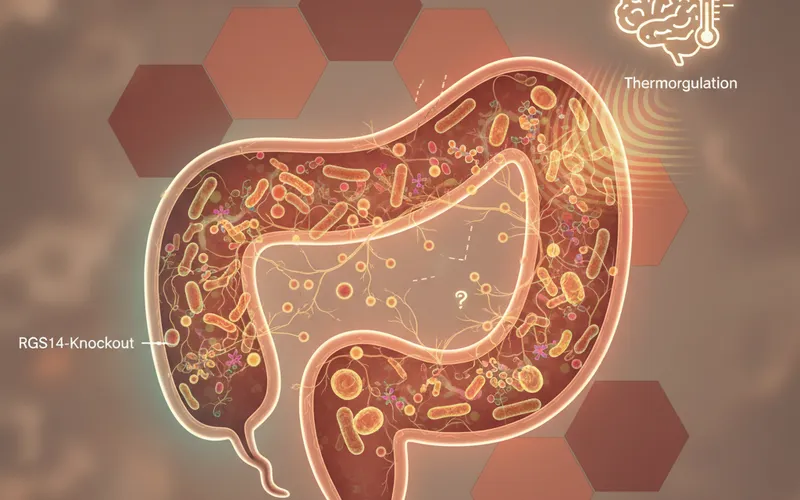
Die Studie – Was wurde untersucht und warum betrifft dich das?
Stell dir vor, du bist topfit, trainierst regelmässig, achtest auf deine Ernährung – und doch fühlst du dich manchmal, als würde dir die nötige Energie fehlen oder deine Körpertemperatur spielt verrückt. Könnte es sein, dass die winzigen Bewohner deines Darms hier eine Rolle spielen? Eine faszinierende neue Studie der Rutgers University in den USA hat genau das untersucht und eine überraschende Verbindung zwischen unserer Darmmikrobiota, dem Stoffwechsel und der Thermoregulation aufgedeckt.
Die Forscher um Longoria, DeSio und ihre Kollegen konzentrierten sich auf Mäuse, denen ein bestimmtes Gen, das RGS14-Gen, fehlte (sogenannte RGS14 KO Mäuse). Dieses Gen spielt eine Rolle bei der Regulierung von G-Protein-Signalwegen, die wiederum an vielen zellulären Prozessen beteiligt sind. Interessanterweise zeigten diese RGS14 KO Mäuse eine erhöhte Trainingskapazität – sie waren also leistungsfähiger als ihre Artgenossen mit intaktem RGS14-Gen. Doch die Studie enthüllte, dass diese erhöhte Leistungsfähigkeit mit einer gestörten Darmmikrobiota Hand in Hand ging.
Die zentrale Fragestellung der Studie war: Wie beeinflusst die Veränderung der Darmmikrobiota bei diesen RGS14 KO Mäusen den Stoffwechsel und die Fähigkeit, körperliche Leistung zu erbringen? Und welche Rolle spielt dabei die Körpertemperatur? Die Wissenschaftler wollten verstehen, ob und wie die Zusammensetzung der Darmbakterien nicht nur die Energiebereitstellung, sondern auch grundlegende physiologische Funktionen wie die Temperaturregulation steuert.
Dafür untersuchten sie verschiedene Aspekte: Sie analysierten das Metabolom (die Gesamtheit aller Stoffwechselprodukte) der Mäuse, die Zusammensetzung ihrer Darmmikrobiota und ihre körperliche Leistungsfähigkeit. Ein besonderes Augenmerk lag auf der Thermoregulation, also der Fähigkeit des Körpers, seine Temperatur konstant zu halten. Sie stellten fest, dass die gestörte Darmmikrobiota der RGS14 KO Mäuse nicht nur das Metabolom veränderte, sondern auch zu einer verringerten Fähigkeit führte, ihre Körpertemperatur bei Belastung zu regulieren, was wiederum ihre eigentlich erhöhte Trainingskapazität reduzierte.
Die Stichprobe umfasste genetisch modifizierte Mäuse (RGS14 KO) und eine Kontrollgruppe. Das Studiendesign war experimentell und vergleichend, was einen direkten Zusammenhang zwischen den genetischen Veränderungen, der Darmmikrobiota und den physiologischen Auswirkungen nahelegt.
Quelle: Longoria CR, DeSio DD, Oydanich M, Su X, Chiles EN, Kerkhof LJ, Ibironke O, Häggblom MM, Wages NP, Guers JJ, Vatner DE, Vatner SF, Campbell SC (2026). Disruption of the gut microbiota in regulator of G protein signaling 14 knockout (RGS14 KO) mice alters the metabolome and reduces enhanced exercise capacity. European journal of applied physiology. PubMed-ID: 41831055
Was heisst das wirklich? – Die kritische Einordnung
Die Ergebnisse dieser Studie sind spannend, doch lass uns sie genauer unter die Lupe nehmen. Du bist einzigartig, und was für Mäuse gilt, lässt sich nicht eins zu eins auf dich übertragen. Dennoch liefert die Forschung wertvolle Hinweise, die zum Nachdenken anregen.
Die Studie zeigt klar, dass eine gestörte Darmmikrobiota bei RGS14 KO Mäusen das Metabolom verändert und die eigentlich verbesserte Trainingskapazität reduziert, insbesondere durch eine beeinträchtigte Thermoregulation. Dies ist ein „harter“ Endpunkt im Sinne von messbaren physiologischen Veränderungen. Die statistische Signifikanz der Ergebnisse ist gegeben, was bedeutet, dass die beobachteten Effekte wahrscheinlich nicht zufällig sind. Aber was heisst das für dich? Eine „signifikante“ Veränderung im Mausmodell ist nicht zwingend „klinisch bedeutsam“ für den Menschen.
Die methodische Stärke liegt in der genauen Analyse der Darmmikrobiota und des Metaboloms, was tiefe Einblicke in die biochemischen Prozesse ermöglicht. Die Forscher konnten spezifische Veränderungen in der mikrobiellen Zusammensetzung und bei den Stoffwechselprodukten identifizieren. Die Grenzen der Studie sind offensichtlich: Es handelt sich um ein Tiermodell. Mäuse sind keine Menschen. Ihr Stoffwechsel, ihre Lebensweise und ihre Reaktionen auf Umweltfaktoren unterscheiden sich von unseren. Zudem wurde ein spezifisches genetisches Modell verwendet, dessen Relevanz für die allgemeine menschliche Bevölkerung noch geklärt werden muss.
Für wen gelten die Ergebnisse? Primär für die untersuchten Mäuse. Die Übertragbarkeit auf den Menschen ist eine Hypothese, die weitere Forschung erfordert. Es ist jedoch ein starker Hinweis darauf, dass das Mikrobiom eine weitreichendere Rolle spielt, als wir oft annehmen.
Denkwerkzeug: Stell dir die Frage: Wenn meine Darmbakterien meine Leistungsfähigkeit und sogar meine Körpertemperatur beeinflussen können – welche Rolle spielen sie dann noch bei anderen Aspekten meiner Gesundheit, die ich bisher nicht damit in Verbindung gebracht habe?
Der Geist im Körper – Die psychophysiologische Perspektive
Hier wird es besonders interessant, denn diese Studie berührt das Herzstück des psychophysiologischen Interaktionsmodells. Wenn die Darmmikrobiota – und damit unsere Ernährung und Lebensweise – die Thermoregulation und Leistungsfähigkeit beeinflusst, welche Rolle spielen dann Stress, Erwartungen und unsere psychische Verfassung?
Wir wissen, dass chronischer Stress die Zusammensetzung der Darmmikrobiota massiv beeinflussen kann. Eine gestörte Darm-Hirn-Achse kann zu Entzündungen im Darm führen, die wiederum den gesamten Stoffwechsel beeinflussen. Es ist gut denkbar, dass ein hohes Stresslevel nicht nur direkt unsere Leistungsfähigkeit mindert, sondern auch indirekt über eine Veränderung der Darmbakterien. Wenn du unter konstantem Druck stehst, kann das deine Verdauung durcheinanderbringen, was sich wiederum auf die Aufnahme von Nährstoffen und die Produktion von Stoffwechselprodukten auswirkt, die für Energie und Thermoregulation wichtig sind.
Stell dir vor, du bist vor einem wichtigen Wettkampf oder einer Prüfung extrem nervös. Dein Körper reagiert mit erhöhtem Cortisol, dein Darm rebelliert vielleicht. Könnte diese psychische Belastung über die Darmbakterien auch deine Fähigkeit beeinträchtigen, deine Körpertemperatur optimal zu halten oder deine maximale Leistung abzurufen? Die Studie liefert zwar keine direkten Beweise dafür, doch sie öffnet die Tür für diese Überlegung. Die Erwartungshaltung, wie gut man performen wird, kann sich sowohl positiv (Placebo-Effekt) als auch negativ (Nocebo-Effekt) auswirken. Und diese Effekte werden oft von physiologischen Veränderungen begleitet, die auch die Darmflora beeinflussen könnten.
Der Hawthorne-Effekt, bei dem Menschen ihr Verhalten ändern, weil sie wissen, dass sie beobachtet werden, ist hier ebenfalls relevant. Auch wenn die Mäuse nicht wussten, dass sie beobachtet wurden, so ist doch die Umgebung, in der sie leben, und der Umgang mit ihnen nicht zu unterschätzen. Jede Interaktion, jeder Stressor, selbst auf subtiler Ebene, kann die physiologischen Reaktionen beeinflussen.
Der grössere Kontext – Einordnung und Abhängigkeiten
Diese Studie ist ein weiteres wichtiges Puzzleteil in der immer komplexer werdenden Forschung zur Darmmikrobiota. Sie bestätigt und erweitert die wachsende Erkenntnis, dass unsere Darmbakterien weit mehr sind als nur Verdauungshelfer. Sie sind ein wichtiger Regulator für unseren gesamten Körperhaushalt, einschliesslich Energiebereitstellung und Temperaturregulation.
Die Studie wurde von Forschern der Rutgers University durchgeführt und in einem renommierten Journal für angewandte Physiologie publiziert. Ein wichtiger Punkt, der die Glaubwürdigkeit stärkt: Die Autoren deklarierten keine Interessenkonflikte und die Experimente wurden unter Einhaltung ethischer Richtlinien für Tierversuche durchgeführt und genehmigt. Das ist ein gutes Zeichen für unabhängige und sorgfältige Forschung.
Diese Erkenntnis reiht sich ein in eine Vielzahl von Studien, die den Einfluss des Mikrobioms auf unterschiedlichste Körperfunktionen beleuchten – von der Immunabwehr über die Hirnfunktion bis hin zum Stoffwechsel. Die Neuheit hier ist die direkte Verbindung zur Thermoregulation und zur körperlichen Leistungsfähigkeit. Bisher wurde dieser Aspekt weniger stark beleuchtet.
Was wurde nicht kontrolliert? Wie bei jeder Tierstudie bleibt die Frage offen, welche Rolle Umweltfaktoren, die in einem Labor nicht exakt repliziert werden können, bei Menschen spielen würden. Ernährung, Stress, Schlaf und die individuelle Genetik sind alles Faktoren, die auch bei den Mäusen nicht bis ins letzte Detail kontrolliert werden konnten und die Ergebnisse beeinflusst haben könnten.
Denkwerkzeug: Überlege dir: Wenn eine einzelne Studie bei Mäusen solche weitreichenden Zusammenhänge aufzeigt, wie viele andere unkontrollierte Lebensstilfaktoren könnten dann meine eigene Gesundheit beeinflussen, von denen ich noch gar nichts weiss?
Was heisst das für dich? – Fazit und Alltagsrelevanz
Was kannst du nun aus dieser Mausstudie für dein eigenes Leben mitnehmen? Auch wenn direkte Übertragungen auf den Menschen immer mit Vorsicht zu geniessen sind, gibt es doch einige wertvolle Erkenntnisse:
- Achte auf deine Darmgesundheit: Diese Studie unterstreicht einmal mehr die zentrale Rolle der Darmmikrobiota für den gesamten Körper. Eine vielfältige und gesunde Darmflora ist entscheidend für deinen Stoffwechsel, deine Energie und möglicherweise sogar für deine Fähigkeit, deine Körpertemperatur zu regulieren. Eine Ernährung reich an Ballaststoffen, fermentierten Lebensmitteln und wenig verarbeiteten Produkten ist hier der Schlüssel.
- Dein Darm beeinflusst deine Leistung: Wenn du Sport treibst oder körperlich aktiv bist, denk daran, dass deine Darmbakterien deine Leistungsfähigkeit mitbestimmen können. Eine gestörte Darmflora könnte ein bisher unterschätzter Faktor sein, wenn du das Gefühl hast, dass deine Trainingsergebnisse stagnieren oder du dich nicht optimal erholst.
- Die Ganzheitlichkeit zählt: Deine Gesundheit ist ein komplexes Zusammenspiel. Diese Studie zeigt, wie eng scheinbar unabhängige Systeme wie Darmflora, Stoffwechsel und Thermoregulation miteinander verbunden sind. Es ist ein Plädoyer für einen ganzheitlichen Ansatz, bei dem du nicht nur auf einzelne Symptome schaust, sondern den Körper als Einheit verstehst.
Was solltest du NICHT daraus schliessen? Bitte fang jetzt nicht an, deine Körpertemperatur zwanghaft zu überwachen oder dir Sorgen zu machen, dass deine Darmbakterien deine gesamte körperliche Leistung ruinieren. Diese Studie ist ein Mosaikstein, kein vollständiges Bild. Sie ist ein Hinweis, kein Grund zur Panik oder für radikale Ernährungsumstellungen. Experimentiere mit deiner Ernährung und Lebensweise, aber höre immer auf deinen Körper und sei geduldig.
Diese Erkenntnisse sind besonders relevant für Sportler und Menschen, die ihre körperliche Leistungsfähigkeit optimieren möchten, aber auch für jeden, der generell an seiner Gesundheit interessiert ist. Für wen es weniger relevant ist? Wenn du dich gesund und fit fühlst und keine Beschwerden hast, gibt es keinen Grund, dich von dieser Studie beunruhigen zu lassen.
Der psychophysiologische Gedanke zum Schluss bleibt: Dein Körper reagiert nicht nur auf das, was du isst und wie du dich bewegst, sondern auch auf das, was du denkst und fühlst. Stress und psychische Verfassung können deine Darmbakterien und damit indirekt auch deine Leistungsfähigkeit und Thermoregulation beeinflussen. Es ist eine ständige Wechselwirkung, bei der Geist und Körper untrennbar verbunden sind.
Welche Fragen bleiben offen? Wie genau interagiert das RGS14-Gen mit der Darmmikrobiota? Und vor allem: Lassen sich diese Erkenntnisse auf den Menschen übertragen? Diese Fragen laden zu weiterer Forschung ein und erinnern uns daran, dass das Wissen über unseren Körper ein unendliches Feld ist. Bleib neugierig und achte auf die Signale deines Körpers – er ist ein Wunderwerk.