Darm und Augen: Wie Darmentzündungen die Netzhaut beeinflussen
Eine neue Studie enthüllt eine überraschende Verbindung zwischen Darmgesundheit und Augengesundheit. Entzündungen im Darm könnten die Fettsäurezusammensetzung der Netzhaut verändern – ein wichtiger Hinweis für die Prävention von Augenerkrankungen. Erfahre, was das für dich bedeutet.
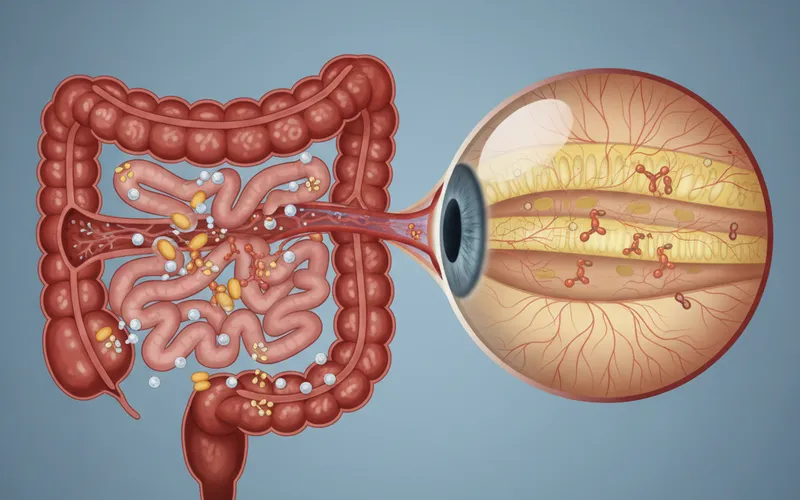
1. Die Studie – Was wurde untersucht und warum betrifft dich das?
Stell dir vor, dein Darm, dieses komplexe Ökosystem in deiner Körpermitte, könnte direkten Einfluss darauf nehmen, wie scharf du siehst. Klingt weit hergeholt? Eine aktuelle Studie, die bald im renommierten Journal Experimental Eye Research erscheinen wird, liefert spannende Hinweise genau darauf. Sie zeigt, dass Entzündungen im Darm die Fettsäurezusammensetzung deiner Netzhaut – jenes hochsensiblen Gewebes am Augenhintergrund, das Licht in elektrische Signale umwandelt – beeinflussen können.
Das Team um P. Lapaquette und M. Bringer von der Université Bourgogne Europe in Frankreich hat sich dieser faszinierenden Verbindung gewidmet. Der Hintergrund ist nicht neu: Es gibt immer mehr Belege dafür, dass chronische Darmerkrankungen wie Morbus Crohn oder Colitis ulcerosa mit einem erhöhten Risiko für altersbedingte Makuladegeneration (AMD) einhergehen können. AMD ist eine der häufigsten Ursachen für Sehverlust im Alter, und Entzündungen sowie ein gestörter Fettstoffwechsel – insbesondere bei den Omega-3-Fettsäuren – spielen dabei eine zentrale Rolle.
Die Forschenden haben ein Tiermodell genutzt, um diese Zusammenhänge genauer zu untersuchen. Sie induzierten bei Mäusen eine Darmentzündung (Colitis) mithilfe von Dextransulfat-Natrium (DSS) und verglichen die Netzhaut dieser Mäuse mit der von gesunden Kontrolltieren. Ihre zentrale Frage war: Verändert eine Darmentzündung die Fettsäureprofile in der Netzhaut, selbst wenn die Netzhaut selbst keine Entzündungszeichen zeigt?
Die Ergebnisse sind bemerkenswert: In der Netzhaut der Mäuse mit Darmentzündung fanden die Wissenschaftler signifikant höhere Mengen an mehrfach ungesättigten Fettsäuren (PUFAs) und gleichzeitig weniger gesättigte Fettsäuren. Sowohl Omega-6- (wie Arachidonsäure, C20:4n-6) als auch Omega-3-PUFAs (wie Docosahexaensäure, C22:6n-3), die für die Sehkraft entscheidend sind, waren betroffen. Interessanterweise blieb das Verhältnis von Omega-6 zu Omega-3 unverändert. Bei der Analyse der Genexpression, die an der Fettsäuresynthese beteiligt ist, zeigte sich eine Tendenz zur Abnahme von Fasn und eine signifikante Reduktion von Fads2 in der Netzhaut der DSS-behandelten Mäuse. Erstaunlicherweise fanden die Forschenden keine erhöhte Expression von entzündungsfördernden Zytokinen (wie Il1b, Il6, Il8 und Tnfa) in der Netzhaut, was darauf hindeutet, dass die Netzhautzellen selbst nicht entzündet waren, obwohl sich ihre Fettsäurezusammensetzung verändert hatte.
Diese Erkenntnisse deuten darauf hin, dass die Darmgesundheit die retinale Verfügbarkeit von Fettsäuren beeinflusst, selbst wenn keine direkte Entzündung im Auge vorliegt. Das ist ein wichtiger Mosaikstein, um die komplexe Verbindung zwischen Darmerkrankungen und Augengesundheit besser zu verstehen.
Quelle: Lapaquette P, Loriot B, Grégoire S, Courcet E, Acar N, Bringer MA (2026). Gut inflammation affects retinal fatty acid composition. Experimental eye research, 267. PubMed-ID: 41759572
2. Was heisst das wirklich? – Die kritische Einordnung
Die Studie liefert faszinierende Einblicke in die Darm-Auge-Achse, aber wie ordnen wir diese Ergebnisse ein? Zunächst einmal ist es wichtig zu verstehen, dass es sich um eine präklinische Studie an Mäusen handelt. Während Tiermodelle wertvolle Erkenntnisse liefern und oft der erste Schritt in der Forschung sind, können wir die Ergebnisse nicht direkt auf den Menschen übertragen. Der menschliche Stoffwechsel und die physiologischen Reaktionen sind ungleich komplexer.
Ein starker Punkt der Studie ist die klare und detaillierte Analyse der Fettsäureprofile und der Genexpression in der Netzhaut. Das Team hat spezifische Veränderungen bei wichtigen Fettsäuren identifiziert, die für die Funktion der Netzhaut entscheidend sind. Das Studiendesign mit einer klaren Kontrollgruppe und einer gut etablierten Methode zur Induktion von Colitis ist methodisch solide.
Doch es gibt auch Grenzen. Die induzierte Darmentzündung bei Mäusen ist ein akutes Modell und bildet nicht unbedingt die Komplexität chronischer entzündlicher Darmerkrankungen beim Menschen vollständig ab. Zudem wurde in dieser Studie nicht untersucht, welche funktionellen Auswirkungen diese veränderten Fettsäureprofile auf die Sehfunktion der Mäuse hatten. Die Forschenden konnten zwar zeigen, dass die Netzhautzellen selbst keine entzündlichen Marker aufwiesen, aber die veränderte Fettsäurezusammensetzung könnte dennoch langfristige Auswirkungen haben, die in diesem Modell nicht erfasst wurden.
Denkwerkzeug: Wenn du von Studienergebnissen liest, die an Tiermodellen gewonnen wurden, frage dich immer: Wie ähnlich ist dieses Modell meiner eigenen Biologie und meinen Lebensumständen? Welche Schritte wären nötig, um diese Ergebnisse auch für den Menschen zu bestätigen?
Die Studie zeigt eine Korrelation und mögliche kausale Zusammenhänge, aber sie erklärt noch nicht den genauen Mechanismus, wie Darm-Entzündungen die Fettsäurezusammensetzung der Netzhaut beeinflussen. Ist es eine veränderte Aufnahme, ein veränderter Transport oder eine veränderte Synthese von Fettsäuren im Körper, die sich dann auf die Netzhaut auswirkt? Diese Fragen bleiben offen und sind Ansatzpunkte für weitere Forschung.
3. Der Geist im Körper – Die psychophysiologische Perspektive
Hier tauchen wir in das psychophysiologische Interaktionsmodell ein, das Jürg Hösli so zentral ist. Auch wenn diese Studie primär biochemische und physiologische Zusammenhänge untersucht, dürfen wir die Rolle der Psyche nicht ausser Acht lassen. Entzündliche Darmerkrankungen sind oft eng mit Stress, Angst und Depressionen verbunden. Chronischer Stress beeinflusst das Darmmikrobiom und kann Entzündungen im Darm begünstigen oder verstärken. Wenn der Darm entzündet ist, ist es sehr wahrscheinlich, dass auch das Stressniveau der betroffenen Mäuse erhöht war – ein Faktor, der in dieser Studie nicht direkt gemessen oder kontrolliert wurde.
Stell dir vor, wie die psychische Belastung einer chronischen Erkrankung den gesamten Körper beeinflusst. Stresshormone wie Cortisol können den Stoffwechsel verändern, die Darmbarriere schwächen und entzündliche Prozesse im Körper modulieren. Es ist gut denkbar, dass diese Stresskomponente, die mit der Darmentzündung einhergeht, ebenfalls eine Rolle bei der Veränderung der Fettsäureprofile in der Netzhaut spielt. Die psychische Belastung könnte also nicht nur die Darmentzündung selbst beeinflussen, sondern auch indirekt die Auswirkungen auf andere Organe wie die Augen verstärken.
Zudem ist der Placebo-/Nocebo-Effekt hier relevant, auch wenn er in einer Mäusestudie nicht direkt anwendbar ist. Beim Menschen wissen wir, dass Erwartungen und Überzeugungen die Physiologie massgeblich beeinflussen. Wenn ein Mensch mit einer Darmerkrankung die Information erhält, dass dies auch seine Augen beeinflussen könnte, kann dies Ängste schüren, die wiederum physiologische Reaktionen auslösen. Umgekehrt kann die Überzeugung, dass eine bestimmte Behandlung oder Lebensstiländerung helfen wird, positive Effekte verstärken.
Das psychophysiologische Interaktionsmodell lehrt uns, dass Körper und Geist untrennbar verbunden sind. Was im Darm passiert – ob Entzündung oder Heilung – ist nicht isoliert zu betrachten, sondern steht im Kontext des gesamten Systems, einschliesslich des Nervensystems und der Psyche. Die Studie zeigt die physiologische Verbindung, aber die psychische Komponente könnte als Katalysator oder Modulator dieser Verbindung wirken.
4. Der grössere Kontext – Einordnung und Abhängigkeiten
Diese Studie ist ein weiteres Puzzleteil in der wachsenden Erkenntnis über die sogenannte „Darm-Auge-Achse“. Es gibt immer mehr Forschung, die darauf hindeutet, dass die Gesundheit unseres Darms weitreichende Auswirkungen auf entfernte Organe, einschliesslich der Augen, hat. Diese Studie bestätigt frühere Beobachtungen, dass Patienten mit entzündlichen Darmerkrankungen (IBD) ein erhöhtes Risiko für Augenerkrankungen haben. Sie liefert nun einen möglichen biochemischen Mechanismus, nämlich die Veränderung der retinalen Fettsäurezusammensetzung.
Die Studie wurde von einem Team aus verschiedenen Forschungseinrichtungen in Frankreich durchgeführt, was auf eine kollaborative und interdisziplinäre Herangehensweise hindeutet. Die Autoren geben an, keine bekannten finanziellen Interessenkonflikte zu haben, was die Glaubwürdigkeit der Ergebnisse stärkt.
Was nicht kontrolliert wurde und in zukünftigen Studien beleuchtet werden sollte, sind Faktoren wie die genaue Zusammensetzung des Darmmikrobioms, die Ernährung der Mäuse vor und während der Studie, sowie der genaue Zeitpunkt und die Dauer der Entzündung. All diese Faktoren können die Fettsäureprofile und deren Transport im Körper beeinflussen. Auch die Rolle des Immunsystems, das sowohl im Darm als auch in den Augen aktiv ist, ist hier von Bedeutung.
Diese Studie ist ein explorativer Schritt, der die Tür für weitere Forschung öffnet. Sie ist kein abschliessender Beweis für eine direkte Kausalität beim Menschen, aber sie verstärkt die Hypothese, dass die Darmgesundheit ein wichtiger Faktor für die Augengesundheit sein könnte. Die Ergebnisse fügen sich gut in das Gesamtbild ein, dass ein gesunder Darm nicht nur für die Verdauung, sondern für die Gesundheit des gesamten Organismus von zentraler Bedeutung ist.
Denkwerkzeug: Wenn du von einer Studie liest, die einen Zusammenhang zwischen zwei scheinbar unabhängigen Körperteilen herstellt, frage dich: Welche anderen Lebensstilfaktoren oder Umweltbedingungen könnten diese Verbindung beeinflussen oder sogar erklären? Eine einzelne Studie ist selten die ganze Geschichte.
5. Was heisst das für dich? – Fazit und Alltagsrelevanz
Was kannst du aus dieser vielversprechenden, aber noch im Frühstadium befindlichen Forschung mitnehmen? Auch wenn die Studie an Mäusen durchgeführt wurde, unterstreicht sie einmal mehr die Bedeutung eines gesunden Darms für deine gesamte Gesundheit, einschliesslich deiner Augen.
- Achte auf deine Darmgesundheit: Auch wenn noch viel Forschung nötig ist, um die genauen Mechanismen beim Menschen zu verstehen, ist es eine kluge Strategie, deinen Darm gut zu pflegen. Eine ausgewogene Ernährung mit vielen Ballaststoffen, fermentierten Lebensmitteln und einer ausreichenden Flüssigkeitszufuhr unterstützt ein gesundes Darmmikrobiom.
- Die Rolle der Fettsäuren: Die Studie hebt die Bedeutung von mehrfach ungesättigten Fettsäuren hervor. Achte auf eine ausreichende Zufuhr von Omega-3-Fettsäuren aus Quellen wie fettem Fisch (Lachs, Makrele), Leinsamen, Chiasamen oder Walnüssen. Diese Fettsäuren sind nicht nur für die Augen, sondern auch für das Gehirn und die Herz-Kreislauf-Gesundheit essenziell.
- Stressmanagement als Augenschutz: Da Darmentzündungen oft mit Stress verbunden sind und Stress wiederum physiologische Auswirkungen hat, ist ein effektives Stressmanagement indirekt auch ein Beitrag zur Darm- und damit potenziell zur Augengesundheit. Techniken wie Achtsamkeit, Yoga oder regelmässige Bewegung können hier unterstützend wirken.
Was solltest du aber NICHT aus dieser Studie schliessen? Bitte interpretiere diese Ergebnisse nicht so, dass jede Darmentzündung zwangsläufig zu einer schweren Augenerkrankung führt. Die Studie zeigt eine Veränderung der Fettsäureprofile, aber keine direkte Schädigung oder Funktionsverlust der Netzhaut. Es ist ein Hinweis auf einen potenziellen Mechanismus, keine Diagnose oder Prognose für dein individuelles Risiko.
Für wen ist das besonders relevant? Diese Erkenntnisse sind vor allem für Menschen mit chronisch entzündlichen Darmerkrankungen interessant, da sie ein weiteres Argument für eine umfassende Betreuung und ein ganzheitliches Gesundheitsmanagement liefern. Aber auch jeder, der seine Augengesundheit langfristig unterstützen möchte, kann von einem bewussten Umgang mit Darmgesundheit und Ernährung profitieren.
Der psychophysiologische Gedanke zum Schluss: Dein Körper reagiert nicht nur auf das, was du isst oder wie du dich bewegst, sondern auch auf das, was du denkst und fühlst. Die Verbindung zwischen Darm und Auge ist ein weiteres Beispiel dafür, wie alles in deinem Körper miteinander verwoben ist. Eine gesunde Psyche kann einen gesunden Darm unterstützen, und ein gesunder Darm kann wiederum die Funktion anderer Organe positiv beeinflussen. Bleibe neugierig auf die komplexen Zusammenhänge deines Körpers und höre auf seine Signale.
Welche Fragen bleiben offen? Wie genau gelangen die Signale vom entzündeten Darm zur Netzhaut? Welche Rolle spielen dabei das Mikrobiom und seine Stoffwechselprodukte? Und können wir diese Erkenntnisse nutzen, um präventive oder therapeutische Strategien für Augenerkrankungen zu entwickeln? Die Forschung hat gerade erst begonnen, die ganze Geschichte zu erzählen.
Bleib achtsam, pflege deinen Darm und gib deinen Augen die Aufmerksamkeit, die sie verdienen – sie sind dein Fenster zur Welt, und ihr Wohl hängt von mehr ab, als du vielleicht denkst.