Dein Darm-Mikrobiom: Ein Schlüssel zwischen Stoffwechsel, Immunsystem und Krebs
Wie dein Darm-Mikrobiom nicht nur deine Verdauung, sondern auch deinen Stoffwechsel, dein Immunsystem und sogar das Krebsrisiko beeinflusst – und was das für dich bedeutet.
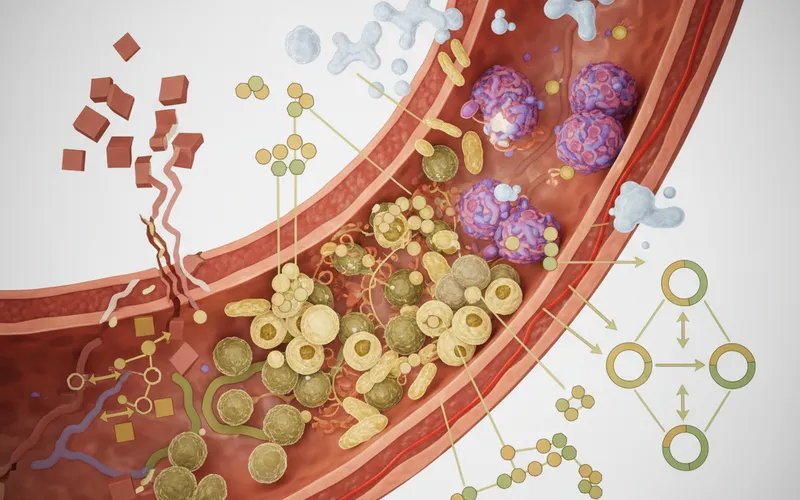
1. Die Studie – Was wurde untersucht und warum betrifft dich das?
Vielleicht hast du schon oft gehört, wie wichtig dein Darm für die Gesundheit ist. Aber hast du dir jemals vorgestellt, dass die Billionen von Mikroorganismen, die in deinem Bauch leben, nicht nur deine Verdauung regeln, sondern auch eng mit deinem Stoffwechsel, deinem Immunsystem und sogar dem Risiko für bestimmte Krankheiten wie Krebs verbunden sind? Eine faszinierende neue Übersichtsarbeit aus China beleuchtet genau dieses komplexe Zusammenspiel und zeigt auf, wie tiefgreifend unser Mikrobiom in unsere Physiologie eingreift.
Forschende der Zhejiang University School of Medicine haben sich die Mühe gemacht, die aktuelle wissenschaftliche Literatur zu durchforsten, um die Verbindungen zwischen dem Darm-Mikrobiom, Stoffwechselstörungen und Krebs zu entschlüsseln. Ihre zentrale Fragestellung war: Wie beeinflusst die Zusammensetzung und Funktion unseres Darm-Mikrobioms die Entstehung und Progression von Stoffwechselkrankheiten und verschiedenen Krebsarten, insbesondere durch die Modulation des Immunsystems? Die Autoren wollten verstehen, welche spezifischen Mikroben oder mikrobiellen Produkte hierbei eine Rolle spielen und welche Signalwege betroffen sind.
Die Studie ist als umfangreiche Review-Arbeit konzipiert, was bedeutet, dass sie keine eigenen Experimente durchgeführt, sondern die Ergebnisse zahlreicher Einzelstudien zusammengefasst und analysiert hat. Dies ist ein wertvolles Studiendesign, um einen Überblick über ein komplexes Forschungsfeld zu gewinnen und Muster sowie Lücken in der aktuellen Wissenschaft zu identifizieren. Sie haben dabei eine Vielzahl von In-vitro- und In-vivo-Studien sowie klinische Beobachtungen berücksichtigt. Die Analyse umfasste Studien zu Adipositas, Diabetes, Fettleber und verschiedenen Krebsarten, darunter Darmkrebs, Leberkrebs und Lungenkrebs, um nur einige zu nennen.
Die zentralen Ergebnisse dieser umfassenden Analyse zeigen, dass ein Ungleichgewicht im Darm-Mikrobiom – eine sogenannte Dysbiose – ein entscheidender Faktor bei der Entwicklung von Stoffwechselstörungen und Krebs ist. Bestimmte Mikroben können entzündliche Prozesse fördern, Metaboliten produzieren, die krebserregend wirken, oder die Immunantwort so verändern, dass Krebszellen leichter überleben und wachsen können. Umgekehrt können andere Mikroben schützende Funktionen haben, indem sie entzündungshemmende Substanzen produzieren oder das Immunsystem so modulieren, dass es Krebszellen effektiver bekämpft. Besonders hervorgehoben wird die Rolle des Mikrobioms bei der Regulation der Immunzellen, die sowohl bei Stoffwechselstörungen als auch bei der Krebsentstehung eine Schlüsselrolle spielen.
Quelle: Chen, R., & Shen, X. (2024). Gut microbiota, metabolic disorders, and cancer: Insights into immune regulation. Journal of physiology and biochemistry. PubMed-ID: 41860665
Diese Erkenntnisse sind nicht nur für die Grundlagenforschung spannend, sondern haben auch weitreichende Implikationen für die Prävention und Behandlung dieser weit verbreiteten Krankheiten. Aber was genau bedeuten diese komplexen Zusammenhänge für dich und deine Gesundheit?
2. Was heisst das wirklich? – Die kritische Einordnung
Diese Review-Studie liefert einen beeindruckenden Überblick über ein hochkomplexes Forschungsfeld. Sie bestätigt einmal mehr, dass unser Darm-Mikrobiom weit mehr ist als nur ein Verdauungshelfer. Doch wie immer gilt: Eine Zusammenfassung vieler Studien ist nur so gut wie die Originalstudien selbst. Es ist wichtig zu erkennen, dass es sich hier um eine Übersichtsarbeit handelt, die bestehende Erkenntnisse synthetisiert, aber keine neuen Daten generiert. Das ist eine Stärke, weil es hilft, den Überblick zu behalten, aber auch eine Grenze, da die Qualität der Schlussfolgerungen von der Qualität der zugrundeliegenden Studien abhängt.
Du bist kein Durchschnitt. Die Studie spricht von allgemeinen Zusammenhängen und statistischen Signifikanzen, die in der Summe vieler Studien gefunden wurden. Für dich persönlich bedeutet das nicht automatisch, dass du mit einem bestimmten Mikrobiom-Muster zwangsläufig eine bestimmte Krankheit entwickeln wirst. Grosse Studien liefern Durchschnittswerte, aber jedes Individuum hat ein einzigartiges Mikrobiom und eine einzigartige genetische Ausstattung sowie Lebensweise. Was für die Masse gilt, muss nicht eins zu eins auf dich zutreffen. Der Unterschied zwischen «statistisch signifikant» und «klinisch bedeutsam» ist hier entscheidend. Eine statistisch signifikante Korrelation zwischen einem bestimmten Bakterium und einem Krankheitsrisiko bedeutet nicht zwingend, dass dieses Bakterium bei dir persönlich eine Krankheit auslösen wird, oder dass das Entfernen dieses Bakteriums dich heilen würde.
Die Stärke dieser Arbeit liegt in ihrer Aktualität und der breiten Abdeckung verschiedener Krankheitsbilder. Sie zeigt auf, welche Mechanismen – insbesondere über die Immunregulation – vermittelt werden könnten. Die Grenzen liegen darin, dass viele der zitierten Studien oft an Tiermodellen oder in vitro durchgeführt wurden, und die Übertragung auf den Menschen nicht immer direkt möglich ist. Zudem sind die Zusammenhänge oft Korrelationen und keine klaren Kausalitäten. Es ist schwierig zu sagen, ob eine veränderte Mikrobiom-Zusammensetzung die Krankheit verursacht, oder ob die Krankheit selbst das Mikrobiom verändert.
Für wen gelten die Ergebnisse? Die Ergebnisse sind grundsätzlich relevant für jeden, der sich für die Zusammenhänge zwischen Lebensstil, Darmgesundheit und chronischen Krankheiten interessiert. Die Studie liefert jedoch keine spezifischen Empfehlungen für einzelne Personengruppen, da dies nicht ihre Aufgabe war. Die Erkenntnisse sind eher auf einer fundamentalen wissenschaftlichen Ebene angesiedelt.
Denkwerkzeug: Wenn du eine solche Studie liest, frage dich: Basieren die Schlussfolgerungen auf Beobachtungen oder auf Interventionen? Zeigen sie einen Zusammenhang oder eine Ursache-Wirkung-Beziehung? Das hilft dir, die Aussagekraft für dein eigenes Leben besser einzuschätzen.
Diese Studie bestärkt uns in der Annahme, dass unser Darm ein zentrales Steuerorgan ist. Aber wie stark beeinflusst deine innere Welt – deine Gedanken, Gefühle und Überzeugungen – dieses empfindliche Ökosystem in deinem Bauch?
3. Der Geist im Körper – Die psychophysiologische Perspektive
Hier kommen wir zu dem Punkt, der in vielen wissenschaftlichen Studien oft zu kurz kommt: die untrennbare Verbindung zwischen Psyche und Körper. Das psychophysiologische Interaktionsmodell lehrt uns, dass dein Darm-Mikrobiom nicht nur auf das reagiert, was du isst, sondern auch auf das, was du denkst und fühlst.
Stell dir vor, du bist chronisch gestresst, leidest unter Angst oder Depressionen. Dein Körper schüttet dann konstant Stresshormone wie Cortisol aus. Dieses Cortisol hat weitreichende Auswirkungen auf deinen gesamten Organismus, einschliesslich deines Darms. Es kann die Durchlässigkeit deiner Darmwand erhöhen (Stichwort «Leaky Gut»), die Schleimproduktion beeinflussen und die Zusammensetzung deines Mikrobioms direkt verändern. Bestimmte Bakterien gedeihen unter Stressbedingungen besser, während andere absterben. Diese Dysbiose wiederum kann Entzündungen im Darm fördern, die Immunantwort modulieren und somit indirekt die von der Studie beschriebenen Zusammenhänge zu Stoffwechselstörungen und Krebs beeinflussen.
Nehmen wir zum Beispiel das Thema Entzündungen, das in der Studie als Brücke zwischen Mikrobiom, Stoffwechsel und Krebs genannt wird. Chronischer Stress ist ein bekannter Treiber von systemischen Entzündungen. Wenn dein Mikrobiom durch Stress bereits aus dem Gleichgewicht geraten ist und pro-entzündliche Bakterien überwiegen, potenziert sich dieser Effekt. Dein Immunsystem ist dann dauerhaft in Alarmbereitschaft, was langfristig das Risiko für Stoffwechselerkrankungen und auch für die Entstehung von Krebs erhöhen kann.
Auch deine Erwartungen und Überzeugungen spielen eine Rolle. Wenn du fest daran glaubst, dass eine bestimmte Ernährungsweise oder ein Probiotikum dir helfen wird, kann allein dieser Glaube physiologische Veränderungen bewirken. Der Placebo-Effekt ist nicht nur bei Medikamenten wirksam, sondern auch bei Nahrungsergänzungsmitteln und Lebensstilinterventionen. Dein Gehirn kann durch positive Erwartungen die Darmmotilität, die Produktion von Verdauungsenzymen und sogar die Freisetzung von schützenden Substanzen beeinflussen, die wiederum dein Mikrobiom positiv beeinflussen können. Umgekehrt kann der Nocebo-Effekt – die negative Erwartung – negative physiologische Reaktionen auslösen.
Es ist gut denkbar, dass viele der in der Studie beschriebenen Zusammenhänge durch diese psychophysiologischen Schleifen verstärkt oder abgemildert werden. Eine gesunde Darm-Hirn-Achse ist also nicht nur eine Frage der Ernährung, sondern auch eine Frage deiner mentalen und emotionalen Verfassung. Dein Darm reagiert nicht nur auf die Pizza, die du isst, sondern auch auf die Sorgen, die du dir machst.
4. Der grössere Kontext – Einordnung und Abhängigkeiten
Diese Studie ist ein wichtiges Puzzleteil in einem immer grösser werdenden Bild. Sie bestätigt und vertieft die Erkenntnisse, dass das Darm-Mikrobiom eine zentrale Rolle in der menschlichen Gesundheit spielt. Die Forschung in diesem Bereich hat in den letzten Jahrzehnten enorm zugenommen, und diese Review-Arbeit hilft, die vielen Einzelergebnisse zu einem kohärenten Ganzen zusammenzufügen.
Die Finanzierung der Studie erfolgte durch chinesische staatliche Fonds, was als neutral zu bewerten ist. Es sind keine offensichtlichen Interessenkonflikte ersichtlich, die die Objektivität der Autoren beeinträchtigen könnten. Dies stärkt die Glaubwürdigkeit der Analyse.
Wo steht diese Studie in der Forschungslandschaft? Sie ist keine bahnbrechende Entdeckung, sondern eine solide Synthese bestehender Forschung. Sie bestätigt viele Hypothesen, die in der Mikrobiomforschung schon länger existieren, und liefert eine detaillierte Aufschlüsselung der immunologischen Mechanismen. Das ist wichtig, weil es hilft, die Forschung in die richtige Richtung zu lenken – hin zu spezifischeren Interventionsstrategien, die auf diese Mechanismen abzielen könnten.
Was wurde nicht kontrolliert? Wie bei jeder Review-Arbeit, die auf der Analyse bestehender Studien basiert, können die zugrundeliegenden Studien selbst Einschränkungen haben. Viele der zitierten Studien, insbesondere im Zusammenhang mit Stoffwechselstörungen und Krebs, konnten nicht alle Lebensstilfaktoren umfassend kontrollieren. Ernährungsgewohnheiten, Bewegungsmuster, Schlafqualität, Stresslevel und sogar Umweltgifte beeinflussen sowohl das Mikrobiom als auch das Risiko für Stoffwechselstörungen und Krebs. Diese Faktoren sind oft schwer zu isolieren und zu quantifizieren, können aber die Ergebnisse erheblich beeinflussen. Eine Studie, die den Einfluss eines einzelnen Bakterienstamms auf die Krebsentstehung untersucht, kann beispielsweise nicht alle komplexen Wechselwirkungen im menschlichen Körper abbilden.
Denkwerkzeug: Frage dich bei solchen Übersichtsartikeln immer: Welche Faktoren des Lebensstils könnten die hier beschriebenen Zusammenhänge ebenfalls erklären oder beeinflussen, die aber in den zitierten Studien möglicherweise nicht umfassend berücksichtigt wurden? Das hilft dir, die Ergebnisse nicht zu isoliert zu betrachten.
Die Erkenntnis, dass das Mikrobiom ein Vermittler zwischen vielen Prozessen ist, ist entscheidend. Aber was bedeutet das nun konkret für deinen Alltag?
5. Was heisst das für dich? – Fazit und Alltagsrelevanz
Diese Studie unterstreicht die immense Bedeutung deines Darm-Mikrobioms für deine Gesundheit. Es ist ein Ökosystem, das du aktiv pflegen kannst und solltest. Hier sind 2–3 konkrete Erkenntnisse, die du mitnehmen kannst:
- Ernähre dich mikrobiomfreundlich: Eine vielfältige und ballaststoffreiche Ernährung ist entscheidend. Gemüse, Obst, Vollkornprodukte und fermentierte Lebensmittel (wie Joghurt, Kefir, Sauerkraut) fördern eine gesunde Bakterienvielfalt. Versuche, verarbeitete Lebensmittel, übermässigen Zucker und ungesunde Fette zu reduzieren, da diese eine Dysbiose begünstigen können.
- Achte auf dein Stressmanagement: Da Stress das Mikrobiom nachweislich negativ beeinflusst und Entzündungen fördert, sind Techniken zur Stressreduktion wie Meditation, Achtsamkeitsübungen, Yoga oder einfach regelmässige Spaziergänge in der Natur von unschätzbarem Wert. Dein Geisteszustand ist direkt mit deinem Darm verbunden.
- Sei neugierig, aber übertreibe es nicht: Es ist faszinierend zu wissen, wie komplex die Zusammenhänge sind. Das Wissen kann dich motivieren, gesündere Entscheidungen zu treffen. Aber sei vorsichtig mit schnellen Schlussfolgerungen oder teuren Nahrungsergänzungsmitteln, die ein «perfektes» Mikrobiom versprechen. Die Forschung ist noch lange nicht am Ende, und Patentrezepte gibt es kaum.
Was solltest du NICHT daraus schliessen? Du solltest jetzt nicht in Panik verfallen und dein Mikrobiom obsessiv überwachen wollen. Auch solltest du nicht glauben, dass allein ein bestimmtes Probiotikum alle Probleme lösen kann. Dein Mikrobiom ist ein Teil eines grösseren Systems, und die Wechselwirkungen sind extrem komplex. Eine einzelne Studie oder ein einzelnes Produkt wird nicht die Lösung für alle Stoffwechsel- oder Krebserkrankungen sein.
Diese Erkenntnisse sind besonders relevant für Menschen mit chronischen Stoffwechselproblemen oder einer familiären Vorbelastung für Krebs. Aber letztendlich betrifft es jeden von uns, denn ein gesundes Mikrobiom ist die Basis für ein starkes Immunsystem und allgemeines Wohlbefinden.
Der psychophysiologische Gedanke zum Schluss ist klar: Dein Körper reagiert nicht nur auf das, was du isst und wie du dich bewegst, sondern auch auf das, was du denkst und fühlst. Dein Darm-Mikrobiom ist ein Spiegel deiner gesamten Lebensweise – physisch und psychisch. Kümmere dich um deinen Geist, und dein Darm wird es dir danken. Und wer weiss, vielleicht öffnet das die Tür zu neuen, ganzheitlichen Wegen der Krankheitsprävention und -behandlung.
Welche Fragen bleiben offen? Wie können wir die komplexen Signalwege zwischen Mikrobiom, Immunsystem und Stoffwechsel noch präziser entschlüsseln? Und vor allem: Wie können wir dieses Wissen in personalisierte, effektive Strategien für jeden Einzelnen übersetzen? Die Reise der Forschung geht weiter, und wir alle sind ein Teil davon.