Schizophrenie und dein Darm: Eine neue Verbindung im Gehirn
Eine aktuelle Studie beleuchtet die komplexe Verbindung zwischen Darmgesundheit und Gehirnchemie bei Schizophrenie. Entdecke, wie Biomarker der Darmdurchlässigkeit mit wichtigen Gehirnstoffen korrelieren und was das für dich bedeutet.
1. Die Studie – Was wurde untersucht und warum betrifft dich das?
Stell dir vor, dein Darm und dein Gehirn würden ständig miteinander sprechen. Diese Vorstellung, oft als «Darm-Hirn-Achse» bezeichnet, ist in den letzten Jahren immer relevanter geworden, besonders wenn es um komplexe Erkrankungen geht. Eine neue Studie aus Polen hat sich genau diese Verbindung bei einem der rätselhaftesten psychiatrischen Leiden vorgenommen: der Schizophrenie. Aber auch wenn du nicht direkt von Schizophrenie betroffen bist, sind die Erkenntnisse dieser Forschung relevant, denn sie vertiefen unser Verständnis, wie eng Psyche und Körper miteinander verwoben sind.
Ein Team um Dr. Turek und Kollegen von der Jagiellonen-Universität in Krakau hat untersucht, wie bestimmte Biomarker der Darmgesundheit mit Veränderungen im Gehirnstoffwechsel und gastrointestinalen Symptomen bei Menschen mit Schizophrenie zusammenhängen. Warum ist das so wichtig? Die Schizophrenie ist eine schwere, chronische psychiatrische Erkrankung, die nicht nur das Denken und Fühlen der Betroffenen stark beeinflusst, sondern auch oft mit Entzündungsprozessen im Körper, einer gestörten Blut-Hirn-Schranke und Verdauungsproblemen einhergeht. Die Forschenden wollten herausfinden, ob es hier messbare Verbindungen gibt, die uns helfen, die Krankheit besser zu verstehen und vielleicht sogar neue Therapieansätze zu finden.
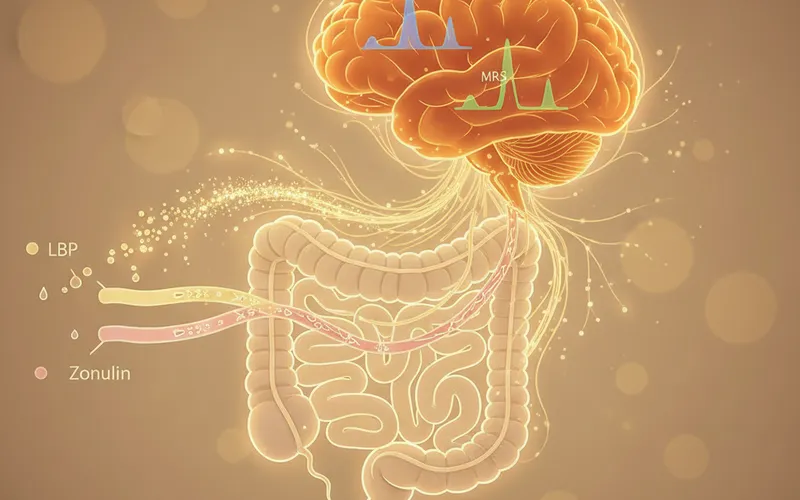
Für ihre Untersuchung wählten die Wissenschaftler ein vergleichsweise kleines, aber präzises Studiendesign. Sie verglichen 28 Patientinnen und Patienten mit Schizophrenie, die sich in Remission befanden (also gerade keine akuten Symptome zeigten), mit 29 gesunden Kontrollpersonen. Bei allen Teilnehmenden wurden drei Dinge gemessen: Erstens, Blutproben, um Biomarker der Darmdurchlässigkeit zu bestimmen – namentlich Lipopolysaccharid-bindendes Protein (LBP) und Zonulin. LBP ist ein Zeichen für das Durchsickern von bakteriellen Toxinen aus dem Darm, während Zonulin ein Marker für die Durchlässigkeit der Darmwand selbst ist. Zweitens, eine spezielle Art der Magnetresonanztomographie, die Magnetresonanzspektroskopie (MRS), um Stoffwechselprodukte in zwei wichtigen Hirnbereichen zu messen: dem anterioren und posterioren Cingulären Kortex (ACC und PCC). Diese Hirnregionen sind unter anderem für Emotionen, Kognition und Schmerzverarbeitung wichtig. Und drittens füllten alle Teilnehmenden einen Fragebogen (Gastrointestinal Symptoms Rating Scale, GSRS) zu ihren Verdauungsbeschwerden aus.
Die zentralen Ergebnisse waren spannend: Die Gruppe der Schizophrenie-Patienten hatte signifikant höhere LBP-Werte im Blut (durchschnittlich 11 µg/ml) als die gesunde Kontrollgruppe (7.9 µg/ml), was auf eine erhöhte Bakterientoxin-Belastung hindeutet. Bei Zonulin gab es keine signifikanten Unterschiede zwischen den Gruppen. Besonders interessant waren die Korrelationen: Bei den Schizophrenie-Patienten zeigte sich eine Verbindung zwischen LBP-Werten und dem Myo-Inositol im PCC – je höher das LBP, desto niedriger das Myo-Inositol. Myo-Inositol gilt als Marker für die Gliazellen, die Stützzellen des Gehirns, und kann auf Entzündungsprozesse hinweisen. Zudem korrelierte bei Schizophrenie-Patienten Zonulin mit Glutamin im ACC, einem wichtigen Neurotransmitter. LBP wiederum war bei den Schizophrenie-Patienten mit einem früheren Krankheitsbeginn und stärkeren Beschwerden im unteren Verdauungstrakt verbunden. Bei den gesunden Kontrollpersonen korrelierte LBP überraschenderweise mit Beschwerden im oberen Verdauungstrakt. Es gab keine klaren Zusammenhänge zwischen den LBP- oder Zonulin-Werten und der Schwere der psychiatrischen Symptome (gemessen mit der PANSS-Skala).
*Quelle: Turek, A., Śmierciak, N., Szwajca, M., Karcz, P., Krzyściak, W., Batko, B., Magacz, M., Donicz, P., Furman, K., Bryll, A., Popiela, T., & Pilecki, M. (2026). Serum LBP and zonulin levels with brain MRS findings and gastrointestinal symptoms in schizophrenia and health. Brain, behavior, & immunity - health, 53, 101206. PubMed-ID: 41852948*2. Was heisst das wirklich? – Die kritische Einordnung
Diese Studie ist ein wichtiger Schritt, um die komplexen Zusammenhänge zwischen Darm, Gehirn und psychischer Gesundheit zu entschlüsseln. Aber was bedeuten diese Ergebnisse wirklich für dich? Zunächst einmal: Grosse Studien liefern Durchschnittswerte – aber du bist kein Durchschnitt. Die statistischen Signifikanzen, die hier gefunden wurden, sind Hinweise, aber keine unumstösslichen Beweise für einen direkten kausalen Zusammenhang, der für jeden Einzelnen gleichermassen gilt.
Ein wichtiger Punkt ist, dass die Forschenden harte Endpunkte wie Biomarker (LBP, Zonulin) und Gehirnstoffwechselprodukte (mittels MRS) gemessen haben, was die Aussagekraft erhöht. Gleichzeitig wurden aber auch subjektive gastrointestinale Symptome erfasst, die naturgemäss variabler sind. Die Stärke der Studie liegt darin, dass sie als erste die Verbindung von Darmdurchlässigkeitsmarkern und Gehirnstoffwechsel bei Schizophrenie untersucht hat. Das ist Pionierarbeit.
Allerdings gibt es auch Grenzen: Die Stichprobengrösse von 28 Patienten und 29 Kontrollen ist relativ klein, was die Verallgemeinerbarkeit der Ergebnisse einschränkt. Zudem wurden die Patienten in Remission untersucht, was bedeutet, dass die Ergebnisse möglicherweise nicht auf Patienten in akuten Krankheitsphasen übertragbar sind. Auch die Korrelationen, obwohl statistisch signifikant, sind moderat (z.B. r = -0.49). Das bedeutet, dass LBP nur einen Teil der Variation im Myo-Inositol erklärt und andere Faktoren ebenfalls eine Rolle spielen. Ein weiterer wichtiger Aspekt ist, dass die Studie nur Assoziationen und keine Kausalität beweisen kann. Wir wissen also nicht, ob die erhöhte Darmdurchlässigkeit die Gehirnveränderungen verursacht oder umgekehrt, oder ob es einen gemeinsamen zugrunde liegenden Mechanismus gibt.
Für wen gelten die Ergebnisse? Die Studienteilnehmer waren polnische Erwachsene. Ob diese Ergebnisse auf andere Populationen oder Altersgruppen übertragbar sind, muss weitere Forschung zeigen. Es ist auch wichtig zu bedenken, dass die Patienten Neuroleptika einnahmen, was den Stoffwechsel und die Darmgesundheit beeinflussen kann – auch wenn die Forschenden versucht haben, die Neuroleptika-Dosis in ihren Analysen zu kontrollieren.
Denkwerkzeug: Wenn du eine Studie liest, die Korrelationen aufzeigt, frage dich immer: «Kann ich daraus wirklich schliessen, dass A B verursacht, oder könnte es auch andersherum sein, oder gibt es einen dritten Faktor, der beides beeinflusst?»
3. Der Geist im Körper – Die psychophysiologische Perspektive
Hier kommen wir zum Kern dessen, was Jürg Hösli auf seiner Plattform immer wieder betont: Psyche und Körper sind untrennbar miteinander verbunden. Diese Studie, obwohl sie sich auf biologische Marker konzentriert, schreit geradezu nach einer psychophysiologischen Betrachtung. Die erhöhten LBP-Werte bei Schizophrenie-Patienten deuten auf eine gestörte Darmbarriere hin, die es Bakterienbestandteilen ermöglicht, in den Blutkreislauf zu gelangen und Entzündungen hervorzurufen. Solche systemischen Entzündungen können wiederum die Blut-Hirn-Schranke beeinträchtigen und Neuroinflammation im Gehirn fördern.
Aber was hat das mit der Psyche zu tun? Chronischer Stress, Ängste und die psychische Belastung, die mit einer Krankheit wie Schizophrenie einhergeht, sind bekanntermassen mächtige Modulatoren der Darmfunktion. Es ist gut denkbar, dass der anhaltende psychische Stress, der oft schon vor dem Ausbruch einer Schizophrenie oder im Umgang mit der Erkrankung vorhanden ist, zu einer erhöhten Darmdurchlässigkeit beiträgt. Der Hawthorne-Effekt, also die Verhaltensänderung durch Beobachtung, spielt hier zwar weniger eine Rolle, aber die reine Existenz der Krankheit selbst ist ein massiver Stressor. Die Überzeugung, krank zu sein, die Angst vor Stigmatisierung und die Herausforderungen im Alltag können eine konstante Quelle von psychischem Stress sein, der sich direkt auf die Darmbarriere auswirkt.
Die Korrelation zwischen LBP und Myo-Inositol im Gehirn bei Schizophrenie-Patienten ist besonders spannend. Myo-Inositol wird mit der Funktion von Gliazellen in Verbindung gebracht, die eine wichtige Rolle bei der Immunantwort und Entzündungsprozessen im Gehirn spielen. Eine erhöhte Darmdurchlässigkeit könnte also über Entzündungswege direkt die Mikroglia aktivieren und den Gehirnstoffwechsel beeinflussen. Das ist keine abstrakte Theorie, sondern die Brücke zwischen dem, was du isst, wie du dich fühlst und wie dein Gehirn funktioniert. Diese psychophysiologische Schleife – psychischer Stress beeinträchtigt den Darm, der Darm beeinflusst das Gehirn, was wiederum die psychische Verfassung verschlechtert – ist ein zentrales Element, das in vielen «reinen» Biomarker-Studien oft übersehen wird.
4. Der grössere Kontext – Einordnung und Abhängigkeiten
Diese Studie ist ein weiteres Puzzleteil im immer komplexer werdenden Bild der Darm-Hirn-Achse und ihrer Rolle bei psychiatrischen Erkrankungen. Sie bestätigt im Wesentlichen die wachsende Erkenntnis, dass Entzündungsprozesse und Darmgesundheit bei Schizophrenie eine Rolle spielen, und erweitert sie um den Aspekt des Gehirnstoffwechsels. Frühere Meta-Analysen haben bereits auf irreguläre Metabolitenkonzentrationen im Gehirn von Schizophrenie-Patienten hingewiesen, und diese Studie liefert mögliche Verbindungen zu peripheren Markern.
Die Finanzierung der Studie erfolgte durch die Jagiellonen-Universität, was auf eine unabhängige Forschungsinitiative hindeutet und keine offensichtlichen Interessenkonflikte erkennen lässt, wie sie beispielsweise bei Pharma-Studien auftreten könnten. Dies stärkt die Glaubwürdigkeit der Ergebnisse.
Was wurde nicht kontrolliert? Wie bei vielen Studien dieser Art kann der Lebensstil der Teilnehmer – Ernährungsgewohnheiten, Bewegung, Schlafqualität, soziale Unterstützung – einen erheblichen Einfluss auf die Darmgesundheit und den Gehirnstoffwechsel haben. Diese Faktoren wurden hier nicht detailliert erfasst oder kontrolliert. Es ist gut möglich, dass eine ungesunde Ernährung, die oft mit psychischen Erkrankungen einhergeht, die Darmbarriere zusätzlich belastet und so die beobachteten Biomarker-Veränderungen verstärkt. Auch der Umgang mit Stress – ob aktiv oder passiv – könnte eine Rolle spielen.
Denkwerkzeug: Wenn du eine Studie liest, frage dich: «Welche Aspekte meines Lebensstils oder meiner psychischen Verfassung könnten ähnliche biologische Marker beeinflussen, auch wenn sie in dieser Studie nicht direkt untersucht wurden?»
5. Was heisst das für dich? – Fazit und Alltagsrelevanz
Was kannst du aus dieser Studie mitnehmen, auch wenn du nicht von Schizophrenie betroffen bist? Die Quintessenz ist, dass dein Darm und dein Gehirn in einem ständigen Dialog stehen, der deine psychische Gesundheit massgeblich beeinflussen kann. Das ist keine Einbahnstrasse, sondern ein komplexes Zusammenspiel.
- Achte auf deine Darmgesundheit: Auch wenn du keine Verdauungsprobleme hast, können subtile Veränderungen in der Darmbarriere (wie erhöhte LBP-Werte) mit Gehirnstoffwechselveränderungen einhergehen. Eine ausgewogene, ballaststoffreiche Ernährung, die reich an Prä- und Probiotika ist (z.B. durch fermentierte Lebensmittel), kann deine Darmflora unterstützen und so potenziell auch dein Gehirn schützen.
- Nimm psychischen Stress ernst: Diese Studie unterstreicht indirekt, wie wichtig Stressmanagement ist. Chronischer Stress ist ein bekannter Faktor, der die Darmbarriere beeinträchtigen kann. Techniken wie Achtsamkeit, Meditation, regelmässige Bewegung oder ausreichend Schlaf können nicht nur deine Psyche, sondern auch deinen Darm und somit dein Gehirn positiv beeinflussen.
- Höre auf deinen Körper: Wenn du Verdauungsbeschwerden hast, nimm sie ernst. Sie könnten nicht nur ein Zeichen für ein Problem im Darm sein, sondern auch eine Rückwirkung auf deine Stimmung und dein Denkvermögen haben. Eine ganzheitliche Betrachtung ist hier entscheidend.
Was solltest du NICHT daraus schliessen? Diese Studie ist kein Beweis dafür, dass Darmprobleme Schizophrenie verursachen oder umgekehrt. Es sind komplexe Zusammenhänge, die weitere Forschung erfordern. Sie ist auch kein Grund zur Panik, wenn du mal Verdauungsprobleme hast. Vielmehr ist sie eine Einladung, deine Gesundheit ganzheitlich zu betrachten und die Verbindung zwischen deinem Darm und deinem Gehirn zu würdigen.
Für wen ist das besonders relevant? Für Menschen, die bereits psychische Belastungen oder Erkrankungen haben, und für alle, die ein tieferes Verständnis dafür entwickeln möchten, wie sehr Körper und Geist ineinandergreifen. Dein Körper reagiert nicht nur auf das, was du isst oder wie du dich bewegst – sondern auch auf das, was du denkst und fühlst. Das ist der psychophysiologische Gedanke zum Schluss.
Welche Fragen bleiben offen? Es wäre spannend zu sehen, ob Interventionen, die die Darmgesundheit verbessern (z.B. spezielle Diäten oder Probiotika), sich positiv auf den Gehirnstoffwechsel und die Symptome bei Schizophrenie auswirken können. Auch die genauen Mechanismen, wie LBP und Zonulin die Gehirnchemie beeinflussen, müssen noch genauer erforscht werden. Die Wissenschaft ist hier noch lange nicht am Ende ihrer Reise.
Bleib neugierig, achte auf dich und erinnere dich daran: Dein Körper ist ein Wunderwerk der Vernetzung, und du hast mehr Einfluss darauf, als du vielleicht denkst.