Zahnfleisch und Psyche: Wie Stress die Mundflora verändert und Omega-3 helfen kann
Eine bahnbrechende Studie enthüllt, wie psychischer Stress die Mundflora beeinflusst und Parodontitis verschlimmert. Erfahre, welche Rolle Omega-3-Fettsäuren dabei spielen und was das für deine Zahngesundheit bedeutet.
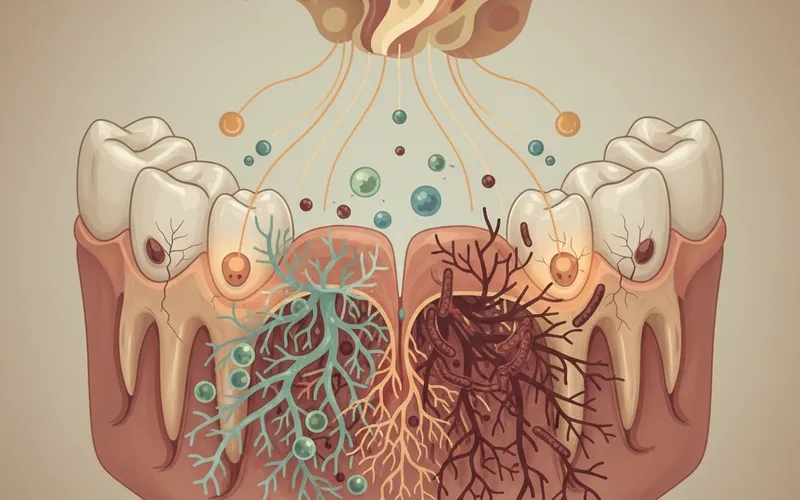
Die Studie – Was wurde untersucht und warum betrifft dich das?
Stell dir vor, du stehst unter Dauerdruck, die To-do-Liste wird immer länger, und gefühlt ist keine Entspannung in Sicht. Viele Menschen kennen dieses Gefühl. Aber hast du dir schon einmal überlegt, was dieser psychische Stress mit deinem Zahnfleisch macht? Eine faszinierende neue Studie aus China und Neuseeland beleuchtet genau diesen Zusammenhang und zeigt, wie eng Psyche, Mundflora und entzündliche Prozesse im Körper miteinander verwoben sind.
Ein Team um Luo S. und Jin X. von der Chongqing Medical University hat untersucht, wie chronischer Stress die Mundgesundheit beeinflusst. Konkret ging es um die Frage, wie sich anhaltender psychischer Druck auf die Entstehung und Verschlimmerung von Parodontitis, einer weit verbreiteten Zahnfleischerkrankung, auswirkt. Die Forschenden wollten verstehen, welche Mechanismen hier greifen und ob es Wege gibt, diese negativen Effekte abzumildern.
Die Studie, die im renommierten Fachjournal Advanced Science veröffentlicht wurde, nutzte ein mehrstufiges Design. Zunächst wurden klinische Beobachtungen an Menschen durchgeführt, um den Zusammenhang zwischen depressiven Symptomen und dem Schweregrad von Parodontitis zu untersuchen. Dabei zeigte sich eine deutliche Korrelation: Je stärker die depressiven Symptome, desto ausgeprägter war die Zahnfleischerkrankung. Diese Beobachtung wurde durch eine Analyse des oralen Mikrobioms, also der Gesamtheit der Mikroorganismen im Mund, ergänzt.
Um die kausalen Zusammenhänge zu ergründen, arbeiteten die Wissenschaftler im Tiermodell. Mäuse wurden chronischem Stress ausgesetzt (sogenannter «chronic restraint stress», CRS), um die Auswirkungen auf die Mundflora und die Parodontitis-Entwicklung zu simulieren. Ein besonders spannendes Detail: Die Forschenden führten eine fäkale Mikrobiota-Transplantation durch. Dabei wurde Stuhl von gestressten Mäusen auf keimfreie Mäuse übertragen. Das Ergebnis war verblüffend: Auch die keimfreien Mäuse entwickelten eine verstärkte Parodontitis, was darauf hindeutet, dass die durch Stress veränderte Mikrobiota ursächlich für die Zahnfleischerkrankung ist.
Mithilfe von Stoffwechselanalysen (Metabolomik) entdeckten sie zudem, dass gestressten Mäusen mit Parodontitis eine bestimmte Fettsäure fehlte: die Eicosapentaensäure (EPA), eine Omega-3-Fettsäure. Weitere Experimente zeigten, dass eine Supplementierung mit EPA die Parodontitis verbesserte, indem sie entzündliche Signalwege (NF-κB-Signalweg) unterdrückte und die Polarisierung von Makrophagen in eine entzündungsfördernde M1-Form hemmte. Diese M1-Makrophagen sind entscheidend für die Immunantwort und spielen eine Rolle bei chronischen Entzündungen.
Die Studie enthüllt somit eine neuartige Verbindung zwischen Darm und Mund, die durch Mikroorganismen und Stoffwechselprodukte unter Stress vermittelt wird. Sie positioniert die Omega-3-Fettsäure EPA als vielversprechenden therapeutischen Ansatz zur Minderung stressbedingter entzündlicher Erkrankungen.
Quelle: Luo S, Lou F, Yang P, Zhang Y, Yan L, Dong Y, Yang B, Wang H, Liu Y, Pu J, Cannon RD, Xie P, Ji P, Jin X (2026). Dysregulation of Oral Microbial Eicosapentaenoic Acid Induced by Chronic Restraint Stress Exacerbates Periodontitis via M1 Macrophage Polarization. Advanced science (Weinheim, Baden-Wurttemberg, Germany). PubMed-ID: 41783924
Was heisst das wirklich? – Die kritische Einordnung
Diese Studie liefert beeindruckende Einblicke in die komplexen Zusammenhänge zwischen Stress, Mikrobiom und Entzündungen. Aber was bedeutet das genau für dich, jenseits der Laborergebnisse und Fachtermini?
Zunächst einmal ist es wichtig zu verstehen, dass die klinischen Beobachtungen an Menschen einen Zusammenhang zwischen depressiven Symptomen und Parodontitis herstellen. Das ist eine Korrelation, keine direkte Kausalität. Es könnte sein, dass Menschen mit Parodontitis aufgrund ihrer Erkrankung depressiver sind, oder dass ein dritter Faktor beides beeinflusst. Die Stärke der Studie liegt jedoch in den Tiermodellen, die über die fäkale Mikrobiota-Transplantation einen kausalen Link zwischen stressveränderter Mikrobiota und Parodontitis aufzeigen. Das ist ein starkes Argument dafür, dass die Stress-induzierten Veränderungen im Mikrobiom tatsächlich die Zahnfleischerkrankung vorantreiben können.
Die Messung von Surrogatparametern, wie der M1-Makrophagen-Polarisierung oder der NF-κB-Signalweg-Aktivität, ist in der Grundlagenforschung üblich und wichtig, um Mechanismen zu verstehen. Für dich als Endverbraucher ist aber letztlich entscheidend, ob das auch zu einer spürbaren Verbesserung der Symptome oder gar zu einer Heilung führt. Die Tatsache, dass EPA die Parodontitis im Tiermodell «verbessert» hat, ist vielversprechend, aber es sind weitere Studien am Menschen notwendig, um die klinische Relevanz dieser Effekte zu bestätigen.
Die Stichprobengrösse der klinischen Beobachtungen ist nicht explizit genannt, was eine Einschränkung darstellt. Im Tiermodell sind die Ergebnisse jedoch sehr deutlich. Ein wichtiger methodischer Aspekt ist, dass die Studie im Tiermodell mit «chronic restraint stress» gearbeitet hat. Das ist ein etabliertes Modell für psychischen Stress, aber es bildet nicht alle Facetten menschlichen Stresses ab. Dein Stress im Alltag ist komplexer und vielfältiger als das, was eine Maus im Labor erlebt.
Denkwerkzeug: Wenn du selbst unter Parodontitis leidest und das Gefühl hast, dass Stress ein Faktor in deinem Leben ist, frage dich: «Habe ich in Phasen hohen Stresses bemerkt, dass sich meine Zahnfleischprobleme verschlimmern, oder dass ich anfälliger für Entzündungen bin?» Die Antwort kann dir einen ersten Hinweis geben, wie relevant diese Art von Forschung für deine persönliche Situation sein könnte.
Der Geist im Körper – Die psychophysiologische Perspektive
Genau hier, an der Schnittstelle von Stress und körperlicher Reaktion, zeigt sich die Bedeutung des psychophysiologischen Interaktionsmodells. Diese Studie ist ein Paradebeispiel dafür, wie unsere Psyche – in diesem Fall chronischer Stress – tiefgreifende physiologische Veränderungen auslösen kann, die wiederum unsere körperliche Gesundheit beeinflussen. Der Geist ist nicht vom Körper getrennt, sondern ein integraler Bestandteil dessen, was wir sind und wie wir funktionieren.
Die Forschenden haben den Stress nicht nur als abstrakten Faktor untersucht, sondern konnten zeigen, dass er messbar die Zusammensetzung der oralen Mikrobiota verändert. Dies ist keine isolierte Beobachtung. Wir wissen, dass Stress die Darmflora beeinflusst, und es ist logisch, dass ähnliche Mechanismen auch im Mund greifen, der ein eigenes, komplexes Mikrobiom beherbergt. Die Veränderung der Mikrobiota führt dann zu einer Dysregulation des Stoffwechsels, was sich in einem Mangel an EPA äussert und entzündliche Prozesse anheizt.
Was hier besonders deutlich wird, ist der Einfluss von Stress auf das Immunsystem. Die Polarisierung von Makrophagen in die entzündungsfördernde M1-Form ist eine direkte Folge der Stressreaktion. Chronischer Stress führt zu einer Überaktivierung des Immunsystems, was langfristig zu chronischen Entzündungen führen kann – nicht nur im Zahnfleisch, sondern potenziell im ganzen Körper. Deine innere Überzeugung, permanent unter Druck zu stehen, oder deine emotionale Reaktion auf Stressoren kann also direkt die Entzündungsprozesse in deinem Mund beeinflussen.
Das psychophysiologische Interaktionsmodell lehrt uns, dass unsere Gedanken, Gefühle und Erwartungen keine Randerscheinungen sind. Sie sind mächtige Modulatoren unserer Biologie. Wenn du glaubst, dass Stress dich krank macht, kann diese Erwartungshaltung die physiologischen Stressreaktionen verstärken. Umgekehrt kann ein Gefühl der Selbstwirksamkeit und der Fähigkeit, mit Stress umzugehen, schützend wirken.
Der grössere Kontext – Einordnung und Abhängigkeiten
Diese Studie fügt sich nahtlos in ein wachsendes Forschungsfeld ein, das die sogenannte "Darm-Hirn-Achse" erweitert. Hier sehen wir eine "Stress-Mikrobiota-Mund-Achse", die die Komplexität der Wechselwirkungen in unserem Körper verdeutlicht. Es ist kein Zufall, dass die Autoren auch die Auswirkungen von fäkaler Mikrobiota-Transplantation untersucht haben, da die Darm-Mund-Verbindung immer mehr an Bedeutung gewinnt.
Die Finanzierung der Studie wurde nicht explizit im Abstract erwähnt, was in der Regel bedeutet, dass sie durch öffentliche Forschungsgelder oder universitäre Mittel erfolgte. Die Tatsache, dass mehrere chinesische Institutionen und eine neuseeländische Universität beteiligt waren, deutet auf eine breite wissenschaftliche Zusammenarbeit hin. Es gibt keine Hinweise auf direkte Interessenkonflikte, was die Glaubwürdigkeit der Ergebnisse stärkt.
Diese Erkenntnisse bestätigen und erweitern frühere Untersuchungen, die bereits einen Zusammenhang zwischen psychischem Stress und Parodontitis nahelegten. Die Neuheit dieser Studie liegt in der detaillierten Aufschlüsselung der mechanistischen Wege, insbesondere der Rolle der Mikrobiota und des EPA-Mangels. Eine einzelne Studie ist jedoch nie die ganze Wahrheit. Sie ist ein wichtiges Puzzleteil, das uns hilft, das Gesamtbild besser zu verstehen. Es wird weitere Forschung brauchen, um diese Ergebnisse in grösseren Kohorten und mit anderen Stressmodellen zu replizieren und die genaue Dosierung und Wirksamkeit von EPA beim Menschen zu bestimmen.
Was oft in solchen Studien nicht kontrolliert werden kann, sind andere Lebensstilfaktoren. Ernährung, Rauchen, Alkoholkonsum, Schlafqualität und die allgemeine Mundhygiene sind allesamt Faktoren, die sowohl den Stresspegel als auch die Parodontitis beeinflussen können. Obwohl die Forschenden im Tiermodell diese Faktoren kontrollieren konnten, ist es im menschlichen Alltag eine Herausforderung, die isolierte Wirkung von Stress zu betrachten, ohne die anderen Variablen zu berücksichtigen.
Denkwerkzeug: Bevor du auf Basis dieser Studie dein Leben umkrempelst, frage dich: «Wie gut ist mein Stressmanagement bereits? Welche anderen Faktoren in meinem Leben – wie Ernährung oder Mundhygiene – könnten ebenfalls zu meinen Zahnfleischproblemen beitragen, und wie gehe ich mit ihnen um?»
Was heisst das für dich? – Fazit und Alltagsrelevanz
Diese Studie liefert dir eine wichtige Erkenntnis: Dein Zahnfleisch ist kein isoliertes Organ, das nur auf Zahnbürste und Zahnseide reagiert. Es ist tief mit deinem gesamten System verbunden, und dein psychischer Zustand spielt eine entscheidende Rolle für seine Gesundheit.
- Stressmanagement ist Zahnpflege: Die wichtigste Botschaft ist, dass effektives Stressmanagement nicht nur gut für deine Psyche ist, sondern auch direkten Einfluss auf deine körperliche Gesundheit hat, einschliesslich deiner Mundgesundheit. Techniken wie Achtsamkeit, Meditation, regelmässige Bewegung oder ausreichend Schlaf können helfen, den chronischen Stresspegel zu senken und damit potenziell auch entzündliche Prozesse im Mund zu reduzieren.
- Omega-3 als Unterstützer: Die Studie deutet darauf hin, dass Omega-3-Fettsäuren, insbesondere EPA, eine schützende Rolle spielen könnten, indem sie entzündliche Prozesse modulieren. Wenn du unter Parodontitis leidest oder generell entzündliche Tendenzen hast und gleichzeitig viel Stress erlebst, könnte eine ausreichende Versorgung mit Omega-3-Fettsäuren (durch fettreichen Fisch wie Lachs, Makrele oder hochwertige Nahrungsergänzungsmittel) eine sinnvolle Ergänzung sein. Konsultiere jedoch immer einen Arzt oder Ernährungsberater, bevor du hochdosierte Supplemente einnimmst.
- Ganzheitlicher Blick: Diese Forschung ermutigt dich, deine Gesundheit ganzheitlich zu betrachten. Probleme in einem Bereich (z.B. psychischer Stress) können sich in einem anderen Bereich (z.B. Zahnfleisch) manifestieren. Achte auf die Signale deines Körpers und sei dir bewusst, dass alles miteinander verbunden ist.
Was du daraus nicht schliessen solltest: Die Studie ist kein Freifahrtschein, um schlechte Mundhygiene zu vernachlässigen und sich allein auf Stressmanagement oder Omega-3 zu verlassen. Eine gute Mundhygiene mit regelmässigem Zähneputzen und Zahnseide bleibt die Basis für gesundes Zahnfleisch. Auch ist die Einnahme von EPA im Tiermodell getestet worden, nicht direkt am Menschen in dieser spezifischen Fragestellung. Betrachte EPA als potenzielle Unterstützung, nicht als Wundermittel.
Diese Erkenntnisse sind besonders relevant für Menschen, die unter chronischem Stress leiden und gleichzeitig mit wiederkehrenden Zahnfleischentzündungen oder Parodontitis zu kämpfen haben. Für Personen mit geringem Stresslevel oder ohne Zahnfleischprobleme sind die direkten Handlungsempfehlungen aus dieser Studie weniger dringlich, wenngleich ein gesunder Lebensstil immer von Vorteil ist.
Denke daran: Dein Körper reagiert nicht nur auf das, was du isst oder wie du dich bewegst – sondern auch auf das, was du denkst und fühlst. Die Verbindung zwischen deinem Geist und deinem Zahnfleisch ist ein weiteres faszinierendes Beispiel dafür. Bleibe neugierig, höre auf deinen Körper und suche stets nach einem stimmigen Zusammenspiel von Psyche und Physiologie für deine Gesundheit.
Wissenschaftliche Quelle
Advanced science (Weinheim, Baden-Wurttemberg, Germany)