Stress, das Mundmikrobiom und Parodontitis: Eine neue Perspektive auf EPA
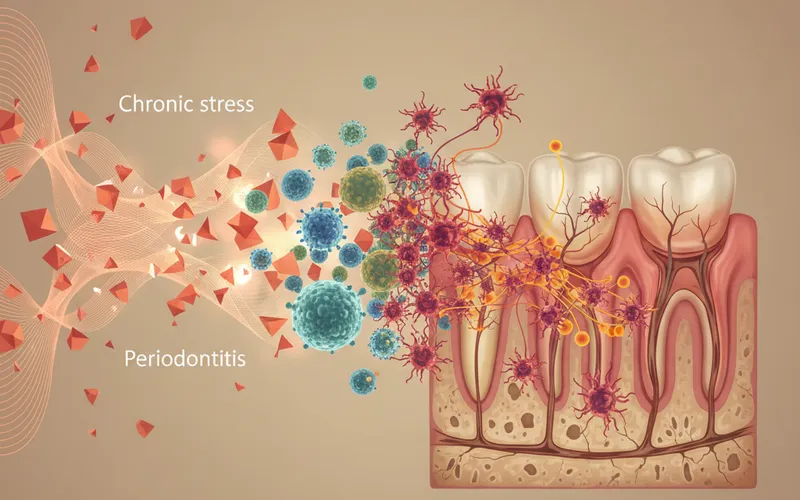
Chronischer Stress kann Parodontitis verschlimmern, indem er das Mundmikrobiom verändert und die Entzündungsreaktion beeinflusst. Könnte die Omega-3-Fettsäure EPA hier eine wichtige Rolle spielen?
Die Studie – Was wurde untersucht und warum betrifft dich das?
Stell dir vor, du bist über längere Zeit hinweg starkem Druck ausgesetzt – sei es beruflich, privat oder emotional. Dein Körper reagiert darauf, das spürst du. Aber wusstest du, dass dieser chronische Stress nicht nur dein Nervensystem oder deinen Magen-Darm-Trakt beeinflusst, sondern auch die Gesundheit deines Mundes massgeblich mitbestimmen kann? Viele Menschen leiden unter Parodontitis, einer entzündlichen Erkrankung des Zahnfleischs und des Zahnhalteapparats, die oft als rein bakterielles Problem betrachtet wird. Doch die Wissenschaft entdeckt immer mehr Faktoren, die weit über die blosse Anwesenheit von Keimen hinausgehen.
Eine spannende neue Studie aus China und Neuseeland hat sich genau diesem komplexen Zusammenspiel gewidmet. Forscher unter der Leitung von Luo S. und Jin X. wollten verstehen, wie chronischer psychologischer Stress die Parodontitis beeinflusst und welche Rolle dabei das Mundmikrobiom – also die Gemeinschaft der Mikroorganismen in unserem Mund – spielt. Sie untersuchten auch, ob eine bestimmte Fettsäure, die Eicosapentaensäure (EPA), hier einen schützenden Effekt haben könnte.
Die Forschenden führten sowohl klinische Beobachtungen an Menschen als auch detaillierte Experimente an Mäusen durch. Bei den menschlichen Probanden stellten sie einen deutlichen Zusammenhang zwischen depressiven Symptomen und dem Schweregrad der Parodontitis fest, begleitet von einem veränderten Mundmikrobiom. Um die kausale Rolle des stressbedingten Mikrobioms zu belegen, führten sie ein cleveres Experiment durch: Sie transplantierten Stuhlproben von gestressten Mäusen in keimfreie Mäuse. Das Ergebnis war verblüffend: Auch die keimfreien Mäuse entwickelten eine verstärkte Parodontitis, was klar auf die Rolle des durch Stress veränderten Mikrobioms hindeutet.
Durch die Analyse des Stoffwechsels (Metabolomik) entdeckten die Wissenschaftler, dass gestresste Mäuse mit Parodontitis weniger EPA im Mundraum hatten. Mechanistisch zeigte sich, dass eine Ergänzung mit EPA die Parodontitis linderte, indem sie einen entzündungsfördernden Signalweg (NF-κB) unterdrückte und so die Aktivierung von entzündlichen Immunzellen (M1-Makrophagen) hemmte. Diese Ergebnisse legen nahe, dass chronischer Stress über Veränderungen im Mundmikrobiom und einem Mangel an EPA die Parodontitis verschlimmern kann und EPA ein vielversprechendes therapeutisches Mittel sein könnte.
Quelle: Luo S, Lou F, Yang P, Zhang Y, Yan L, Dong Y, Yang B, Wang H, Liu Y, Pu J, Cannon RD, Xie P, Ji P, Jin X (2026). Dysregulation of Oral Microbial Eicosapentaenoic Acid Induced by Chronic Restraint Stress Exacerbates Periodontitis via M1 Macrophage Polarization. Advanced science (Weinheim, Baden-Wurttemberg, Germany). PubMed-ID: 41783924
Was heisst das wirklich? – Die kritische Einordnung
Diese Studie liefert faszinierende Einblicke in die komplexe Verbindung zwischen Psyche, Mikrobiom und Entzündungen. Doch was bedeuten diese Ergebnisse wirklich für dich? Zunächst einmal ist es wichtig zu verstehen, dass die Studie sowohl klinische Beobachtungen am Menschen als auch Tiermodelle (Mäuse) kombiniert hat. Die Korrelation zwischen depressiven Symptomen und Parodontitis bei Menschen ist zwar signifikant, beweist aber noch keine Ursache-Wirkungs-Beziehung. Hier kommen die Tiermodelle ins Spiel: Die Stuhltransplantation von gestressten Mäusen in keimfreie Mäuse, die dann eine verstärkte Parodontitis entwickelten, ist ein starkes Argument für eine kausale Rolle des stressveränderten Mikrobioms.
Die Stärke dieser Studie liegt in der multimodalen Herangehensweise, die von der klinischen Beobachtung über Mikrobiom- und Metabolom-Analyse bis hin zu mechanistischen Untersuchungen reicht. Die Identifizierung von EPA als potenziellen Faktor, der durch Stress reduziert wird, und seine entzündungshemmende Wirkung sind vielversprechend. Es ist jedoch wichtig zu bedenken, dass die Stressinduktion bei Mäusen (chronischer Fesselungsstress) eine sehr spezifische Form von Stress ist, die nicht direkt mit menschlichem psychischem Stress vergleichbar ist. Auch wenn es ein etabliertes Modell ist, sind die Übertragbarkeit der genauen Mechanismen und der Dosis von EPA auf den Menschen noch nicht abschliessend geklärt.
Ein weiterer Punkt ist die Messung von Parodontitis. Während bei Mäusen oft experimentell eine Parodontitis ausgelöst wird (z.B. durch Ligaturen), ist die menschliche Parodontitis eine multifaktorielle Erkrankung. Die Studie konzentriert sich auf Entzündungsmarker und die Polarisierung von Makrophagen, was wichtige Aspekte der Krankheit sind. Aber ob eine EPA-Supplementierung langfristig zu einer signifikanten Verbesserung der klinischen Parameter wie Zahnfleischtaschen oder Knochenabbau führt, muss in weiteren humanen Studien untersucht werden.
Denkwerkzeug: Wenn du von „statistisch signifikanten“ Ergebnissen liest – wie in dieser Studie – frage dich immer: Ist das Ergebnis auch „klinisch bedeutsam“ für mich persönlich? Ein Effekt, der im Labor nachweisbar ist, muss nicht zwingend eine spürbare Verbesserung im Alltag bewirken.
Diese Studie ist ein wichtiges Puzzleteil, das die Verbindung zwischen Stress, systemischer Gesundheit und oralem Mikrobiom weiter festigt. Sie lädt uns ein, über die rein lokale Betrachtung von Zahnfleischerkrankungen hinauszuschauen und den Körper als untrennbare Einheit zu begreifen.
Der Geist im Körper – Die psychophysiologische Perspektive
Hier kommen wir zum Kern dessen, was wir bei Jürg Hösli immer wieder betonen: Psyche und Körper sind keine getrennten Einheiten, sondern ein eng verwobenes System. Diese Studie ist ein Paradebeispiel dafür, wie psychologischer Stress – in diesem Fall chronischer Fesselungsstress bei Mäusen und depressive Symptome beim Menschen – direkte physiologische Auswirkungen hat, die sich bis in den Mundraum erstrecken. Das ist keine esoterische Vorstellung, sondern handfeste Psychophysiologie.
Wie kann Stress das Mundmikrobiom und damit die Parodontitis beeinflussen? Das psychophysiologische Interaktionsmodell bietet hier mehrere Erklärungsansätze. Chronischer Stress aktiviert die Stressachsen im Körper, insbesondere die Hypothalamus-Hypophysen-Nebennierenrinden-Achse (HPA-Achse) und das sympathische Nervensystem. Diese Aktivierung führt zur Ausschüttung von Stresshormonen wie Cortisol und Adrenalin. Diese Hormone können direkt das Immunsystem beeinflussen, Entzündungsprozesse modulieren und sogar die Zusammensetzung des Mikrobioms im Darm und möglicherweise auch im Mund verändern.
Es ist gut denkbar, dass chronischer Stress die Zusammensetzung des Mundmikrobioms so verschiebt, dass sich entzündungsfördernde Bakterien stärker vermehren oder die Stoffwechselprodukte der Bakterien (wie die hier untersuchte EPA) verändert werden. Wenn dein Körper unter Dauerstrom steht, ist das Immunsystem weniger in der Lage, eine ausgewogene Balance im Mikrobiom aufrechtzuerhalten und Entzündungen effektiv zu kontrollieren. Die Studie zeigt ja, dass gestresste Mäuse weniger EPA hatten – eine Fettsäure, die bekannt für ihre entzündungshemmenden Eigenschaften ist.
Denke an den Placebo- und Nocebo-Effekt, den wir oft besprechen. Allein die Erwartungshaltung kann physiologische Prozesse beeinflussen. Wenn du dich gestresst fühlst und glaubst, dass sich das auf deine Gesundheit auswirkt, kann diese Überzeugung die physiologischen Stressreaktionen verstärken und damit möglicherweise auch die Anfälligkeit für Entzündungen im Mund erhöhen. Umgekehrt könnte die Überzeugung, dass du etwas Gutes für dich tust – sei es durch Stressmanagement oder durch die Einnahme von EPA – die positiven Effekte verstärken.
Diese Studie erinnert uns daran, dass die Mundgesundheit nicht isoliert betrachtet werden darf. Dein Stresslevel, deine emotionalen Zustände und deine mentalen Überzeugungen sind keine Randthemen, sondern integrale Bestandteile deiner gesamten Physiologie, die auch darüber entscheiden, wie gut dein Zahnfleisch Entzündungen abwehren kann.
Der grössere Kontext – Einordnung und Abhängigkeiten
Diese Entdeckung reiht sich ein in eine wachsende Zahl von Studien, die die enge Verbindung zwischen dem Gehirn, dem Darmmikrobiom (der sogenannten Darm-Hirn-Achse) und nun auch der Mundgesundheit beleuchten. Die Erkenntnis, dass Stress das Mikrobiom verändert und dies wiederum Auswirkungen auf entzündliche Prozesse hat, ist nicht neu, aber die Identifizierung von EPA als spezifischem Metaboliten und die Rolle bei Parodontitis ist ein wichtiger Fortschritt.
Die Studie wurde von Forschenden aus China und Neuseeland durchgeführt und in einem renommierten Journal publiziert, was für die Qualität der Arbeit spricht. Es wurden keine offensichtlichen Interessenkonflikte genannt, was die Glaubwürdigkeit der Ergebnisse stärkt. Die Integration von klinischen Daten und Tiermodellen ist methodisch fundiert und trägt dazu bei, die Komplexität der Zusammenhänge besser zu verstehen.
Was wurde nicht kontrolliert? Wie bei jeder Studie gibt es auch hier Grenzen. Die Studie konzentrierte sich auf die Rolle von EPA und den NF-κB-Signalweg. Es gibt jedoch viele andere Faktoren, die die Entstehung und den Verlauf von Parodontitis beeinflussen können, wie zum Beispiel Rauchen, Diabetes, genetische Veranlagung oder auch die individuelle Mundhygiene. Diese Lebensstilfaktoren wurden in den Tiermodellen natürlich nicht berücksichtigt und bei den menschlichen Probanden möglicherweise nicht vollständig kontrolliert. Es wäre interessant zu sehen, wie die EPA-Spiegel und die Mikrobiom-Zusammensetzung bei Menschen mit unterschiedlichen Lebensstilen und Stressbewältigungsstrategien variieren.
Denkwerkzeug: Bevor du aufgrund einer einzelnen Studie deine Gewohnheiten komplett umstellst, frage dich: Passt diese neue Erkenntnis zu dem, was ich bereits über meinen Körper und meine Gesundheit weiss? Und gibt es andere, vielleicht noch wichtigere Faktoren, die ich berücksichtigen sollte?
Diese Studie ist ein wertvolles Puzzleteil, das uns hilft, das Gesamtbild der Mundgesundheit besser zu verstehen. Sie bestätigt und erweitert unser Wissen über die Wechselwirkungen zwischen Stress, Mikrobiom und Entzündungen und öffnet neue Türen für präventive und therapeutische Ansätze.
Was heisst das für dich? – Fazit und Alltagsrelevanz
Diese Studie liefert dir mehrere wichtige Erkenntnisse, die du in deinem Alltag nutzen kannst, um deine Mundgesundheit und dein Wohlbefinden zu verbessern:
- Stressmanagement ist Mundgesundheitsmanagement: Wenn du unter chronischem Stress leidest, ist das nicht nur schlecht für deine Psyche und dein Herz-Kreislauf-System, sondern kann auch deine Mundgesundheit direkt beeinträchtigen. Egal ob Meditation, Achtsamkeitsübungen, regelmässige Bewegung oder einfach bewusste Auszeiten – finde Wege, deinen Stress effektiv zu managen. Dein Zahnfleisch wird es dir danken.
- Achte auf deine Omega-3-Zufuhr: Die Studie deutet darauf hin, dass die Omega-3-Fettsäure EPA eine wichtige Rolle im Kampf gegen stressbedingte Entzündungen im Mund spielen könnte. Eine ausreichende Zufuhr von Omega-3-Fettsäuren über die Ernährung (fetter Fisch wie Lachs, Makrele, Hering oder Algenöl) oder durch hochwertige Nahrungsergänzungsmittel kann sinnvoll sein. Besprich dies am besten mit deinem Arzt oder Ernährungsberater.
- Mundhygiene bleibt das A und O – aber nicht das Einzige: Eine gute Mundhygiene ist und bleibt die Basis für gesunde Zähne und Zahnfleisch. Aber diese Studie zeigt, dass sie allein nicht ausreicht, wenn systemische Faktoren wie Stress oder ein unausgewogenes Mikrobiom ins Spiel kommen. Betrachte deine Mundgesundheit immer im Kontext deiner gesamten körperlichen und psychischen Verfassung.
Was solltest du NICHT daraus schliessen? Nimm diese Studie nicht als Freibrief, deine Mundhygiene zu vernachlässigen und dich nur auf EPA zu verlassen. Auch ist sie kein Grund zur Panik, wenn du gestresst bist. Sie ist vielmehr eine Einladung, deine Gesundheit ganzheitlich zu betrachten und präventiv zu handeln.
Diese Erkenntnisse sind besonders relevant für Menschen, die unter chronischem Stress stehen, depressive Symptome zeigen oder bereits an Parodontitis leiden, die trotz guter Mundhygiene immer wieder aufflammt. Für sie könnte die Betrachtung des Stressfaktors und die Optimierung der Omega-3-Zufuhr einen entscheidenden Unterschied machen.
Dein Körper reagiert nicht nur auf das, was du isst und wie du dich bewegst, sondern auch darauf, wie du denkst und fühlst. Die Verbindung zwischen deinem Geist, deinem Mikrobiom und deiner Mundgesundheit ist ein weiteres, eindrückliches Beispiel dafür. Bleib neugierig, achtsam und hör auf die Signale deines Körpers – er spricht eine klare Sprache.
Welche Rolle spielen andere Omega-3-Fettsäuren oder weitere Mikronährstoffe in diesem komplexen Zusammenspiel? Und wie können wir die genauen Mechanismen beim Menschen noch besser verstehen? Die Forschung geht weiter und hält sicherlich noch viele spannende Antworten für uns bereit.
Wissenschaftliche Quelle
Advanced science (Weinheim, Baden-Wurttemberg, Germany)