Nierensteine und biologisches Alter: Ein überraschender Zusammenhang
Eine neue Studie beleuchtet den Zusammenhang zwischen beschleunigtem biologischem Altern und Nierensteinen. Das psychophysiologische Interaktionsmodell bietet eine spannende Erklärung.
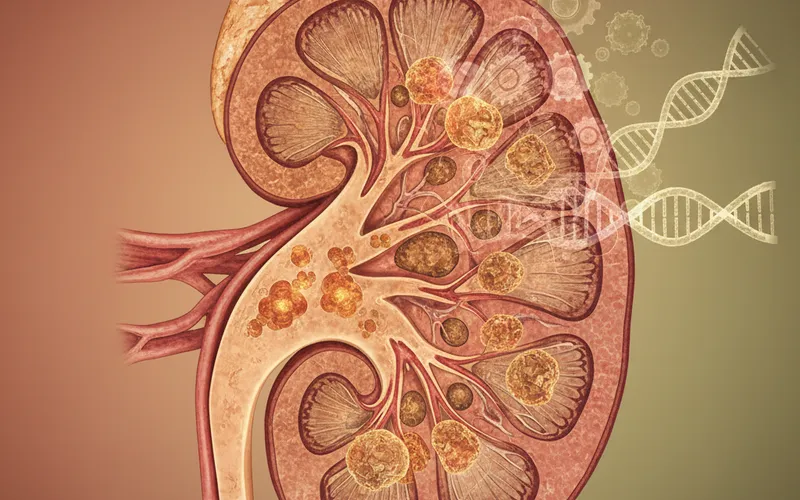
Die Studie – Was wurde untersucht und warum betrifft dich das?
Stell dir vor, dein Körper altert schneller, als es dein Geburtsdatum vermuten lässt. Und stell dir vor, dieses beschleunigte Altern könnte das Risiko für eine unangenehme und schmerzhafte Erkrankung erhöhen: Nierensteine. Das klingt vielleicht nach Science-Fiction, ist aber der Kern einer faszinierenden neuen Studie, die im Fachjournal «Translational Andrology and Urology» veröffentlicht wurde.
Forschende aus China, darunter Shi F. und Zhou X. vom CAAC East China Aviation Personnel Medical Appraisal Center und der Second Affiliated Hospital of Naval Medical University in Shanghai, haben sich dieser Frage gewidmet. Sie wollten herausfinden, ob es einen Zusammenhang zwischen beschleunigtem biologischem Altern (Biological Aging Acceleration, BAA) und dem Auftreten von Nierensteinen (KS) gibt. Der Hintergrund ist klar: Ein fortgeschrittenes biologisches Alter wird bereits mit einem erhöhten Risiko für verschiedene gesundheitliche Probleme in Verbindung gebracht. Doch die Verbindung zu Nierensteinen war bisher unklar. Zudem interessierte die Forschenden, ob Insulinresistenz (IR) eine vermittelnde Rolle in diesem Zusammenhang spielen könnte.
Für ihre Querschnittsstudie nutzten Shi und Kollegen Daten der National Health and Nutrition Examination Survey (NHANES) aus den Jahren 2007 bis 2018. Insgesamt wurden 10'227 nicht-schwangere Erwachsene in die Analyse einbezogen, mit einem Durchschnittsalter von 47.96 Jahren und einem ausgewogenen Geschlechterverhältnis (50.03% Männer). Das biologische Alter der Teilnehmenden wurde mit zwei etablierten Algorithmen gemessen: der Klemera-Doubal-Methode (KDM-BA) und dem phänotypischen Alter (PhenoAge). Die Beschleunigung des biologischen Alterns wurde dann durch den Vergleich mit dem chronologischen Alter quantifiziert. Die Insulinresistenz wurde mithilfe von fünf verschiedenen Surrogatmarkern bewertet, darunter der Triglycerid-Glukose-Index (TyG) und dessen Kombinationen mit Taillenumfang (TyG-WC), Taillen-Grössen-Verhältnis (TyG-WHtR) und Body Mass Index (TyG-BMI), sowie der metabolische Score für Insulinresistenz (METS-IR).
Die Beziehungen zwischen der Beschleunigung des biologischen Alterns, den Insulinresistenz-Markern und dem Nierensteinrisiko wurden mittels multivariabler logistischer Regressionsmodelle untersucht. Zusätzlich führten die Forschenden Mediationsanalysen durch, um zu prüfen, ob die Insulinresistenz den Zusammenhang zwischen beschleunigtem Altern und Nierensteinen teilweise erklärt.
Die Ergebnisse sind bemerkenswert: Nach Bereinigung um verschiedene Einflussfaktoren zeigte sich, dass Erwachsene im obersten Drittel der KDM-BA-Beschleunigung ein um 21% erhöhtes Risiko für Nierensteine hatten (Odds Ratio (OR): 1.21, 95% Konfidenzintervall (CI): 1.02-1.44) im Vergleich zu denen im untersten Drittel. Noch deutlicher war der Zusammenhang beim PhenoAge: Hier hatten Teilnehmende im obersten Drittel der Beschleunigung ein 77% höheres Nierensteinrisiko (OR: 1.77, 95% CI: 1.47-2.13). Die Mediationsanalysen ergaben, dass die fünf IR-Surrogatmarker einen Teil des Zusammenhangs zwischen PhenoAge-Beschleunigung und Nierensteinen statistisch vermittelten, wobei die vermittelten Anteile zwischen 1.67% und 29.34% lagen (alle p < 0.001). Für die KDM-BA-Beschleunigung wurden hingegen keine signifikanten vermittelnden Effekte durch Insulinresistenz beobachtet.
Zusammenfassend lässt sich sagen: Ein beschleunigtes biologisches Altern ist signifikant mit einem erhöhten Risiko für Nierensteine verbunden, und dieser Zusammenhang wird teilweise durch Insulinresistenz erklärt. Diese Erkenntnisse könnten helfen, gezielte Präventionsstrategien für Nierensteine in alternden Bevölkerungsgruppen zu entwickeln.
Quelle: Shi F, Zhou X, Zhou Z, Wang D (2026). Association between accelerated biological aging and kidney stones and role of insulin resistance: a cross-sectional NHANES study. Transl Androl Urol, 15(2):52. PubMed-ID: 41809778
Was heisst das wirklich? – Die kritische Einordnung
Diese Studie liefert einen spannenden Hinweis darauf, dass unser biologisches Alter – also der tatsächliche Zustand unserer Zellen und Gewebe im Vergleich zu unserem chronologischen Alter – eine wichtige Rolle für unsere Gesundheit spielt, die über das hinausgeht, was wir bisher dachten. Die Verbindung zu Nierensteinen ist neu und relevant, da Nierensteine nicht nur schmerzhaft sind, sondern auch ein Indikator für systemische Stoffwechselstörungen sein können.
Doch was bedeuten diese Ergebnisse für dich persönlich? Zunächst einmal ist es wichtig zu verstehen, dass diese Studie eine Querschnittsstudie ist. Das bedeutet, sie hat einen Schnappschuss gemacht und Korrelationen festgestellt, aber keine direkten Ursache-Wirkungs-Beziehungen bewiesen. Wir wissen also, dass beschleunigtes Altern und Nierensteine oft zusammen auftreten, aber nicht zwingend, dass das eine das andere verursacht. Es könnte auch sein, dass ein dritter, nicht gemessener Faktor beides beeinflusst.
Die statistische Signifikanz der Ergebnisse ist gegeben (p < 0.001), was bedeutet, dass die beobachteten Zusammenhänge wahrscheinlich nicht zufällig sind. Allerdings ist es wichtig, zwischen statistischer Signifikanz und klinischer Bedeutsamkeit zu unterscheiden. Ein um 21% oder sogar 77% erhöhtes Risiko klingt dramatisch. Wenn jedoch die Ausgangsrate sehr niedrig ist, kann selbst eine Verdopplung des Risikos im Einzelfall immer noch ein geringes absolutes Risiko bedeuten. Hier fehlen uns die absoluten Zahlen der Nierensteinerkrankungen in den verschiedenen Gruppen, um die tatsächliche Relevanz für den Einzelnen besser einschätzen zu können.
Die Studie zeichnet sich durch eine sehr grosse Stichprobe aus (über 10'000 Teilnehmende), was die Aussagekraft der Ergebnisse stärkt. Zudem wurden zwei unterschiedliche Methoden zur Bestimmung des biologischen Alters verwendet, was die Robustheit der Ergebnisse erhöht, insbesondere da der Zusammenhang mit PhenoAge noch stärker war. Die Messung von Surrogatparametern für Insulinresistenz ist ebenfalls methodisch sinnvoll, da direkte Messungen oft komplexer sind und diese Indizes gut etabliert sind.
Eine Grenze der Studie ist, dass sie harte Endpunkte wie die tatsächliche Inzidenz von Nierensteinen in der Zukunft nicht erfasst. Nierensteine wurden hier wahrscheinlich durch Selbstauskunft oder medizinische Diagnosen in der Vergangenheit erfasst, was retrospektive Verzerrungen mit sich bringen kann. Zudem wurden die Teilnehmenden aus den USA rekrutiert, was die Übertragbarkeit auf andere Bevölkerungsgruppen einschränken könnte, insbesondere wenn Lebensstilfaktoren oder genetische Prädispositionen eine Rolle spielen.
Dein Denkwerkzeug: Wenn du von einem erhöhten Risiko für eine Krankheit hörst, frage dich: Wie hoch ist mein persönliches Ausgangsrisiko? Und welche der genannten Faktoren (z.B. beschleunigtes Altern oder Insulinresistenz) treffen auf mich zu? Überlege, ob diese Studie dir einen Hinweis gibt, wo du genauer hinschauen könntest, anstatt dich sofort beunruhigen zu lassen.
Der Geist im Körper – Die psychophysiologische Perspektive
Hier wird es besonders spannend, denn genau hier setzt das psychophysiologische Interaktionsmodell an, das in vielen Studien – auch in dieser – oft übersehen wird. Die Studie identifiziert Insulinresistenz als einen teilweisen Mediator zwischen beschleunigtem biologischem Altern und Nierensteinen. Aber was beeinflusst wiederum die Insulinresistenz und das biologische Alter selbst?
Aus psychophysiologischer Sicht ist Insulinresistenz nicht nur eine Frage von Ernährung und Bewegung. Chronischer Stress, anhaltende psychische Belastungen und ein Gefühl der Überforderung können die Insulinempfindlichkeit massiv beeinträchtigen. Die Cortisol-Achse, die bei Stress aktiviert wird, spielt eine zentrale Rolle im Glukosestoffwechsel. Dauerhaft erhöhte Cortisolspiegel können zu einer verminderten Insulinwirkung führen, was wiederum die Insulinresistenz fördert. Wenn du also ständig unter Strom stehst, dich gefangen oder machtlos fühlst, kann das messbare Auswirkungen auf deinen Stoffwechsel haben, die sich dann in Indikatoren wie dem TyG-Index widerspiegeln.
Ähnliches gilt für das biologische Altern. Während genetische Faktoren und Lebensstil (Ernährung, Schlaf, Bewegung) zweifellos eine Rolle spielen, wissen wir, dass psychischer Stress und Trauma ebenfalls die Telomerlänge beeinflussen können – ein bekannter Marker für zelluläres Altern. Ein Leben unter ständigem Druck, mit Sorgen und ohne ausreichende Erholung, kann deinen Körper auf zellulärer Ebene schneller altern lassen. Die innere Uhr tickt schneller, wenn die Psyche leidet.
Es ist gut denkbar, dass ein Teil der beschleunigten biologischen Alterung und der Entwicklung von Insulinresistenz, die in dieser Studie beobachtet wurden, auf chronischen psychischen Stress, mangelnde emotionale Regulation und eine ungünstige Stressverarbeitung zurückzuführen ist. Diese Faktoren werden in solchen grossen epidemiologischen Studien selten erfasst, da sie schwer zu messen sind und oft als «weiche» Faktoren abgetan werden. Doch sie sind mächtig. Wenn du dich gestresst fühlst, wenn du das Gefühl hast, dein Leben nicht selbst steuern zu können, kann das deine Physiologie so verändern, dass es sich in erhöhten Entzündungswerten, schlechterer Glukosetoleranz und letztlich auch in einem erhöhten Risiko für Erkrankungen wie Nierensteine manifestiert.
Dein Körper reagiert nicht nur auf das, was du isst und wie du dich bewegst, sondern auch fundamental auf das, was du denkst und fühlst. Das ist keine abstrakte Theorie, sondern eine messbare Realität, die uns das psychophysiologische Interaktionsmodell lehrt. Diese Studie, auch wenn sie es nicht explizit untersucht, untermauert indirekt, wie wichtig es ist, die psychische Gesundheit und Stressbewältigung als integralen Bestandteil der Prävention von Alterungsprozessen und Stoffwechselerkrankungen zu betrachten.
Der grössere Kontext – Einordnung und Abhängigkeiten
Diese Studie reiht sich ein in eine wachsende Forschungslandschaft, die das Konzept des biologischen Alters immer ernster nimmt. Es ist ein Puzzleteil, das die Bedeutung dieses Konzepts für die Prävention von Krankheiten unterstreicht. Die Tatsache, dass Insulinresistenz einen Teil der Verbindung erklärt, ist ebenfalls konsistent mit vielen anderen Studien, die Insulinresistenz als zentralen Faktor für eine Vielzahl von chronischen Erkrankungen identifizieren, von Diabetes über Herz-Kreislauf-Erkrankungen bis hin zu bestimmten Krebsarten.
Die Finanzierung der Studie und potenzielle Interessenkonflikte wurden im Abstract nicht explizit genannt. Die Autoren stammen von verschiedenen Universitäten und medizinischen Zentren in China, was auf eine unabhängige Forschungsinitiative hindeutet. Das Fehlen von direkten Industriebeziehungen ist in der Regel ein gutes Zeichen für die Objektivität der Ergebnisse.
Was wurde nicht kontrolliert? Wie in vielen grossen Bevölkerungsstudien gibt es eine Fülle von Lebensstilfaktoren, die die Ergebnisse beeinflusst haben könnten, aber nicht alle erfasst oder in die Analyse einbezogen werden konnten. Dazu gehören detaillierte Informationen über:
- Ernährungsgewohnheiten: Insbesondere die Einnahme von oxalatreichen Lebensmitteln, Kalziumzufuhr und Trinkverhalten, die direkt mit Nierensteinen in Verbindung stehen.
- Physische Aktivität: Während Bewegung die Insulinresistenz positiv beeinflusst, wurde dies möglicherweise nicht detailliert genug erfasst.
- Stresslevel und psychische Gesundheit: Wie im vorherigen Abschnitt erwähnt, sind dies entscheidende Faktoren, die sowohl das biologische Altern als auch die Insulinresistenz beeinflussen können.
- Medikamenteneinnahme: Bestimmte Medikamente können das Nierensteinrisiko erhöhen oder die Insulinempfindlichkeit beeinflussen.
- Genetische Prädispositionen: Es gibt genetische Faktoren, die sowohl das Altern als auch die Nierensteinbildung beeinflussen können.
Diese fehlenden Kontrollen bedeuten nicht, dass die Studie fehlerhaft ist, sondern dass die Realität komplexer ist, als jede einzelne Studie abbilden kann. Die Ergebnisse sind ein Hinweis, kein absolut letzter Beweis. Sie fordern uns auf, weiter zu forschen und die Zusammenhänge noch genauer zu beleuchten.
Dein Denkwerkzeug: Wenn du eine neue Gesundheitsinformation liest, frage dich: Welche anderen Faktoren in meinem Leben könnten hier eine Rolle spielen, die in dieser Studie vielleicht nicht berücksichtigt wurden? Das hilft dir, die Ergebnisse nicht isoliert zu betrachten, sondern in deinem persönlichen Kontext einzuordnen.
Was heisst das für dich? – Fazit und Alltagsrelevanz
Die Erkenntnisse dieser Studie sind ein weiterer Mosaikstein, der uns zeigt, wie eng unser Körper und unser Alterungsprozess mit unserem Stoffwechsel verknüpft sind. Hier sind 2–3 konkrete Erkenntnisse, die du daraus für deinen Alltag mitnehmen kannst:
- Achte auf dein biologisches Alter: Auch wenn du es nicht direkt messen kannst, sind die Faktoren, die es beeinflussen, bekannt: gesunde Ernährung, regelmässige Bewegung, ausreichend Schlaf und effektives Stressmanagement. Die Studie legt nahe, dass diese Bemühungen nicht nur dein allgemeines Wohlbefinden verbessern, sondern auch spezifische Risiken wie Nierensteine reduzieren könnten.
- Insulinresistenz ernst nehmen: Wenn du Anzeichen von Insulinresistenz hast (z.B. Übergewicht, besonders am Bauch, Blutzuckerschwankungen, Müdigkeit nach dem Essen), ist es umso wichtiger, aktiv zu werden. Eine Ernährung mit wenig verarbeiteten Kohlenhydraten und Zucker, sowie regelmässige körperliche Aktivität sind hier die wichtigsten Hebel.
- Stressmanagement als Priorität: Da Insulinresistenz und beschleunigtes Altern stark mit psychophysiologischen Faktoren wie Stress zusammenhängen, solltest du Stressmanagement nicht als Luxus, sondern als essenziellen Bestandteil deiner Gesundheitsvorsorge betrachten. Techniken wie Achtsamkeit, Meditation, ausreichende Erholung und soziale Kontakte können hier einen grossen Unterschied machen.
Was solltest du NICHT daraus schliessen? Diese Studie ist kein Grund zur Panik, wenn du bereits Nierensteine hattest oder dich älter fühlst, als du bist. Es ist eine Korrelationsstudie, die Zusammenhänge aufzeigt, aber keine Schicksalsvorhersage ist. Sie sagt nicht, dass du zwangsläufig Nierensteine bekommst, wenn dein biologisches Alter beschleunigt ist.
Diese Erkenntnisse sind besonders relevant für Menschen, die bereits eine erhöhte Anfälligkeit für Nierensteine haben oder bei denen Risikofaktoren für Insulinresistenz und beschleunigtes Altern vorliegen. Für alle anderen ist es eine gute Erinnerung daran, dass ein gesunder Lebensstil eine ganzheitliche Angelegenheit ist.
Der psychophysiologische Gedanke zum Schluss bleibt bestehen: Dein Körper ist keine Maschine, die isoliert funktioniert. Er ist ein komplexes System, in dem Geist und Körper untrennbar miteinander verbunden sind. Was du denkst, fühlst und wie du mit Stress umgehst, hinterlässt Spuren in deiner Physiologie – bis hin zur Anfälligkeit für Nierensteine. Die Forschung wird weiterhin die genauen Mechanismen entschlüsseln. Bis dahin können wir schon heute unseren Körper und Geist in Einklang bringen, um gesund und vital zu bleiben.
Bleib neugierig, höre auf deinen Körper und gestalte dein Leben aktiv mit – denn deine Gesundheit liegt in deinen Händen, und dein Geist spielt dabei eine zentrale Rolle.