Smartphone am Abend: Wie die Nutzung vor dem Schlafengehen deine Stimmung als Sportler beeinflusst
Du bist Sportler und fragst dich, ob dein Smartphone am Abend deinen Schlaf und deine Morgenstimmung beeinflusst? Eine aktuelle Studie aus Portugal liefert spannende Einblicke, die weit über den Durchschnitt hinausgehen.
1. Die Studie – Was wurde untersucht und warum betrifft dich das?
Stell dir vor, du bist Athlet, gibst im Training alles und planst deinen Tag minutiös, um Höchstleistungen zu erbringen. Du achtest auf Ernährung, Trainingspläne und Regeneration. Doch hast du schon einmal darüber nachgedacht, wie das kleine Gerät in deiner Hand – dein Smartphone – deine Performance heimlich untergraben könnte? Es ist ein Ritual für viele: Kurz vor dem Schlafengehen noch schnell die letzten Nachrichten checken, durch Social Media scrollen oder ein Video schauen. Doch gerade für Sportler, bei denen jeder Prozentpunkt an Erholung zählt, könnte genau das ein entscheidender Faktor sein. Eine aktuelle Studie aus Portugal hat sich diesem Thema gewidmet und beleuchtet, wie die abendliche Smartphone-Nutzung den Schlaf und die Morgenstimmung von Athleten beeinflusst.
Unter der Leitung von L. Rozman und Kollegen von der Universität Lissabon, in Zusammenarbeit mit dem portugiesischen Fussballverband, wurde untersucht, welche Zusammenhänge es zwischen der Smartphone-Nutzung vor dem Schlafengehen, der sogenannten „Schlafschuld“ und der Stimmung am Morgen gibt. Die Forscher wollten herausfinden, ob und wie stark das abendliche Bildschirmlicht und die mentale Aktivität durch das Smartphone die kritische Erholungsphase von Sportlern beeinträchtigen.
Für ihre Untersuchung befragten die Wissenschaftler 174 portugiesische Athleten im Alter von 15 bis 65 Jahren. Die Teilnehmer füllten detaillierte Fragebögen zu ihren Schlafgewohnheiten, der Smartphone-Nutzung vor dem Schlafengehen und ihrer Stimmung am Morgen aus. Die Athleten wurden in zwei Gruppen eingeteilt: „High User“ (tägliche Nutzung) und „Low/Moderate User“ (Nutzung an weniger als sechs Tagen pro Woche). Die „Schlafschuld“ wurde dabei als die Differenz zwischen der durchschnittlichen Schlafdauer an Arbeits-/Schultagen und an freien Tagen definiert.
Die zentralen Ergebnisse sind aufschlussreich: Eine grössere Schlafschuld sagte signifikant eine schlechtere Morgenstimmung voraus (ρ = -0.215, p = 0.004). Dieser Zusammenhang war besonders ausgeprägt bei Athleten, die ihr Smartphone intensiv nutzten (ρ = -0.30, p = 0.001). Obwohl die Smartphone-Nutzung selbst die Schlafschuld nicht direkt signifikant beeinflusste, zeigte sich eine leichte Verbindung zwischen hoher Nutzung und schlechterer Morgenstimmung. Eine genaue Analyse ergab, dass die Schlafschuld den Zusammenhang zwischen Smartphone-Nutzung und Morgenstimmung nicht vermittelte. Das deutet darauf hin, dass die abendliche Bildschirmnutzung eher eine direktere Auswirkung auf die unmittelbare Schlafqualität und damit die Stimmung am nächsten Morgen hat, als dass sie primär zu einer langfristigen Schlafschuld führt.
Die Forscher schlussfolgern, dass eine häufige Smartphone-Nutzung vor dem Schlafengehen bei Athleten mit einer schlechteren Stimmung beim Aufwachen verbunden ist. Dies weise auf unmittelbare Schlafstörungen hin und nicht so sehr auf einen über längere Zeit angesammelten Schlafmangel. Angesichts der weit verbreiteten abendlichen Bildschirmnutzung bei Sportlern könnte die Förderung gesünderer Einschlafroutinen die emotionale Erholung und die Leistungsbereitschaft unterstützen.
Quelle: Rozman L, Barreira J, Brito J, Costa JA, Reis C (2026). High evening smartphone use drives sleep debt and lower morning affect in athletes. Chronobiology international, 1-8. PubMed-ID: 41846253
Diese Ergebnisse zeigen uns, dass die Routine vor dem Schlafengehen einen grösseren Einfluss auf unser Wohlbefinden haben könnte, als wir vielleicht annehmen. Aber was heisst das wirklich, wenn wir genauer hinschauen?
2. Was heisst das wirklich? – Die kritische Einordnung
Die Studie liefert interessante Hinweise, doch wie bei jeder wissenschaftlichen Arbeit ist es wichtig, die Ergebnisse kritisch zu beleuchten und ihre wahre Bedeutung für dich als Sportler einzuordnen. Grosse Studien liefern oft Durchschnittswerte, aber du bist kein Durchschnitt. Dein Körper und dein Leben sind einzigartig.
Die Tatsache, dass eine grössere Schlafschuld mit einer schlechteren Morgenstimmung einhergeht, ist wenig überraschend und deckt sich mit vielen anderen Studien. Jeder, der schon einmal zu wenig geschlafen hat, kennt das Gefühl, morgens nicht richtig in die Gänge zu kommen und sich mürrisch zu fühlen. Die statistische Signifikanz (p-Wert) bestätigt diesen Zusammenhang, aber sie sagt nichts darüber aus, wie stark der Effekt für dich persönlich ist. Ein kleiner p-Wert bedeutet lediglich, dass das Ergebnis wahrscheinlich nicht zufällig ist, aber nicht unbedingt, dass es klinisch hochrelevant ist.
Ein wichtiger Punkt ist, dass die Studie hauptsächlich auf Fragebögen basiert. Das heisst, die Daten zur Smartphone-Nutzung, Schlafdauer und Stimmung wurden von den Athleten selbst berichtet. Solche Selbstauskünfte können durch Erinnerungsfehler oder den Wunsch, „gut“ abzuschneiden, beeinflusst sein. Idealerweise würde man hier objektivere Messmethoden wie Aktigraphie für den Schlaf oder App-Nutzungsdaten für die Bildschirmzeit einsetzen. Die „Schlafschuld“ wurde als Differenz zwischen Wochentags- und Wochenendschlaf definiert, was eine gängige, aber vereinfachte Metrik ist. Sie erfasst nicht die gesamte Komplexität des individuellen Schlafbedarfs.
Die Studie hebt hervor, dass die Smartphone-Nutzung die Schlafschuld nicht signifikant vorhersagte, aber dennoch mit einer schlechteren Morgenstimmung assoziiert war. Das ist ein feiner, aber wichtiger Unterschied. Es deutet darauf hin, dass die unmittelbare Wirkung der Bildschirmnutzung – vielleicht durch die Stimulation, das blaue Licht oder die Inhalte – direkt die Schlafqualität der aktuellen Nacht beeinträchtigt und nicht unbedingt zu einem chronischen Schlafmangel über die Woche führt, der dann die Stimmung drückt. Es geht also möglicherweise weniger um die Summe des Schlafdefizits als um die Qualität des Schlafes in der Nacht nach der Nutzung.
Die Stichprobe bestand aus portugiesischen Athleten im Alter von 15 bis 65 Jahren. Das ist eine breite Altersspanne, und es ist unklar, ob die Effekte bei einem 15-jährigen Nachwuchssportler dieselben sind wie bei einem 60-jährigen Master-Athleten. Auch die Art des Sports wurde nicht näher spezifiziert. Die Ergebnisse sind also auf diese spezifische Population von Sportlern übertragbar, aber nicht unbedingt auf die breite Bevölkerung oder andere Sportarten.
Denkwerkzeug: Wenn du diese Studie liest, frage dich: „Wie oft nutze ich mein Smartphone direkt vor dem Schlafengehen, und wie fühle ich mich dann am nächsten Morgen? Gibt es einen spürbaren Unterschied, wenn ich mein Handy mal eine Stunde vor dem Schlafengehen weglege?“
Doch was ist mit den unsichtbaren Kräften, die hier am Werk sein könnten, die oft in Studien übersehen werden?
3. Der Geist im Körper – Die psychophysiologische Perspektive
Hier kommen wir zum Kern dessen, was wir bei Jürg Hösli betonen: Psyche und Körper sind untrennbar miteinander verbunden. Diese Studie, obwohl sie sich auf das Verhalten (Smartphone-Nutzung) und physiologische Parameter (Schlaf) konzentriert, lässt einen entscheidenden Aspekt weitgehend unberücksichtigt: deine innere Verfassung, deine Erwartungen und deine Überzeugungen.
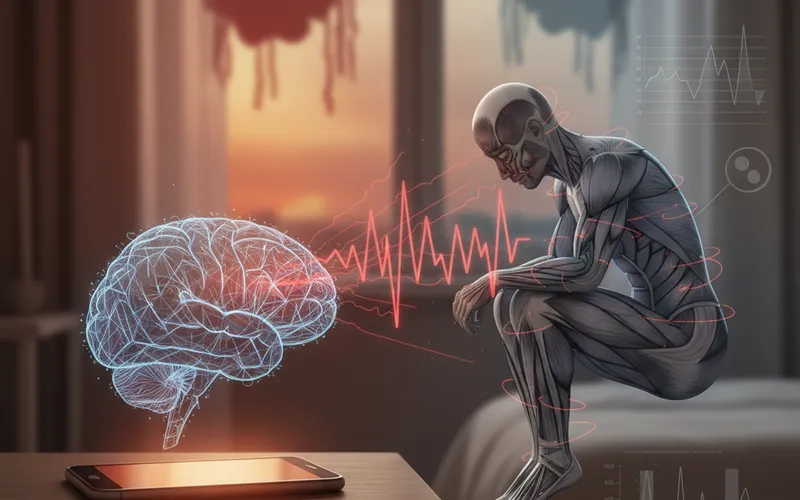
Betrachten wir die Smartphone-Nutzung aus psychophysiologischer Sicht. Wenn du abends noch am Handy bist, geht es nicht nur um das blaue Licht, das die Melatoninproduktion stören kann. Es geht auch um die Inhalte: Nachrichtenschlagzeilen, Social-Media-Feeds, E-Mails von der Arbeit oder emotionale Chats. All das kann Stress auslösen, den Geist anregen und dich in einen Zustand der mentalen Aktivierung versetzen, der dem Einschlafen entgegenwirkt. Dein Gehirn bleibt im „Aufmerksamkeitsmodus“ statt in den „Ruhemodus“ zu wechseln. Dieser mentale Stress, oft unbewusst, kann die Herzfrequenz erhöhen, die Muskelspannung steigern und die Cortisolwerte beeinflussen – alles Faktoren, die einen erholsamen Schlaf torpedieren.
Der Hawthorne-Effekt könnte hier auch eine Rolle spielen. Die Athleten wussten, dass sie zu ihren Schlafgewohnheiten befragt wurden. Allein das Bewusstsein, dass ihr Verhalten beobachtet wird, könnte ihr Schlafverhalten oder zumindest ihre Berichterstattung darüber beeinflusst haben. Jemand, der weiss, dass Smartphone-Nutzung vor dem Schlafengehen „schlecht“ ist, könnte dazu neigen, seine Nutzung herunterzuspielen oder sich bewusster zu verhalten, während er die Fragebögen ausfüllt.
Darüber hinaus spielen Erwartungen eine grosse Rolle. Wenn du fest davon überzeugt bist, dass das Smartphone deinen Schlaf stört, kann allein diese Überzeugung – ein Nocebo-Effekt – dazu führen, dass du schlechter schläfst, selbst wenn der physiologische Effekt des blauen Lichts geringer wäre. Umgekehrt: Wenn du das Handy als Entspannung wahrnimmst, könnte eine solche Nutzung für dich persönlich weniger schädlich sein, als es die Durchschnittsstudie vermuten lässt.
Betrachte auch den Aspekt der emotionalen Regulation. Viele nutzen das Smartphone abends, um von den Gedanken des Tages abzuschalten oder um Langeweile zu vertreiben. Doch anstatt wirklich zur Ruhe zu kommen, kann dies zu einer Art „mentalen Flucht“ führen, die die eigentliche Verarbeitung von Emotionen und Stress verhindert. Wenn du mit Sorgen oder Grübeleien ins Bett gehst, wird dein Schlaf ohnehin beeinträchtigt sein, und das Smartphone könnte diese Muster sogar noch verstärken, anstatt sie zu lösen.
Es ist gut denkbar, dass Athleten, die abends intensiv ihr Smartphone nutzen, dies tun, um mit Leistungsdruck, Stress oder Unsicherheiten umzugehen. Diese zugrunde liegenden psychischen Faktoren könnten die eigentlichen Treiber für sowohl die Smartphone-Nutzung als auch die schlechtere Morgenstimmung sein, während das Smartphone selbst eher ein Symptom als die alleinige Ursache ist. Die Studie deutet auf einen direkten Zusammenhang zwischen Bildschirmexposition und Stimmung hin, was die Idee unterstützt, dass die akute psychische Stimulation wichtiger sein könnte als die chronische Schlafschuld.
Dieses Zusammenspiel von mentaler Aktivierung, Erwartungen und unbewusstem Stress ist ein mächtiger Faktor, der in vielen Studien übersehen wird. Es ist nicht nur das Gerät, es ist auch, was du damit machst und was in deinem Kopf dabei vorgeht.
4. Der grössere Kontext – Einordnung und Abhängigkeiten
Diese Studie reiht sich in eine wachsende Zahl von Forschungsarbeiten ein, die die Auswirkungen von Bildschirmzeit auf Schlaf und Wohlbefinden untersuchen. Sie bestätigt im Wesentlichen die allgemeine Erkenntnis, dass abendliche Bildschirmnutzung den Schlaf beeinträchtigen kann, und erweitert diese auf die spezielle Population von Athleten. Das ist wichtig, da Sportler oft einen höheren Bedarf an qualitativ hochwertigem Schlaf haben, um ihre körperliche und geistige Leistungsfähigkeit zu optimieren.
Finanziert wurde die Studie von verschiedenen portugiesischen Institutionen, darunter die Universität Lissabon und der portugiesische Fussballverband. Dies deutet auf ein Interesse an der Optimierung der Athletenleistung hin, was die Glaubwürdigkeit der Ergebnisse stärkt, da keine kommerziellen Interessen von Smartphone-Herstellern oder dergleichen erkennbar sind. Die Autoren geben keine Interessenkonflikte an, was ein positives Zeichen für die Objektivität der Forschung ist.
Was wurde nicht kontrolliert? Die Studie hat viele wichtige Faktoren berücksichtigt, aber wie immer gibt es Grenzen. Zum Beispiel wurde nicht erfasst, welche Art von Inhalten die Athleten auf ihren Smartphones konsumierten. Gibt es einen Unterschied zwischen dem Lesen eines E-Books auf dem Handy, dem Ansehen eines spannenden Films oder dem Scrollen durch Social Media? Die mentale und emotionale Belastung dieser verschiedenen Aktivitäten ist wahrscheinlich sehr unterschiedlich. Auch andere Lebensstilfaktoren wie der Konsum von Koffein oder Alkohol am Abend, die allgemeine psychische Gesundheit oder Trainingsintensität wurden nicht detailliert kontrolliert, obwohl sie alle den Schlaf und die Morgenstimmung beeinflussen können.
Es ist auch wichtig zu bedenken, dass Korrelation nicht gleich Kausalität ist. Die Studie zeigt Zusammenhänge auf, aber sie beweist nicht, dass das Smartphone allein die schlechtere Morgenstimmung verursacht. Es könnte sein, dass Athleten, die ohnehin Schwierigkeiten mit Schlaf oder Stimmung haben, eher dazu neigen, ihr Smartphone als Ablenkung zu nutzen. In solchen Fällen wäre das Smartphone eher ein Begleitsymptom als die primäre Ursache.
Denkwerkzeug: Bevor du aufgrund dieser Studie dein Smartphone verbannst, frage dich: „Welche anderen Faktoren in meinem Leben könnten meinen Schlaf und meine Stimmung beeinflussen, und wie stark ist der Beitrag meines Smartphones im Vergleich dazu wirklich?“
Diese Studie ist ein Puzzleteil in einem grossen Bild. Sie liefert wertvolle Hinweise, aber sie ist nicht das letzte Wort. Was kannst du nun konkret daraus lernen?
5. Was heisst das für dich? – Fazit und Alltagsrelevanz
Für dich als gesundheitsbewussten Menschen, insbesondere wenn du sportlich aktiv bist, halten diese Erkenntnisse konkrete Handlungsempfehlungen bereit. Es geht nicht darum, das Smartphone zu verteufeln, sondern es bewusster zu nutzen.
- Schaffe eine digitale Auszeit vor dem Schlafengehen: Versuche, dein Smartphone (und andere Bildschirme) mindestens 60 bis 90 Minuten vor dem geplanten Schlafengehen wegzulegen. Nutze diese Zeit für entspannende Aktivitäten wie Lesen (ein physisches Buch!), ein warmes Bad, leichte Dehnübungen oder einfach ein ruhiges Gespräch. Diese „Pufferzone“ hilft deinem Gehirn, vom Aktivitätsmodus in den Ruhemodus zu wechseln.
- Achte auf deine Morgenstimmung: Werde zum Beobachter deiner eigenen Morgenstimmung. Fühlst du dich nach einer langen Smartphone-Session am Vorabend schlechter als sonst? Dies kann ein direkter Indikator dafür sein, dass deine Schlafqualität beeinträchtigt wurde. Dein Körper gibt dir wichtige Signale – lerne, sie zu deuten.
- Reflektiere deine Nutzung: Frage dich, warum du abends zum Smartphone greifst. Ist es Langeweile, der Wunsch nach Ablenkung, oder die Angst, etwas zu verpassen? Das Bewusstsein für die Motivation hinter der Nutzung ist der erste Schritt zur Veränderung.
Was solltest du **NICHT** daraus schliessen? Du musst dein Smartphone nicht komplett aus deinem Leben verbannen. Es ist ein nützliches Werkzeug. Aber es ist wichtig zu verstehen, dass die abendliche Nutzung potentielle Auswirkungen auf deine Erholung und dein Wohlbefinden haben kann. Eine schlechtere Morgenstimmung ist zwar unangenehm, aber keine Katastrophe. Es ist ein Hinweis deines Körpers, dass hier Optimierungspotenzial besteht. Es geht nicht um Perfektion, sondern um bewusste Entscheidungen.
Diese Erkenntnisse sind besonders relevant für Sportler und Menschen mit hohem Leistungsanspruch, da Schlaf und mentale Frische entscheidend für Performance und Regeneration sind. Aber auch für jeden anderen, der morgens frisch und gut gelaunt in den Tag starten möchte, sind diese Hinweise wertvoll.
Der psychophysiologische Gedanke zum Schluss: Dein Körper reagiert nicht nur auf das, was du isst oder wie du dich bewegst, sondern auch fundamental auf das, was du denkst und fühlst. Das Smartphone ist nicht nur ein Gerät, es ist ein Tor zu einer Welt voller Informationen und Emotionen, die dein autonomes Nervensystem beeinflussen können. Eine bewusste Gestaltung deiner Abendroutine ist eine Investition in deine mentale und körperliche Gesundheit. Welche Fragen bleiben offen? Wie würden sich die Ergebnisse verändern, wenn man die Inhalte der Smartphone-Nutzung genauer analysieren würde? Und welche Rolle spielen individuelle Unterschiede in der Melatoninproduktion oder der Stressresistenz?
Nimm diese Erkenntnisse als Anregung, um achtsamer mit deiner Abendroutine umzugehen. Dein Schlaf und deine Morgenstimmung werden es dir danken.