Fettleber und die Medikamentenflut: Warum Polypharmazie deine Gesundheit mehr belasten kann als du denkst
Eine neue Studie beleuchtet die erschreckende Häufigkeit von Polypharmazie bei Fettleber und deren negative Auswirkungen auf die Gesundheit. Erfahre, warum zu viele Medikamente deine Leber belasten und wie du deine Therapie bewusster gestalten kannst.
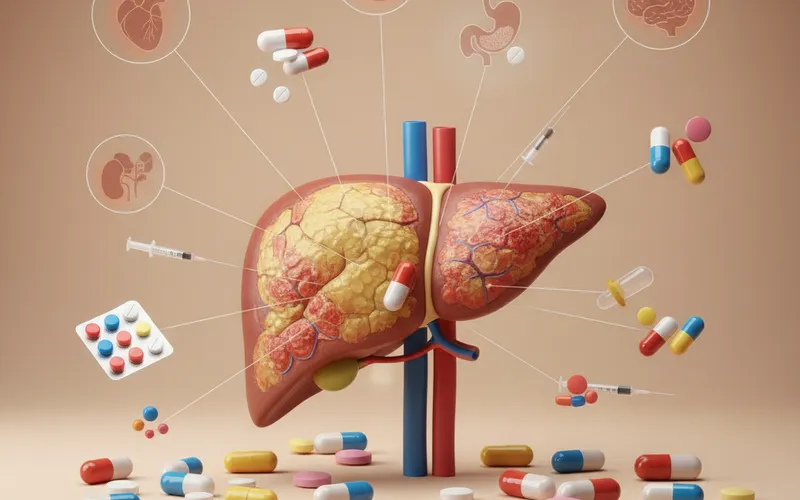
Die Studie – Was wurde untersucht und warum betrifft dich das?
Stell dir vor, du gehst zum Arzt, weil du dich müde fühlst, dein Bauchumfang zunimmt und vielleicht auch deine Leberwerte nicht optimal sind. Die Diagnose lautet: Fettleber, genauer gesagt, eine metabolische Dysfunktion-assoziierte steatotische Lebererkrankung (MASLD). Das ist keine Seltenheit; Millionen von Menschen sind davon betroffen. Oft kommen zu dieser Diagnose noch weitere Beschwerden hinzu, wie Bluthochdruck, Diabetes oder hohe Cholesterinwerte. Und für jede dieser Baustellen erhältst du ein oder mehrere Medikamente. Plötzlich nimmst du eine ganze Handvoll Pillen täglich – morgens, mittags, abends. Was, wenn genau diese Medikamentenflut, auch Polypharmazie genannt, deine Gesundheit zusätzlich belastet, anstatt sie nur zu verbessern?
Genau diese Frage haben sich Forschende des NNEdPro Global Institute for Food Nutrition and Health in Cambridge, England, gestellt und eine umfassende systematische Übersichtsarbeit mit Meta-Analyse durchgeführt. Sie wollten herausfinden, wie weit Polypharmazie bei Menschen mit MASLD verbreitet ist und welche Nebenwirkungen damit verbunden sind, insbesondere im Hinblick auf die Lebensqualität und den Krankheitsverlauf. Die Arbeit wurde im renommierten Fachjournal BMJ Nutrition, Prevention & Health veröffentlicht und bietet wichtige Einblicke in ein oft unterschätztes Problem.
Für ihre Analyse durchsuchten die Wissenschaftler fünf grosse medizinische Datenbanken und berücksichtigten Studien, die bis August 2024 publiziert wurden. Sie schlossen randomisiert-kontrollierte Studien, Kohortenstudien und Fall-Kontroll-Studien ein, die die Prävalenz von Polypharmazie und deren Folgen bei erwachsenen MASLD-Patienten untersuchten. Polypharmazie wurde dabei als die Einnahme von fünf oder mehr verschiedenen Medikamenten definiert. Die Qualität der eingeschlossenen Studien wurde sorgfältig bewertet, um die Aussagekraft der Ergebnisse sicherzustellen.
Die zentralen Ergebnisse sind alarmierend: Von den sechs eingeschlossenen Studien, von denen drei in eine Meta-Analyse mit insgesamt 2194 Teilnehmern eingingen, zeigte sich eine extrem hohe Prävalenz von Polypharmazie. Zwischen 25% und 89% der MASLD-Patienten nahmen mehrere Medikamente ein, mit einem gepoolten Wert von erschreckenden 81%. Das bedeutet, dass über vier von fünf Betroffenen mit Fettleber gleichzeitig fünf oder mehr Medikamente einnehmen. Diese Polypharmazie war mit einer Reihe negativer Folgen verbunden: ein erhöhtes Risiko für Krankenhausaufenthalte aufgrund von hepatischer Enzephalopathie (einer Gehirnfunktionsstörung durch Leberversagen), eine deutlich reduzierte Lebensqualität in physischen und mentalen Bereichen und eine beschleunigte Progression der Lebererkrankung, besonders bei fortgeschrittener MASLD. Häufig verwendete Medikamente wie Anticholinergika und Insulin wurden mit einer erheblichen Symptombelastung und metabolischer Dysregulation in Verbindung gebracht.
Quelle: Armes S, Tibaes J, Rajaram R, Ruddock MW, Kurth MJ, Fitzgerald P, Golubic R, Ray S (2025). Prevalence of polypharmacy and associated side effects in individuals with metabolic dysfunction-associated steatotic liver disease (MASLD): a systematic review and meta-analysis. BMJ nutrition, prevention & health, 8(2):e001236. PubMed-ID: 41768507
Diese Zahlen lassen aufhorchen und zeigen, dass die Medikamentenflut bei Fettleber-Patienten ein ernstzunehmendes Problem ist. Doch was bedeuten diese Ergebnisse wirklich für dich?
Was heisst das wirklich? – Die kritische Einordnung
Die Ergebnisse dieser Studie sind beeindruckend, aber wie bei jeder wissenschaftlichen Arbeit ist es wichtig, genau hinzuschauen. Die gepoolte Prävalenz von 81% für Polypharmazie bei MASLD-Patienten ist ein sehr hoher Wert. Er zeigt, dass die Einnahme mehrerer Medikamente für viele Betroffene eher die Regel als die Ausnahme ist. Doch was bedeutet das konkret für den Einzelnen?
Du bist kein Durchschnitt. Die Studie liefert Durchschnittswerte und statistische Zusammenhänge. Ein p-Wert, der statistische Signifikanz anzeigt, sagt uns, dass ein beobachteter Effekt wahrscheinlich nicht zufällig ist. Er sagt uns aber nicht, wie gross dieser Effekt für dich persönlich ist oder ob er klinisch bedeutsam ist. Ob die Einnahme von sechs statt fünf Medikamenten für dich einen drastischen Unterschied macht, kann die Statistik allein nicht beantworten. Es geht darum, ob sich dein Leben dadurch spürbar verschlechtert, deine Symptome zunehmen oder dein Krankheitsverlauf ungünstiger wird. Die Studie zeigt klar, dass die Polypharmazie mit schlechteren klinischen Outcomes und reduzierter Lebensqualität assoziiert ist, was eine klinische Relevanz nahelegt.
Was wurde wirklich gemessen? Hier wurden nicht nur Surrogatparameter wie Leberwerte untersucht, sondern auch harte Endpunkte wie Krankenhausaufenthalte und die selbstberichtete Lebensqualität (Quality of Life, QoL). Eine reduzierte Lebensqualität ist ein sehr direkter und für den Patienten spürbarer Endpunkt. Auch die Beobachtung einer beschleunigten Lebererkrankungsprogression ist ein ernstes Ergebnis und deutet auf eine direkte klinische Relevanz hin.
Methodische Stärken und Grenzen: Die Stärke dieser Studie liegt in ihrer systematischen Natur als Meta-Analyse. Sie fasst die Ergebnisse mehrerer Studien zusammen und erhöht damit die statistische Aussagekraft. Allerdings wiesen 50% der eingeschlossenen Studien ein hohes Bias-Risiko auf, hauptsächlich aufgrund von Querschnittsdesigns und inkonsistenten Definitionen von Polypharmazie. Ein Querschnittsdesign kann nur Assoziationen, aber keine Ursache-Wirkungs-Beziehungen aufzeigen. Wir wissen also, dass Polypharmazie und schlechtere Outcomes oft zusammen auftreten, aber nicht immer, ob die Polypharmazie direkt die Ursache ist. Es könnte auch sein, dass schwerer kranke Patienten einfach mehr Medikamente benötigen.
Für wen gelten die Ergebnisse? Die Studie konzentrierte sich auf Erwachsene mit MASLD. Wenn du zu dieser Gruppe gehörst, sind die Ergebnisse für dich hochrelevant. Wenn du keine Fettleber hast oder keine Medikamente einnimmst, ist die direkte Übertragbarkeit natürlich geringer. Es ist auch wichtig zu bedenken, dass die genaue Zusammensetzung der Medikamenten-Cocktails von Patient zu Patient stark variiert.
Denkwerkzeug: Welche Medikamente nimmst du momentan regelmässig ein, und weisst du von jedem Einzelnen, warum du es brauchst und welche potenziellen Nebenwirkungen es haben kann?
Diese kritische Einordnung führt uns zur nächsten wichtigen Frage: Welche Rolle spielt dabei eigentlich dein Inneres, deine Psyche, dein Stresslevel?
Der Geist im Körper – Die psychophysiologische Perspektive
Hier kommen wir zum Kern dessen, was auf Jürg Höslis Plattform immer wieder betont wird: Psyche und Körper sind untrennbar miteinander verbunden. Gerade bei der Polypharmazie und ihren Auswirkungen auf die Leber spielt dieser Aspekt eine entscheidende Rolle, die in den meisten Studien viel zu kurz kommt.
Stell dir vor, du nimmst fünf, sechs oder noch mehr Medikamente täglich. Das allein kann eine enorme psychische Belastung darstellen. Die ständige Erinnerung an deine Krankheiten, die Angst vor Nebenwirkungen, das Gefühl, „krank“ zu sein – all das erzeugt Stress. Dieser chronische Stress wiederum beeinflusst deine gesamte Physiologie. Die Cortisol-Achse wird aktiviert, Entzündungsmarker steigen, und dein Stoffwechsel gerät zusätzlich unter Druck. Eine bereits geschwächte Leber, wie bei MASLD, ist dann noch anfälliger für weitere Belastungen, sei es durch die Medikamente selbst oder durch die stressbedingten physiologischen Veränderungen.
Erwartungshaltung und Nocebo-Effekt: Wenn du erwartest, dass Medikamente Nebenwirkungen haben oder dass dein Zustand sich verschlechtert, kann diese Erwartungshaltung die realen Effekte verstärken. Der sogenannte Nocebo-Effekt ist das negative Gegenstück zum Placebo-Effekt und kann dazu führen, dass du dich schlechter fühlst, auch wenn die Medikamente an sich gut verträglich wären. Die Studie berichtet von einer reduzierten Lebensqualität – wie viel davon ist objektiv durch die Medikamente bedingt und wie viel durch die psychische Last der Polypharmazie und der damit verbundenen Krankheitswahrnehmung?
Stress und Leberfunktion: Chronischer Stress ist ein bekannter Faktor, der die Leberfunktion beeinträchtigen kann. Er fördert Entzündungen, Insulinresistenz und kann die Entwicklung und Progression einer Fettleber begünstigen. Wenn nun zur MASLD und den Medikamenten noch der psychische Stress durch die Komplexität der Therapie kommt, entsteht ein Teufelskreis. Die Medikamente sollen helfen, aber die psychische Belastung untergräbt möglicherweise einen Teil ihrer Wirkung oder verstärkt die wahrgenommenen Nebenwirkungen.
Es ist gut denkbar, dass ein Teil der beobachteten schlechteren Outcomes und der reduzierten Lebensqualität nicht nur auf die pharmakologischen Effekte der vielen Medikamente zurückzuführen ist, sondern auch auf die psychologische Last der Polypharmazie selbst und den damit verbundenen erhöhten Stresslevel. Eine Therapie, die diesen psychophysiologischen Aspekt nicht berücksichtigt, greift zu kurz.
Der grössere Kontext – Einordnung und Abhängigkeiten
Diese Studie ist ein wichtiges Puzzleteil in einem immer komplexer werdenden Gesundheitsbild. Sie bestätigt, was viele Ärzte und Patienten intuitiv spüren: Mehr ist nicht immer besser, besonders wenn es um Medikamente geht. Die hohe Prävalenz von Polypharmazie bei MASLD ist nicht überraschend, da diese Erkrankung oft mit anderen Stoffwechselstörungen einhergeht, die wiederum medikamentös behandelt werden.
Wer steht dahinter? Die Autoren sind an verschiedenen Institutionen in England und Nordirland angesiedelt, darunter das NNEdPro Global Institute for Food Nutrition and Health und die Ulster University. Randox Laboratories Ltd, ein Diagnostikunternehmen, ist ebenfalls als Co-Autor aufgeführt. Dies ist eine wichtige Kontextinformation. Es gab keine spezifische Angabe zu direkten Interessenkonflikten bezüglich der Medikamentenindustrie, was die Glaubwürdigkeit der Ergebnisse stärkt. Die Studie selbst fordert ja gerade eine Reduktion der Medikamenteneinnahme, was nicht im Interesse der Pharmaindustrie liegen würde.
Wo steht diese Studie in der Forschungslandschaft? Diese Meta-Analyse untermauert frühere Beobachtungen, dass Polypharmazie im Allgemeinen mit schlechteren Gesundheitsoutcomes verbunden ist, und spezialisiert diese Erkenntnis auf die Gruppe der MASLD-Patienten. Sie ist ein starker Hinweis darauf, dass das Problem bei dieser spezifischen Patientengruppe besonders ausgeprägt ist und dringend angegangen werden muss. Eine einzelne Studie ist nie die ganze Wahrheit, aber eine Meta-Analyse wie diese fasst vorhandenes Wissen zusammen und schafft eine solide Basis für weitere Diskussionen und Interventionen.
Was wurde nicht kontrolliert? Die Studie konnte naturgemäss nicht alle potenziellen Confounder kontrollieren. Lebensstilfaktoren wie Ernährung, Bewegung, Schlaf und Stressmanagement spielen eine enorme Rolle bei der Entwicklung und dem Verlauf von MASLD und können auch die Notwendigkeit und Wirkung von Medikamenten beeinflussen. Auch die individuelle Genetik, die oft die Medikamentenverstoffwechselung beeinflusst, wurde nicht detailliert betrachtet. Dies ist keine Kritik an der Studie, sondern eine Erinnerung daran, dass im realen Leben viele Faktoren zusammenspielen, die in einer Studie nur schwer isoliert werden können.
Denkwerkzeug: Wenn du Medikamente einnimmst, überlege: Gibt es alternative Ansätze (Ernährung, Bewegung, Stressmanagement), die du noch nicht voll ausgeschöpft hast und die vielleicht dazu beitragen könnten, die Anzahl deiner Medikamente zu reduzieren?
Dies führt uns zu der entscheidenden Frage: Was kannst du aus all dem für dich mitnehmen?
Was heisst das für dich? – Fazit und Alltagsrelevanz
Diese Studie ist ein Weckruf. Sie zeigt, dass die schiere Menge an Medikamenten, die bei einer Fettleber oft verschrieben wird, nicht nur den Körper, sondern auch die Psyche belasten kann und mit schlechteren Gesundheitsergebnissen verbunden ist. Was kannst du daraus lernen?
- Sei proaktiv in deinem Medikamentenmanagement: Sprich mit deinem Arzt offen über alle Medikamente, die du einnimmst. Frage kritisch nach, ob jedes einzelne Medikament wirklich notwendig ist und ob es Alternativen gibt. Das Konzept des „Deprescribing“, also des gezielten Reduzierens oder Absetzens von Medikamenten, ist ein wichtiger Ansatz, der hier ins Spiel kommt.
- Hinterfrage die Ursachen: Medikamente behandeln oft Symptome, nicht die Ursachen. Eine Fettleber entsteht selten isoliert. Sie ist oft die Folge eines ungesunden Lebensstils. Fokussiere dich auf Ernährungsumstellung, regelmässige Bewegung und Stressmanagement, um die Grundursachen anzugehen und vielleicht die Notwendigkeit vieler Medikamente zu reduzieren.
- Achte auf deinen Körper und deine Psyche: Nimm die psychische Belastung durch Polypharmazie ernst. Wenn du dich durch die vielen Pillen überfordert fühlst, sprich darüber. Dein Stresslevel hat direkten Einfluss auf deine Physiologie und kann die Wirkung von Medikamenten und deinen Krankheitsverlauf beeinflussen.
Was solltest du NICHT daraus schliessen? Diese Studie ist keine Aufforderung, Medikamente eigenmächtig abzusetzen oder ärztlichen Rat zu ignorieren. Das wäre gefährlich. Sie ist vielmehr ein Appell an dich, ein informierter und mündiger Patient zu sein, der aktiv mit seinen Ärzten zusammenarbeitet, um die bestmögliche und minimal-invasive Therapie zu finden.
Für wen ist das besonders relevant? Wenn du an einer Fettleber leidest und bereits mehrere Medikamente einnimmst, ist diese Information für dich von höchster Relevanz. Aber auch wenn du (noch) keine Fettleber hast, aber bereits an anderen Stoffwechselstörungen leidest und mehrere Medikamente nimmst, kann diese Studie eine wichtige Denkanstoss sein.
Der psychophysiologische Gedanke zum Schluss: Dein Körper reagiert nicht nur auf die chemischen Substanzen der Medikamente, sondern auch auf deine Überzeugungen, Ängste und deinen allgemeinen mentalen Zustand. Gesundheit ist ein komplexes Zusammenspiel. Eine optimale Therapie berücksichtigt immer beides: die physiologischen Notwendigkeiten und die psychologische Realität des Patienten. Die Zukunft der Medizin liegt in einem ganzheitlichen Ansatz, der nicht nur die Symptome, sondern den ganzen Menschen sieht.
Bleibe neugierig, stelle Fragen und übernimm Verantwortung für deine Gesundheit – in enger Zusammenarbeit mit deinem Arzt. Denn dein Wohlbefinden ist mehr als die Summe deiner Medikamente.