RvD1: Wie Omega-3 Entzündungen und Schmerz auflösen könnte
Schmerzmittel haben oft Nebenwirkungen. Eine neue Untersuchung beleuchtet, wie ein Omega-3-Derivat namens RvD1 auf natürliche Weise Schmerz und Entzündung lindern könnte – ein vielversprechender Ansatz für sicherere Alternativen.
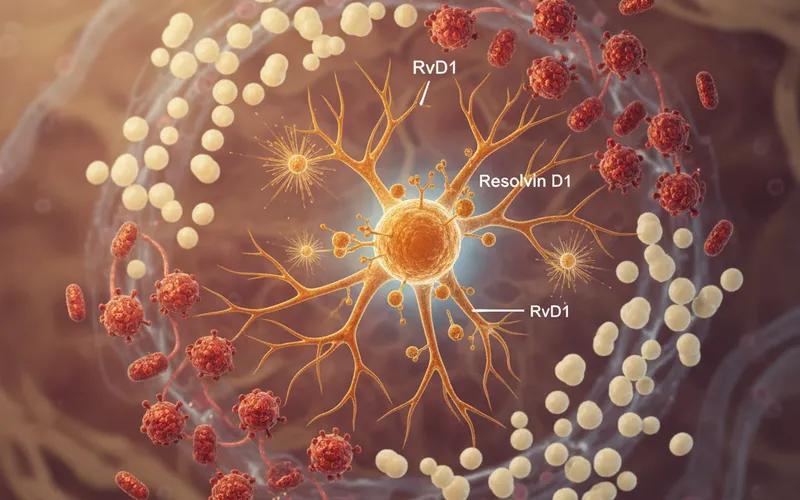
Die Studie – Was wurde untersucht und warum betrifft dich das?
Stell dir vor, du wachst morgens auf und jeder Schritt schmerzt, deine Gelenke fühlen sich steif an, oder ein alter Sportunfall meldet sich wieder. Schmerz ist ein Warnsignal des Körpers, ein Schutzmechanismus, der uns vor Gefahren bewahrt. Doch chronischer Schmerz, oft begleitet von Entzündungen, kann das Leben zur Qual machen. Viele greifen dann zu gängigen Schmerzmitteln wie nichtsteroidalen Antirheumatika (NSAIDs), Cortison oder Opioiden. Sie wirken oft gut, keine Frage. Aber Hand aufs Herz: Hast du dich auch schon gefragt, ob es nicht sanftere, natürlichere Wege gibt, Schmerz zu lindern, ohne den Körper mit potenziellen Nebenwirkungen zu belasten?
Genau an diesem Punkt setzt eine aktuelle Übersichtsarbeit aus dem Jahr 2026 an. Forschende um Martelossi-Cebinelli und Verri von der Londrina State University in Brasilien haben sich genauer angesehen, wie ein bestimmtes Molekül namens Resolvin D1 (RvD1) Schmerz auflösen könnte. Diese Studie ist keine neue Laboruntersuchung im klassischen Sinne, sondern eine Preclinical Insight – eine Zusammenfassung und Analyse bestehender präklinischer Forschungsergebnisse. Das bedeutet, das Team hat die aktuelle wissenschaftliche Literatur zu RvD1 durchforstet und die wichtigsten Erkenntnisse zu seinen schmerzlindernden Mechanismen zusammengetragen.
RvD1 ist besonders interessant, weil es kein synthetisches Medikament ist, sondern ein sogenannter spezialisierter pro-resolvierender Mediator (SPM). Diese Mediatoren sind Derivate von mehrfach ungesättigten Fettsäuren – genauer gesagt, RvD1 stammt aus der Omega-3-Fettsäure Docosahexaensäure (DHA). Ihre Aufgabe im Körper ist es, Entzündungsprozesse aktiv zu beenden und die Heilung zu fördern. Die zentrale Frage der Forschenden war: Wie genau gelingt es RvD1, Schmerz und Entzündungen zu modulieren, und welche präklinischen Belege gibt es dafür?
Die Autoren haben dabei verschiedene präklinische Modelle untersucht und festgestellt, dass RvD1 auf vielfältige Weise wirkt. Es beeinflusst nicht nur das Immunsystem, sondern auch Nervenzellen (Neuronen) und Gliazellen, die unterstützenden Zellen im Nervensystem. Diese multimodale Wirkweise macht RvD1 zu einem vielversprechenden Kandidaten für die Entwicklung neuer, sichererer Therapien zur Linderung entzündlicher und schmerzhafter Prozesse.
Quelle: Martelossi-Cebinelli G, Zaninelli TH, Casagrande R, Borghi SM, Verri WA Jr (2026). Resolving Pain: Preclinical Insights into the Analgesic Mechanisms of RvD1. Current reviews in clinical and experimental pharmacology. PubMed-ID: 41832624
Was heisst das wirklich? – Die kritische Einordnung
Diese Übersichtsarbeit ist spannend, weil sie einen vielversprechenden natürlichen Wirkstoff in den Fokus rückt, der auf eine andere Art und Weise wirkt als viele herkömmliche Schmerzmittel. Statt die Entzündung einfach zu unterdrücken, wie es beispielsweise NSAIDs tun, scheint RvD1 den Körper dabei zu unterstützen, die Entzündung aktiv zu „beenden“ und die Schmerzrezeptoren zu beruhigen. Das ist ein wichtiger Unterschied.
Es ist jedoch wichtig zu verstehen, dass es sich hier um eine präklinische Untersuchung handelt. Das bedeutet, die Ergebnisse stammen hauptsächlich aus Zellkulturen und Tiermodellen. Was im Labor oder bei Mäusen funktioniert, lässt sich nicht eins zu eins auf den Menschen übertragen. Es ist ein erster, aber entscheidender Schritt in der Forschungskette. Die Studie zeigt die potenziellen Mechanismen auf, aber die tatsächliche Wirksamkeit und Sicherheit beim Menschen muss noch in klinischen Studien überprüft werden.
Ein weiterer wichtiger Punkt ist, dass diese Arbeit eine Zusammenfassung bestehender Forschung ist. Sie liefert also keine neuen Daten aus einem eigenen Experiment, sondern ordnet die vorhandenen Erkenntnisse ein. Das ist wertvoll, um einen Überblick über den Forschungsstand zu bekommen und zukünftige Studien zu leiten. Die methodische Stärke liegt also in der umfassenden Literaturanalyse und der Identifikation der Hauptwirkmechanismen von RvD1. Eine Grenze ist natürlich, dass die Qualität der analysierten Einzelstudien variieren kann und die Ergebnisse, wie gesagt, noch nicht am Menschen getestet wurden.
Denkwerkzeug: Wenn du von einem neuen „Wundermittel“ hörst, das in präklinischen Studien vielversprechend war, frage dich immer: „Gibt es bereits Studien am Menschen? Wenn nicht, wie weit ist die Forschung wirklich, und wie lange könnte es dauern, bis es eine zugelassene Therapie gibt?“
Der Geist im Körper – Die psychophysiologische Perspektive
Hier wird es besonders spannend, wenn wir durch die psychophysiologische Brille blicken. RvD1 ist ein Derivat von Omega-3-Fettsäuren. Viele Menschen nehmen Omega-3-Präparate ein, oft mit der Erwartung, etwas Gutes für ihre Gesundheit zu tun. Und genau hier kommt die psychische Komponente ins Spiel: Der Glaube an die Wirksamkeit eines Mittels – sei es ein Medikament oder ein Nahrungsergänzungsmittel – kann die physiologische Wirkung massgeblich beeinflussen. Wir sprechen hier vom Placebo-Effekt.
Es ist gut denkbar, dass die positiven Erwartungen an die Einnahme von Omega-3-Fettsäuren oder später vielleicht eines RvD1-basierten Medikaments die körpereigene Schmerzverarbeitung zusätzlich positiv beeinflussen. Wenn du überzeugt bist, dass du etwas tust, das dir hilft, kann das dein Schmerzempfinden reduzieren, deine Stressreaktion dämpfen und sogar die Ausschüttung körpereigener schmerzlindernder Substanzen fördern. Diese psychische Komponente – die Erwartungshaltung und das Vertrauen in eine Therapie – ist ein mächtiger Faktor, der in präklinischen Studien naturgemäss nicht erfasst werden kann.
Auch die Beziehung zwischen chronischem Schmerz und Stress ist unbestreitbar. Chronischer Schmerz ist ein enormer Stressor für den Körper und die Psyche. Er kann zu Angst, Depressionen und Schlafstörungen führen, was wiederum die Schmerzempfindlichkeit erhöht und Entzündungsprozesse verstärken kann. Wenn RvD1 tatsächlich entzündungsauflösend wirkt, könnte es nicht nur den Schmerz direkt lindern, sondern indirekt auch den Teufelskreis aus Schmerz und Stress durchbrechen. Eine Verringerung der Entzündung könnte zu einer Reduktion des allgemeinen Stresslevels im Körper führen, was sich wiederum positiv auf die psychische Verfassung auswirken würde.
Diese psychophysiologischen Interaktionen sind in der Schmerzforschung von entscheidender Bedeutung. Ein Wirkstoff wie RvD1, der Entzündungen aktiv „auflöst“, könnte somit nicht nur auf zellulärer Ebene wirken, sondern auch einen positiven Einfluss auf die gesamte Stressachse und das Wohlbefinden haben, indem er dem Körper hilft, wieder ins Gleichgewicht zu kommen.
Der grössere Kontext – Einordnung und Abhängigkeiten
Diese Übersichtsarbeit ist ein wichtiges Puzzleteil in der Suche nach besseren Schmerztherapien. Die Forschung an spezialisierten pro-resolvierenden Mediatoren (SPMs) wie RvD1 ist ein relativ junges, aber sehr vielversprechendes Feld. Es repräsentiert einen Paradigmenwechsel: Statt Entzündungen nur zu unterdrücken, versucht man, die natürlichen Prozesse des Körpers zu unterstützen, die Entzündungen aktiv beenden und zur Heilung führen. Das ist ein eleganterer Ansatz, der potenziell weniger Nebenwirkungen hat als viele aktuelle Medikamente.
Die Autoren dieser Studie sind an verschiedenen Universitäten in Brasilien und den USA angesiedelt. Die Finanzierung und mögliche Interessenkonflikte werden im Abstract nicht explizit genannt, was bei einer reinen Übersichtsarbeit oft der Fall ist, da keine neuen Daten generiert wurden, die eine direkte Finanzierung durch Pharmaunternehmen erfordern würden. Es ist davon auszugehen, dass die Forschung in diesem Bereich primär von öffentlichen Forschungsgeldern getragen wird, was die Objektivität der Analyse stärkt.
Diese Studie bestätigt und vertieft die Erkenntnisse, dass Omega-3-Fettsäuren nicht nur entzündungshemmend wirken, sondern auch spezifische Signalmoleküle wie RvD1 bilden, die eine aktive Rolle bei der Auflösung von Entzündungen spielen. Sie reiht sich ein in eine wachsende Zahl von Studien, die die Bedeutung dieser Mediatoren für die Gesundheit beleuchten.
Was oft nicht kontrolliert werden kann, aber dennoch einen grossen Einfluss hat, sind die individuellen Lebensstilfaktoren der Menschen, die später möglicherweise von solchen Therapien profitieren sollen. Ernährungsgewohnheiten, Stresslevel, Schlafqualität und Bewegungsmuster beeinflussen die körpereigene Fähigkeit, Entzündungen zu regulieren und SPMs zu bilden. Eine Person mit einem stressigen Lebensstil und einer pro-entzündlichen Ernährung wird möglicherweise weniger von einem RvD1-basierten Mittel profitieren als jemand, der bereits einen gesunden Lebensstil pflegt.
Denkwerkzeug: Bevor du eine neue Therapie in Betracht ziehst, frage dich: „Welche meiner Lebensgewohnheiten könnten die Wirksamkeit dieser Therapie beeinflussen, und kann ich diese Faktoren optimieren, um die besten Ergebnisse zu erzielen?“
Was heisst das für dich? – Fazit und Alltagsrelevanz
Diese Übersichtsarbeit zeigt dir, dass die Forschung intensiv daran arbeitet, neben den bekannten Schmerzmitteln auch sanftere, körpereigene Wege der Schmerzbehandlung zu finden. Was kannst du konkret daraus mitnehmen?
- Die Kraft der Omega-3-Fettsäuren: RvD1 wird aus der Omega-3-Fettsäure DHA gebildet. Das unterstreicht noch einmal die Bedeutung einer ausreichenden Zufuhr von Omega-3-Fettsäuren, zum Beispiel durch fettreichen Fisch (Lachs, Makrele, Hering) oder hochwertige Algenöle. Dein Körper braucht diese Bausteine, um entzündungsauflösende Moleküle wie RvD1 selbst herstellen zu können.
- Ein Blick in die Zukunft: Auch wenn RvD1 noch nicht als Medikament verfügbar ist, gibt dir diese Forschung Hoffnung. Sie zeigt, dass es vielversprechende Ansätze gibt, Schmerz nicht nur zu betäuben, sondern die Entzündung, die ihn oft verursacht, aktiv zu beenden und so die Heilung zu fördern.
- Die Rolle deiner Psyche: Erinnere dich daran, dass deine Erwartungshaltung und dein Glaube an eine Therapie eine Rolle spielen können. Eine gesunde Lebenseinstellung, Stressmanagement und das Vertrauen in die Selbstheilungskräfte deines Körpers sind immer wichtige Begleiter, auch wenn du auf Medikamente angewiesen bist.
Was solltest du aber nicht daraus schliessen? Diese Studie ist kein Freifahrtschein, jetzt alle anderen Schmerzmittel abzusetzen und nur noch auf Omega-3 zu setzen. Sprich immer mit deinem Arzt, bevor du deine Medikation änderst. RvD1 ist noch in der präklinischen Forschung, und es wird noch einige Zeit dauern, bis es möglicherweise als Therapie zur Verfügung steht.
Für wen ist das besonders relevant? Für alle, die unter chronischen Entzündungsprozessen oder Schmerzen leiden und nach ganzheitlichen Ansätzen suchen, die die körpereigenen Heilungsmechanismen stärken. Es ist auch relevant für alle, die an der Bedeutung von Ernährung und Nahrungsergänzungsmitteln für ihre Gesundheit interessiert sind.
Dein Körper ist ein komplexes System, und Gesundheit ist immer ein Zusammenspiel von dem, was du isst, wie du dich bewegst, wie du schläfst und vor allem, wie du denkst und fühlst. Diese Studie erinnert uns daran, dass wir die Bausteine für unsere Gesundheit oft in uns selbst finden – oder durch bewusste Entscheidungen bereitstellen können.
Bleibe neugierig, höre auf deinen Körper und informiere dich weiterhin kritisch. Die Forschung geht weiter, und mit jedem neuen Puzzlestück verstehen wir besser, wie wir unsere Gesundheit optimal unterstützen können.
Wissenschaftliche Quelle
Current reviews in clinical and experimental pharmacology