Nährstoff-Timing beim Krafttraining: Wann ist der beste Zeitpunkt für Muskelaufbau?
Verpasst du das anabole Fenster? Eine neue Studie untersucht, ob der Zeitpunkt deiner Proteinzufuhr nach dem Training wirklich entscheidend für Muskelwachstum und Kraft ist – und welche Rolle mikroskopisch kleine Botenstoffe dabei spielen.
1. Die Studie – Was wurde untersucht und warum betrifft dich das?
Du gibst im Training alles, schwitzt, stemmst Gewichte und achtest darauf, genug Eiweiss zu dir zu nehmen. Aber hast du dich jemals gefragt, ob der genaue Zeitpunkt deiner Mahlzeit nach dem Training wirklich einen Unterschied macht? Ist das berühmte «anabole Fenster» – dieses kurze Zeitfenster direkt nach dem Sport, in dem dein Körper Nährstoffe besonders gut aufnehmen soll – tatsächlich so entscheidend für deinen Muskelaufbau und deine Kraftentwicklung, wie oft behauptet wird? Oder ist es am Ende doch zweitrangig, solange die Gesamtzufuhr stimmt?
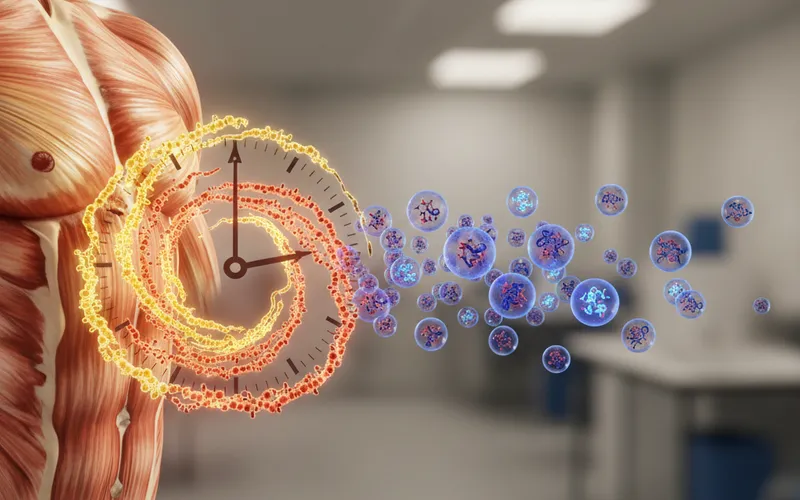
Genau diese Frage haben sich Forschende der Universitäten Pécs in Ungarn gestellt. Sie wollten herausfinden, wie sich chronisches Widerstandstraining in Kombination mit unterschiedlichem Nährstoff-Timing auf die Muskelmasse, Kraft und sogar auf die Profile von Mikro-RNAs (miRNAs) in sogenannten extrazellulären Vesikeln (EVs) auswirkt. miRNAs sind kleine, nicht-kodierende RNA-Moleküle, die eine wichtige Rolle bei der Genregulation spielen und so auch den Proteinaufbau und -abbau beeinflussen können. EVs sind winzige Bläschen, die von Zellen freigesetzt werden und Botenstoffe, einschliesslich miRNAs, zwischen Zellen transportieren.
Für diese Studie wurden zwanzig junge, widerstandstrainierte Männer (Durchschnittsalter 22 ± 2 Jahre) rekrutiert. Sie absolvierten ein fünfwöchiges Hypertrophie-Trainingsprogramm, das auf Muskelwachstum ausgelegt war. Die Teilnehmer wurden in drei Gruppen unterteilt, die sich durch das Timing ihrer Post-Workout-Ernährung unterschieden:
- AE-Gruppe (Immediately After Exercise): Nahm Maltodextrin und Molkenprotein unmittelbar nach dem Training ein.
- AE3-Gruppe (Three Hours After Exercise): Nahm Maltodextrin und Molkenprotein drei Stunden nach dem Training ein.
- CTRL-Gruppe (Control): Nahm keine spezifische Post-Workout-Supplementierung ein.
Alle Gruppen führten das gleiche Trainingsprogramm durch, und die Gesamt-Makronährstoffzufuhr wurde über die gesamte Studiendauer überwacht, um sicherzustellen, dass die Hauptunterschiede im Timing lagen. Vor und nach der fünfwöchigen Intervention wurden die Körperzusammensetzung (Muskelmasse, Körperfettanteil) und die Kniebeugestärke gemessen. Zusätzlich wurden Blutproben entnommen, um die kleinen extrazellulären Vesikel zu isolieren und die darin transportierten miRNA-Profile zu analysieren. Dies ermöglichte den Forschenden, nicht nur die sichtbaren Veränderungen im Körper zu erfassen, sondern auch tiefere Einblicke in die molekularen Mechanismen der Anpassung zu gewinnen.
Die zentralen Ergebnisse der Studie waren:
- Die Skelettmuskelmasse nahm in der AE-Gruppe signifikant zu (p = 0.001, g = 2) und auch in der AE3-Gruppe (p = 0.028, g = 1). Die Zunahme in der AE-Gruppe war dabei signifikant höher als in der Kontrollgruppe (p = 0.013, η2 = 0.41).
- Die Kniebeugestärke verbesserte sich nur in der AE-Gruppe signifikant (p = 0.032, g = 0.9).
- Der Körperfettanteil nahm in allen drei Gruppen signifikant ab (AE: p = 0.005, g = 1.5; AE3: p = 0.024, g = 1; CTRL: p = 0.005, g = 1.7).
- Die Konzentration der extrazellulären Vesikel nahm in der AE-Gruppe signifikant zu (p = 0.043, r = 0.7), während sie in der CTRL-Gruppe abnahm (p = 0.046, r = 0.8).
- Nach der Intervention zeigten sich unterschiedliche miRNA-Expressionsprofile: 20 miRNAs waren in der AE-Gruppe hochreguliert, während 13 in der AE3-Gruppe und 15 in der CTRL-Gruppe herunterreguliert waren.
Die Forschenden schlussfolgern, dass das Nährstoff-Timing die Trainingsanpassung beeinflusst, aber nicht kritischer ist als die gesamte Makronährstoffzufuhr. Die Veränderungen in den EV-transportierten miRNAs könnten über Signalwege wie PI3K-AKT-mTOR und FoxO anabolische Prozesse regulieren.
Quelle: Csala D, Ádám Z, Horváth-Szalai Z, Sebesi B, Garai K, Kvell K, Wilhelm M (2026). Chronic Resistance Exercise Combined with Nutrient Timing Enhances Skeletal Muscle Mass and Strength While Modulating Small Extracellular Vesicle miRNA Profiles. Biomedicines, 14(1):127. PubMed-ID: 41595663
Diese Ergebnisse werfen spannende Fragen auf: Ist es wirklich so einfach, dass ein Shake direkt nach dem Training dir mehr bringt als der gleiche Shake drei Stunden später? Und was bedeuten diese Veränderungen auf molekularer Ebene für dich?
2. Was heisst das wirklich? – Die kritische Einordnung
Auf den ersten Blick scheinen die Ergebnisse klar: Die Gruppe, die ihre Nährstoffe sofort nach dem Training zu sich nahm (AE), zeigte die besten Resultate in Bezug auf Muskelmasse und Kraft. Die AE3-Gruppe, die ihre Nährstoffe drei Stunden später konsumierte, zeigte zwar auch Muskelwachstum, aber keine signifikante Kraftsteigerung. Und die Kontrollgruppe, die nur trainierte, verlor sogar EVs und hatte die geringsten Zuwächse in Muskelmasse, aber immerhin auch eine Reduktion des Körperfettanteils.
Doch wie immer lohnt sich ein genauerer Blick. Die statistische Signifikanz (p-Werte) sagt uns, dass die beobachteten Unterschiede wahrscheinlich nicht zufällig sind. Aber die Effektstärken (g und η2) geben uns ein Gefühl für die Grösse dieser Unterschiede. Ein g-Wert von 2 für Muskelwachstum in der AE-Gruppe ist beispielsweise ein sehr grosser Effekt, während g = 1 in der AE3-Gruppe immer noch beachtlich ist. Dies deutet darauf hin, dass das Nährstoff-Timing tatsächlich einen messbaren Einfluss haben kann.
Ein wichtiger Punkt ist, dass alle Gruppen ihren Körperfettanteil signifikant reduzieren konnten – selbst die Kontrollgruppe. Das zeigt, dass das Widerstandstraining an sich schon sehr effektiv ist, um die Körperzusammensetzung positiv zu beeinflussen, unabhängig vom genauen Nährstoff-Timing oder der Supplementierung. Hier wurden also nicht nur Surrogatparameter gemessen, sondern harte Endpunkte wie Muskelmasse und Kraft, die für Trainierende direkt relevant sind. Die miRNA-Profile sind faszinierend, da sie Einblicke in die zellulären Mechanismen geben, aber für den Alltag sind die physiologischen Anpassungen wichtiger.
Die Studie wurde an relativ jungen, widerstandstrainierten Männern durchgeführt. Das ist eine homogene Gruppe, was die Aussagekraft der Ergebnisse für diese spezifische Population erhöht. Allerdings bedeutet es auch, dass die Ergebnisse nicht eins zu eins auf andere Altersgruppen, Frauen oder untrainierte Personen übertragen werden können. Ihr Stoffwechsel und ihre hormonelle Reaktion auf Training und Nährstoffe können sich unterscheiden.
Denkwerkzeug: Wenn du diese Studie liest, frage dich: Wie ähnlich bin ich den Studienteilnehmern in Bezug auf Alter, Geschlecht und Trainingserfahrung? Könnten meine persönlichen Umstände die Relevanz dieser Ergebnisse für mich verändern?
Die Studie liefert wertvolle Hinweise, ist aber nur ein Puzzleteil. Auch wenn sie methodisch sauber erscheint, müssen wir die psychophysiologische Dimension betrachten, die oft übersehen wird.
3. Der Geist im Körper – Die psychophysiologische Perspektive
Das psychophysiologische Interaktionsmodell lehrt uns, dass Körper und Geist untrennbar miteinander verbunden sind. Was wir denken, glauben und fühlen, beeinflusst unsere Physiologie auf tiefgreifende Weise. Gerade bei Studien, die sich mit Nährstoffen und Trainingsanpassungen beschäftigen, spielt die Erwartungshaltung eine nicht zu unterschätzende Rolle.
Denke an den Placebo-Effekt: Allein die Überzeugung, etwas Wirksames einzunehmen, kann messbare physiologische Veränderungen hervorrufen. Wenn du fest daran glaubst, dass der Proteinshake direkt nach dem Training entscheidend ist, erzeugst du möglicherweise eine positive Erwartungshaltung. Diese Überzeugung kann zu einer erhöhten Motivation führen, das Training intensiver durchzuführen, sich besser zu erholen und bewusster auf andere Lebensstilfaktoren zu achten. Dein Körper könnte auf diese positive Erwartungshaltung hin anders reagieren.
In dieser Studie erhielten die AE- und AE3-Gruppen gezielt Maltodextrin und Molkenprotein. Die Teilnehmer wussten, dass sie ein Supplement erhielten, das für Muskelwachstum vorteilhaft sein sollte. Es ist gut denkbar, dass diese bewusste Supplementierung – unabhängig vom exakten Timing – bereits eine stärkere Motivation und ein Gefühl der «richtigen» Vorgehensweise erzeugt hat, die sich positiv auf die Trainingsleistung und somit auf die Ergebnisse auswirkten. Die Kontrollgruppe hingegen erhielt keine spezifische Supplementierung und hatte möglicherweise nicht diese zusätzliche mentale Unterstützung.
Auch der Hawthorne-Effekt könnte eine Rolle gespielt haben: Alle Teilnehmer wussten, dass sie Teil einer wissenschaftlichen Studie waren. Das allein kann dazu führen, dass sie sich bewusster an das Trainingsprotokoll hielten, sich mehr anstrengten und sich besser erholten, als sie es im Alltag vielleicht tun würden. Die AE-Gruppe, die die «optimale» Strategie verfolgte, könnte sich hier besonders motiviert gefühlt haben.
Es ist also nicht nur die chemische Zusammensetzung des Shakes, die zählt, sondern auch die Geschichte, die wir uns dazu erzählen, und die Erwartungen, die wir damit verbinden. Dein Glaube an die Wirksamkeit einer Strategie kann selbst zu einer wirksamen Strategie werden, indem er deine psychische und physiologische Reaktion moduliert.
4. Der grössere Kontext – Einordnung und Abhängigkeiten
Diese Studie reiht sich in eine lange Debatte um das «anabole Fenster» ein. Die vorherrschende Meinung in der Sportwissenschaft tendiert heute dazu, dass die Gesamtzufuhr von Protein und Kalorien über den Tag hinweg wichtiger ist als das exakte Timing direkt nach dem Training. Viele Studien haben gezeigt, dass das anabole Fenster nicht so eng ist, wie ursprünglich angenommen, und dass eine Proteinzufuhr auch einige Stunden nach dem Training noch effektiv ist, solange die tägliche Gesamtproteinmenge stimmt.
Die vorliegende Studie bestätigt diese Sichtweise teilweise, indem sie zeigt, dass auch die AE3-Gruppe (drei Stunden später) Muskelzuwächse hatte. Allerdings liefert sie auch Hinweise darauf, dass ein früheres Timing (sofort nach dem Training) möglicherweise Vorteile in Bezug auf Kraftentwicklung und die Regulation von miRNAs haben könnte. Dies legt nahe, dass das Timing zwar nicht absolut entscheidend ist, aber unter bestimmten Umständen (z.B. bei Maximierung der Kraftzuwächse) eine Rolle spielen könnte.
Interessant ist auch die Finanzierung der Studie: Sie wurde unter anderem durch das ungarische Stipendienprogramm «New National Excellence Program» und das «National Research, Development and Innovation Office» unterstützt. Es werden keine offensichtlichen Interessenkonflikte mit der Supplementindustrie genannt, was die Glaubwürdigkeit der Ergebnisse stärkt. Dennoch ist es wichtig zu wissen, dass die Supplementierung mit Maltodextrin und Molkenprotein erfolgte, was in der Sportwelt weit verbreitet ist und von einer Industrie beworben wird.
Was wurde nicht kontrolliert? Die Studie konzentrierte sich auf das Nährstoff-Timing und die Supplementierung. Andere wichtige Lebensstilfaktoren, die den Muskelaufbau und die Erholung massgeblich beeinflussen, wie Schlafqualität, Stresslevel ausserhalb des Trainings oder individuelle Unterschiede in der Genetik und Darmmikrobiom, wurden nicht spezifisch erfasst oder kontrolliert. Jede Studie muss Grenzen setzen, aber der Leser sollte sich bewusst sein, dass diese Faktoren in seinem eigenen Leben eine grosse Rolle spielen könnten.
Denkwerkzeug: Bevor du deine Trainings- oder Ernährungsstrategie auf Basis dieser einen Studie änderst, frage dich: Welche anderen Faktoren in meinem Leben (Schlaf, Stress, allgemeine Ernährung) könnten einen grösseren Einfluss auf meine Ergebnisse haben als der genaue Zeitpunkt meines Shakes?
5. Was heisst das für dich? – Fazit und Alltagsrelevanz
Was bedeutet diese Studie nun für dich und dein Training? Hier sind 2–3 konkrete Erkenntnisse, die du mitnehmen kannst:
- Timing ist nicht alles, aber es kann einen Unterschied machen: Wenn du deine Muskelmasse und Kraft maximieren möchtest und es dir möglich ist, dein Protein und Kohlenhydrate direkt nach dem Training zu dir zu nehmen, könnte dies einen kleinen Vorteil bringen. Die Studie deutet darauf hin, dass die unmittelbare Zufuhr zu besseren Kraftzuwächsen und einer vorteilhafteren miRNA-Regulation führt.
- Die Gesamtzufuhr bleibt König: Auch wenn das Timing eine Rolle spielen mag, betonen die Forschenden selbst, dass es nicht kritischer ist als die gesamte Makronährstoffzufuhr. Achte also zuallererst darauf, dass du über den Tag verteilt ausreichend Protein (ca. 1.6-2.2g pro kg Körpergewicht) und Kalorien zu dir nimmst, um deine Trainingsziele zu unterstützen. Das ist das Fundament, auf dem alles andere aufbaut.
- Training allein ist schon wirksam: Selbst die Kontrollgruppe, die keine spezifische Post-Workout-Ernährung erhielt, konnte ihren Körperfettanteil reduzieren. Das zeigt, wie effektiv Widerstandstraining an sich ist, um deine Körperzusammensetzung positiv zu beeinflussen. Lass dich nicht entmutigen, wenn du nicht immer sofort nach dem Training deinen Shake einnehmen kannst.
Was du daraus nicht schliessen solltest, ist, dass ein verpasster Shake direkt nach dem Training all deine Bemühungen zunichtemacht. Panik ist hier fehl am Platz. Dein Körper ist widerstandsfähig und passt sich an. Wenn es dir nicht immer gelingt, dein «anaboles Fenster» perfekt zu treffen, ist das kein Weltuntergang. Beobachte deinen Körper, experimentiere, höre auf deine Bedürfnisse und finde heraus, was für dich am besten funktioniert.
Diese Erkenntnisse sind besonders relevant für ambitionierte Kraftsportler und Bodybuilder, die jedes Prozent an Leistung und Wachstum herausholen möchten. Für den durchschnittlichen Freizeitsportler, der einfach fit bleiben und Muskulatur aufbauen möchte, ist die Einhaltung einer ausgewogenen Ernährung über den Tag hinweg wahrscheinlich von grösserer Bedeutung.
Dein Körper reagiert nicht nur auf die Nährstoffe, die du ihm zuführst, sondern auch auf deine Überzeugungen und Erwartungen. Wenn du mit Überzeugung und Freude trainierst und isst, ist das oft die beste Ergänzung zu jeder wissenschaftlich fundierten Strategie. Eine positive Einstellung, gepaart mit konsistentem Training und einer ausgewogenen Ernährung, ist ein unschlagbares Team für deine Gesundheit und deinen Fortschritt. Welche Fragen bleiben offen? Es wäre spannend zu sehen, wie sich diese Ergebnisse bei Frauen oder älteren Erwachsenen zeigen und welche Rolle individuelle genetische Unterschiede spielen könnten.
Bleibe neugierig, bleibe aktiv und vertraue darauf, dass dein Körper ein Wunderwerk ist, das mit der richtigen Unterstützung und einer positiven Einstellung Grosses leisten kann.